




Edwardian Serving Tray Stand
These edwardian serving tray stand pieces are portable domestic furnishings designed for hospitality, bringing raised surfaces and removable trays together for convenient service.
Edwardian Serving Tray Stand
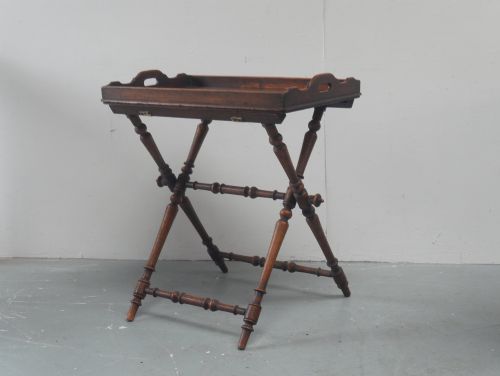
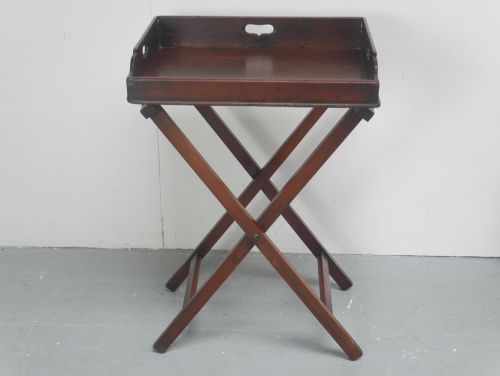
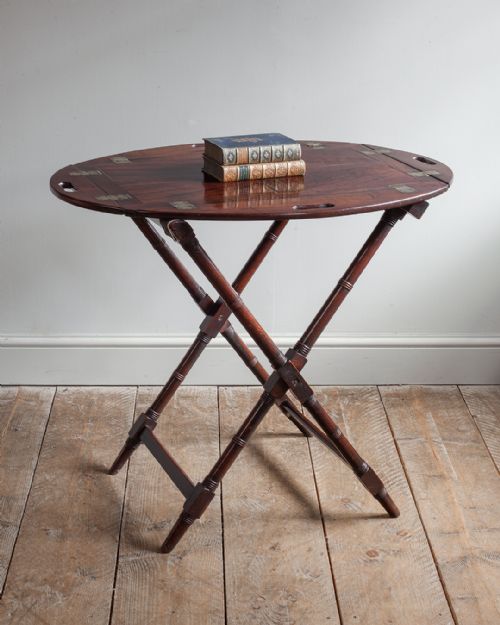
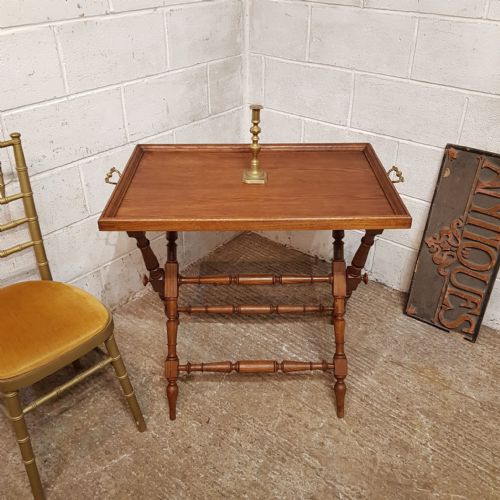
When you search for an edwardian serving tray stand, you are looking at items built to transport food and drink from the kitchen to the parlour or dining room. The form combines a folding or stable support frame with a removable upper tray, allowing the surface itself to double as a serving platter.
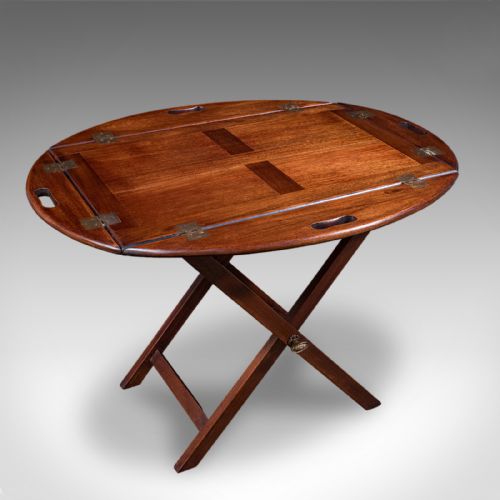
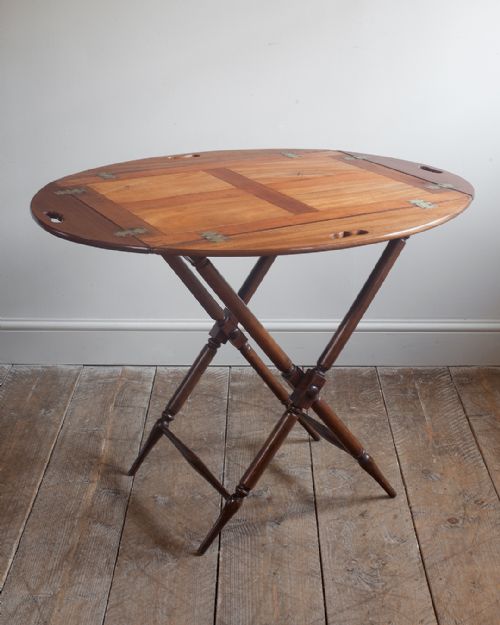
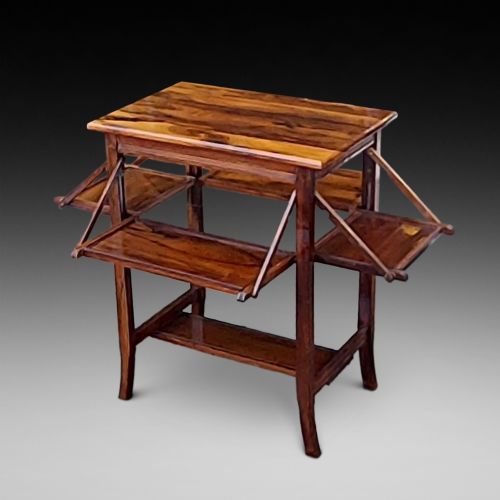
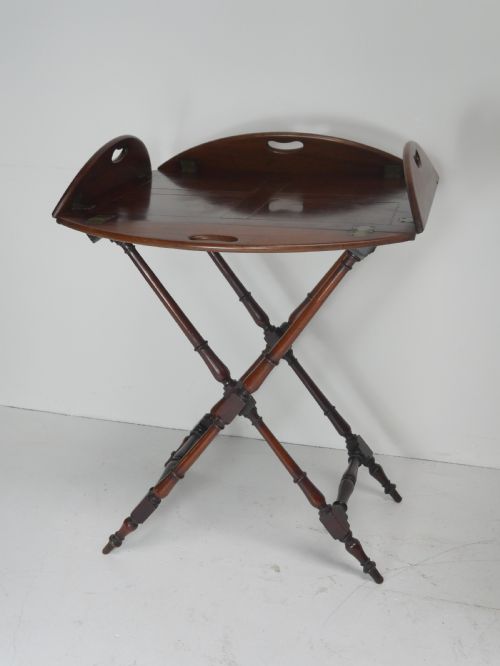
The versions most commonly met on this page span the Edwardian period and the wider nineteenth century, drawing on Georgian, Victorian, and Regency design traditions. They appear primarily as butler trays, side tables, and occasional tables with drop-flaps or handles cut directly into the timber.
Alongside straightforward timber folding stands, you will encounter pieces with marquetry satinwood, brass mountings, and occasional chinoiserie decoration. While some listings include dumb waiters and etageres, the core type remains the tray placed upon a dedicated base.
Materials and construction
Timbers dominate the construction, with mahogany, oak, walnut, and rosewood forming the primary structural frames and tray bases. Cabinetmakers selected these hardwoods for their tensile strength and grain stability, ensuring the portable joints withstood regular lifting and movement.
Inlays of satinwood and delicate marquetry frequently decorate the finer examples, while brass handles, hinges, and gallery rails provide both functional support and secure closure for folding flaps. Papier-mache and lacquer appear on specific decorative surfaces, particularly in pieces influenced by Regency tastes.
Listings feature pieces spanning the nineteenth century through the Edwardian era, utilising mahogany, oak, walnut, satinwood, and brass.
Assessing quality and finish
Quality rests upon the selection of timber and the precision of the joinery where the tray meets its stand. Finer pieces employ well-figured mahogany, walnut, or satinwood with crisp inlay work, whereas simpler examples rely on utilitarian oak or plain nineteenth-century pine.
The integration of the stand reveals the maker's hand through the stability of the folding mechanism and the snug fit of the tray within its rails. Original stands that match the timber and period of the tray command greater regard than later married combinations.
The Edwardian Serving Tray Stand Glossary
- Butler tray
- A portable wooden tray, often with hinged drop-flaps and cut-out handles, designed to sit atop a folding support frame. This format allowed servants to clear dining tables efficiently.
- Drop-flap
- A hinged side section of a tray that lowers to ease passage through narrow doorways or lifts to increase the usable surface area. Brass hinges typically secure these moving parts.
- Dumb waiter
- A tiered stand or revolving piece of furniture used to hold dishes and drinks without requiring a servant present at the table. These items range from folding two-tier stands to stationary serving columns.
- Chinoiserie
- European decorative style imitating Chinese artistic motifs, often seen in lacquerwork and painted surfaces on Regency and nineteenth-century trays. It introduces intricate painted scenes to domestic furniture.
- Marquetry
- The art of applying pieces of veneer to a structure to form decorative patterns and pictures. Craftsmen used contrasting timbers like satinwood and mahogany to achieve tonal depth.
Edwardian Serving Tray Stand: Frequently Asked Questions
What is an edwardian serving tray stand used for?
These pieces served originally to transport food and beverages from kitchens to drawing rooms or dining areas, keeping hospitality efficient. The removable top functioned as a carrying tray while the base remained stationary.
Today, they function well as portable side tables, drinks bars, or display surfaces in living spaces. Their folding design allows for easy storage when floor space is required.
How do I distinguish an original stand from a later pairing?
Original combinations share matching timber patination, wear patterns, and age characteristics across both the tray and the base. The way the tray rests within the frame should show a precise, purpose-built fit without awkward gaps.
Look closely at the underside of the tray and the top of the stand for corresponding tool marks or historical screw placements. Married pieces often display subtle discrepancies in wood species or finish oxidation.
Are these stands stable enough for daily use?
Most stands are built from durable hardwoods like mahogany or oak and remain structurally sound for holding everyday objects. Folding variants rely on secure cross-frames that lock into position when opened.
Checking the joints and hinges periodically ensures the stand remains safe for supporting heavier items like decanters or ceramic serving dishes. Gentle handling preserves the nineteenth-century mechanisms.
How do I care for antique mahogany and walnut tray surfaces?
Maintain timber surfaces by dusting regularly with a soft, dry cloth and avoiding excessive moisture or direct sunlight. Wax polishes applied sparingly help nourish the wood grain and protect the historical finish.
Coasters and protective pads prevent water rings or scratches from glasses placed on the tray during modern use. Preserving the original polish requires avoiding harsh modern chemical cleaners.