
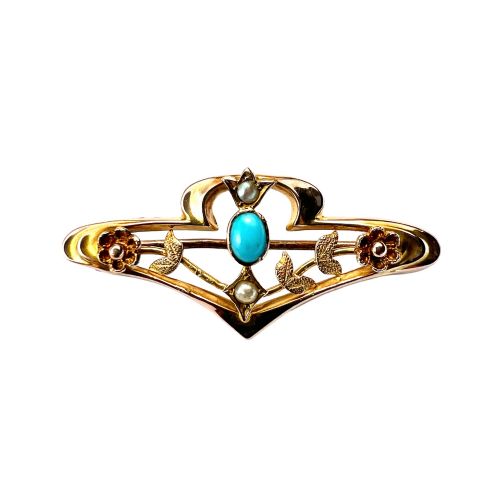
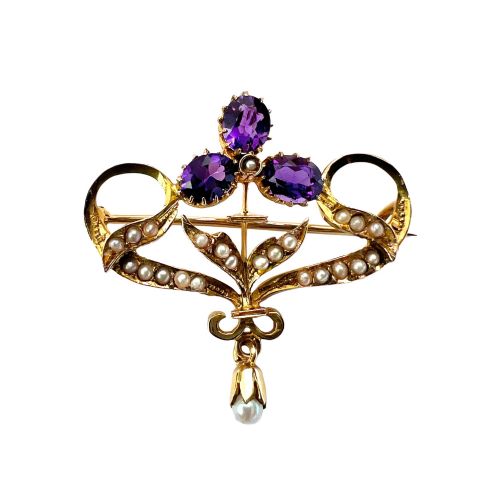
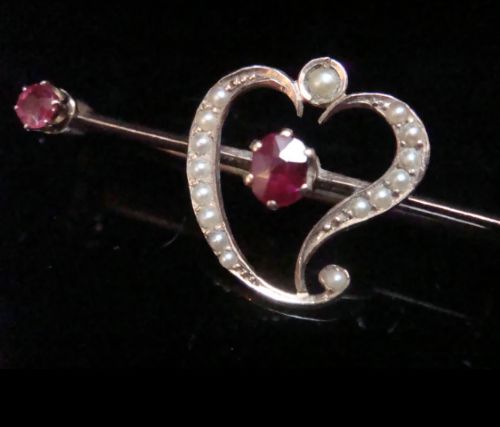


Edwardian Seed Pearl Pin
An edwardian seed pearl pin brings together delicate gold work and tiny, lustrous pearls to create an enduring piece of period adornment.
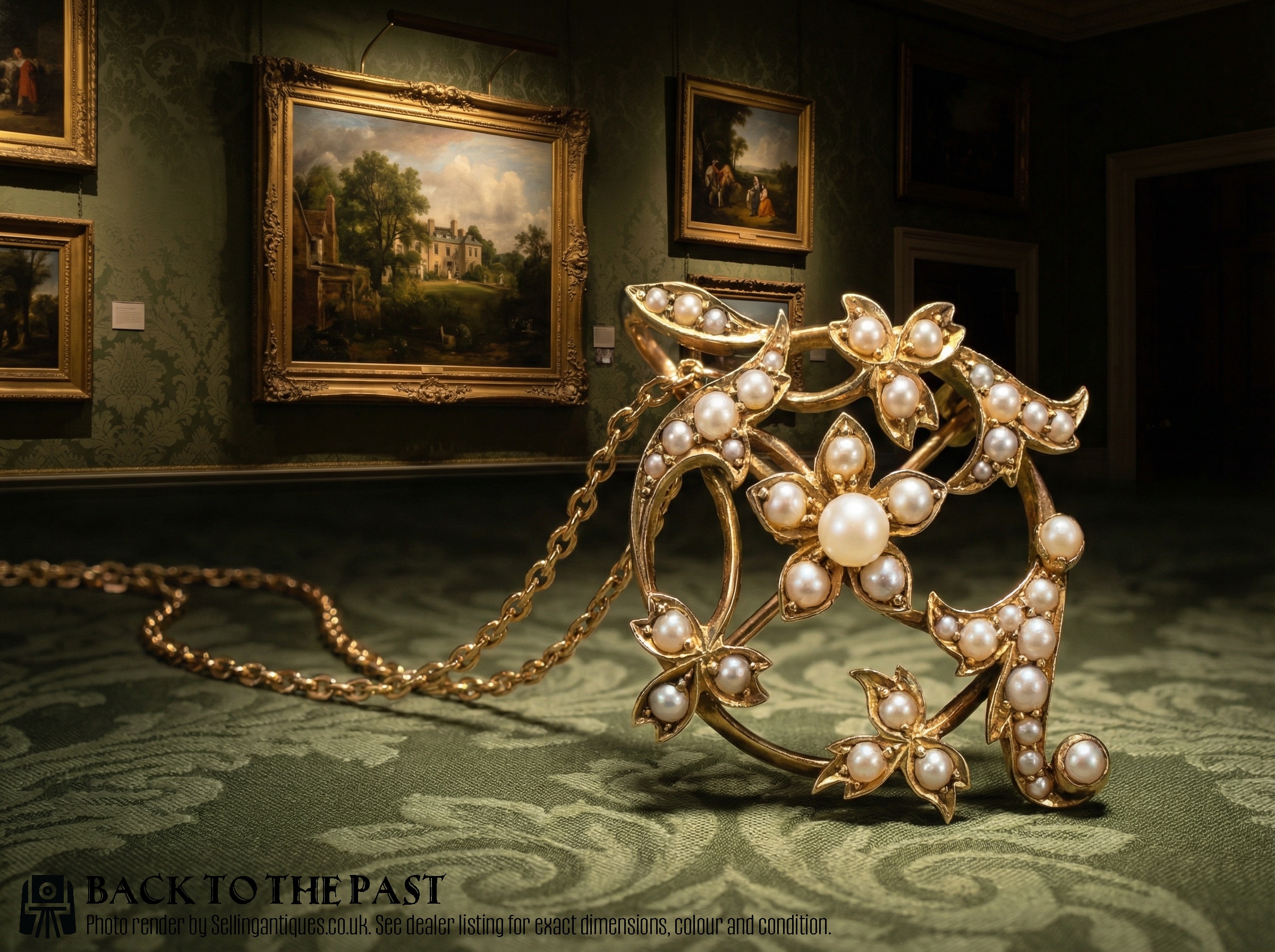
Edwardian Seed Pearl Pin
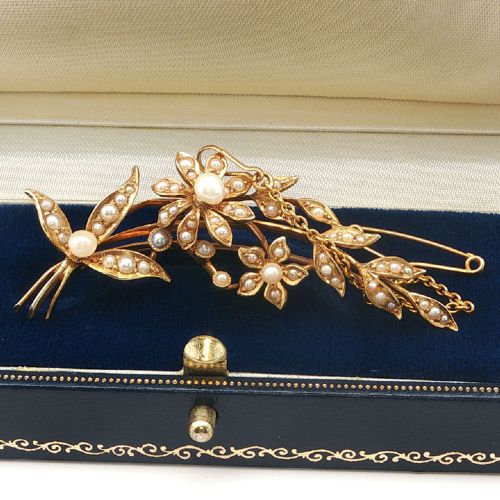
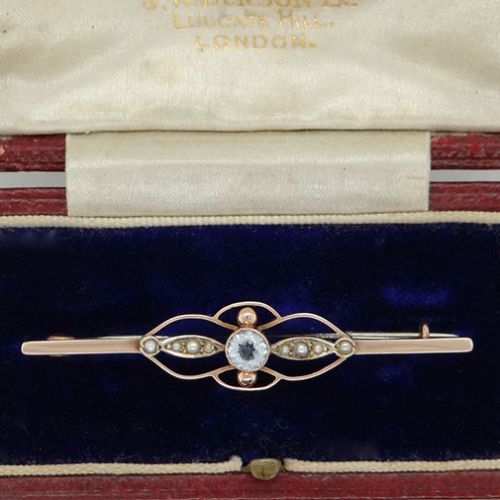
An edwardian seed pearl pin is a small decorative fastening, most frequently encountered as a brooch, bar brooch, or convertible pendant brooch. These items serve to secure garments while offering ornamental grace through delicate craftsmanship.
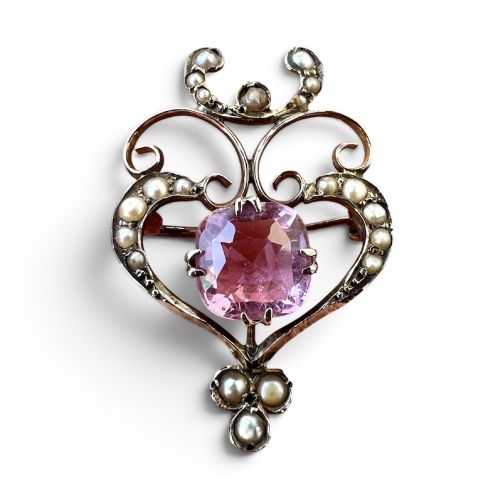
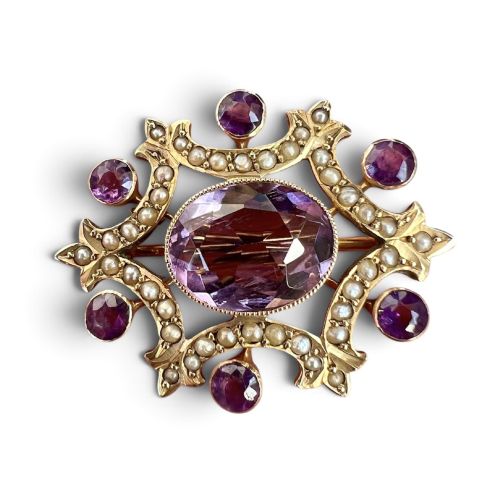
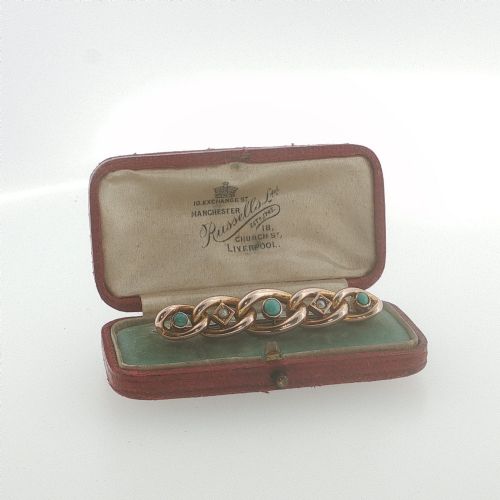
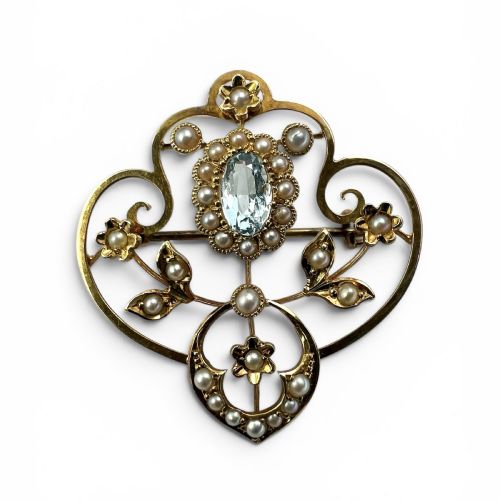
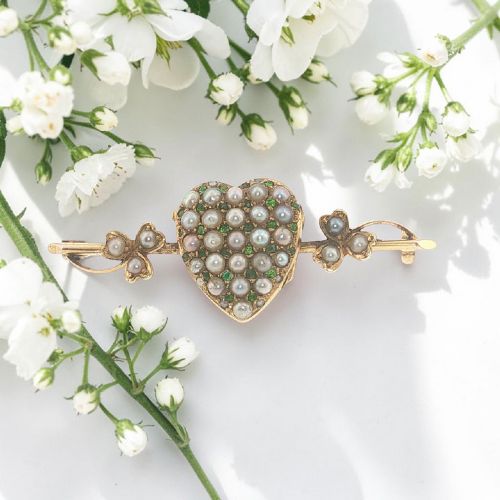
The pieces appear in various configurations, including floral sprays, bows, crescents, hearts, and horseshoe motifs often accompanied by coloured gemstones. Many examples combine seed pearls with stones such as peridot, amethyst, turquoise, and tourmaline.
While the material and stylistic influences span the Edwardian and Victorian eras, the predominant forms on this page reflect early twentieth-century jewellery design. They frequently incorporate nine carat or fifteen carat gold alongside tiny pearls.
Materials and Construction
Goldsmiths utilised nine carat and fifteen carat gold to construct the lightweight frames, wirework, and settings for these brooches. This metal provided sufficient strength for intricate shapes while maintaining a refined yellow or rose tone.
Tiny seed pearls were meticulously set into the gold structures, often complemented by bezel-set or claw-set gemstones including garnets, aquamarines, and rubies. Enamel work and silver accents also appear on specific designs to add contrast and colour.
Listings feature items incorporating nine carat gold, fifteen carat gold, silver, and rolled gold alongside pearls and coloured gemstones.
Evaluating Quality
Quality rests upon the precision of the metalwork and the uniformity of the seed pearls used in the design. Superior examples display secure setting techniques where every tiny pearl aligns evenly within the gold framework.
The integration of secondary gemstones alongside the pearls influences the distinction of a piece. Finer items balance the proportion of gold, pearls, and coloured stones such as peridot or tourmaline without overcrowding the composition.
The Edwardian Seed Pearl Pin Glossary
- Seed Pearl
- A very small natural pearl, often unperforated or finely drilled, used en masse to create delicate textural patterns in jewellery.
- Bar Brooch
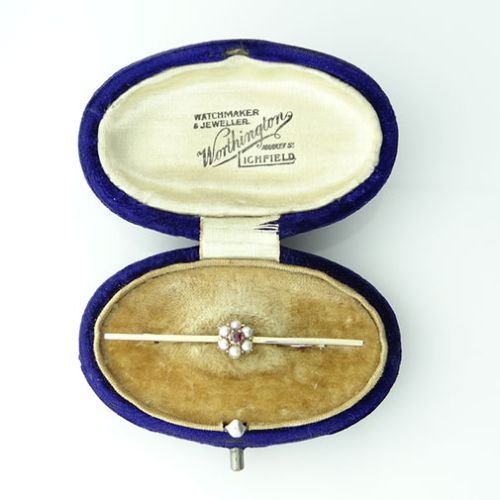
- A long, narrow pin fastener shaped as a straight bar, popular for securing collars, scarves, or lapels during the early twentieth century.
- Target Brooch
- A circular brooch design featuring concentric rings of stones or metal, often drawing the eye toward a central gem or pearl cluster.
- Suffragette Chain Brooch
- A piece of jewellery incorporating the characteristic colour combination of green, white, and violet, associated with the early women's suffrage movement.
Edwardian Seed Pearl Pin: Frequently Asked Questions
What is an edwardian seed pearl pin?
An edwardian seed pearl pin is a small decorative fastener, usually a brooch or pendant, made during the early twentieth century. These items feature tiny natural pearls set into gold frames, often accompanied by coloured gemstones.
They combine practical fastening with delicate ornamental design, reflecting the refined aesthetic of the period.
How were these pins worn originally?
These pieces were typically pinned to the lapels of tailored jackets, high lace collars, or the front of blouses. Many designs also function as pendants by incorporating hidden loops for a chain.
This versatility allowed owners to display the jewellery in multiple ways depending on their attire.
How do I care for my pin?
Seed pearls are organic gems that require gentle handling and should be kept away from harsh chemicals, perfumes, and ultrasonic cleaners. Wipe them softly with a dry or slightly damp cloth after wearing.
Store the item in a dedicated box to protect the delicate gold wirework and tiny pearls from pressure.
How can I tell if a piece is Edwardian?
Edwardian jewellery is characterised by light, airy metalwork, often using yellow or rose gold and platinum to create lace-like motifs. The incorporation of seed pearls alongside stones like peridot and tourmaline is typical of the era.
Examining the pin stem, clasp style, and overall construction helps distinguish these pieces from later vintage reproductions.