
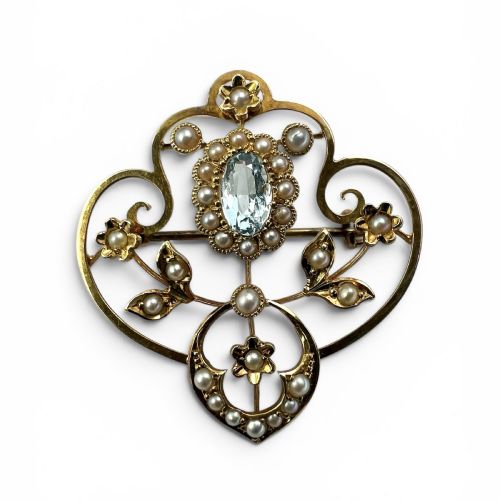

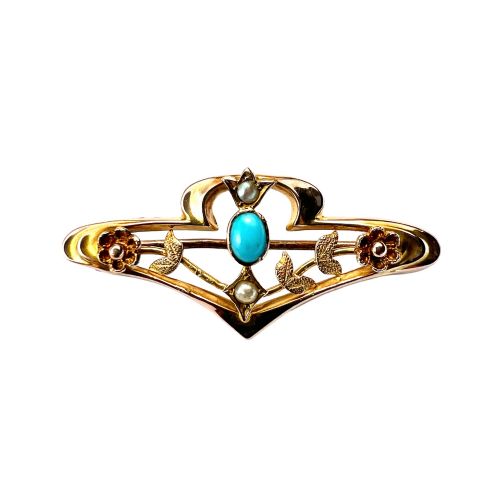
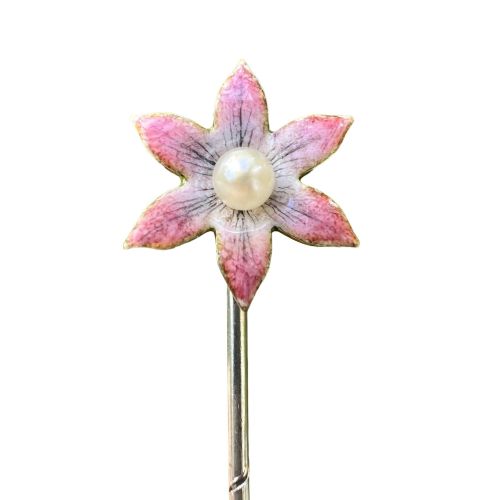


Edwardian Floral Gold Pin
An edwardian floral gold pin brings delicate botanical charm to a lapel, fashioned from warm gold and precious gems.
Edwardian Floral Gold Pin
When searching for an edwardian floral gold pin, collectors examine brooches, pendants, and stick pins that translate natural plant forms into precious metal and gemstones. These jewels capture blossoms, sprays, and wreaths through meticulous craftsmanship rooted in the early twentieth century.
The versions most commonly met on this page span the Edwardian era alongside pieces from surrounding periods like the nineteenth century and the nineteen-thirty period. They emerge in various forms, including bar brooches, pendant combinations, and delicate stick pins.
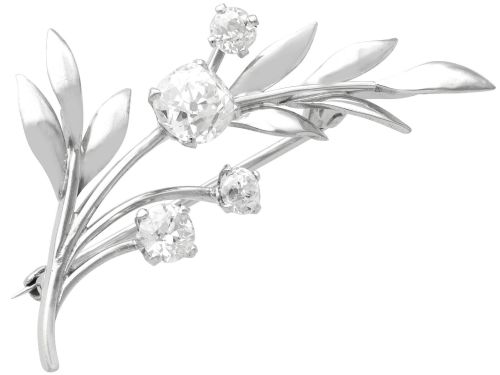
Materials defining these items include fifteen-carat gold, nine-carat gold, and yellow gold, embellished with diamonds, pearls, seed pearls, rubies, turquoises, and colourful enamel work. Each piece reflects botanical inspiration translated through historical jewellery traditions.
Materials and construction
Goldsmiths utilised fifteen-carat and nine-carat gold as the structural foundation for these floral jewels, shaping warm yellow metal into slender stems, leaves, and petals. This metalwork often supports secure settings for diamonds, pearls, and coloured gemstones.
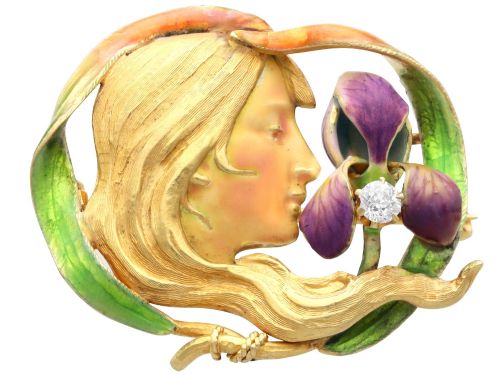
Enamelling techniques, including plique-a-jour, brought translucent colour to floral petals and leaves, mimicking natural flora with vibrant hues. Gemstones such as rubies, diamonds, and seed pearls were then meticulously set to highlight the centres and details of each flower.
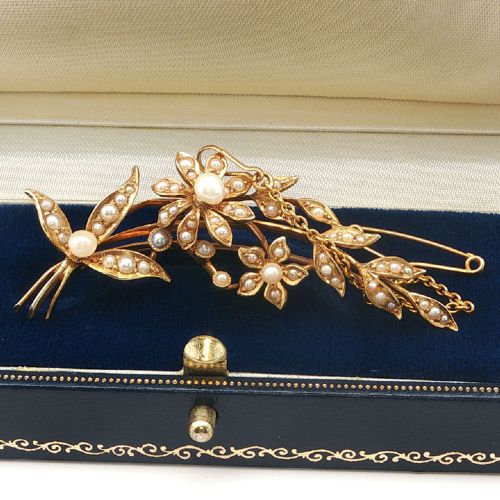
Some floral sprays hide tiny seed pearl stamens that tremble realistically with the wearer's every step.
Quality differences in floral pins
The distinction between standard examples and the finest work lies in the delicacy of the metal piercing and the realism of the botanical form. Superior pieces exhibit refined handling of gold wire and sheet, creating convincing leaf structures and naturalistic flower sprays rather than stiff, geometric interpretations.
The selection and setting of stones also separate tiers of quality, where evenly matched seed pearls, well-matched diamonds, and skilfully applied enamel elevate a jewel. Master goldsmiths ensured that every stone was securely integrated without overwhelming the delicate floral design.
The Edwardian Floral Gold Pin Glossary
- Edwardian
- Pertaining to the reign of King Edward VII, noted for light, garland-style jewellery featuring platinum, gold, and diamonds. This aesthetic favoured delicate lace-like openwork and floral motifs.
- Seed Pearl
- Very small natural pearls, often drilled and threaded onto wire or glued in clusters to form flower petals. They lend a soft, iridescent texture to antique botanical jewellery.
- Plique-a-jour
- An enamelling technique where enamel is applied in cells without a backing, allowing light to shine through the transparent colour like stained glass. It appears frequently in botanical Art Nouveau designs.
- Bar Brooch
- A horizontal pin featuring a central decorative element, such as a floral cluster or gem-set spray. This form was widely worn on collars and lapels during the late nineteenth and early twentieth centuries.
- Stick Pin
- A long pin with a decorative head, worn upright in cravats, lapels, or hats. Floral motifs in gold and gemstones were popular subjects for these accessories.
Edwardian Floral Gold Pin: Frequently Asked Questions
How do I wear an edwardian floral gold pin?
These pins attach securely to lapels, collars, scarves, or hats using traditional pin stems and safety catches. They add a subtle botanical accent to both tailored jackets and soft knitwear.
For daily wear, ensure the pin fastening is secure and store the item in a dedicated jewellery box away from harder pieces to protect delicate enamel and pearls.
What metals are used in these pins?
The listings feature pieces constructed primarily from gold, including specific fifteen-carat and nine-carat variations. Yellow gold provides the warm, traditional background for the floral and gemstone elements.
White gold also appears in later twentieth-century examples, offering a different contrast for diamond and pearl embellishments.
Were these pins also used as pendants?
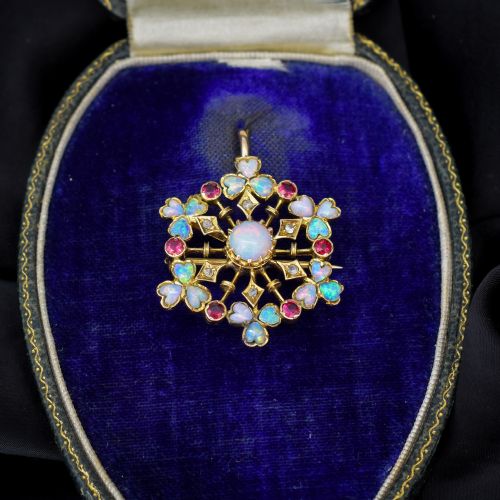
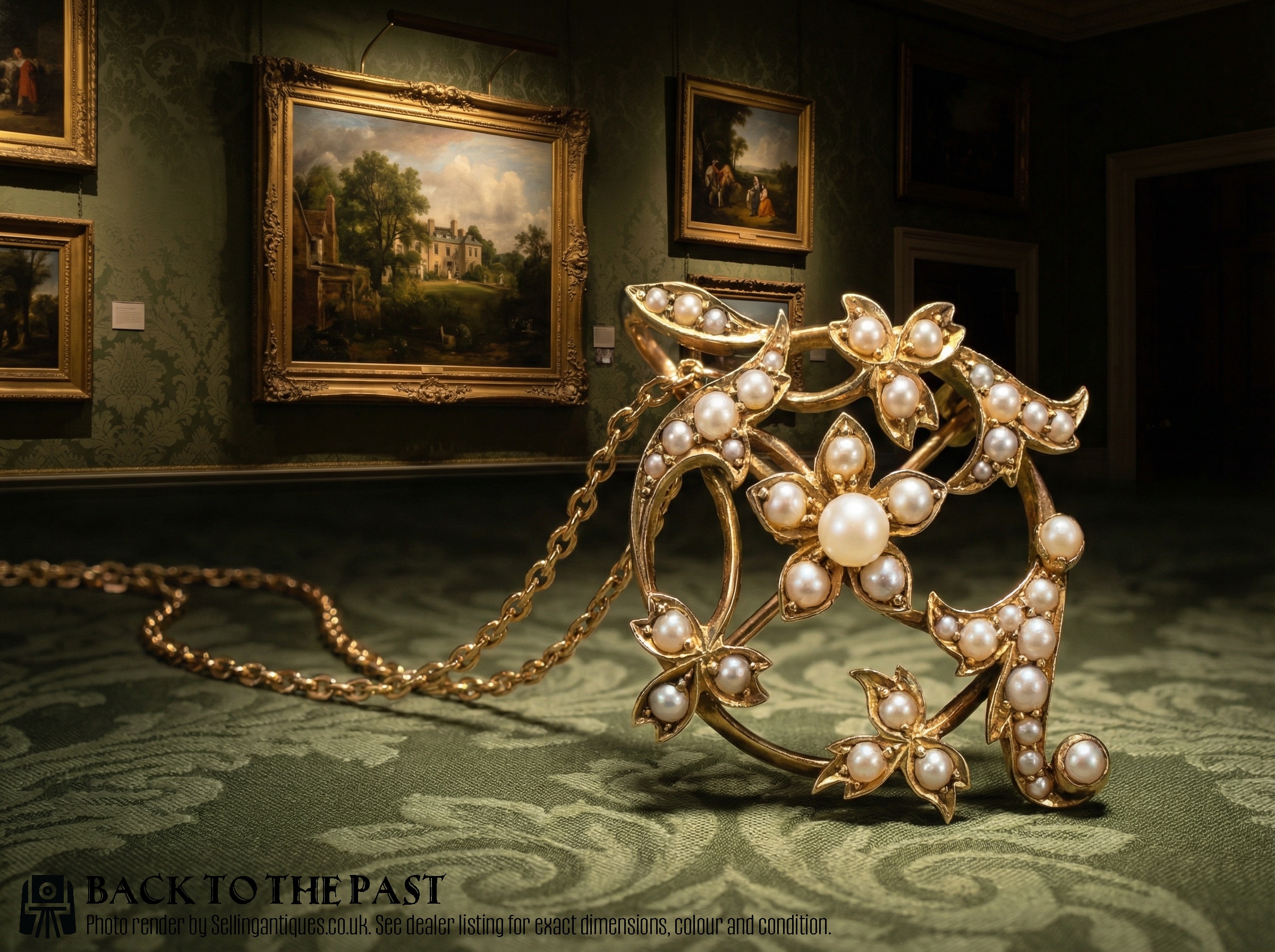
Many floral jewels from this era were designed with hidden bails or folding loops, allowing them to function as both brooches and pendants. This versatility let owners pin the item to clothing or suspend it from a chain.
Examining the reverse of a piece often reveals the hinged loop or hook used for chain suspension.