


Edwardian Secretary Chest
An edwardian secretary chest combines practical storage with a fitted writing surface, offering timeless utility in compact domestic furniture.
Edwardian Secretary Chest
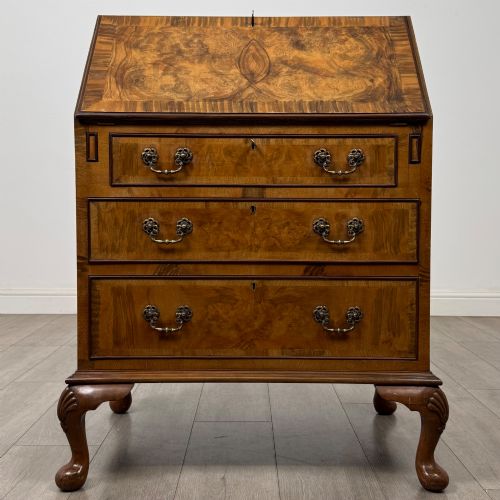
When you search for an edwardian secretary chest, you encounter a hybrid form that merges a set of drawers with a drop-down writing flap, occasionally surmounted by a bookcase cabinet. These pieces provide concealed compartments and pigeonholes for correspondence alongside generous lower drawer space for household storage.
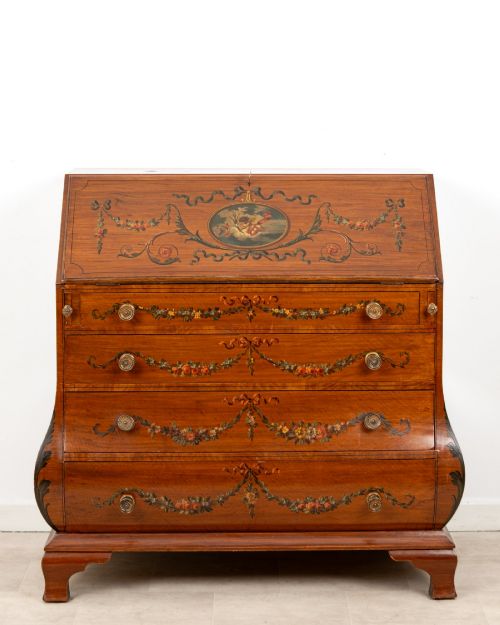
While the designation spans multiple eras in the listings, the Edwardian examples dominate the selection with lighter woods, painted motifs, and delicate inlay work. They reflect a domestic shift towards versatile furniture that saved space in smaller drawing rooms and bedrooms.
Materials and construction methods
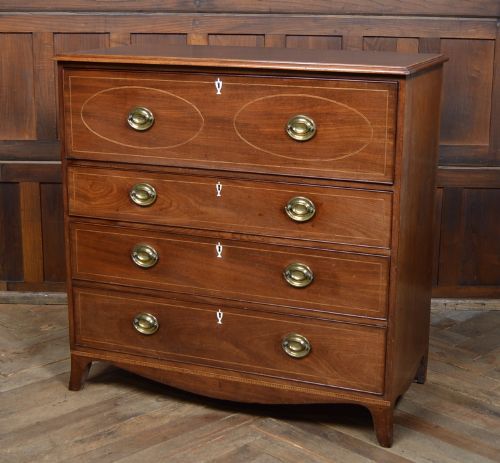
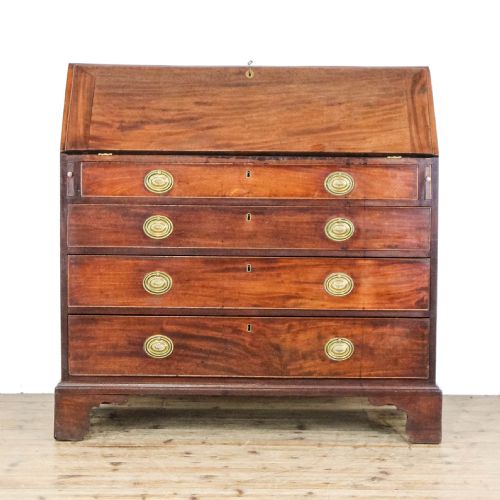
Makers utilised mahogany as the primary timber backbone, frequently pairing it with lighter contrasting veneers such as satinwood, burr walnut, and walnut veneer to create geometric banding and decorative panels. Brass hardware, including drop handles and escutcheons, secures the drawer fronts and internal compartments.
Cabinetmakers applied marquetry and hand-painted details directly onto the wooden surfaces, employing fine stringing to define the borders of the writing flaps and drawer tiers. The fall-front mechanism relies on discreet internal brass hinges or side arms to support the weight of the writing surface when opened.
Judging construction and finish
The distinction between standard and superior pieces rests upon the crispness of the timber selection and the precision of the internal stationery fittings. Fine examples exhibit matched veneer grains across the drawer fronts and carefully dovetailed joints that remain tight after decades of use.
Decorative restraint and hand-painted flourishes differentiate ordinary utility furniture from finer commission work. Superior pieces integrate bone escutcheons, delicate inlay work, and balanced proportions that maintain structural integrity without heavy secondary timber.
The Edwardian Secretary Chest Glossary
- Secretaire
- A piece of furniture containing a drawer or compartment that pulls down or folds out to form a writing desk. It conceals pigeonholes and small drawers for paper and ink.
- Bureau
- An alternative term for a writing desk or chest with a sloping lid that covers fitted compartments. In older pieces, this sits above standard horizontal drawers.
- Marquetry
- Decorative woodwork in which pieces of tinted wood, bone, or other materials are inserted into a veneer to form intricate patterns. This technique frequently decorates Edwardian writing surfaces.
- Satinwood
- A durable, yellowish timber native to Ceylon and India, prized for its lustrous satin-like sheen. Cabinetmakers used it extensively for banding and inlay during the Sheraton and Edwardian periods.
- Escutcheon
- A flat plate of brass or bone surrounding a keyhole to protect the surrounding wood from wear. They are often engraved or shaped to match the period style.
Edwardian Secretary Chest: Frequently Asked Questions
What fits inside the internal drawers?
The small internal compartments suit letters, stamps, pens, and shallow paperwork. They keep loose items organised away from the main surface.
Avoid placing heavy objects inside these miniature drawers, as their lightweight construction and wooden runners are intended solely for stationery.
How do I clean the wood surfaces?
Dust the mahogany, satinwood, or walnut regularly with a soft, dry lint-free cloth to prevent particle buildup. Avoid silicone-based polishes that can degrade historical finishes.
Apply a traditional beeswax sparingly once or twice a year to nourish the timber and maintain a natural, protective sheen across the veneer.
How can I tell an Edwardian piece from a Georgian one?
Edwardian examples typically feature lighter satinwood finishes, painted floral motifs, and marquetry inlay influenced by revival styles. Their overall frames tend to be slender and decorative.
Georgian pieces rely more heavily on solid mahogany or dark walnut grains, displaying heavier proportions, cleaner architectural lines, and deeper drawer configurations without painted decoration.