

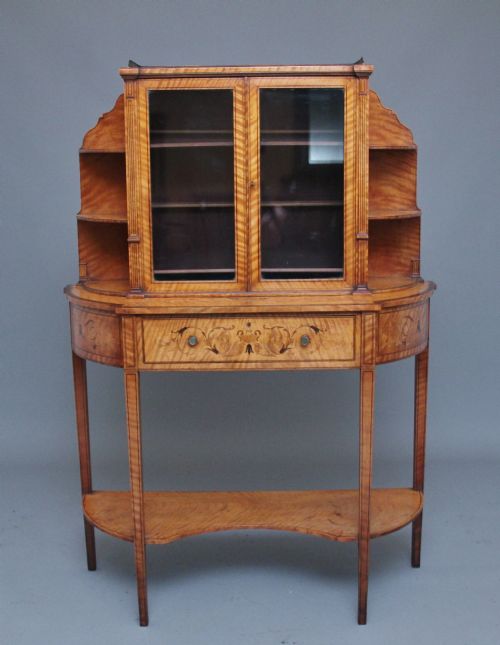
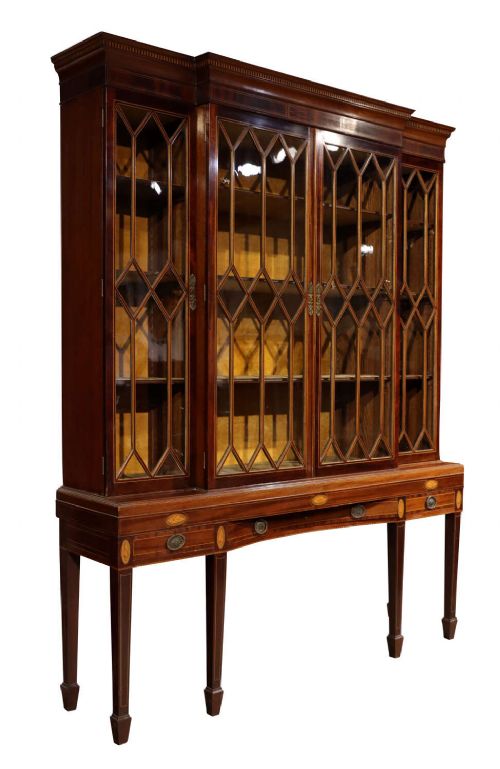
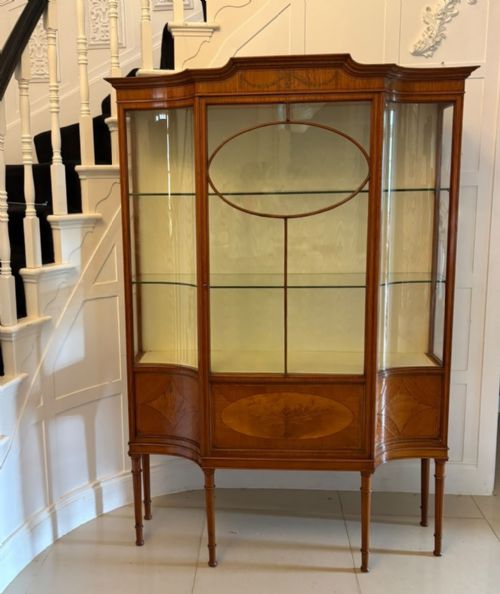
Edwardian Satinwood Vitrine
An Edwardian satinwood vitrine brings refined light and delicate display space into a room, framed in pale timbers and classic revival styles.

Edwardian Satinwood Vitrine
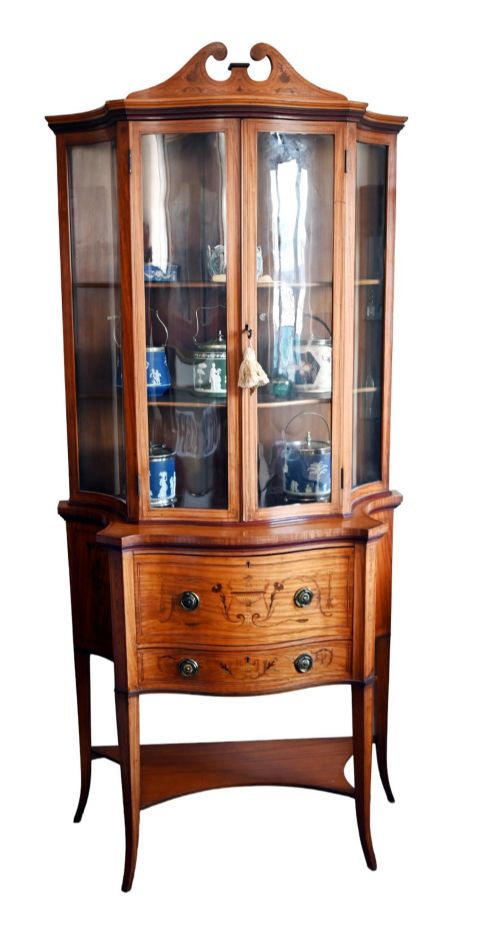
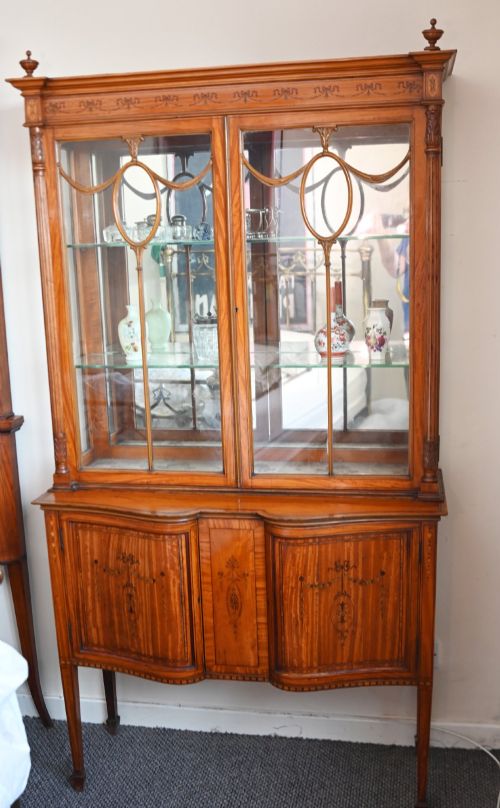
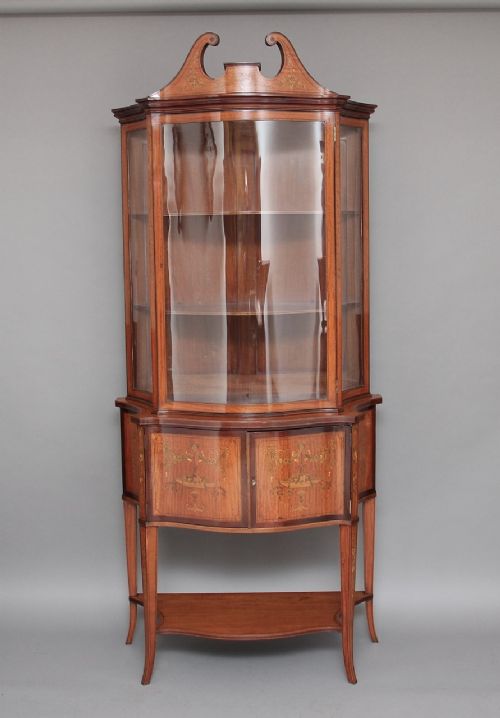
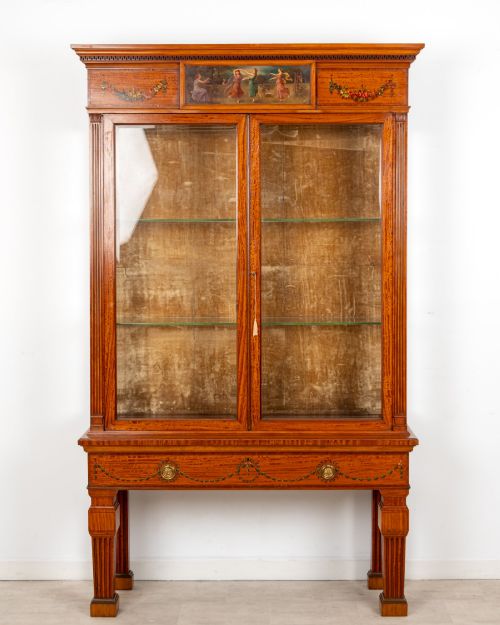
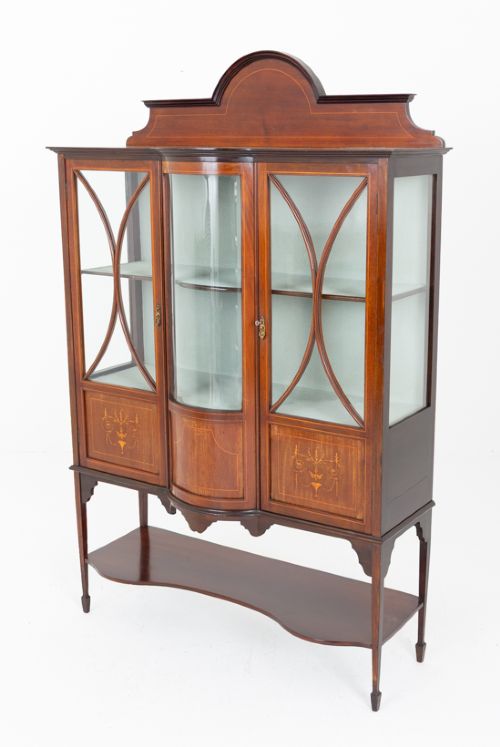
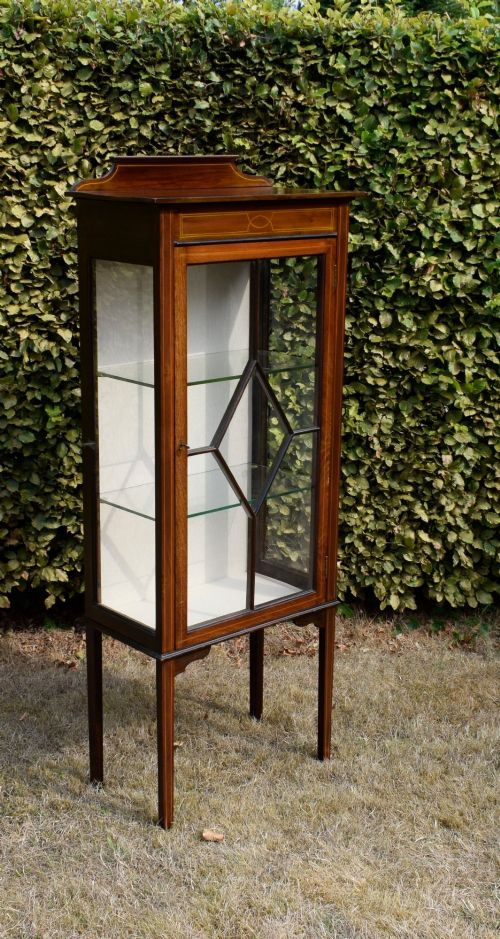
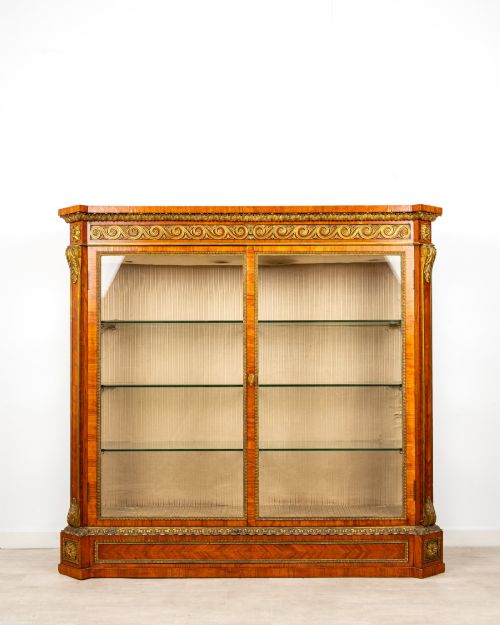
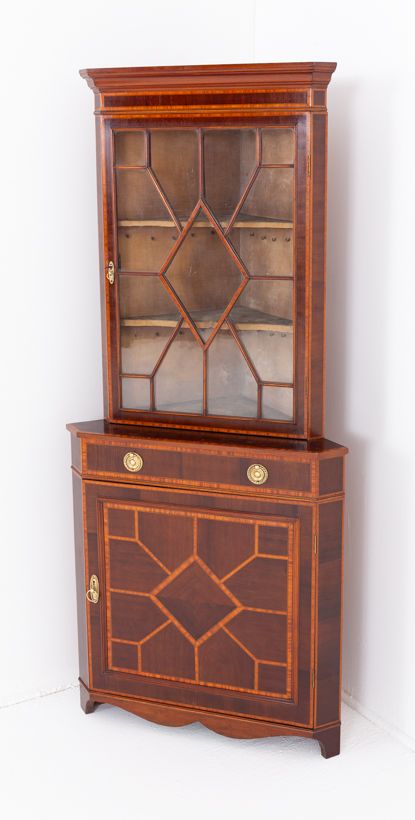
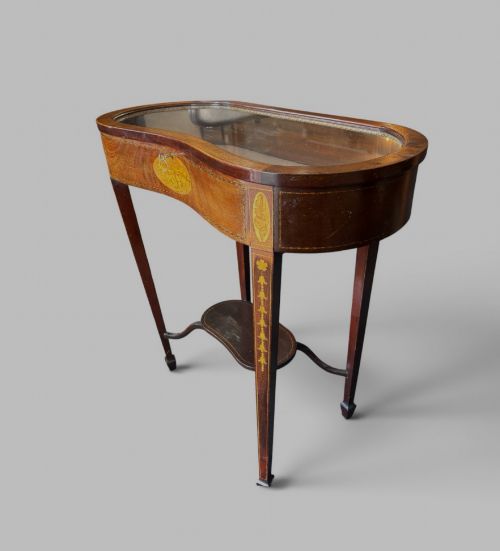
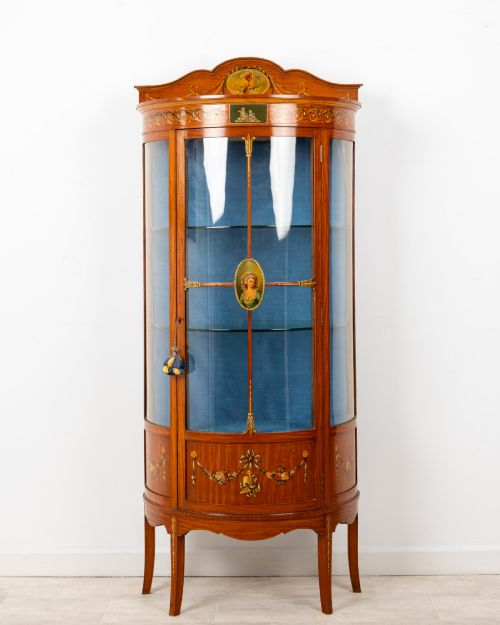
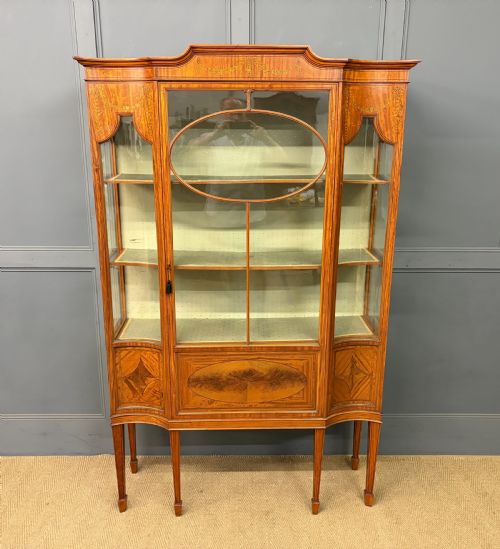
When you search for an Edwardian satinwood vitrine, you are looking at glazed display furniture designed to showcase ceramics, glass and small treasures. The pieces on this page span the late nineteenth century through to the early twentieth century, taking forms such as freestanding display cabinets, corner cabinets, bow fronts and low bijouterie tables.
The prevailing aesthetic draws heavily on Sheraton, Adam and Louis XVI revivals, reflecting a late Victorian and Edwardian taste for lighter, neoclassical furniture forms. You will find satinwood used both as solid timber and as fine veneer over mahogany carcasses, often enriched with painted details, delicate marquetry and contrasting wood inlays.
How They Were Made
Cabinet makers built these vitrines using sturdy structural carcases of mahogany, overlaid with figured satinwood veneers and detailed with intricate wood inlay and marquetry. Glazed doors and panels opened up the furniture to light, supported by brass hinges and locks, while interior shelves were frequently lined with velvet or fabric.
Surface ornamentation often included hand-painted motifs, gilt-bronze mounts and fruitwood stringing. Workshops employed specialist marquetry cutters and painters to achieve the neoclassical ribbon, urn and floral patterns characteristic of the Sheraton and Adam revival styles.
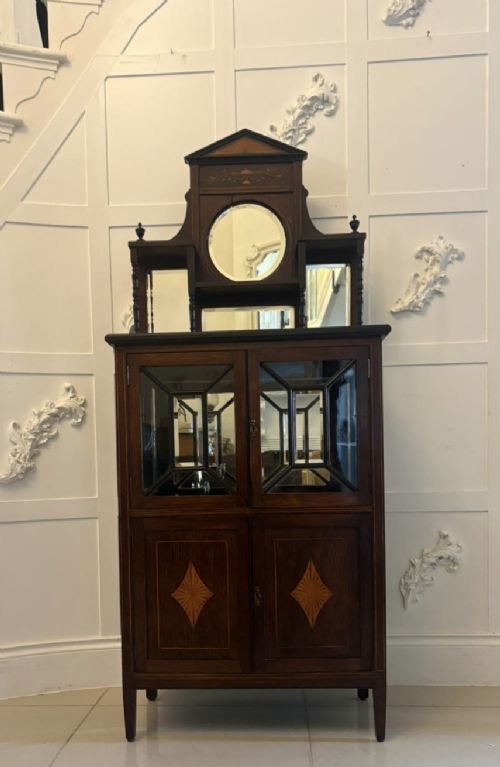
Listings show these cabinets frequently combine mahogany carcases with satinwood veneer, glass panels, and mirror backs.
What Varies in Quality
Quality in an Edwardian satinwood vitrine rests on the depth of figure in the timber and the crispness of the inlay. Finer examples display carefully selected satinwood veneers matched across the front, alongside hand-painted panels and precise marquetry rather than simpler stencilled decoration.
Construction details also separate standard commercial pieces from bespoke cabinet work. Superior vitrines feature heavier brass hardware, well-fitted glazed doors that close true, and interior mirrors or fabric linings chosen to complement the exterior timber work.
Hampton & Sons London·Edwards & Roberts·H. J. Hatfield & Sons·Maple & Co·James Hicks·Jewell of Holborn·Waring & Gillow
The Edwardian Satinwood Vitrine Glossary
- Satinwood
- A lustrous, fine-grained tropical timber with a golden sheen, highly prized for late Victorian and Edwardian veneer work. It forms the bright visual signature of these vitrines.
- Vitrine
- A glass-fronted cabinet or display case designed specifically for showing porcelain, curiosities and decorative objects. The term is frequently used interchangeably with display cabinet.
- Marquetry
- The art of forming decorative patterns by fitting together small pieces of tinted wood veneer. This technique creates the floral and neoclassical motifs seen across drawer fronts and cornices.
- Bijouterie table
- A glazed display table with a glass top, built to hold jewellery, miniatures and small keepsakes at viewing height. They appear as both rectangular and kidney-shaped occasional tables.
- Sheraton Revival
- A late nineteenth and early twentieth century design movement that reinterpreted the light, elegant furniture forms of George Sheraton. It heavily influenced the painted and inlaid satinwood cabinets of this era.
Edwardian Satinwood Vitrine: Frequently Asked Questions
What is the difference between a vitrine and a display cabinet?
A vitrine generally implies a piece with extensive glass panels on the sides as well as the front, maximising light for the objects inside. The terms are often used interchangeably in trade descriptions.
Traditional display cabinets might feature solid wooden sides or lower cupboard sections, whereas a dedicated vitrine focuses entirely on transparent display space.
How do I care for satinwood furniture?
Satinwood benefits from being kept away from direct sunlight and steady sources of artificial heat to prevent the veneer from drying out or fading. Gentle dusting with a dry, soft cloth is usually all that is required.
Avoid using silicone-based polishes or harsh chemical cleaners, as these can damage the aged polish and delicate painted decoration found on Edwardian pieces.
Where were these cabinets placed in a period home?
In Edwardian drawing rooms and reception spaces, vitrines stood against principal walls to display prized porcelain figures, glass collections and travel souvenirs. Corner cabinets and pier cabinets made efficient use of smaller wall spaces.
Bijouterie tables were positioned near seating areas where guests could easily look down through the glass top at small collections of jewellery and curios.