






Edwardian Satinwood Tea Tray
These edwardian satinwood tea tray pieces combine gleaming timbers with delicate marquetry to serve afternoon tea in style.
Edwardian Satinwood Tea Tray
An edwardian satinwood tea tray brings together the crisp elegance of the Edwardian era with the warm glow of figured timbers. Buyers seek these pieces for their refined proportions and decorative surfaces, which range from serving trays to occasional tables with tray tops.
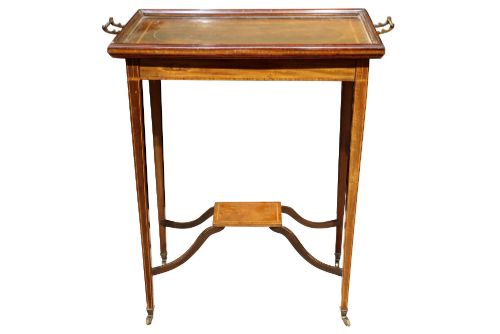
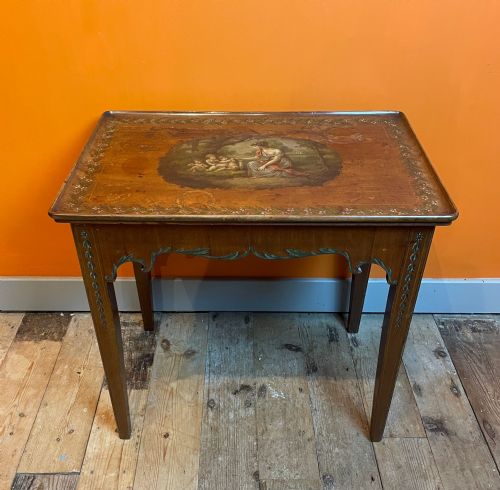
The pieces on this page appear most frequently in Edwardian interpretations of Sheraton Revival and neoclassical styles. Alongside dedicated serving trays, the selection includes tiered etageres and occasional tables featuring integrated or removable tray tops.
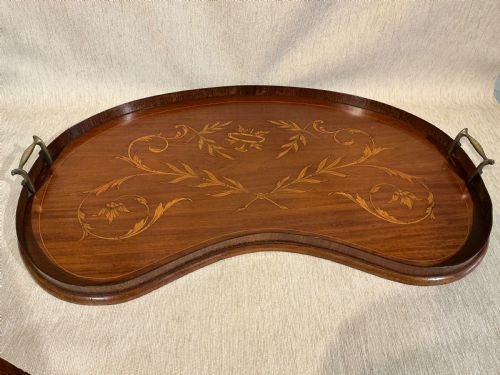
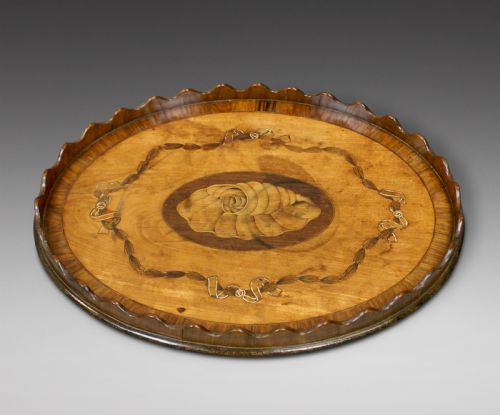
Origins span the Edwardian period back through the nineteenth century, with occasional Georgian examples and earlier nineteenth century work showing similar inlaid motifs. Oval and kidney shapes predominate among the trays, while rectilinear forms appear in the occasional tables.
How they were made
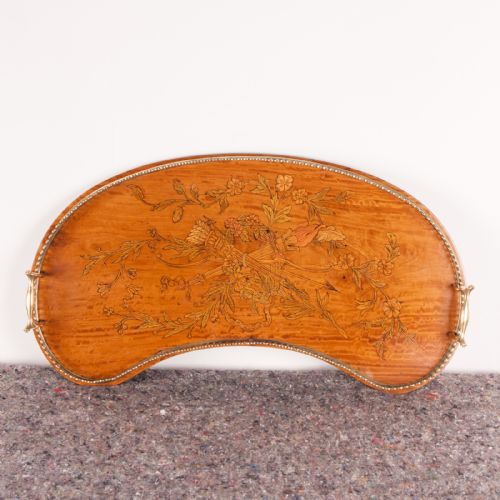
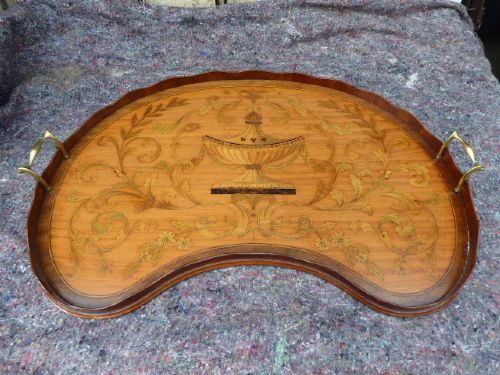
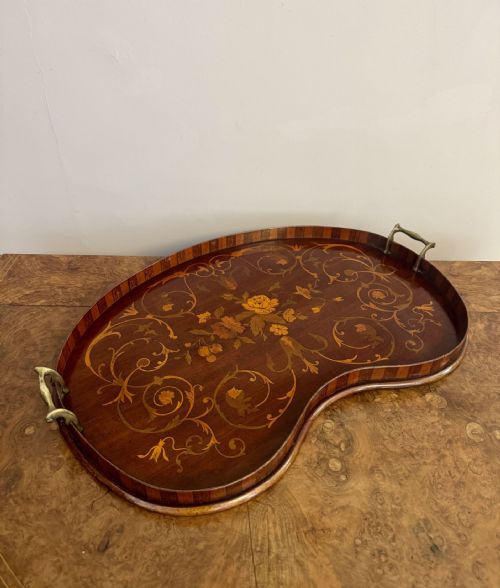
Makers built these trays using sturdy foundational woods like mahogany, overlaid with figured satinwood veneers. Artisans employed boxwood stringing and intricate marquetry inlay to create contrasting borders and central classical motifs.
Many examples incorporate cast brass handles for lifting, while certain pieces feature pierced or solid brass galleries around the perimeter. Glass panels occasionally protect delicate marquetry surfaces on serving trays and table tops.
Several trays swap plain wooden floors for kidney shapes that tuck neatly against the waist.
What varies in quality
The distinction between standard production and top tier work lies in the crispness of the marquetry and the choice of veneers. Finer pieces demonstrate meticulous control in cutting contrasting timbers for pictorial or geometric inlay.
Structural integration also defines quality, particularly where trays meet folding stands or etagere tiers. Superior examples maintain tight joints, well cast brass fittings, and balanced proportions across both standalone trays and table combinations.
Edwards and Roberts
The Edwardian Satinwood Tea Tray Glossary
- Satinwood
- A durable timber prized for its pale yellow colour and natural sheen. It takes a high polish and serves as the primary ground for decorative inlay.
- Marquetry
- The art of forming decorative patterns by fitting together small pieces of wood veneer. Artisans use contrasting timbers to create pictorial scenes or scrolling foliage.
- Gallery
- A low decorative railing surrounding the edge of a tray or table top. It often takes the form of pierced brasswork to secure glassware and china.
- Étagère
- A piece of furniture consisting of open shelves or tiers for displaying small items. These structures frequently incorporate tray tops in their upper sections.
- Sheraton Revival
- A late nineteenth and early twentieth century design movement that reinterprets eighteenth century neoclassical furniture forms. It relies on light timbers, tapered legs, and delicate stringing.
Edwardian Satinwood Tea Tray: Frequently Asked Questions
Can I still use these trays for serving?
Most antique serving trays remain robust enough for light use when handled with care. However, many owners prefer to display them on stands or tables to protect the delicate marquetry and satinwood surface.
Glass panels fitted to certain examples help shield the wood from moisture and heat during afternoon tea service. Assessing the joinery and base construction helps determine whether a specific tray suits active service.
How do I clean satinwood furniture?
Dusting with a soft, dry cloth removes everyday particles without harming the polished finish. Avoid using modern silicone sprays or harsh chemical polishes that can degrade nineteenth century varnishes.
Applying a traditional beeswax polish occasionally helps nourish the wood and maintain its characteristic golden sheen. Keeping pieces away from direct sunlight and radiators prevents the satinwood veneer from drying out.
How do I date an inlaid tray?
Dating relies on examining the timber construction, secondary woods, and stylistic motifs. Edwardian pieces often revive eighteenth century neoclassical designs but utilise machine cut veneers and distinct framing techniques.
Comparing the style of the brass handles, gallery work, and marquetry patterns against documented pieces provides further chronological context. Trays bearing maker stamps offer the clearest evidence of origin and date.