


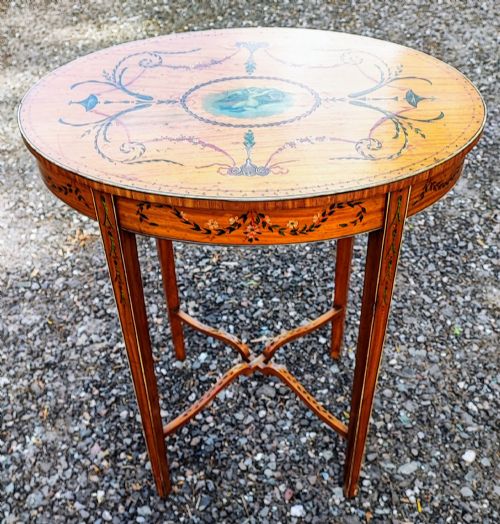
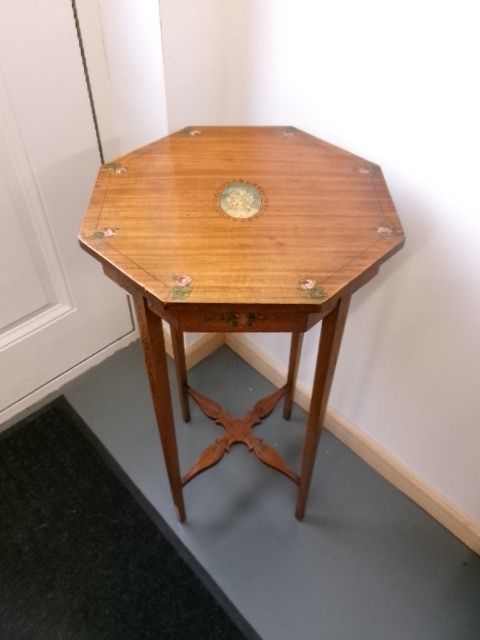


Edwardian Satinwood Lamp Table
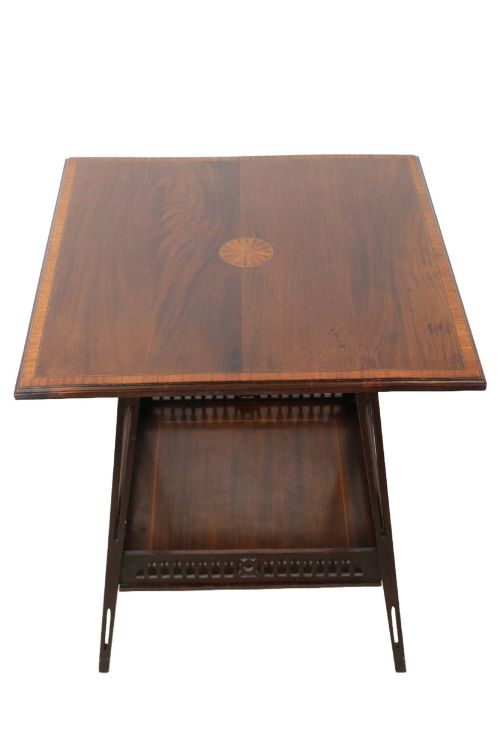
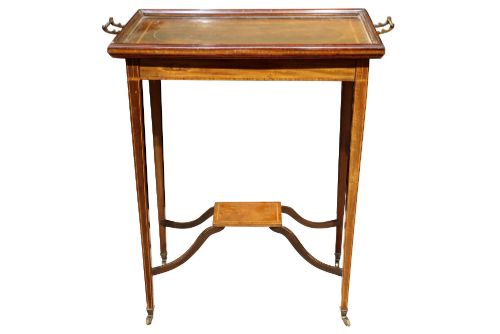
An Edwardian satinwood lamp table brings lightness and refined timber grain to a corner, functioning as a practical surface for lighting while holding period character.
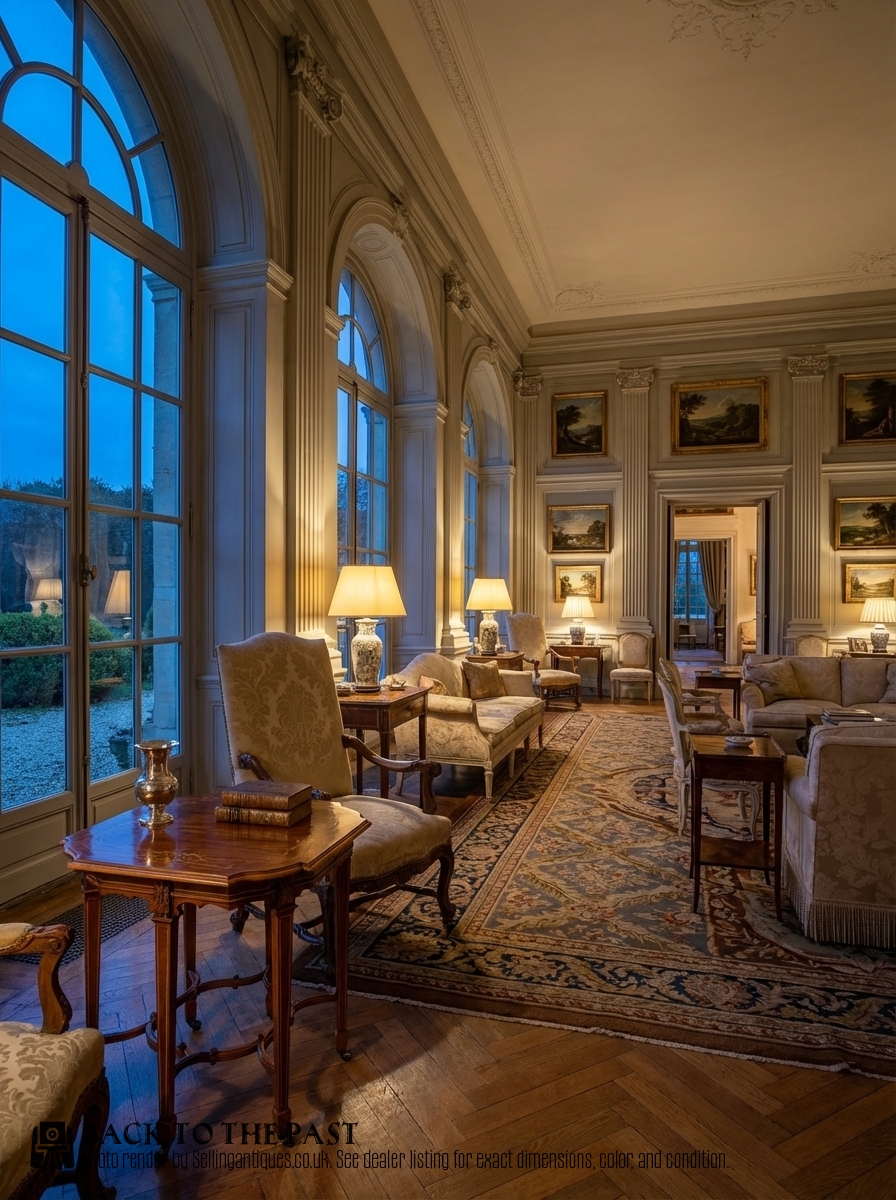
Edwardian Satinwood Lamp Table
When searching for an edwardian satinwood lamp table, buyers encounter small occasional surfaces produced around the turn of the twentieth century. These pieces serve primarily to hold lighting fixtures or display decorative objects in reception rooms.
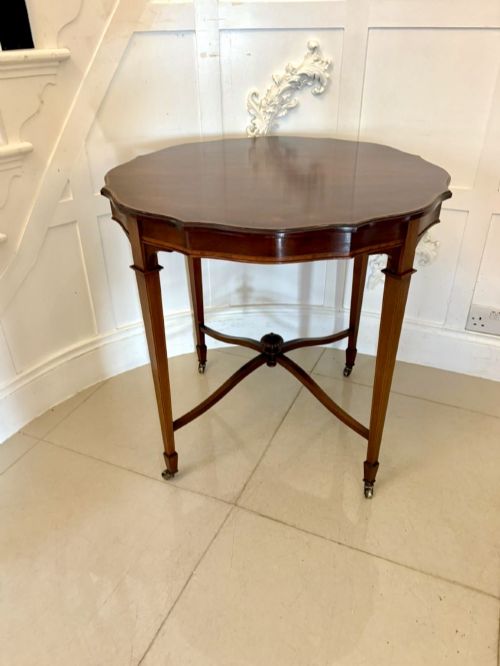
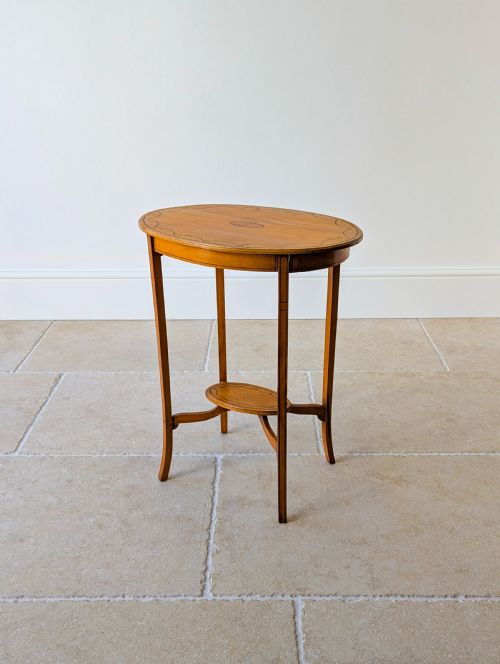
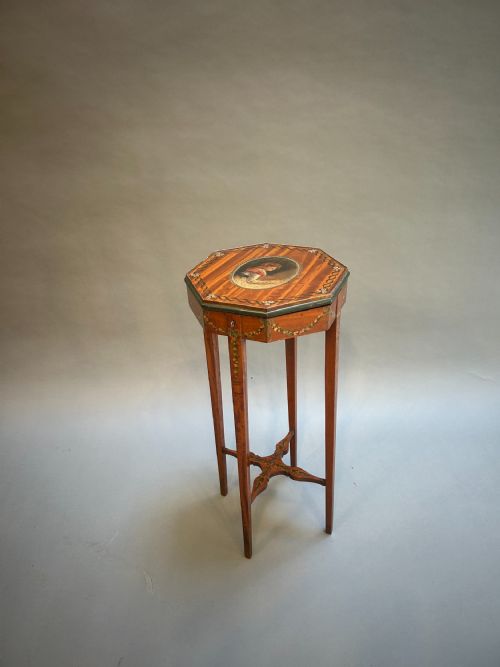
The most common versions on this page date from the Edwardian era and the late nineteenth century, often reflecting Sheraton Revival tastes. Forms range from simple circular or oval tops to octagonal and drop-leaf occasional tables.
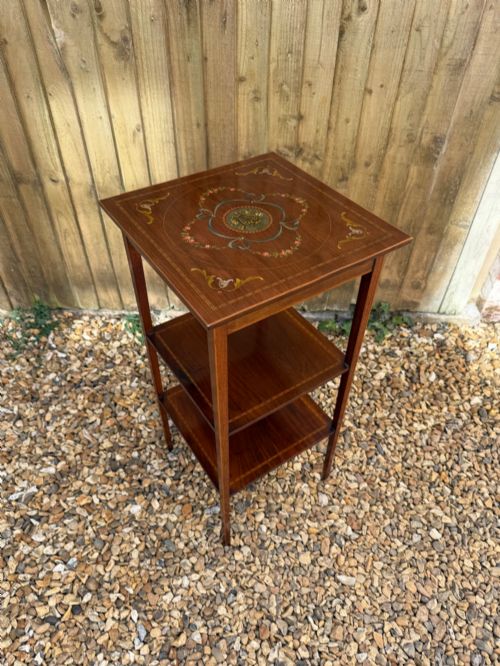
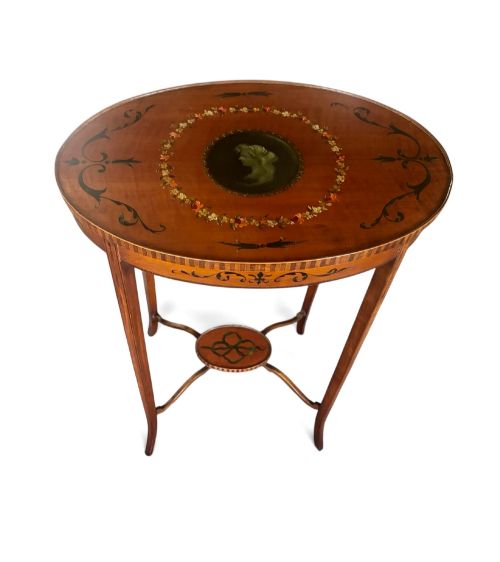
Makers utilised lighter timbers than those favoured by earlier Victorian cabinetmakers, frequently employing satinwood veneers alongside contrasting mahogany and walnut. Many examples incorporate delicate inlay work or painted floral decoration.
How They Were Made
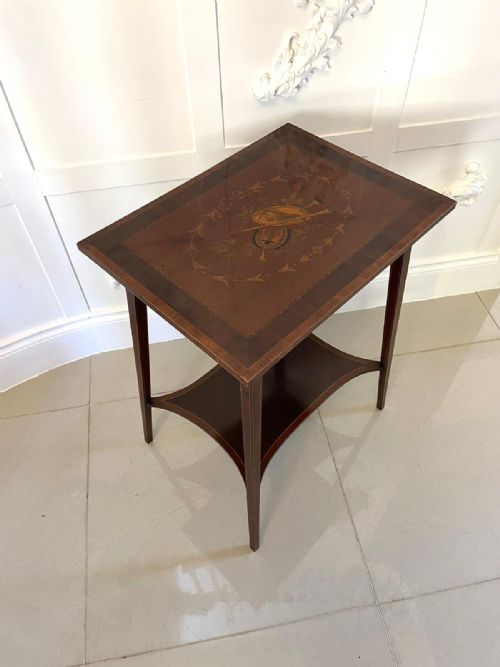
Cabinetmakers constructed these tables using solid secondary timbers faced with figured satinwood or mahogany veneers. Crossbanding in contrasting woods frames the tops, creating geometric borders that highlight the central grain.
Inlay techniques involve delicate boxwood and darker stringing inserted into channels to form classical motifs and floral swags. Selected pieces feature hand-painted botanical or neoclassical decorations directly onto the timber surface.
Listings feature pieces spanning the eighteenth, nineteenth, and early twentieth centuries, with Edwardian and Sheraton Revival styles predominating.
What Varies in Quality
The distinction between standard production and finer workshops lies in the selection of timber veneers and the precision of the marquetry. Superior examples display carefully matched grain patterns across the top and crisp, unbroken boxwood inlay.
Painted decoration also dictates the standing of a piece, with delicate brushwork and retained pigment separation representing skilled hand execution. Structural stability in slender tapered legs and well-fitted joints marks the output of better cabinetmakers.
Trevor Page & Co
The Edwardian Satinwood Lamp Table Glossary
- Satinwood
- A lustrous tropical hardwood with a natural golden sheen, frequently used as a veneer on high-status Edwardian furniture.
- Sheraton Revival
- A late nineteenth and early twentieth century design movement that reinterpreted the light, neoclassical furniture forms of the eighteenth-century designer Thomas Sheraton.
- Crossbanding
- A border of veneer laid around the edge of a table top with the grain running perpendicular to the centre, creating a neat framing effect.
- Marquetry
- Decorative patterns formed by fitting together contrasting pieces of veneer into a paper-thin wooden sheet before gluing it to the carcase.
- Stringing
- Very narrow strips of contrasting wood inlaid into grooves on table legs or tops to create fine linear borders.
Edwardian Satinwood Lamp Table: Frequently Asked Questions
What is an edwardian satinwood lamp table used for?
These compact surfaces were designed to hold small table lamps, reading lights, or decorative ornaments in drawing rooms and halls. Their modest proportions allowed them to fit easily beside armchairs or in corners.
Today, they perform the same functional role while adding period warmth to an interior scheme. The surfaces provide adequate space for contemporary lighting without dominating a room.
How do I identify a sheraton revival table?
Sheraton Revival pieces date from the late nineteenth and early twentieth centuries rather than the eighteenth century. They draw inspiration from neoclassical design, featuring tapered legs, satinwood veneers, and painted floral motifs.
Makers of this later period utilised modern machinery alongside traditional hand-finishing. Examining the secondary timbers and underside construction helps confirm the nineteenth or twentieth century date.
How should I care for satinwood furniture?
Satinwood benefits from minimal intervention, requiring only a soft, dry cloth for regular dusting. Avoid placing these tables in direct sunlight or near heat sources to protect the delicate veneers and painted decoration.
Applying a traditional beeswax polish occasionally helps nourish the timber and maintain its natural lustre. Care must be taken around inlaid edges to prevent moisture penetration.
Are these tables sturdy enough for daily use?
Most occasional tables feature slender tapered legs designed for lightness rather than heavy weight-bearing. They suit placement against walls or beside seating where they experience gentle use.
Checking the joints beneath the top ensures the table remains stable. While built as functional furniture, their refined construction rewards considerate handling.