


Edwardian Sapphire Necklace
An edwardian sapphire necklace brings together bright blue gemstones and delicate gold or platinum work from the early twentieth century.
Edwardian Sapphire Necklace
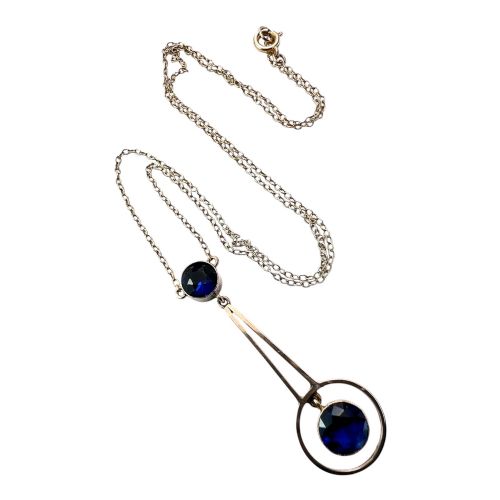
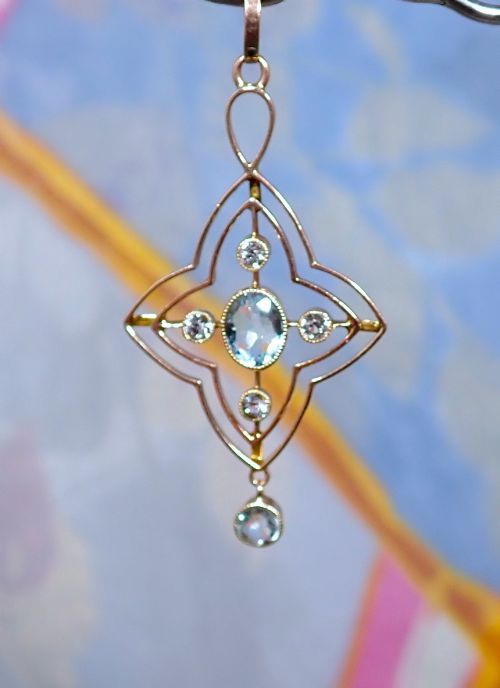
An edwardian sapphire necklace takes the form of delicate pendants, drop necklaces, and fringe designs produced during the early twentieth century. These pieces frequently combine bright blue sapphires with diamonds, seed pearls, and aquamarines set in yellow gold, white gold, or platinum.
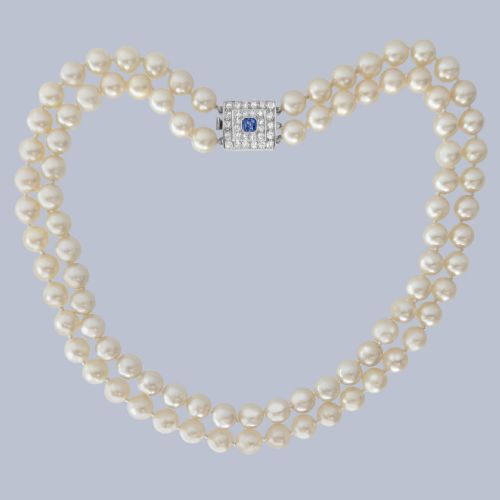
The pieces you meet most often on this page date from the Edwardian era and the 1910s, alongside related Victorian examples and later 1920s Art Deco pieces with sapphire clasps. Drop pendants and floral or wreath motifs appear regularly across the selection.
Makers and jewellers of the period favoured light, airy metalwork such as platinum and fine gold chains to support central sapphire stones. Witches hearts, crosses, and negligee styles also occur among the surviving necklace forms.
How they were made
Goldsmiths utilised 9ct gold, 15ct gold, 18ct gold, and platinum to form the delicate mounts and chains that hold the stones. These metals were shaped into fine wirework, collets, and intricate settings designed to maximise light passing through the gems.
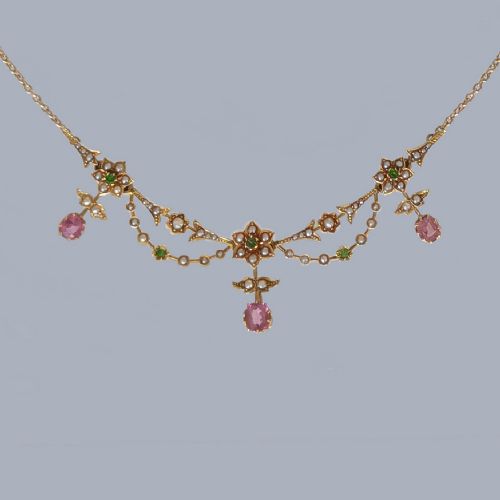
Sapphires are paired with diamonds, seed pearls, pink sapphires, white sapphires, and aquamarines, often secured in openwork pendant frames. Hand-cut stones including oval cuts and old cuts were positioned within floral, crescent, bow, and fringe arrangements.
Edwardian Sapphire Necklace Retail Price Guide 2026
Typical asking prices for edwardian sapphire necklace among the pieces listed under this phrase on Sellingantiques today, from the lower quarter to the upper quarter. They describe what is for sale here now, not the wider market.
What varies in quality
The refinement of the metalwork and the choice of accompanying stones dictate the distinction between standard production and finer pieces. Finer examples display meticulous platinum or high-carat gold wirework alongside well-matched diamonds and natural sapphires.
The harmony of the design elements, such as the arrangement of seed pearls around a central pink or blue sapphire, marks the skill of the original workshop. Pieces retaining their original configuration and well-balanced proportions command greater appreciation.
The Edwardian Sapphire Necklace Glossary
- Edwardian
- A period spanning the reign of King Edward VII from 1901 to 1910, known for light, lace-like jewellery designs. Platinum and diamonds frequently dominated this era.
- Negligee pendant
- A necklace style featuring two uneven drops suspended from a central connector or ribbon motif. Popular during the Edwardian period.
- Seed pearl
- A very small, naturally formed pearl used extensively in clusters and floral wreaths on antique pendants. They provide a soft white contrast to bright sapphires.
- Fringe necklace
- A necklace design featuring hanging drops or tassels suspended along the lower edge of the chain. This style showcases stones such as pink sapphires and garnets.
- Art Deco
- A design style emerging in the 1920s characterised by geometric lines and stylised motifs. Pieces from this time often incorporate sapphires in platinum or white gold settings.
Edwardian Sapphire Necklace: Frequently Asked Questions
How do I date an edwardian sapphire necklace?
Dating relies on examining the metal types, stone cuts, and construction methods characteristic of the early twentieth century. Platinum and high-carat gold point firmly to the Edwardian and 1910s periods.
Specific motifs like bows, wreaths, and negligee drops also help separate Edwardian pieces from later 1920s Art Deco designs or Victorian precursors.
What metals were used in these necklaces?
Jewellers of the era utilised 9ct gold, 15ct gold, 18ct gold, and platinum for mounts and chains. Platinum gained popularity for its strength in delicate, lace-like settings.
Yellow gold remains common in earlier and provincial pieces, often providing a warm contrast to blue and pink sapphires.
Are pearls natural in these antique necklaces?
Seed pearls used in Edwardian drop pendants and floral wreaths are typically natural pearls of the era. Later pearl strands from the 1920s may be certified cultured pearls.
Examining the uniformity and lustre helps identify the nature of the pearls set alongside the sapphires.
What pendant shapes are most common?
Drop pendants, floral wreaths, crescents, and crosses appear frequently among the listings. Witches heart and fringe configurations also represent popular Edwardian styles.
These shapes were designed to highlight central sapphire stones paired with diamonds and seed pearls.
Can I wear an antique necklace daily?
Wearing antique jewellery requires care due to the delicate platinum wirework and fine gold chains. Storing the necklace safely when not in use preserves the fragile seed pearls and settings.
Gentle cleaning without harsh chemicals helps maintain the integrity of the gold, platinum, and sapphires.