


Antique Lavaliere Pendant
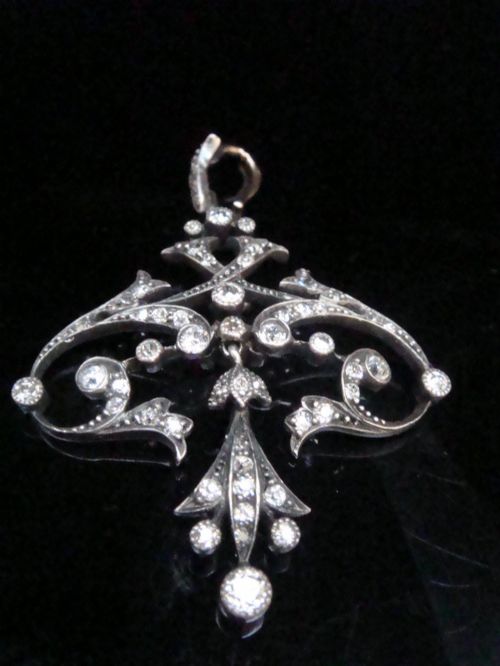
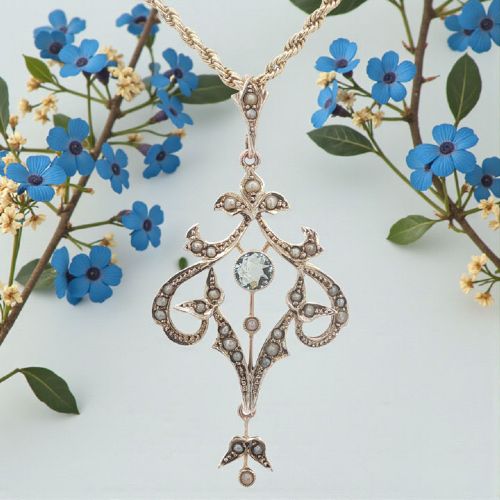
These antique lavaliere pendant pieces combine drop stones and delicate suspended clusters, offering collectors quintessential Edwardian and Victorian grace.
What these pieces are
An antique lavaliere pendant sits on a fine chain as a characteristically dangling necklace, defined by central stones and cascading lower drops. When you search for antique lavaliere pendant, you encounter delicate jewelled designs suspended from narrow mounts.
The pieces appearing in these listings span the Victorian, Edwardian, and Art Nouveau eras, alongside a single Art Deco example from the archive. You find forms ranging from straightforward pendants to complete pendant necklaces.
Edwardian and Victorian iterations dominate the selection, frequently pairing fine gold or silver settings with pearls, diamonds, and coloured gems. Art Nouveau influences also surface through flowing silver gilt and plique-a-jour enamel work.
How they were made
Craftsmen utilised precious metals including platinum, silver, silver gilt, 15ct gold, 18ct gold, and yellow gold to form the delicate frameworks of these necklaces. Settings often combined metals, such as silver-topped gold or platinum over base layers, to securely hold intricate stone arrangements.
Gems were painstakingly hand-set into the metalwork, incorporating diamonds, sapphires, pink sapphires, emeralds, opals, amethyst, and seed pearls. Specialised techniques like plique-a-jour added translucent enamel details resembling stained glass within the open wire frameworks.
Retail Price Guide 2026
Typical UK retail prices for lavaliere pendant, calculated from the Sellingantiques database of over a million retail prices indexed since 2003. This retail price guide relies exclusively on Sellingantiques data; no external sources or auction records are used, so the figures do not describe the wider market.
Some pieces arrive with their original fitted boxes, preserving a trace of the dressing tables they once lived on.
What varies in quality
Quality rests upon the refinement of the metalwork and the precision with which stones are integrated into the drop design. Superior examples display seamless articulation in their suspended elements, allowing fluid movement without stiffness.
The choice of materials dictates the upper tier of the range, where platinum and high-carat gold support substantial diamonds or fine sapphires. Lesser pieces rely on simpler silver or silver gilt structures paired with modest seed pearls and lighter gem weights.
The Antique Lavaliere Pendant Glossary
- Lavaliere
- A pendant necklace featuring a central drop stone with one or more suspended elements hanging below it. This style gained immense popularity during the late nineteenth and early twentieth centuries.
- Plique-a-jour
- An enamelling technique where the enamel is applied without a backing, creating a translucent, stained-glass effect. It requires great skill to execute successfully in fine metal frames.
- Seed pearl
- A very small, naturally formed or early cultured pearl used extensively in delicate Edwardian and Victorian cluster designs. They are typically drilled and threaded onto fine wire or silk.
- Silver gilt
- Sterling silver that has been coated with a thin layer of gold. This treatment provides the warm appearance of gold while utilising a silver base.
Frequently Asked Questions
What is an antique lavaliere pendant?
An antique lavaliere pendant is a necklace featuring a primary decorative motif with one or more drops suspended underneath. These pieces date predominantly from the Victorian, Edwardian, and Art Nouveau periods.
They are distinguished by their graceful, dangling construction and use of fine gemstones like pearls, diamonds, and sapphires set in gold or platinum.
How do I date these necklaces?
Dating relies on examining the materials, hallmarks, and stylistic markers present in the construction. Edwardian pieces often feature platinum and delicate diamond work, while Victorian versions lean towards yellow gold and emeralds or opals.
Art Nouveau examples introduce flowing organic lines and enamel techniques like plique-a-jour. Archive pieces also point to occasional later Art Deco survivals.
Are these pieces suitable for daily wear?
These delicate antique necklaces require careful handling due to their age and intricate suspended construction. Fine chains and intricate drop settings benefit from being stored flat and kept away from strenuous physical activities.
Gentle cleaning with appropriate soft cloths helps preserve the fragile seed pearls and detailed metalwork without causing damage.
What materials are most common?
The listings show a frequent use of gold, platinum, and silver alongside precious and semi-precious stones. Diamonds, sapphires, pink sapphires, emeralds, opals, and amethysts appear regularly.
Seed pearls are particularly prevalent in Edwardian designs, providing a soft white contrast to the surrounding metal and gemstone settings.