


Edwardian Salon Settee
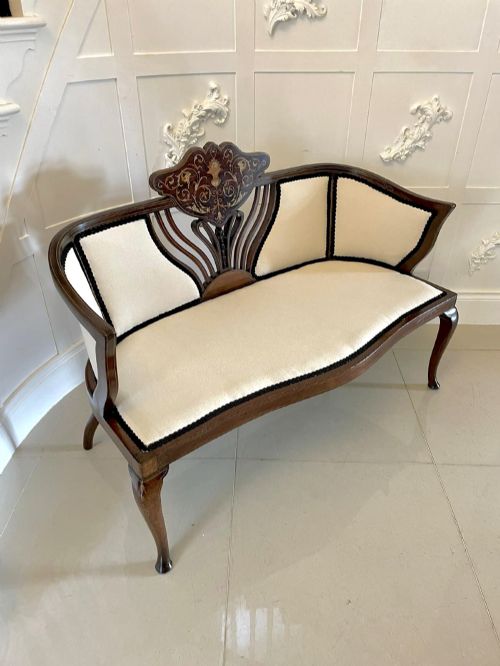
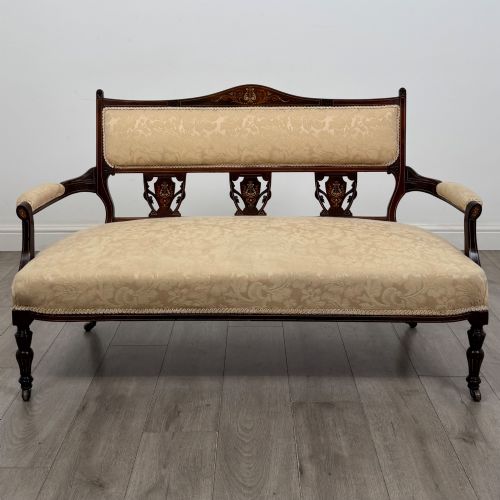
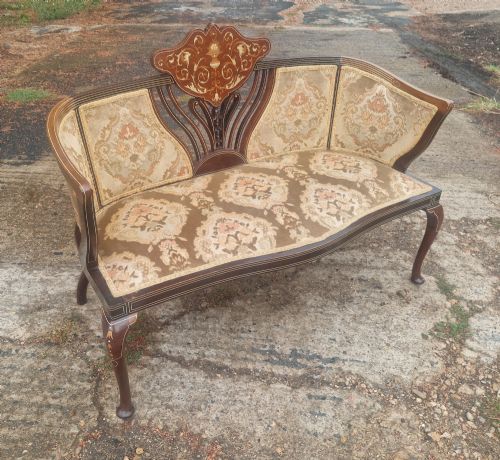
An edwardian salon settee brings refined mahogany frames, delicate marquetry and comfortable upholstery into a drawing room.
Edwardian Salon Settee
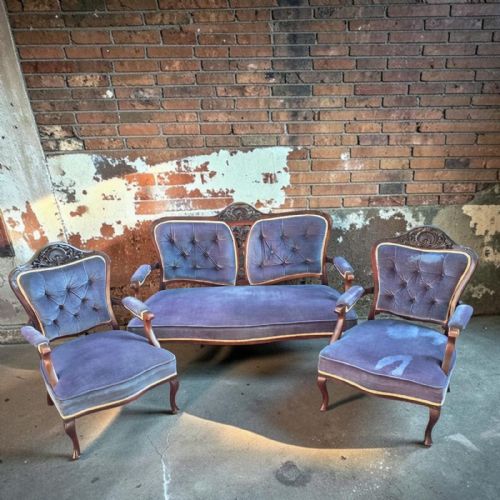
An edwardian salon settee is a light two-seater sofa designed for formal reception rooms, frequently appearing alongside matching armchairs as part of a larger suite.
The pieces seen here range from the late nineteenth century through to the early twentieth century, spanning late Victorian, Edwardian and Arts and Crafts periods.
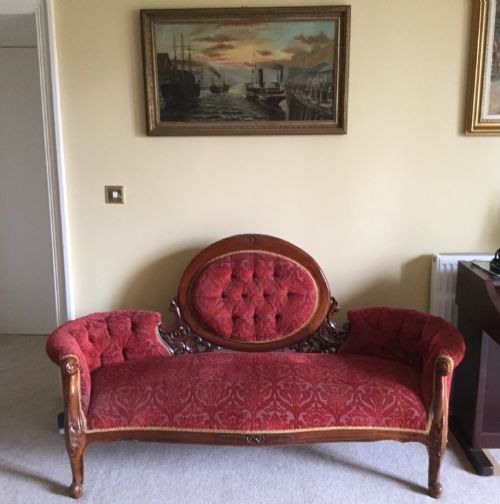
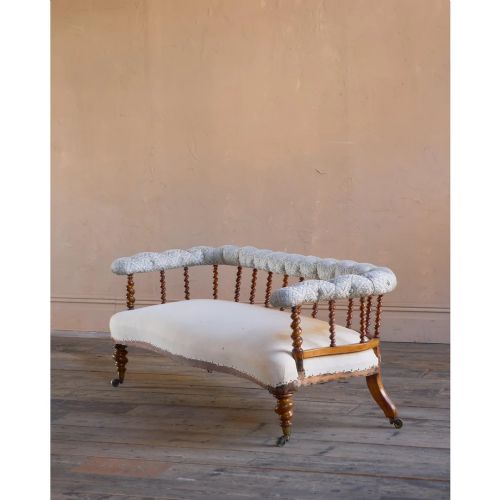
Most examples utilise mahogany timbers enhanced by satinwood and boxwood inlay, often configured as double-ended sofas or tub-shaped seats.
How they were made
Cabinetmakers constructed the frames primarily from solid mahogany, walnut, rosewood or oak, employing traditional joinery to support slender legs and curved backs.
Makers applied intricate marquetry and contrasting veneers using satinwood, boxwood and bone to decorate the crest rails and aprons.
Upholstery techniques combined sprung seats with deep-pile brocade, velvet, damask or plain fabric coverings secured around the wooden framework.
Mahogany and fabric dominate the material records here, supported by velvet, satinwood and boxwood inlay.
What varies in quality
The refinement of the marquetry and the crispness of the timber carving separate standard production pieces from finer examples.
The integrity of the underlying sprung base and the choice of facing wood determine the structural longevity of each frame.
Complete matching suites demonstrate greater design cohesion than isolated settees gathered together later.
C. Hindley & Sons·James Shoolbred
The Edwardian Salon Settee Glossary
- Salon suite
- A coordinated set of seating comprising a settee and matching armchairs or occasional chairs. These groupings furnished formal drawing rooms.
- Satinwood
- A hard timber with a golden sheen used for contrasting inlay and stringing. It highlights the edges of mahogany sofa frames.
- Double-ended sofa
- A seat with symmetrically curved ends of equal height allowing a person to recline from either side. They appear frequently in late Victorian seating.
Edwardian Salon Settee: Frequently Asked Questions
How do I spot an Edwardian piece?
Edwardian seating usually displays lighter mahogany timbers combined with satinwood inlay and slender tapering legs. The overall aesthetic favours brightness and delicate proportions over heavier Victorian mass.
Construction methods from this period also rely on machine-assisted cutting alongside hand assembly, resulting in uniform joinery and refined decorative stringing.
Were these settees meant for daily sitting?
These settees served primarily for formal entertaining in drawing rooms and parlours rather than heavy family lounging. Their lighter frames and delicate upholstery suited polite conversation and occasional use.
Many examples feature sprung bases designed to offer comfortable support during social calls rather than prolonged reclining.
Do matching suites survive together?
Complete parlour and salon suites do survive, often comprising a settee paired with several matching armchairs or occasional chairs. Keeping these groupings intact depends on how descendants managed the furniture.
Some listings offer isolated settees while others present three-piece or five-piece ensembles sharing identical timber and inlay work.
How should I care for the upholstery?
Preserving the fabric requires gentle vacuuming with a soft brush attachment and protection from direct sunlight to prevent fading. Velvet and brocade covers respond well to professional dry cleaning when necessary.
Checking the underlying sprung base periodically ensures the internal webbing and springs maintain proper tension without sagging.