

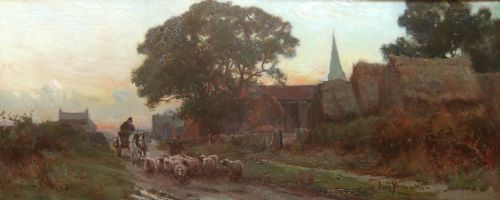


Edwardian Rural Painting
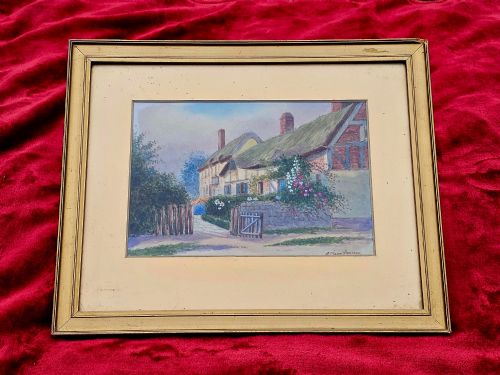
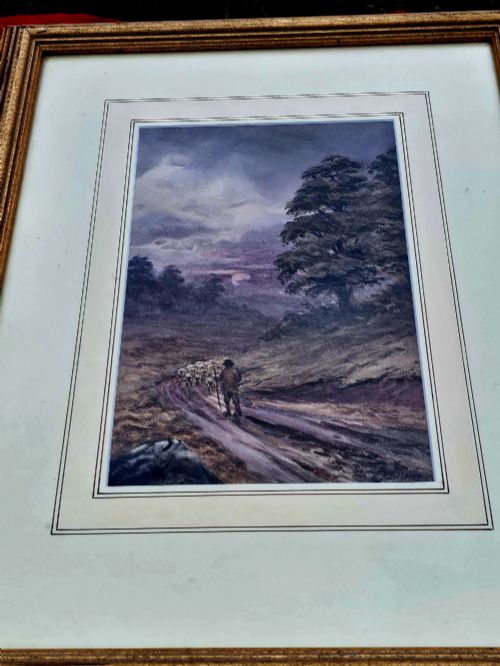
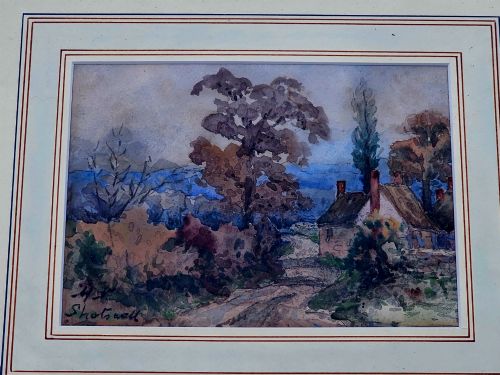
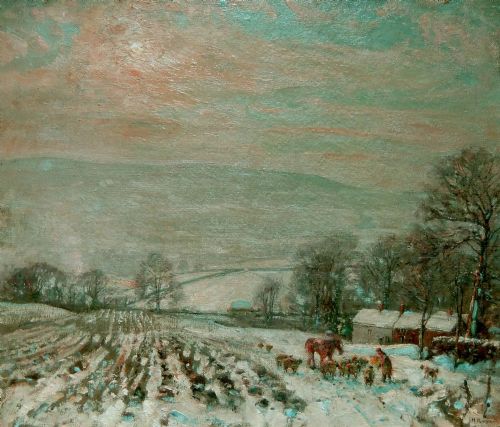
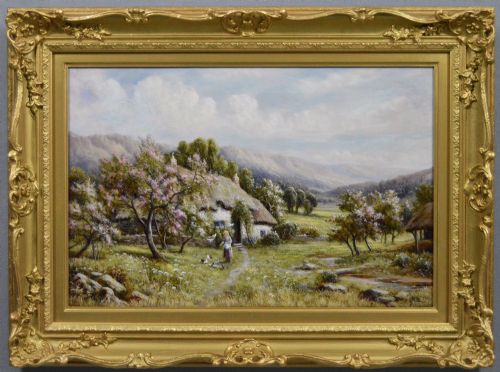
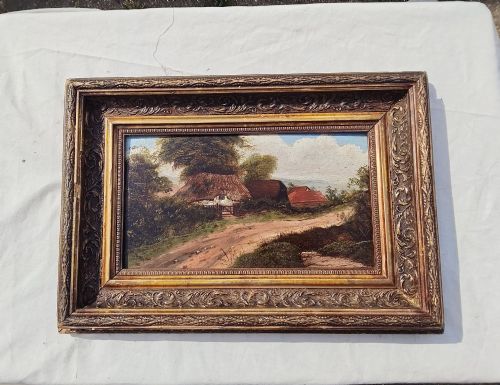
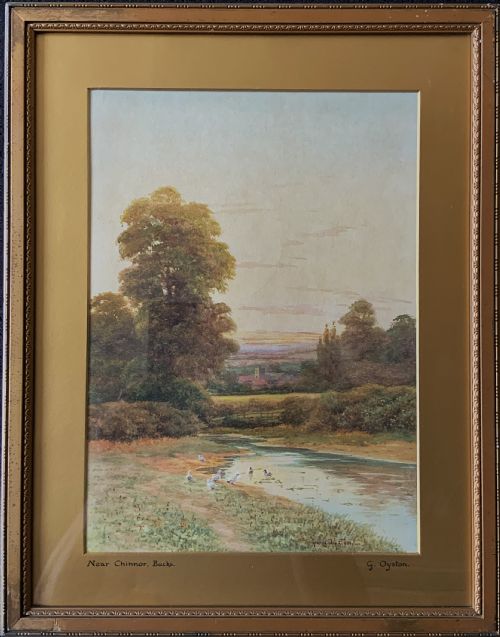
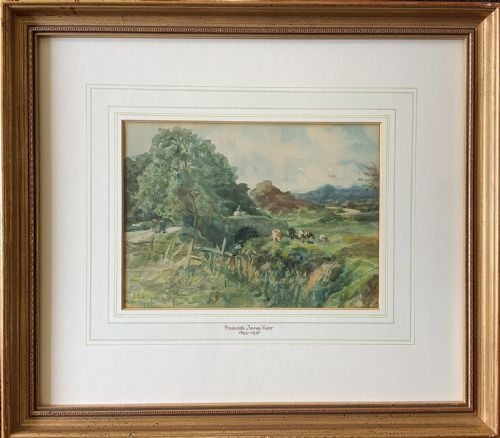
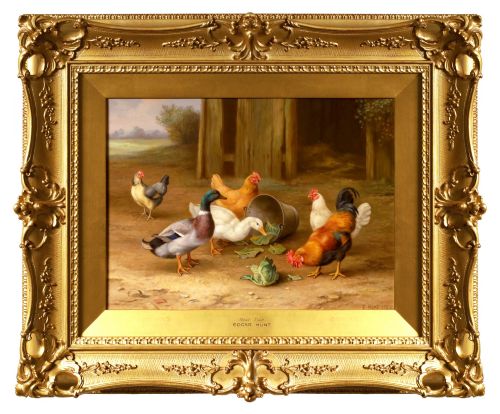
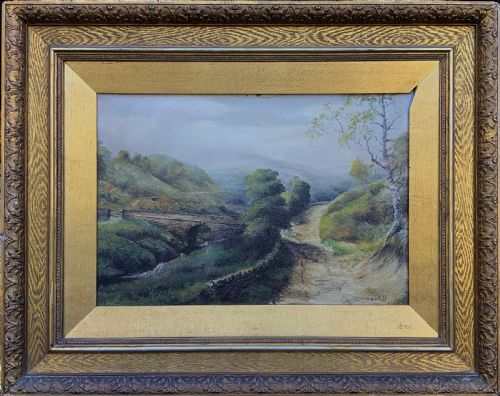
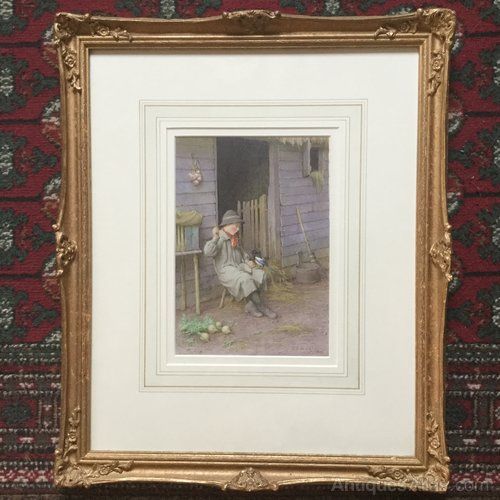
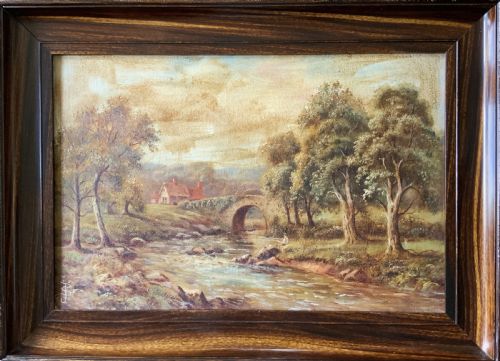
These edwardian rural painting works capture country life, farmyards and quiet fields through oil on canvas and delicate watercolour.
Edwardian Rural Painting
When searching for an edwardian rural painting, a buyer looks at pastoral scenes depicting cottages, livestock and agricultural labour across the British countryside. The pieces on this page span the late nineteenth century into the early decades of the twentieth century, with a strong representation of Edwardian and Victorian pastoral styles.
The subjects centre on everyday country occupations, including herding sheep, driving cattle, harvesting hay and figures beside streams or outside thatched cottages. Watercolours on paper and oil paintings on canvas or card are the primary forms encountered here, often preserved in original giltwood frames.
Materials and Technique
Artists of this period relied primarily on oil on canvas, oil on card, and watercolour pigment applied to paper. Canvas supports allowed for textured, painterly brushwork in larger oil landscapes, while watercolours offered a transparent, luminous medium suited to atmospheric rural views.
Framing played an integral role in presentation, with many works housed in traditional giltwood frames that complement the natural tones of the countryside scenes. Lithographs after original paintings also appear, demonstrating the reproduction methods used during the era.
Materials recorded across the inventory include oil on canvas, watercolour pigment, card, glass, and carved giltwood framing.
Factors of Quality
Quality in these works rests upon the artist's ability to handle light, atmosphere and natural perspective within the landscape. Stronger examples display confident brushwork and precise draughtsmanship, particularly in the rendering of farm animals, figures and vernacular architecture.
The distinction between standard decorative pieces and finer works often lies in the fidelity of the local colour and the preservation of the pigment. Original signed works by recognised regional painters command greater attention than unsigned student pieces or later prints.
A. Marie Parsons·EJ Letheren·Herbert Royle·Robert John Hammond·George Oyston·Frederick James Kerr·Edgar Hunt·Charles Edward Wilson·Sydney Yates Johnson·Owen Bowen·Edgar Woollatt·Oswald Garside·Henry Charles Fox·Cuthbert Crossley·James William Booth·Henry John Yeend King·William Greaves·Ernest Pile Bucknall·William Sydney Cooper·M. C. Hider·John Atkinson·Frederick James Knowles·Frederick W. Jackson·Linnie Watt·Ernest Higgins Rigg
The Edwardian Rural Painting Glossary
- Oil on Canvas
- A painting medium where pigment suspended in drying oil is applied to stretched woven fabric. This technique permits rich texture and deep colour saturation.
- Watercolour
- A painting method in which coloured pigments are suspended in a water-soluble vehicle on paper. It relies on the white of the paper to show through transparent washes.
- Giltwood
- Wood carved and coated with gold leaf or a gold-coloured metallic finish. It was commonly used for framing traditional paintings of this era.
- Genre Painting
- Depictions of aspects of everyday life by depicting ordinary people engaged in common activities. In rural scenes, this typically involves farm labour or village life.
Edwardian Rural Painting: Frequently Asked Questions
What subjects do these paintings show?
These works primarily depict rural British scenes such as farmyards, sheep grazing, cattle ploughing, and figures working in fields or near cottages. The compositions reflect traditional country life from the late Victorian and Edwardian eras.
Artists focused on capturing the seasonal changes, agricultural tasks, and natural landscapes of regions across Yorkshire, Wales, and the southern counties.
How should I care for a watercolour painting?
Watercolour paintings require protection from direct sunlight to prevent the pigments from fading over time. Keeping them in stable indoor humidity conditions preserves the paper support.
Displaying them behind glass with suitable mount board prevents the surface from touching the glazing and protects the delicate pigment.
Are these paintings original works?
The selection includes original oil paintings on canvas and card, alongside original hand-painted watercolours on paper. Each piece reflects the individual hand of the artist named in the description.
Lithographs after original paintings also appear, providing a record of popular imagery reproduced during the early twentieth century.
How do I identify an Edwardian painting?
Edwardian paintings often display a brighter palette and a freer application of paint compared to strict Victorian academic works, influenced by British Impressionism. The clothing of any figures, the architectural styles of cottages, and dated signatures help establish the period.
Framing styles and backing materials also offer physical clues to the date of execution.