


Edwardian Farmyard Scene
An edwardian farmyard scene captures rural life through pastoral oil paintings and watercolours that bring the charm of the countryside indoors.
Edwardian Farmyard Scene
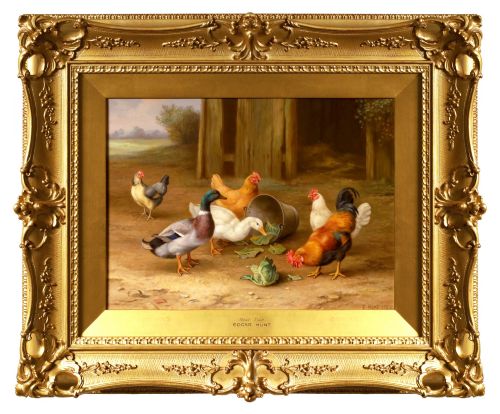
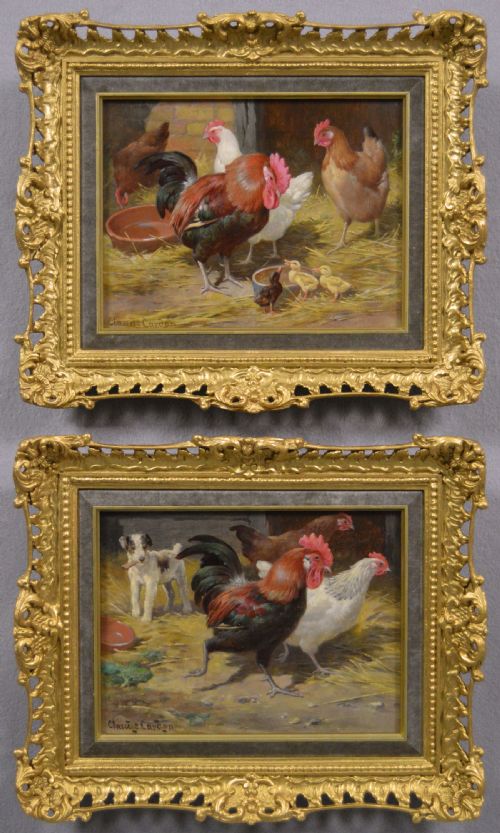
An edwardian farmyard scene depicts rural subjects such as chickens, calves, cows, and farmers engaged in daily country tasks. These works are predominantly found as oil paintings and watercolours spanning the late nineteenth and early twentieth centuries.
The aesthetic falls within British animalier, pastoral, and realism styles, often framed in giltwood or wood. Pieces vary from detailed oils on canvas to delicate paper watercolours and primitive folk art.
Collectors encounter works attributed to known British painters as well as period pieces reflecting Victorian and Edwardian rural traditions. The imagery focuses on domestic livestock and agrarian settings rather than grand landscapes.
How they were made
Artists utilised oil paint on canvas or watercolour on paper to capture these rustic subjects. The application ranges from precise brushwork in realism pieces to simpler forms in primitive folk art.
Frames are constructed from wood and giltwood, often complementing the traditional pastoral palette of the paintings. Glass is used to protect watercolour works on paper.
The artistic styles represented span British animalier, Victorian realism, Edwardian pastoral, and primitive folk art.
What varies in quality
Quality rests in the precision of the animal rendering and the atmospheric depth of the rural landscape. Finer works display careful handling of light and texture in fur, feathers, and rustic timber.
The strength of composition and the handling of the medium separate standard decorative pieces from accomplished fine art paintings by recognised practitioners.
Edgar Hunt·Claude Cardon·Percival Glenfern·B. Kaufmann·Joseph Kirkpatrick·John R. K. Duff·George Morland·Owen Bowen·Thomas Blinks
The Edwardian Farmyard Scene Glossary
- Animalier
- A style focusing on the realistic depiction of animals. This term often applies to paintings featuring farm livestock, poultry, and working dogs.
- Pastoral
- Art that portrays rural life in a romanticised or peaceful manner. These scenes typically show cottages, barns, and farm animals in quiet countryside settings.
- Oil on Canvas
- A painting technique using pigments bound in a drying oil applied to stretched canvas. It is the primary medium for durable, textured fine art works.
- Watercolour Painting
- A method where paints are made of pigments suspended in a water-based solution on paper. This medium creates translucent effects characteristic of period works on paper.
- Giltwood
- Wood that has been treated with gold leaf or a gold-coloured metallic finish. It is commonly found on the frames housing these traditional paintings.
Edwardian Farmyard Scene: Frequently Asked Questions
What subjects appear in these scenes?
These works typically feature farm animals including chickens, cockerels, chicks, calves, cows, pigs, and horses. Figures such as farmers and women feeding livestock also frequently populate the compositions.
Background elements often include rustic cottages, barns, and rural street scenes set within British pastoral landscapes.
How do I date an edwardian farmyard scene?
Dating relies on stylistic markers, artist signatures, and framing materials associated with the Victorian and Edwardian eras. Pieces span from the late nineteenth century through to the early twentieth century.
Inscriptions on the reverse or paper labels often provide specific dates or attribution to artists active during these periods.
Are these works painted on canvas or paper?
The listings include both oil paintings executed on canvas and watercolours executed on paper. Each medium offers a distinct visual texture suited to the domestic rural subject matter.
Watercolour works are typically protected behind glass within wooden or giltwood frames.
How should I hang these paintings at home?
These pastoral works suit traditional interiors, studies, or dining rooms where their rustic subject matter creates a warm atmosphere. They pair well with natural wood finishes and period decor.
Ensure works on paper behind glass are placed away from direct sunlight to protect the watercolours from fading.