

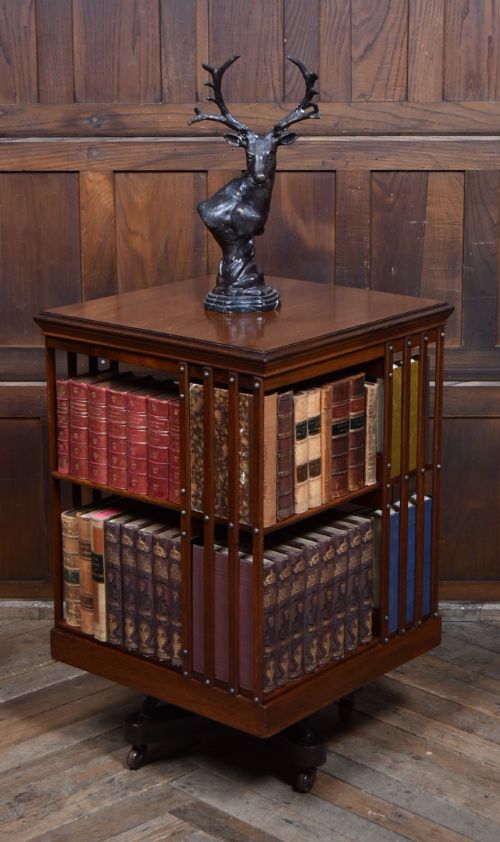
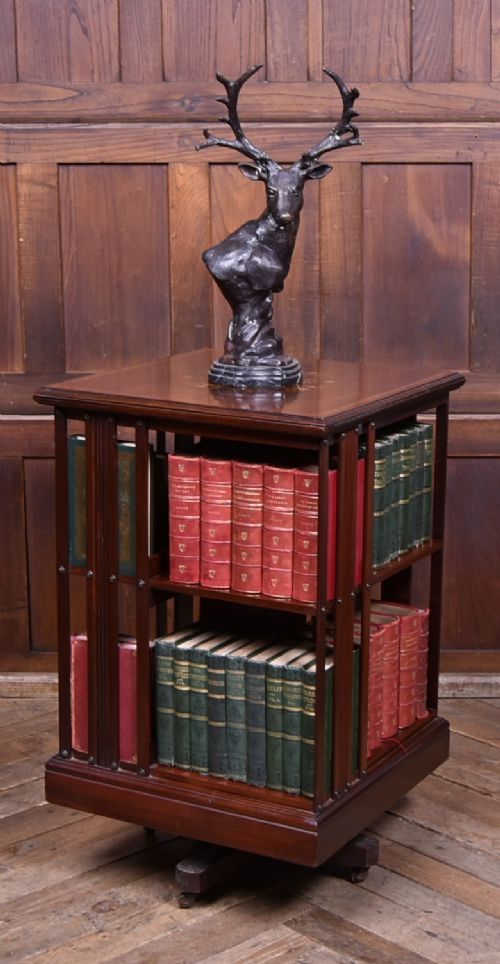
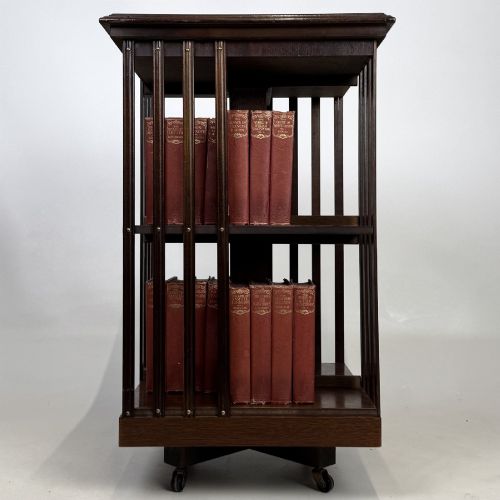
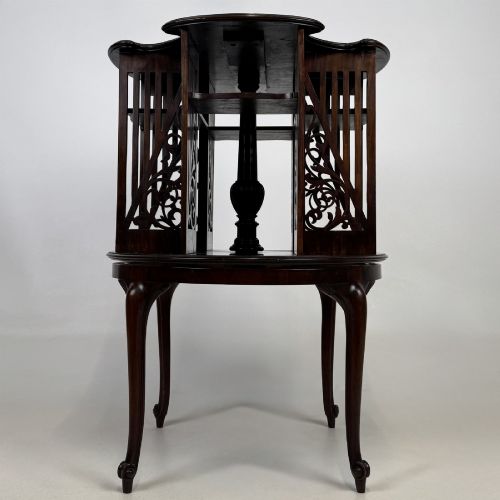
Edwardian Rotating Book Stand
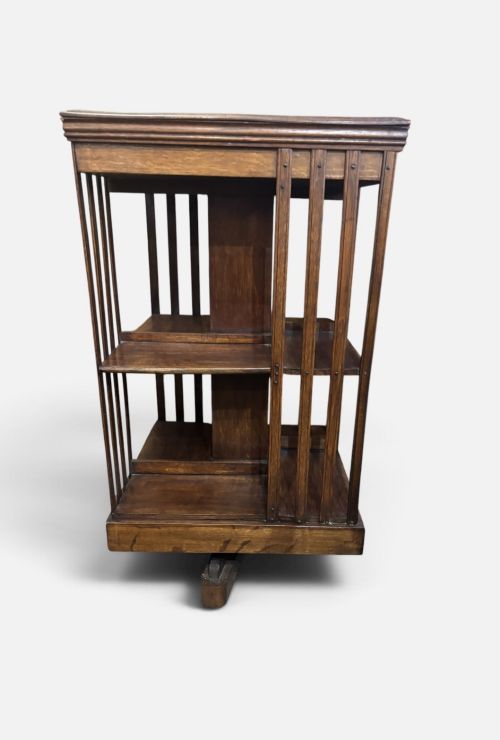
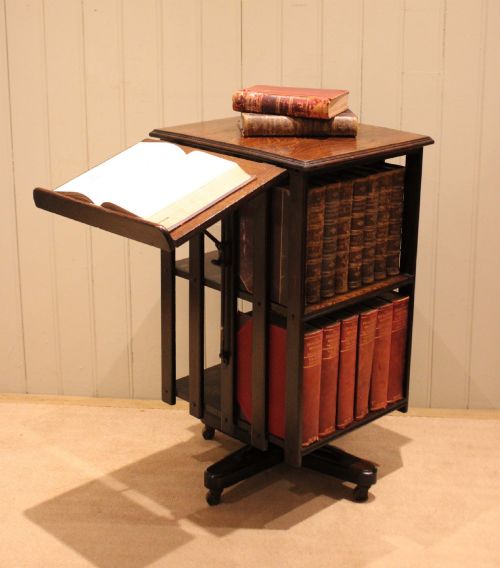
An edwardian rotating book stand brings practical library storage to a study, offering smooth turning access to volumes from an armchair.
Edwardian Rotating Book Stand
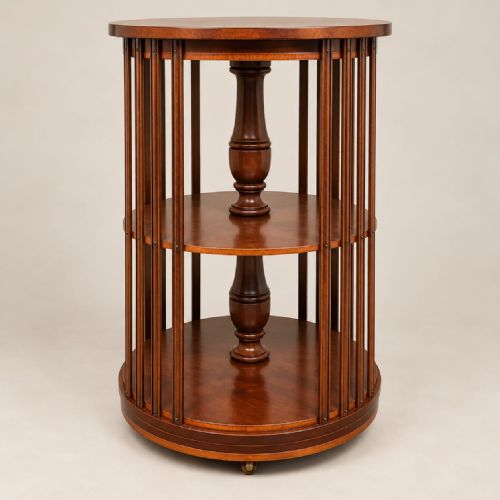
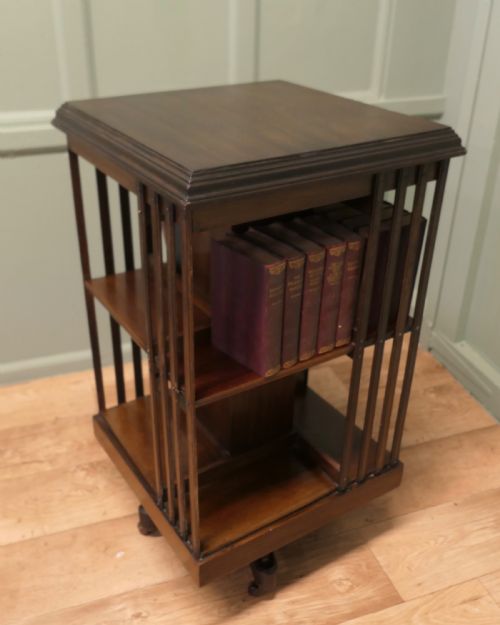
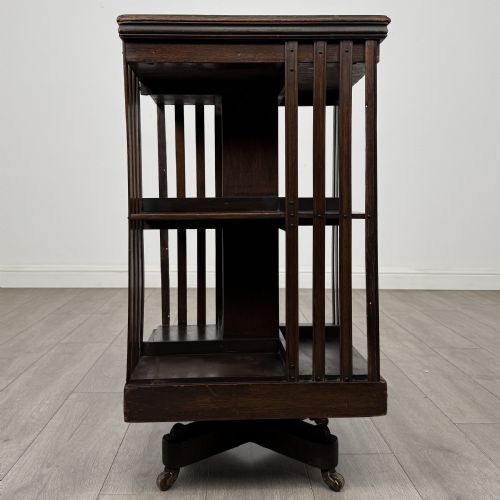
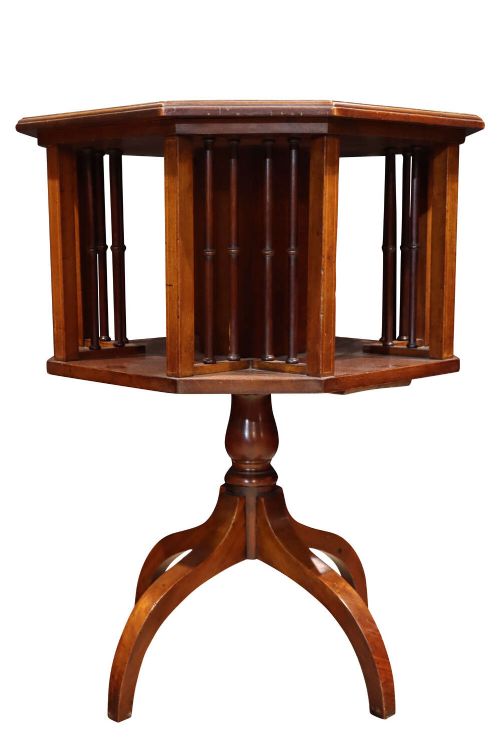
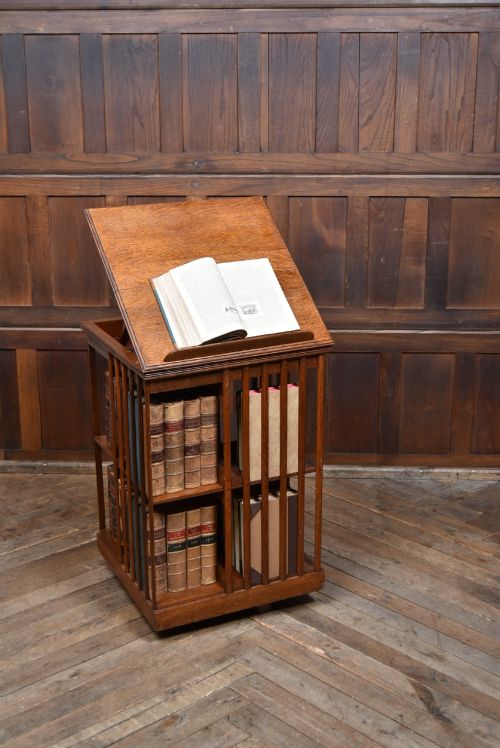
An edwardian rotating book stand provides accessible shelving that turns smoothly on a central pivot mechanism. These pieces range from compact tabletop versions to tall floor-standing library bookcases designed to hold numerous volumes.
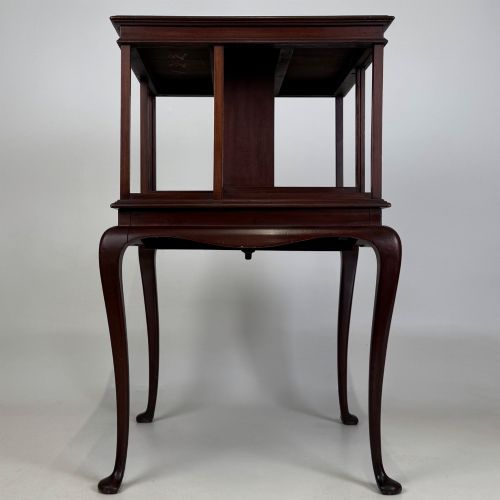
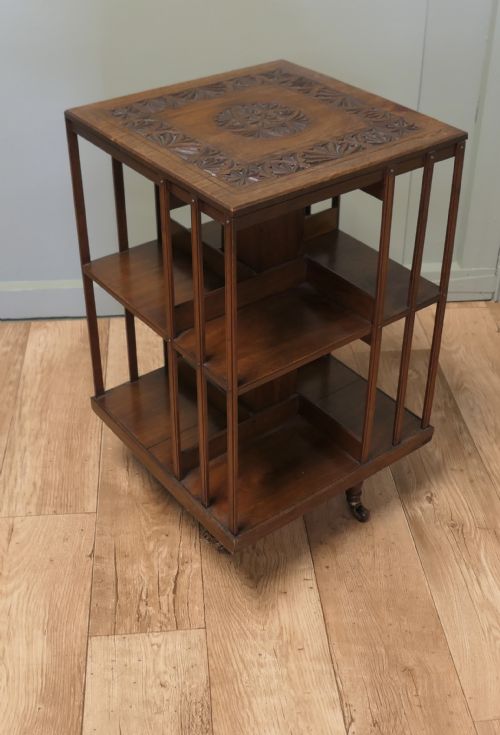
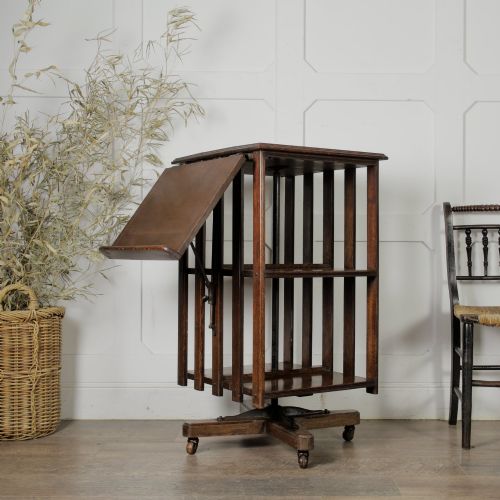
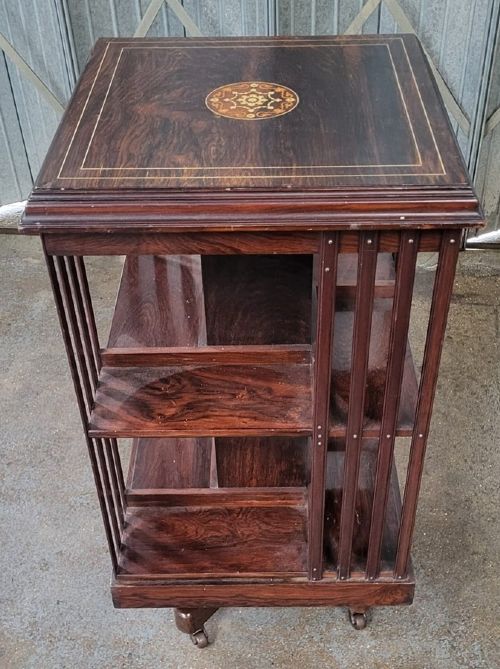
Mahogany and oak form the foundation of these pieces, appearing frequently with satinwood inlay or slatted sides. The aesthetic borrows from Edwardian, Victorian, Art Nouveau, and Arts and Crafts traditions, bringing functional utility to domestic spaces.
Materials and construction
Cabinet makers utilised dense hardwoods like mahogany, oak, and walnut to build the tiers and structural frames. Inlaid satinwood and brass details frequently decorate the top surfaces and borders of finer examples.
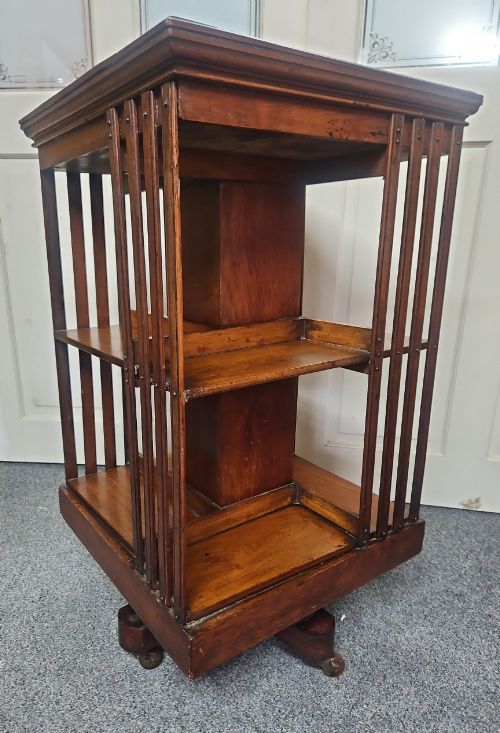
Internal rotating mechanisms often incorporate iron and cast iron components to support the weight of heavy books while allowing effortless rotation. Slatted or panelled sides give structural rigidity to the revolving tiers without adding unnecessary bulk.
Edwardian Rotating Book Stand Retail Price Guide 2026
Typical asking prices for edwardian rotating book stand among the pieces listed under this phrase on Sellingantiques today, from the lower quarter to the upper quarter. They describe what is for sale here now, not the wider market.
Listings show these pieces executed in mahogany, oak, and walnut, spanning periods from the late nineteenth century through the interwar years.
What separates examples
The smoothness of the internal turning mechanism dictates the mechanical success of the piece. Fine examples rotate silently and evenly without listing to one side or binding against the base.
Timber selection and decorative ambition create visual distinction. Plain oak and mahogany versions offer sturdy utility, whilst flame mahogany, intricate satinwood inlay, and carved elements reflect more elaborate workshop production.
The Edwardian Rotating Book Stand Glossary
- Revolving bookcase
- A freestanding or tabletop piece featuring shelves arranged around a central axis that turns on a pivot. This design allows users to browse a collection of books from a single seated position.
- Satinwood inlay
- Decorative woodwork where contrasting light timber is fitted flush into the primary surface. This technique creates geometric or floral patterns typical of Edwardian cabinet work.
- Slatted sides
- Vertical wooden bars forming the outer walls of the book compartments. This construction method reduces weight while keeping volumes securely in place.
- Cabriole legs
- S-shaped furniture supports curving outward at the knee and tapering inward toward the foot. They appear on select floor-standing models.
Edwardian Rotating Book Stand: Frequently Asked Questions
Where should I place a rotating bookcase?
These pieces function well beside a reading chair or beside a desk where immediate access to reference books matters.
Ensure adequate clearance around the circumference so the shelves turn freely without striking nearby furniture.
How do I maintain the turning mechanism?
Dust the pivot area regularly and apply a suitable lubricant to metal bearings if rotation becomes stiff over time.
Avoid overloading individual tiers with excessive weight to keep the internal pivot aligned properly.
What is the difference between tabletop and floor models?
Tabletop versions sit on desks or side tables to hold smaller selections of daily reading material.
Floor-standing variants provide much larger storage capacity across multiple tiers for substantial book collections.
How can I identify the period of the wood?
Edwardian and late Victorian pieces show characteristic timber patination, traditional joinery methods, and specific stylistic traits like inlaid satinwood.
Examining the internal construction and brass hardware helps confirm the date of manufacture.