


Edwardian Powder Jar
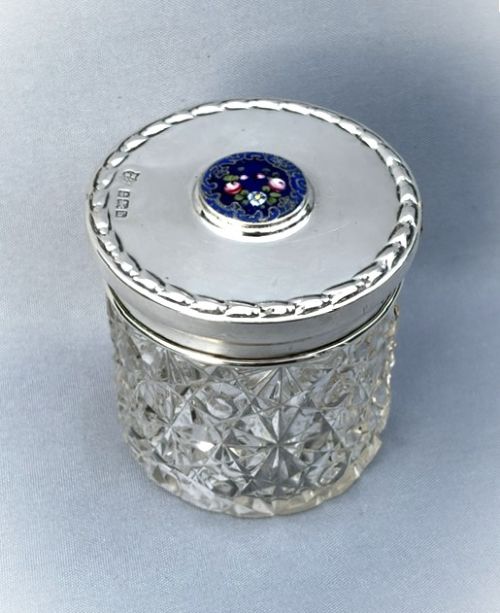
These edwardian powder jar items are dressing table vessels designed to hold cosmetics, uniting heavy cut glass and sterling silver lids.
Edwardian Powder Jar
An edwardian powder jar sits upon the dressing table, serving as a lidded container for vanity preparations, hairpins or cosmetics. The pieces seen here span the Edwardian era alongside adjacent periods such as George V, Art Nouveau and Art Deco, stretching from 1900 through to 1930.
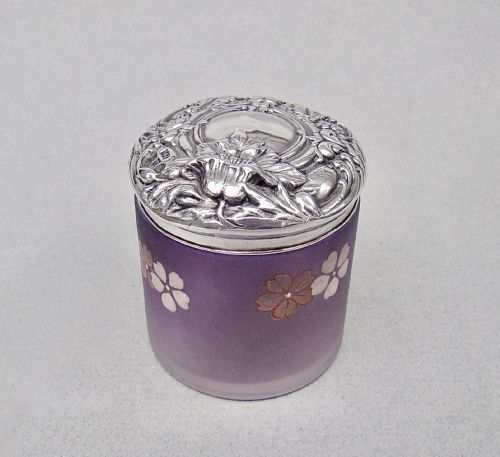
Vessels take forms such as trinket boxes, vanity jars, dressing table boxes, lidded bowls and rouge pots. Alongside standard glass containers, examples emerge in cranberry glass, satin glass, frosted glass, amethyst glass and Limoges ceramic.
The version most commonly met pairs a faceted cut glass or crystal base with a fitted silver lid. These containers reflect the domestic dressing habits of the early twentieth century, combining utility with decorative display.
How They Were Made
Bases are formed from heavy glass, crystal or ceramic, often finished with deep cut patterns or moulded overlays. Glass is blown or pressed into shape before being polished, while ceramic bodies undergo traditional firing and glazing.
Listings for this phrase include pieces from the Edwardian period, George V, Art Nouveau and Art Deco styles, spanning glass, silver, enamel, tortoiseshell and ceramic.
What Varies in Quality
Quality rests upon the weight and clarity of the glass base, where deep, crisp cutting separates superior crystal from simpler moulded vessels. The thickness and purity of the silver mountings also dictate the substance of the piece.
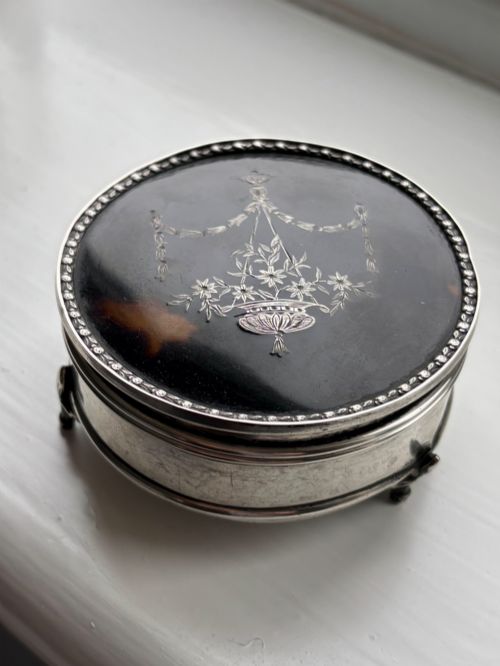
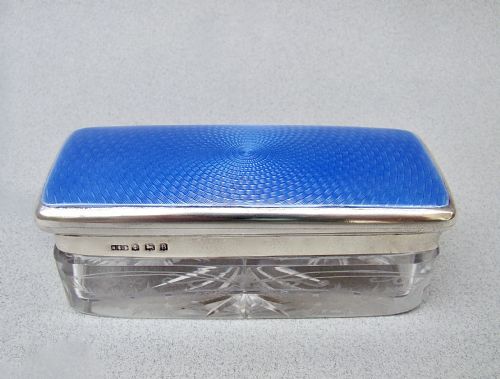
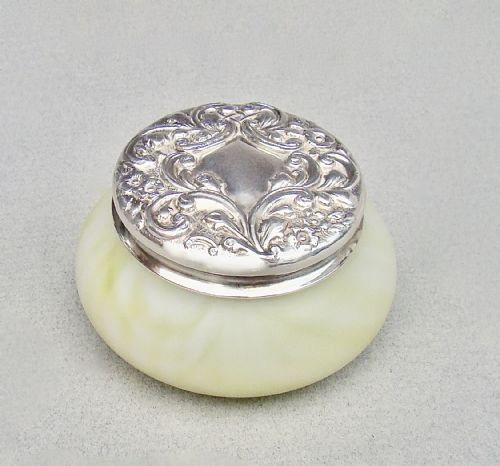
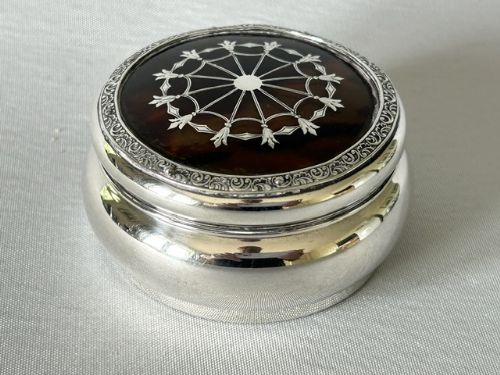
Artistic execution on the lids defines the upper tier, seen in detailed repoussé work, fine pique inlay or evenly applied guilloché enamel. Maker attribution adds distinction, separating standard domestic wares from pieces bearing the marks of established silversmiths.
Ollivant and Botsford·Henry Clifford Davis·Goldsmiths and Silversmiths Company·A. Bromet and Co·Asprey and Co
The Edwardian Powder Jar Glossary
- Guilloché enamel
- Enamel applied over a metal surface that has been machine-engraved with an intricate geometric pattern. This technique allows light to reflect through the translucent colour.
- Repoussé
- A metalworking technique where the silversmith hammers the metal from the reverse side to form a raised design in relief. Details are then refined from the front.
- Pique work
- The delicate insertion of tiny gold or silver pins into a tortoiseshell base to form decorative motifs. It appears frequently on luxury vanity items of this period.
- Satin glass
- Glass treated with an acid dip to produce a velvety, frosted surface finish rather than a bright shine. It diffuses light softly across dressing table pieces.
- Cranberry glass
- A rich red-pink glass created by adding gold chloride to the molten batch. The depth of the colour varies according to the specific chemical recipe used.
Edwardian Powder Jar: Frequently Asked Questions
What were these jars used for?
These vessels held loose face powder, rouge, pins and small trinkets on the Edwardian dressing table. They kept cosmetics tidy and protected vanity items from dust.
Their presence added a decorative element to the bedroom, matching other silver and glass brushes, mirrors and trays.
How do I tell an Edwardian jar from an Art Deco one?
Edwardian pieces often feature organic Art Nouveau motifs, floral repoussé work or soft satin glass. They tend to lean towards curving lines and traditional ornamentation.
Art Deco examples, dating into the 1920s and 1930s, display geometric guilloché enamel, clean lines and heavier reliance on coloured glass or ceramics like Limoges.
Are the lids always made of silver?
Many lids consist of sterling silver, often hallmarked with town marks and date letters. However, some pieces feature plated metals or incorporate tortoiseshell and enamel atop a silver frame.
The base material provides the weight, while the lid carries the decorative identity and hallmarks that help date the object.
How should I clean the glass and silver?
Glass bases tolerate warm soapy water, but silver lids require gentle treatment to preserve the metal and any enamel or tortoiseshell inserts. Avoid submerging lidded parts where organic materials might be glued.
Soft cloths prevent scratching on polished crystal surfaces and maintain the finish of antique metalwork.