




Edwardian Powder Bowl
These edwardian powder bowl pieces combine cut crystal, silver and enamel into neat dressing table containers made to hold vanity powders.
Edwardian Powder Bowl
When you search for an edwardian powder bowl, you are looking at small lidded vessels designed for the dressing table, primarily used to hold cosmetics, trinkets or vanity powders. The selection spans the Edwardian period through to the Art Deco era, encompassing pieces made around nineteen hundred up to nineteen thirty.
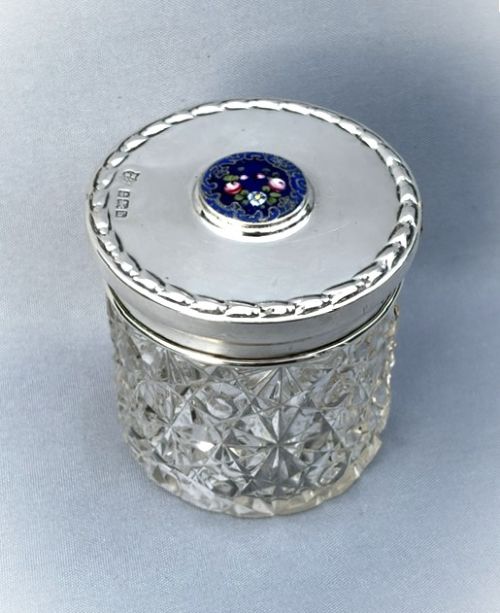
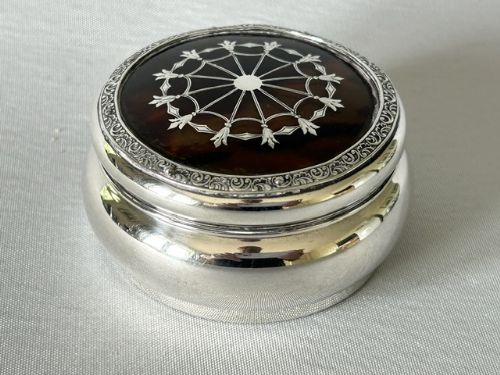
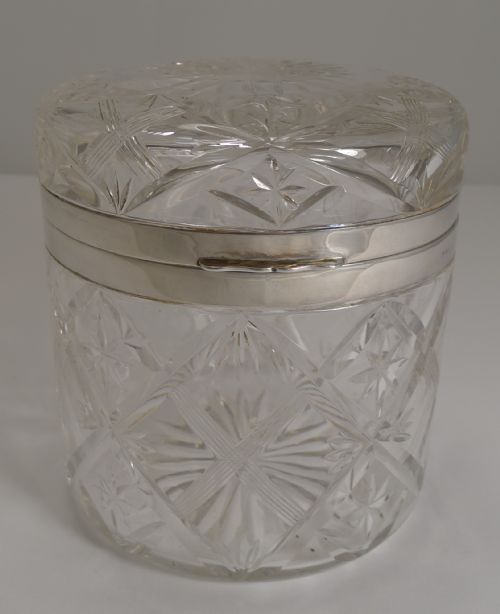
The most common form you will meet on this page is a lidded container featuring a cut crystal or cut glass base paired with a hallmarked sterling silver lid. Many of these lids incorporate coloured enamel, tortoiseshell or pique work decoration, reflecting the refined tastes of the early twentieth century.
Object types frequently overlap under this heading, including vanity jars, trinket boxes and lidded bowls. Origins range from English workshops in Birmingham and London to Scottish makers and French ceramic houses.
Materials and construction
The heavy glass and crystal bases are formed through deep cutting and moulding, producing sharp facets that catch the light. Cranberry glass and ceramic alternatives also appear, offering varied textures alongside the standard clear crystal.
Lids are fashioned from sterling silver, often bearing city assay office hallmarks for Birmingham, Edinburgh or London. These metal mounts are frequently combined with organic materials such as tortoiseshell or finished with translucent enamel coatings.
Listings feature items spanning the Edwardian period through to the Art Deco era, utilising sterling silver, cranberry glass, tortoiseshell and cut crystal.
Assessing quality and finish
Quality rests upon the depth and precision of the glass cutting and the structural integrity of the silver mounts. Finer examples display crisp, unblemished facets on the crystal and securely fitted lids that align neatly with the glass rim.
The presence of undamaged enamel work, intricate pique inlay on tortoiseshell, or clear assay hallmarks elevates a piece. Lighter, thinner glass and worn or dented silver indicate lower tiers of production.
Asprey & Co.·Henry Williamson Ltd
The Edwardian Powder Bowl Glossary
- Sterling Silver
- A silver alloy containing ninety-two point five percent pure silver by mass, standard for British hallmarked items. It provides the durable framework for many lids and mounts.
- Pique Work
- The technique of embedding tiny gold or silver pins into tortoiseshell to form geometric or floral patterns. This delicate inlay work is typically found on dressing table box lids.
- Cranberry Glass
- A rich red-pink glass created by adding gold chloride to the molten batch. It is blown and moulded into jars and bowls popular in the early twentieth century.
- Assay Mark
- A stamp indicating the purity of the precious metal, the assay office town, and the date letter. These marks help verify the exact year and origin of silver components.
- Cut Crystal
- Glass containing lead oxide that increases its weight, brilliance, and clarity. The deep incisions create sparkling geometric patterns across the base of vanity jars.
Edwardian Powder Bowl: Frequently Asked Questions
What were powder bowls used for?
These lidded vessels sat upon dressing tables to hold loose face powder, dusting powders or scented cosmetic preparations during the Edwardian and Art Deco periods. Their snug silver lids kept the contents dry and clean.
They also served as tidy containers for small personal trinkets, hairpins and jewellery. The decorative nature of the glass and silver meant they remained on display rather than stored away.
How do I date an edwardian powder bowl?
Dating relies heavily on reading the silver hallmarks stamped on the metal lid or collar, which indicate the assay office and specific year of testing. Stylistic clues such as floral Edwardian engraving or geometric Art Deco enamel also point to the correct decade.
Comparing the depth of the glass cutting and the materials used, such as tortoiseshell or cranberry glass, helps narrow down whether a piece originates from nineteen hundred or nineteen thirty.
Are the lids and bases always original together?
Most pieces retain their matching components, where the silver collar fits the glass rim precisely and the hallmarks correspond to the expected period. Careful manufacture ensured each lid was custom-fitted to its specific glass base.
Signs of originality include consistent wear patterns across both metal and glass, and a snug, balanced fit when the lid rests on the bowl.
How should I clean silver and crystal?
Silver components require gentle polishing with a non-abrasive cloth to maintain their shine without wearing away fine hallmarks or delicate pique work. Avoid getting liquid polish onto adjacent tortoiseshell or enamel.
Glass bases can be washed in warm soapy water using a soft brush to clear dust from deep cut facets. Thorough drying prevents moisture from trapping under silver mounts.