


Edwardian Platinum Diamond Necklace
An edwardian platinum diamond necklace brings delicate lace-like metalwork and brilliant stones together from the early twentieth century.
Edwardian Platinum Diamond Necklace
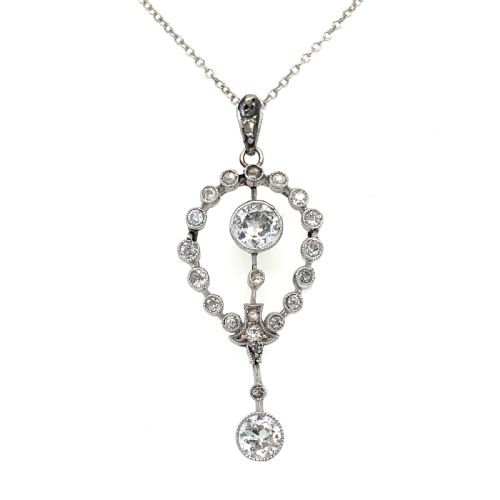
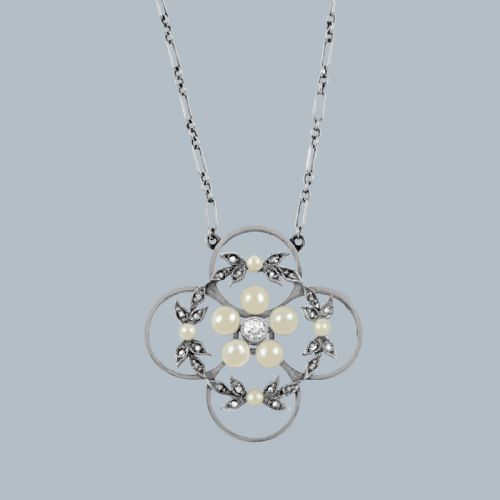
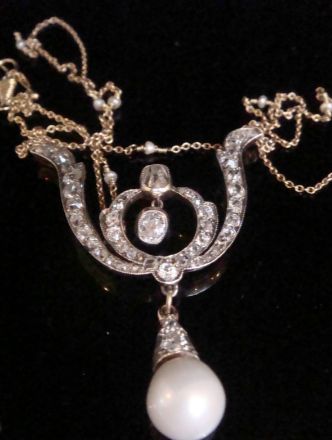
An edwardian platinum diamond necklace represents a period of refined craftsmanship, combining precious metals with fine stones in delicate drop pendants, lavalieres, and fringe designs. You will most frequently encounter delicate platinum-set pendants suspended from fine chains, often incorporating pearls, sapphires, or aquamarines alongside central diamonds.
The material palette of these pieces relies heavily on the introduction of platinum for its strength, which allowed jewellers to create ultra-fine wirework and knife-edge settings that looked like fabric. Alongside platinum, pieces incorporate gold in various carats, creating two-tone structures where yellow gold backs settings and platinum faces the stones.
Origins span the Edwardian era through to the early Art Deco period, capturing a stylistic transition from flowing organic garland motifs to structured geometric lines. Examples range from simple pendant drops to elaborate multi-stone necklaces accompanied by original fitted boxes.
How they were made
Makers utilised platinum for its unique structural resilience, enabling the construction of pierced openwork galleries and millegrain edges that secured small diamonds without heavy bezels. This metalworking technique required expert hand-piercing to form symmetrical scrolls, bows, and floral garlands.
Gems were cut by hand, predominantly using old European cuts and single cuts that displayed broader facets and softer light dispersion than modern brilliant cuts. Stones were then bead-set into the platinum face, bordered by tiny raised metal beads known as millegrain.
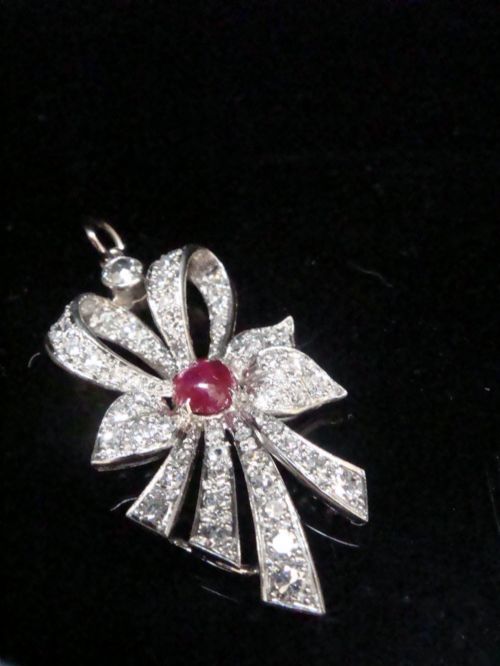
Object forms span simple pendant necklaces, multi-stone fringe necklaces, convertible brooch-pendants, and functional lorgnettes.
What varies in quality
The refinement of the piercing and the crispness of the millegrain work separate standard production from master craftsmanship. Superior examples display perfectly uniform bead borders and hand-pierced motifs that show no trace of file marks under magnification.
Stone selection and matching dictate the upper tier of these pieces, particularly when natural saltwater pearls, unheated sapphires, or large clean aquamarines accompany the primary diamonds. The integration of convertible elements, such as detachable bales or brooches, also indicates higher manufacturing ambition.
Eduard Foehr·Tiffany and Co
The Edwardian Platinum Diamond Necklace Glossary
- Millegrain
- A decorative technique involving a row of tiny, raised metal beads along the edge of a setting. This softens the transition between metal and stone.
- Lavaliere
- A pendant necklace featuring a central suspended drop, popular during the Edwardian and Art Nouveau periods. These often incorporate cascading stones.
- Negligee pendant
- A necklace design featuring two unequal drops suspended from a central motif. It gained popularity during the early twentieth century.
- Old European cut
- A hand-faceted diamond shape with a small table, high crown, and large open culet. It characterises antique stones from this era.
- Fringe necklace
- A necklace style where multiple vertical drops or pendants hang closely along the front curve of the chain. These create a dynamic line of stones.
Edwardian Platinum Diamond Necklace: Frequently Asked Questions
How do I identify an Edwardian platinum diamond necklace?
Look for platinum-topped gold construction, millegrain borders, and delicate garland motifs like bows, ribbons, and flowers. These stylistic markers distinguish early twentieth-century pieces from later jewellery.
Examine the chain and bale for period-correct construction methods, such as hand-formed links and integrated box clasps. Many pieces also retain original fitted retail boxes.
Can I wear an antique necklace every day?
While platinum is exceptionally durable, the delicate wirework and fine chains require gentle handling during daily wear. Storing the piece flat in its original box prevents accidental bending of the openwork galleries.
Avoid exposing natural pearls and softer coloured gemstones like aquamarines or opals to harsh chemicals, perfumes, or ultrasonic cleaners. Professional inspection of the prongs ensures stones remain secure.
What is the difference between Edwardian and Art Deco necklaces?
Edwardian designs lean towards organic, flowing motifs, floral garlands, and lace-like openwork settings. They emphasise feminine elegance and curved platinum scrollwork.
Art Deco pieces introduce rigid geometric lines, symmetry, and strong colour contrasts using rubies, emeralds or sapphires alongside diamonds. This shift reflects the design trends of the nineteen-twenties.
Are original boxes important for these necklaces?
Original fitted boxes provide historical context and often bear the stamp of the original retailer or maker. They offer secure storage specifically shaped for the pendant's dimensions.
Boxes add provenance and collectibility to the piece, though necklaces without boxes remain equally wearable and authentic.