




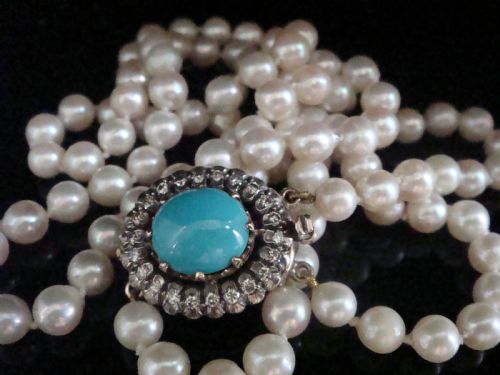

Edwardian Diamond Choker
An edwardian diamond choker rests high on the neck with delicate pearls and platinum work, capturing the brilliant grace of early twentieth-century design.
Edwardian Diamond Choker
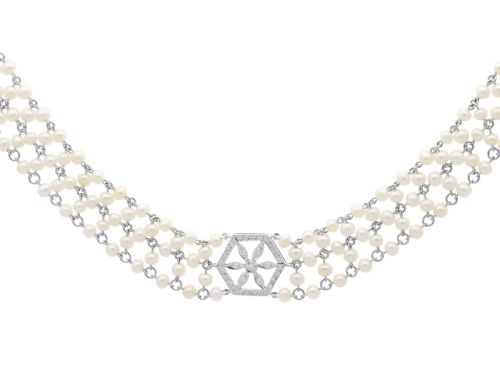
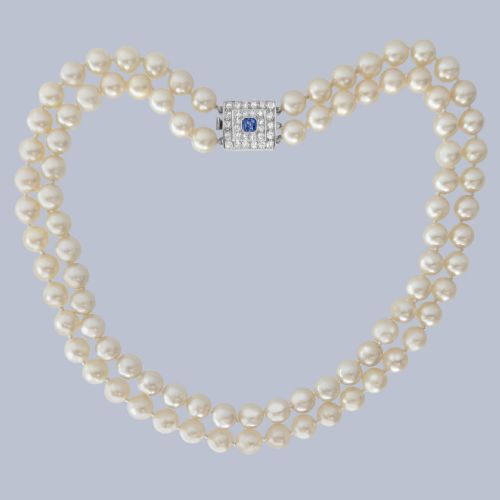
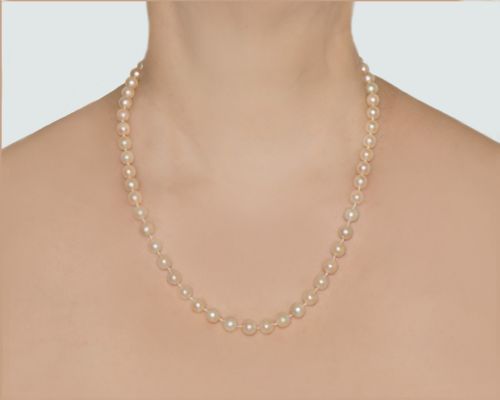
An edwardian diamond choker sits close against the throat, combining lustrous pearl strands with intricate platinum and gold mountings. These necklaces draw the eye upward and frame the collarbone with refined elegance.
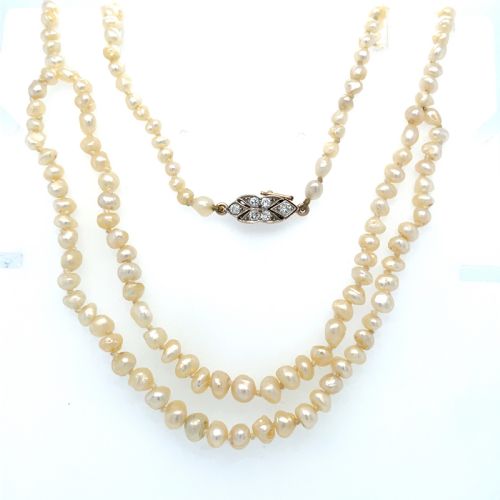
Most examples found here span the Edwardian era into the nineteen-twenties and nineteen-thirties, incorporating multi-strand pearls secured by diamond-set clasps. Many pieces feature floral designs, sapphires, rubies, or turquoise alongside the central diamonds.
The materials range from single strands of natural saltwater pearls to triple-row chokers backed by silk. Jewelers of the period favored platinum for its strength, allowing for lace-like metalwork that holds bright old-cut diamonds securely.
Factors determining quality
The distinction between pieces rests upon the origin and lustre of the pearls, particularly certified natural saltwater varieties versus cultured alternatives. Uniformity in pearl size and matching orient elevate the overall harmony of a choker.
Stone selection dictates the brilliance of the piece, with higher quality chokers featuring well-matched old-cut diamonds and cleanly set secondary gems like sapphires or rubies. Metalwork complexity also plays a role, as finely pierced platinum mounts demand exceptional bench skill.
Original condition and the presence of certified gem lab reports indicate how well a piece has survived and retained its integrity over time.
Listings feature pearls paired with platinum and gold, spanning periods from Georgian through Edwardian to Art Deco.
The Edwardian Diamond Choker Glossary
- Old-cut diamond
- A diamond cut before the modern brilliant standard, typically featuring a smaller table, higher crown, and a noticeable open culet. These stones display a softer, candlelit sparkle under evening illumination.
- Saltwater pearl
- A pearl formed naturally or cultured in marine molluscs rather than freshwater rivers. They possess a distinctive deep orient and smooth nacre.
- Platinum
- A dense, white precious metal utilised extensively during the Edwardian period for its strength. It permits ultra-fine claw settings that maximise light entry into diamonds.
- Clasp
- The mechanical closure of a necklace, which in these pieces often doubles as a decorative focal point set with diamonds and coloured stones. It is typically worn at the side or back of the neck.
- Choker
- A short necklace style designed to fit snugly around the neck. Historical examples frequently employ multiple pearl strands to achieve width.
Edwardian Diamond Choker: Frequently Asked Questions
Are these pearls natural or cultured?
The inventory includes both natural saltwater pearls and cultured pearls, often accompanied by gem lab certifications. Natural saltwater pearls formed without human intervention are particularly prized by collectors.
Examination under magnification or specialised testing helps determine whether pearls grew naturally in the sea or were farm-cultured.
How do I clean an antique pearl choker?
Pearls require gentle care because organic nacre and silk threads are sensitive to chemicals, perfumes, and ultrasonic cleaning. Wipe them gently with a soft, damp cloth after wearing.
Store the necklace flat in a lined box to prevent the silk cord from stretching and to protect the platinum and diamond clasp from scratching.
How do I distinguish Edwardian pieces from Art Deco ones?
Edwardian jewellery relies on organic motifs, floral garlands, and lace-like platinum work that creates an airy, romantic aesthetic. Pearls and soft curves dominate these designs.
Art Deco pieces transition into geometric rigour, featuring sharp lines, symmetry, and bolder colour contrasts through calibrated sapphires or rubies.