
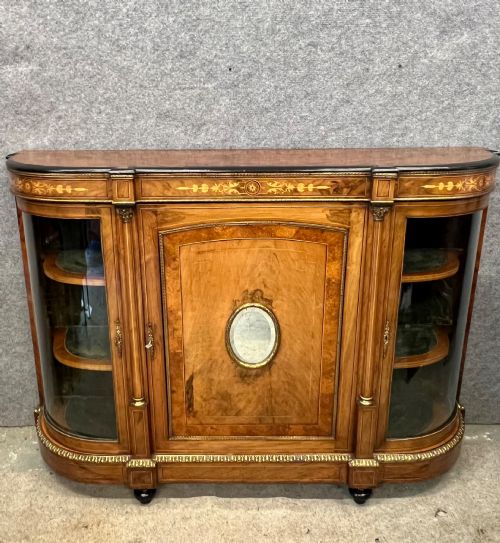


Edwardian Pier Cabinet
An Edwardian pier cabinet is a slender display piece built for narrow wall spaces, offering glass-fronted storage for cherished items.
Edwardian Pier Cabinet
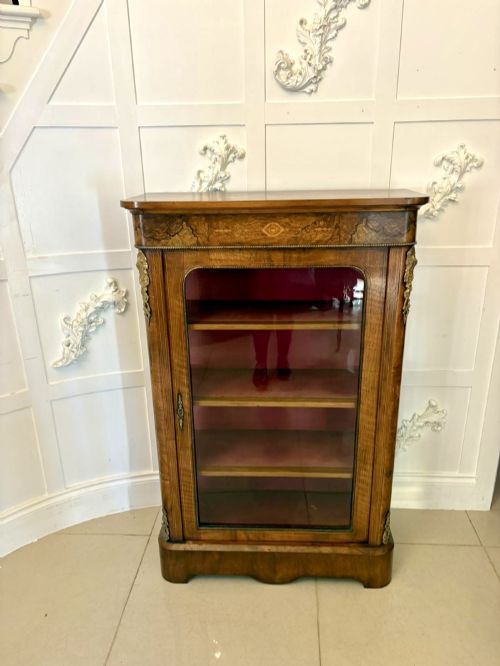
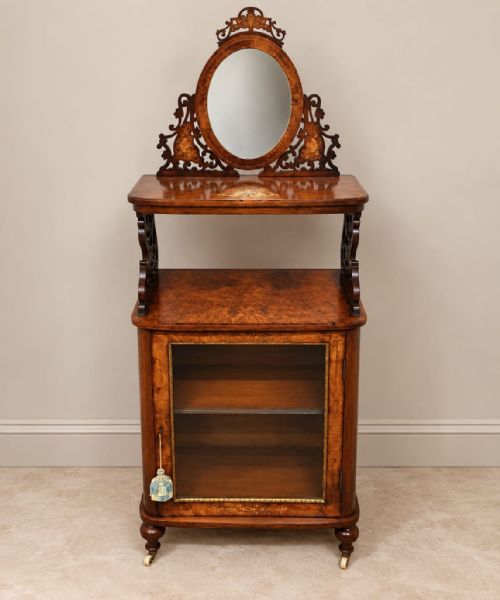
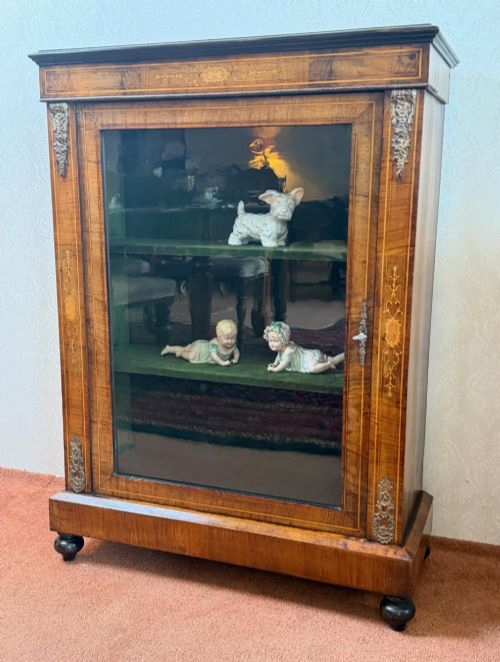
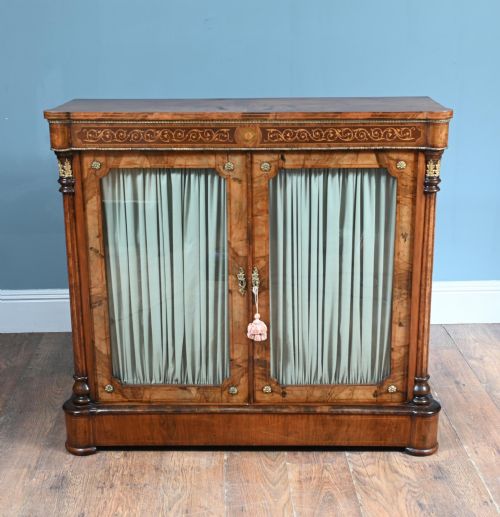
An edwardian pier cabinet is a narrow display piece originally designed to fit the wall space between tall windows. The pieces seen here span the Victorian and Edwardian eras, incorporating related forms such as side cabinets, credenzas, and glazed bookcases.
The versions most commonly met on this page are tall, single-door display units made to showcase ceramics and books. They utilise a slender footprint that suits modern rooms requiring vertical storage without heavy floor occupation.
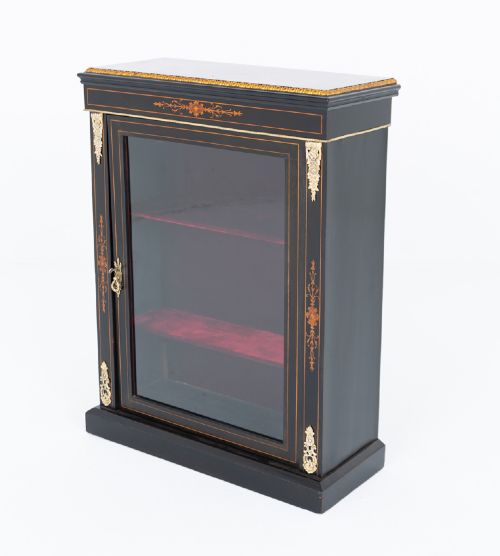
Makers drew on diverse revival styles including Louis XVI, Adam, and Neoclassical vocabularies. This mix provides buyers with options ranging from simple ebonised timber finishes to elaborate inlaid marquetry.
Materials and construction
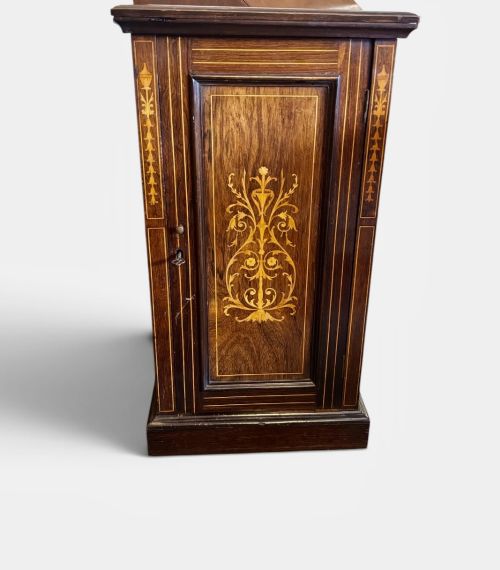
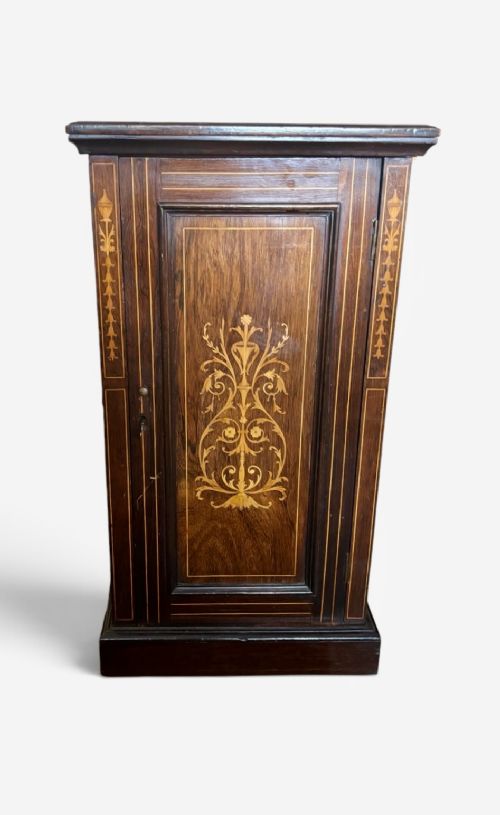
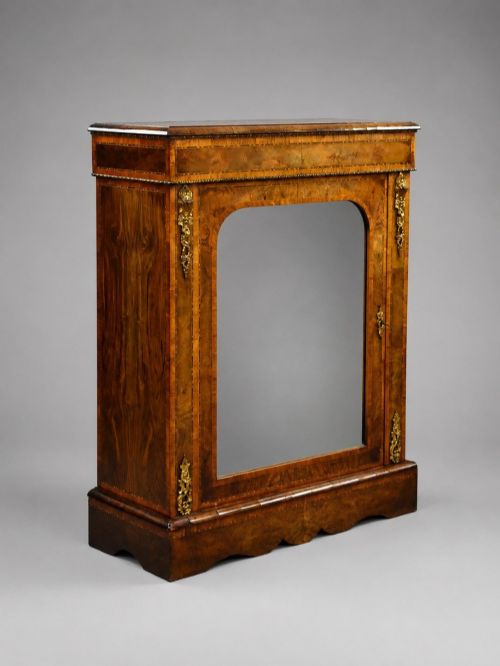
Cabinetmakers relied heavily on walnut and burr walnut, often enhanced with satinwood, rosewood, and mahogany veneers. These timber surfaces were frequently elevated through meticulous marquetry and stringing.
Metal mounts in ormolu and brass provide structural accents and decorative framing around glass doors and panels. Interiors typically house wooden or glass shelving intended for disciplined display.
Some cabinets feature tiny velvet-lined shelves originally intended to display delicate porcelain figurines safely away from draughts.
Markers of quality
Quality rests in the selection of timber figures, where richly patterned burr walnut and balanced satinwood command attention. The precision of the inlaid marquetry and the sharpness of the brass or ormolu mounts signal superior workshop standards.
Structural integrity reveals itself in the flush fit of single glazed doors and the crispness of ebonised or polished finishes. Cabinets finished with detailed Sevres plaques or matched pairs indicate higher levels of original commission cost.
The Edwardian Pier Cabinet Glossary
- Pier cabinet
- A narrow display cabinet designed specifically for the wall space between windows. These pieces often feature glazed doors to protect porcelain and books.
- Marquetry
- Decorative veneer patterns formed by fitting together small pieces of different coloured wood. This technique creates elaborate floral or geometric designs across the front panels.
- Ebonised
- Timber treated with a finish to imitate ebony. This dark, light-absorbing surface was popular for creating high-contrast cabinet frames.
- Ormolu
- Gilded bronze used for decorative mounts and accents. It adds metallic lustre and formal detail to cabinet corners and borders.
- Crossbanding
- A narrow strip of veneer laid around the border of a panel with the grain running at right angles to the centre. This frames the primary timber figure.
Edwardian Pier Cabinet: Frequently Asked Questions
How do I care for the veneer and glass?
Maintain walnut and satinwood surfaces by applying appropriate wax polish sparingly with a soft cloth. Avoid placing antique timber in direct sunlight to prevent the timber and marquetry from fading.
Clean the glazed panels with standard glass cleaner applied to a cloth rather than sprayed directly onto the wood frame. This protects the polished finish and delicate brass or ormolu mounts from moisture damage.
What can I store inside a pier cabinet?
The original glass-fronted shelving serves well for displaying collections of ceramics, glassware, or small sculptures. The enclosed space protects delicate items from household dust.
Some variations accommodate books or writing materials, functioning as compact bookcases or side credenzas depending on the interior shelf configuration.
How do I distinguish between Victorian and Edwardian styles?
Victorian cabinets often display heavier timbers like burr walnut, darker ebonised finishes, and rich marquetry detailing. They frequently incorporate revival motifs reflecting earlier historical periods.
Edwardian pieces tend to utilise lighter woods such as mahogany and satinwood with more restrained neoclassical or revival decoration. Proportions can also appear slightly lighter and airier in the later Edwardian examples.