



Edwardian Piecrust Table
An edwardian piecrust table brings sculptural woodwork and a raised carved edge into a room, offering a compact surface suited to beside a chair.
Edwardian Piecrust Table
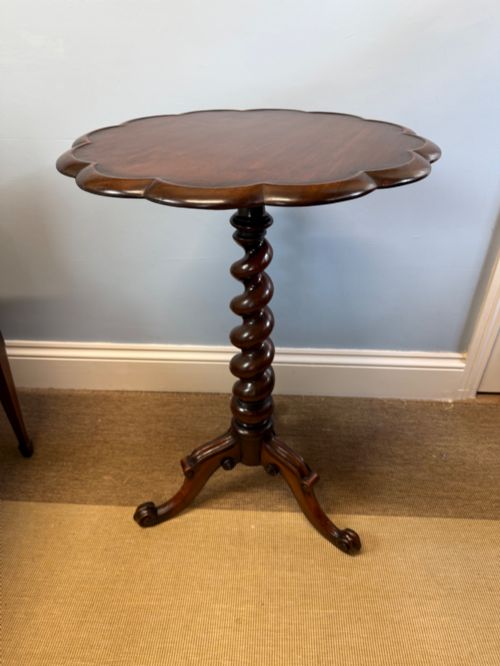
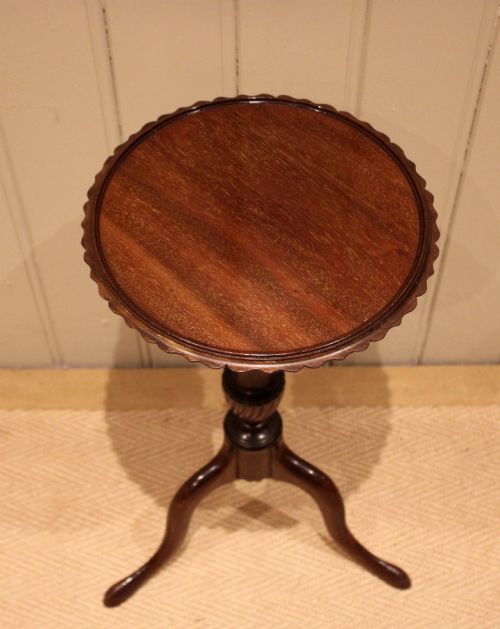
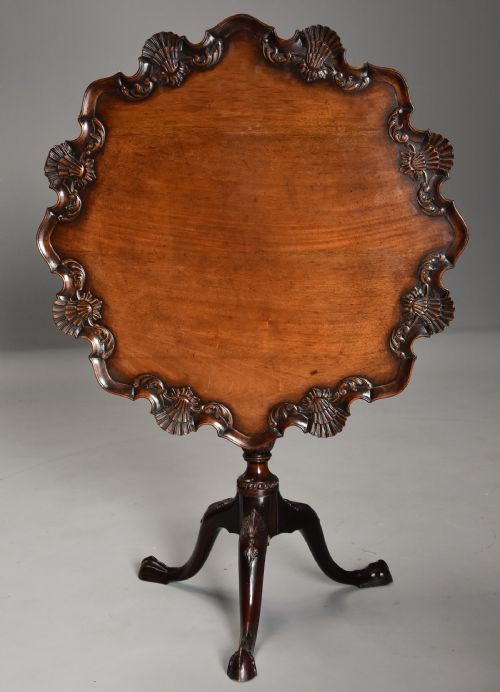
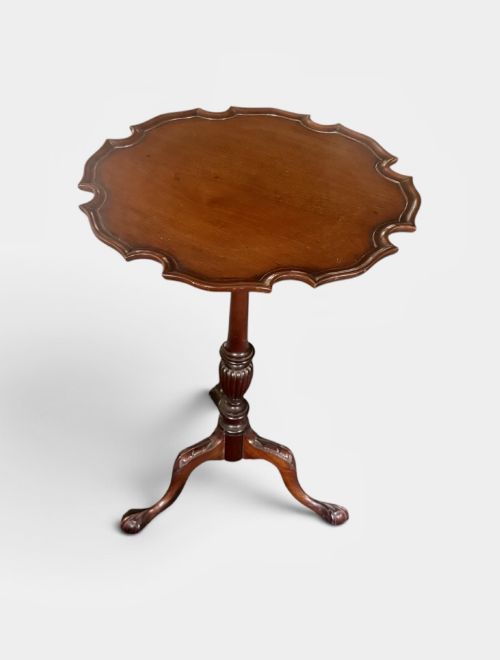
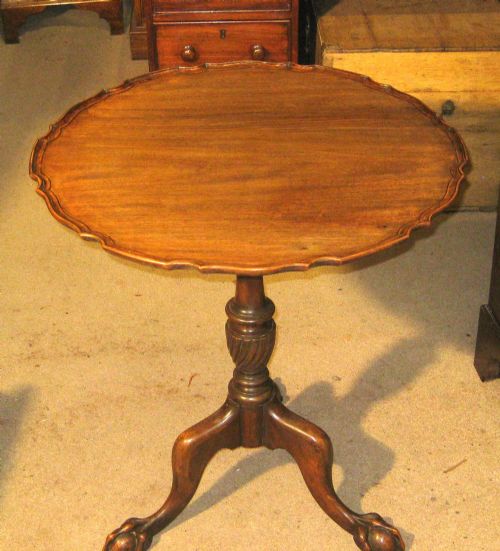
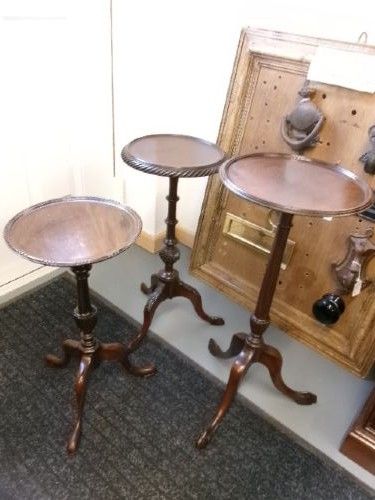
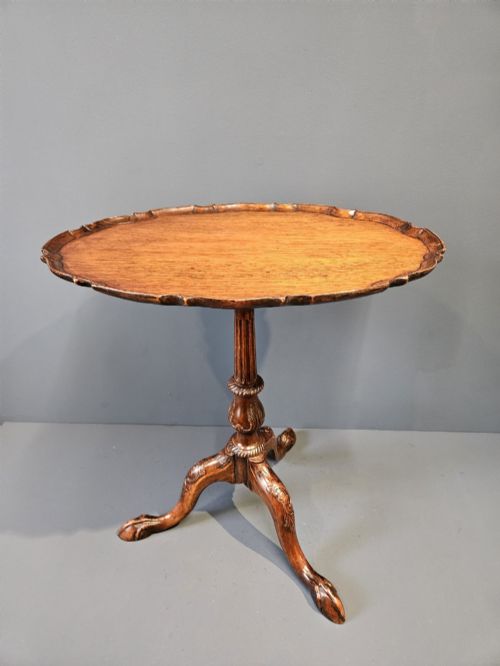
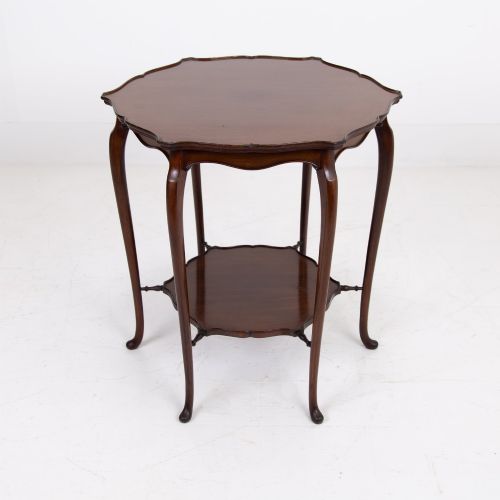
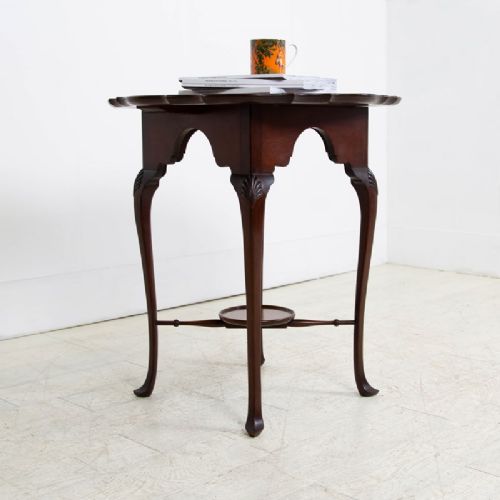
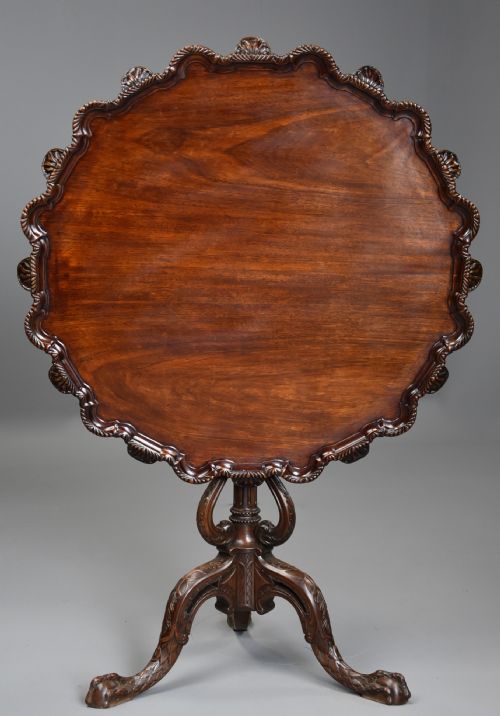
An edwardian piecrust table is a small surface defined by its raised, scalloped rim, which is carved to resemble pastry crust. These pieces appear primarily as wine tables, tripod tables, and occasional tables designed for compact spaces.
The selections span the Edwardian period alongside late nineteenth century revivals and later twentieth century examples. Makers drew heavily on Chippendale and Georgian styles to shape these tripod and pedestal forms.
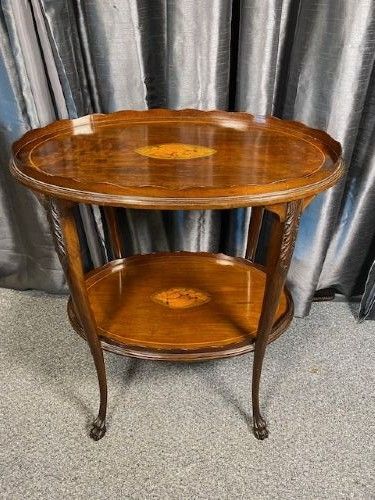
While many examples stick to traditional round tops, oval formats and tilt-top mechanisms also feature across the inventory. This variety ensures collectors find both static side pieces and versatile folding tables.
Materials and construction
Mahogany remains the dominant timber across these pieces, frequently paired with tripod legs and tilting mechanisms. Cabinet makers also utilised oak, yew wood, and brass fittings to construct sturdy bases.
Surface decoration relies on wood veneer, marquetry inlay, and oyster veneer to create patterned tabletops. The distinctive piecrust edge requires careful hand carving to achieve the scalloped profile from solid timber.
Some tables feature a tilt top designed to hide flat against the wall like an oversized wooden pancake.
Distinguishing quality in craftsmanship
Quality rests in the crispness of the carved rim and the stability of the tripod base. Superior pieces show precise detailing along the piecrust edge rather than softened or flattened moulding.
The choice of timber and veneer work further divides the selection. Rich mahogany grain and balanced marquetry inlay separate standard utility tables from finer revival pieces.
Shapland and Petter
The Edwardian Piecrust Table Glossary
- Piecrust rim
- A raised, scalloped edge carved around the perimeter of a tabletop. This decorative moulding emulates pastry work popular on eighteenth century furniture.
- Tripod table
- A small freestanding table supported by three legs radiating from a central pillar. These pieces often incorporate a tilt-top mechanism for storage.
- Tilt-top
- A hinged tabletop mechanism allowing the surface to fold vertically when not in use. This design saved space in historic domestic interiors.
- Marquetry inlay
- Decorative patterns formed by fitting contrasting pieces of wood veneer into a prepared surface. It adds visual complexity to tabletops.
- Oyster veneer
- Slices of small branches cut across the grain to create circular or oval patterns resembling oyster shells. This technique appears on decorative coffee tables.
Edwardian Piecrust Table: Frequently Asked Questions
What is an edwardian piecrust table used for?
These pieces function primarily as occasional tables, wine tables, or side tables placed beside armchairs. Their compact surfaces hold small items like cups, books, or decorative objects.
The raised rim prevents small items from rolling off the edge, making them practical for daily use as well as display.
How do I tell an original edwardian piecrust table apart from a revival piece?
Dating relies on examining timber shrinkage, construction joints, and tool marks beneath the tabletop. Edwardian pieces display specific joinery techniques and wear patterns consistent with the early twentieth century.
Revival pieces often borrow eighteenth century Chippendale proportions, so checking the secondary woods and hardware helps clarify the exact period.
What is a tilt top mechanism?
A tilt top mechanism uses a hinged block beneath the tabletop that allows the surface to pivot from horizontal to vertical. This enabled tables to be stored flat against a wall when not in use.
Many tripod tables feature this mechanism, combining stability when locked down with compact storage capabilities.
How do I care for mahogany and oak surfaces?
Maintaining these wooden surfaces requires dusting with a dry cloth and avoiding direct sunlight or excessive moisture. Natural wax can be applied periodically to nourish the timber and protect the finish.
Keeping the tables away from direct heat sources prevents the wood veneer and solid panels from splitting or warping over time.