
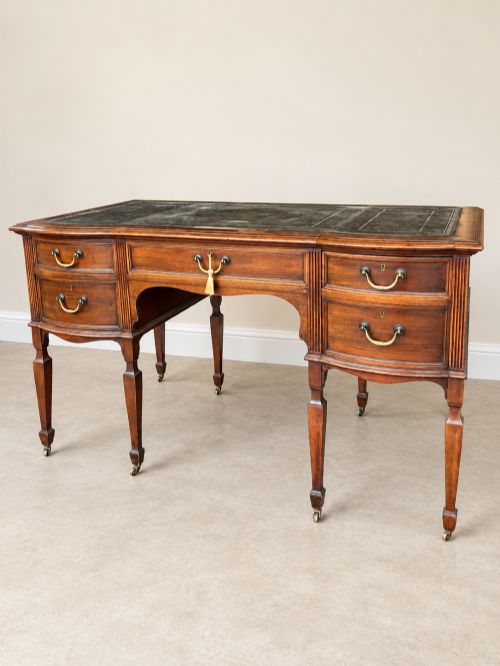
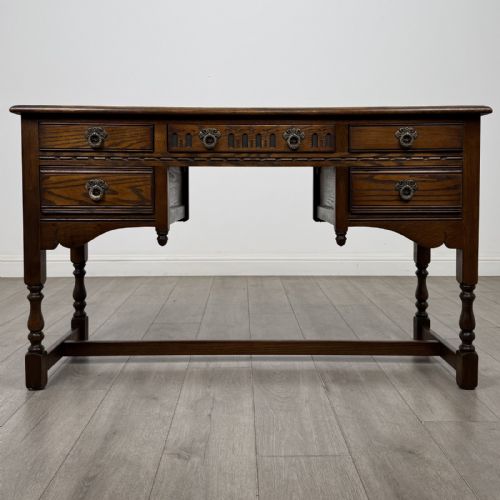
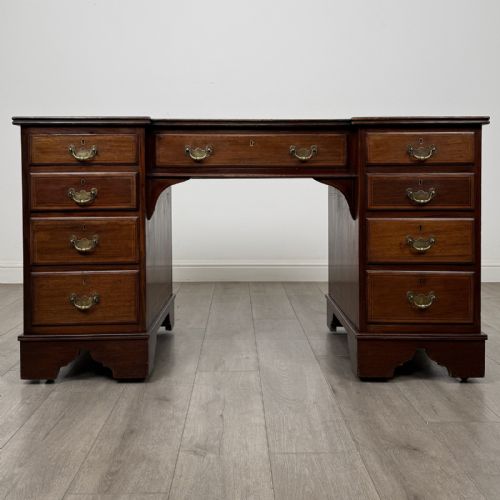
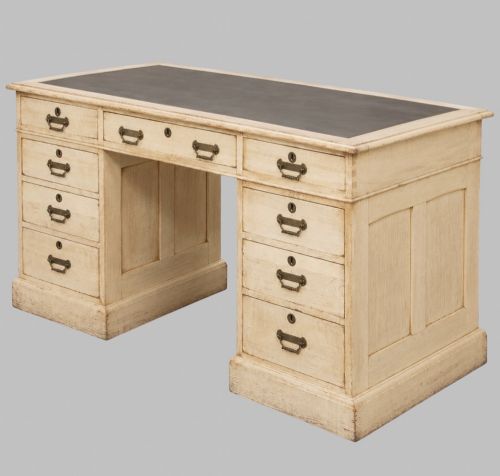
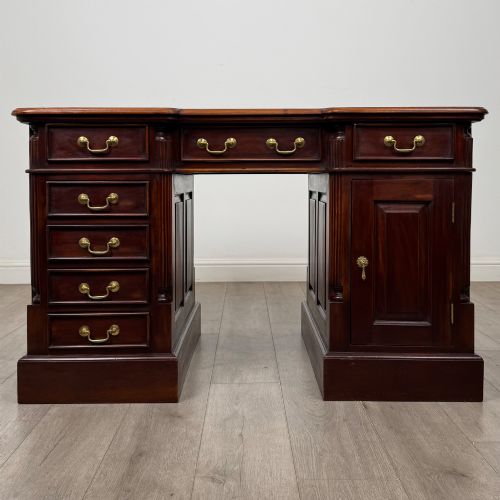
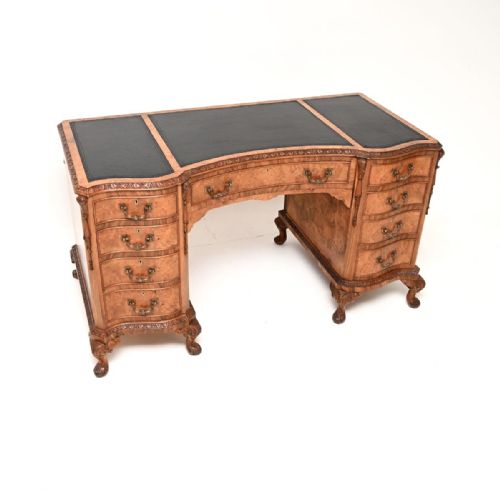
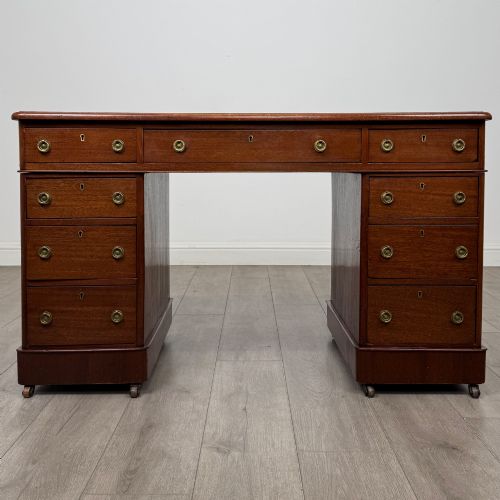
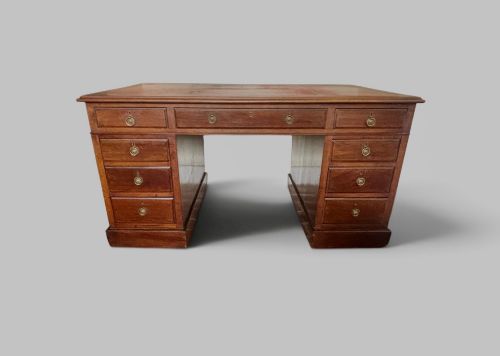
Edwardian Pedestal Writing Table
An Edwardian pedestal writing table brings symmetry and purpose to a room, offering structured storage beneath a dedicated writing surface.
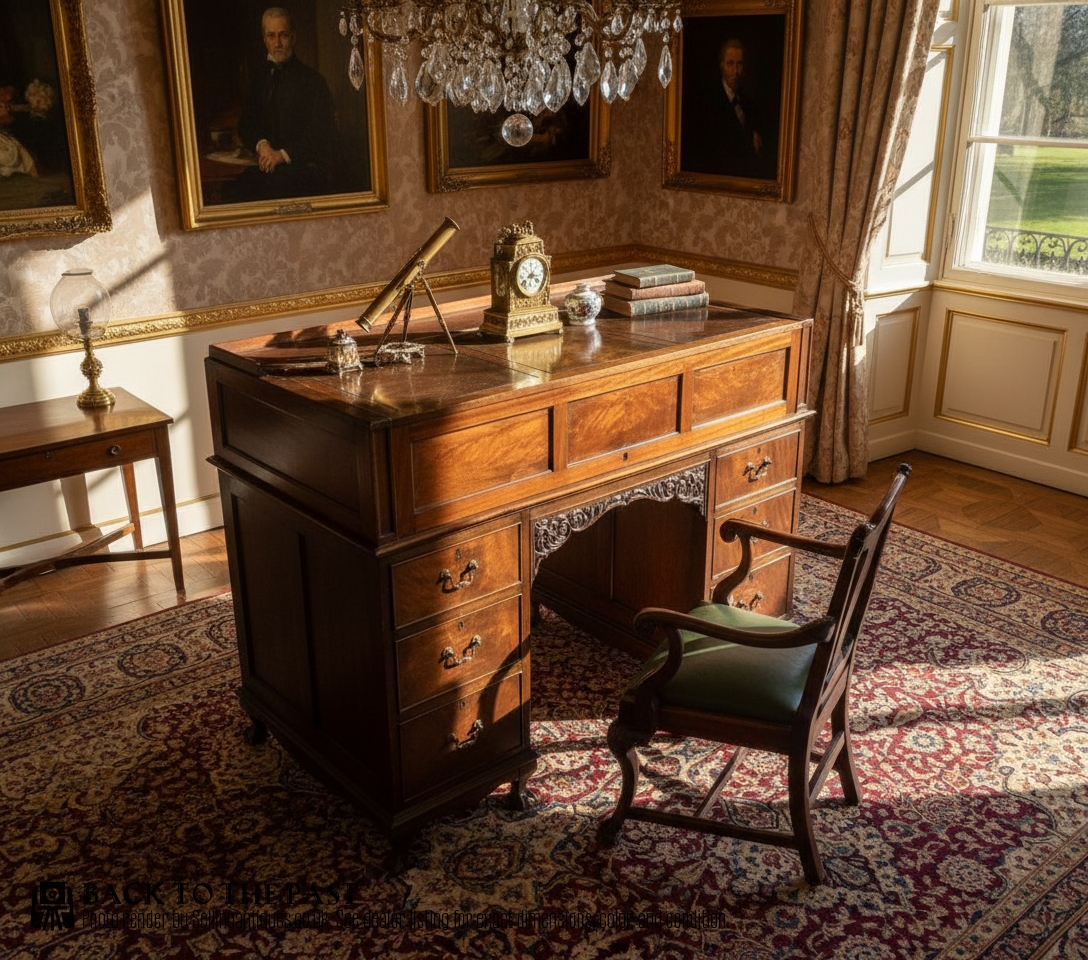
Edwardian Pedestal Writing Table
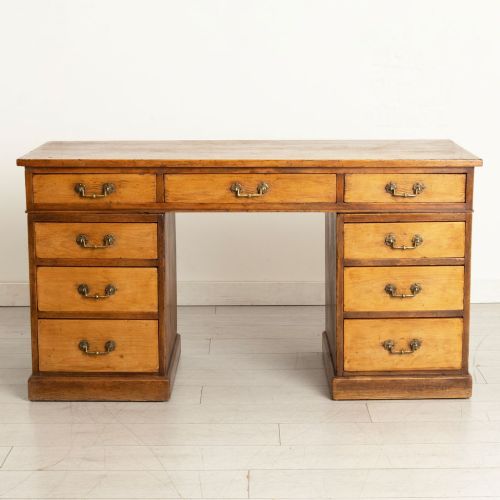
The edwardian pedestal writing table combines twin banks of drawers with a central writing surface, establishing a formal anchor for the study or library. Most pieces encountered stem from the Edwardian period and the late nineteenth century, though earlier Victorian influences remain visible.
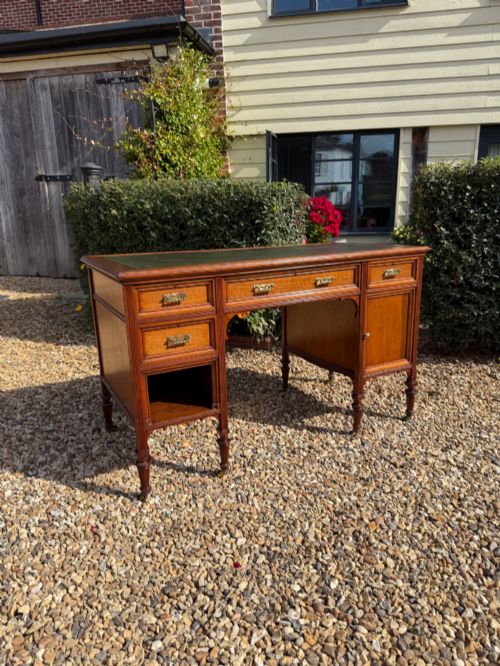
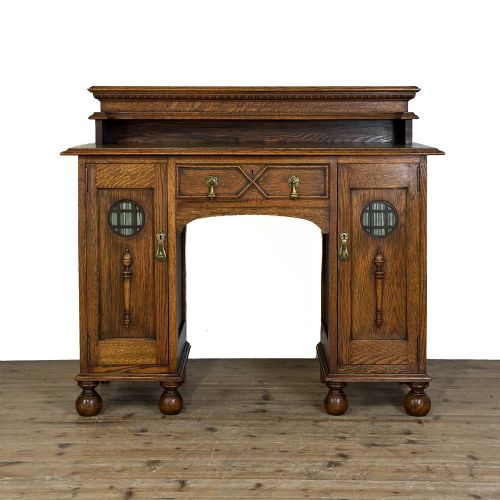
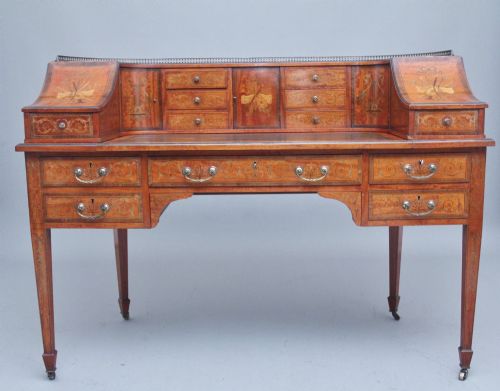
Makers of this phrase often utilised classic pedestal formats alongside kidney shapes and Carlton House variations. Woods range from rich flame mahogany and burr walnut to lighter satinwood and oak, reflecting diverse aesthetic demands of the era.
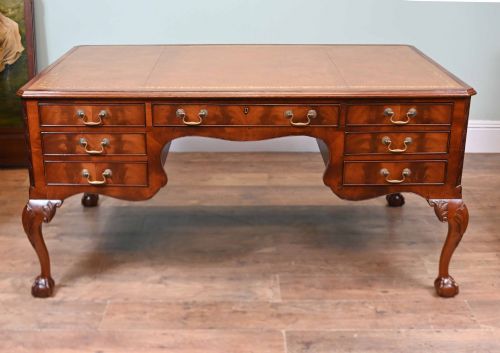
Revival styles such as Sheraton, Queen Anne and Chippendale heavily inform the design vocabulary of these desks. Buyers frequently select between twin pedestal layouts and kneehole writing tables depending on space and storage requirements.
Materials and Construction
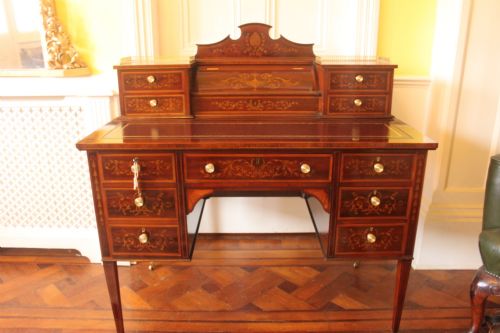
Cabinet makers constructed these tables using solid hardwoods like mahogany, walnut and oak, frequently applying finely figured veneers such as burr walnut and flame mahogany to primary surfaces. Inlays in satinwood and marquetry added ornamental detail to drawer fronts and top borders.
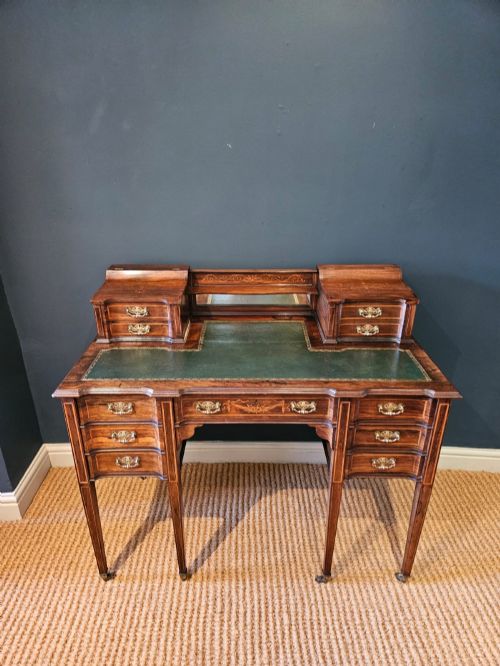
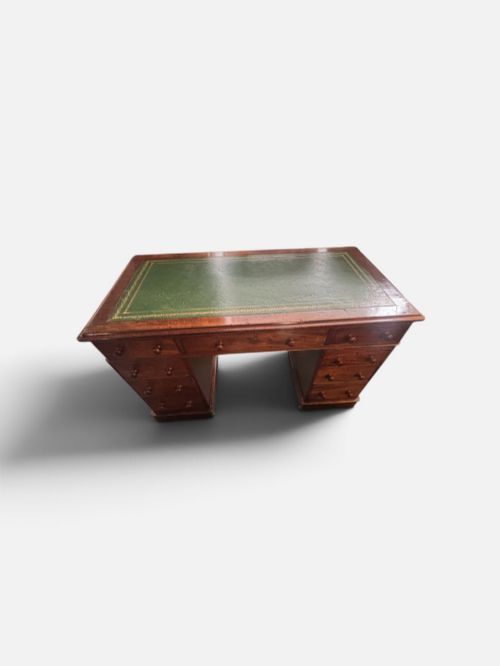
Writing surfaces almost universally incorporate inset leather panels, often tooled with gilt borders, providing a durable and traditional medium for correspondence. Drawer construction relied on traditional dovetail joints, accompanied by brass hardware and occasionally original handles.
Some desks hide secret stationery compartments within their superstructures, built for letters too private to leave in an open pigeonhole.
Assessing Craftsmanship
Quality rests upon the selection of timber veneers and the precision of the marquetry or inlay work across the top and drawer fronts. Finer examples display symmetrical grain patterns in flame mahogany or burr walnut alongside crisp cabinet joints.
The inclusion of original brass handles, well-tooled leather writing inserts, and secondary woods of high grade elevate a piece's standing. Structural integrity in the pedestals and smooth operation of the multiple drawers further separate standard production from superior workshop output.
Trollope and sons·Edwards and Roberts·Maple and Co
The Edwardian Pedestal Writing Table Glossary
- Pedestal desk
- A twin-pedestal form featuring two separate banks of drawers supporting a central desktop.
- Carlton house desk
- A fitted writing table with a curved superstructure of small drawers and pigeonholes running around the back and sides.
- Partners desk
- A large writing table designed with drawers and cupboards on both sides to accommodate two users simultaneously.
- Marquetry
- Decorative patterns formed by fitting together thin slices of wood veneer of different colours and grains.
- Gilt
- A thin layer of gold leaf applied to decorate leather borders or wooden elements.
Edwardian Pedestal Writing Table: Frequently Asked Questions
What is an Edwardian pedestal writing table?
An Edwardian pedestal writing table is a freestanding wooden desk featuring a central writing surface flanked by two pedestals containing multiple drawers. These pieces date from the early twentieth century or late nineteenth century and often display revival styles.
They served as functional furniture for private studies and offices, combining generous drawer storage with a dedicated workspace topped in leather.
How do I care for the leather top?
The leather inset requires gentle cleaning with a damp cloth and occasional application of appropriate leather cream to prevent drying and cracking. Avoid using harsh chemical cleaners that can damage the gilt tooling.
Protecting the surface from direct sunlight helps preserve the colour and integrity of both the leather and the surrounding timber.
Are these desks suitable for modern daily use?
These tables provide sturdy workspaces and ample drawer storage that accommodate laptops and writing materials comfortably. Their traditional dimensions offer generous legroom beneath the central kneehole space.
Placing a protective blotter on the leather surface allows you to work daily without risking marks to the antique material.
How do I distinguish Edwardian from Victorian desks?
Edwardian desks tend to feature lighter timbers like satinwood and brighter mahogany alongside refined revival motifs, whereas Victorian pieces often showcase heavier proportions and darker walnut or mahogany finishes. The choice of hardware and inlay work also shifts between the heavier Victorian aesthetic and the more delicate Edwardian taste.
Examining the secondary woods and construction methods inside the drawers helps confirm the period of manufacture.