

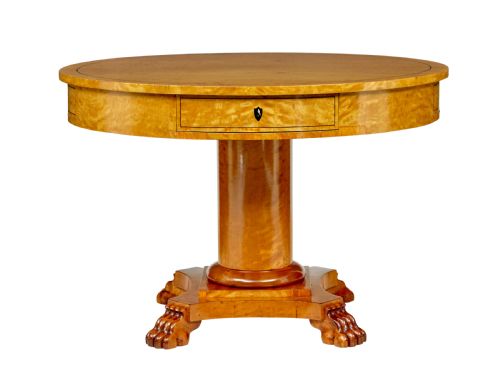

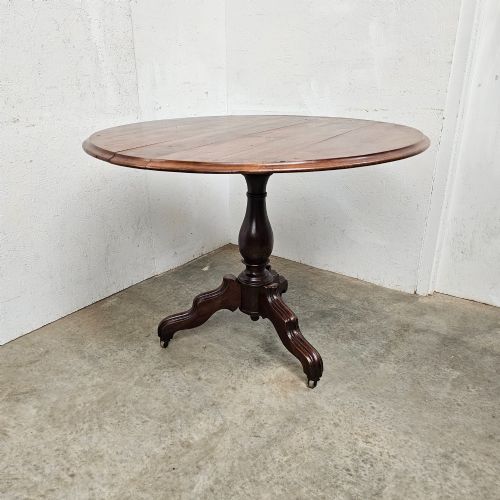
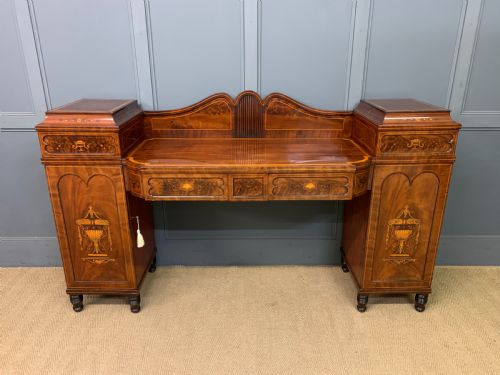
Edwardian Pedestal Dining Table
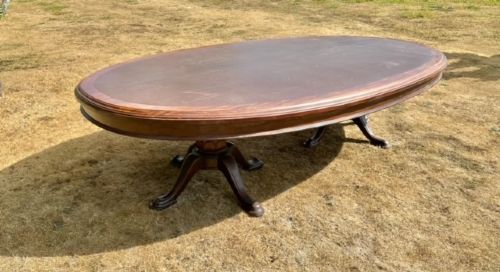
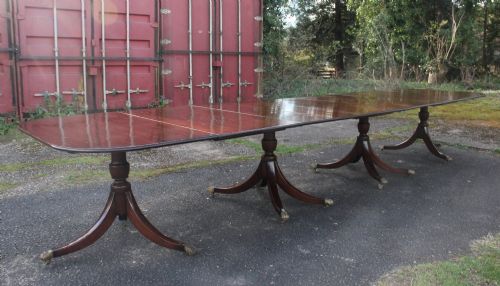
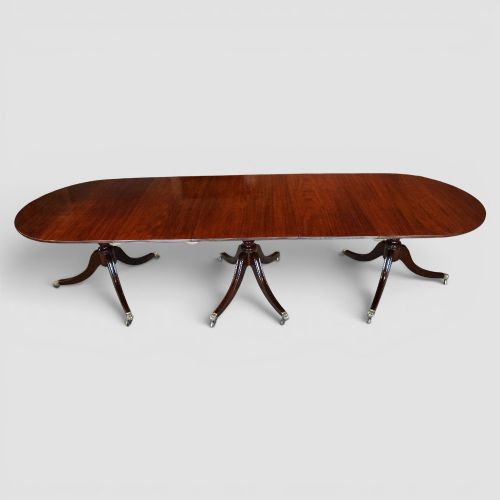
These edwardian pedestal dining table pieces combine solid mahogany timbers with extendable pillar bases to seat large gatherings for formal meals.
Edwardian Pedestal Dining Table
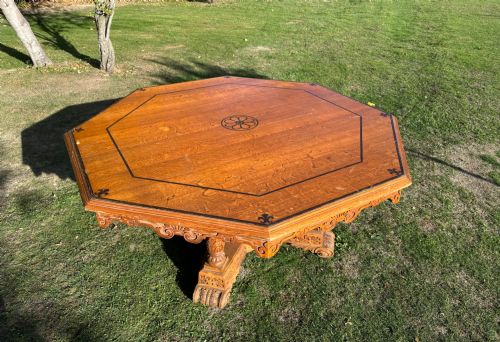
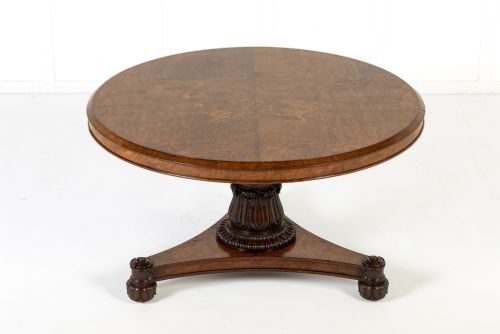
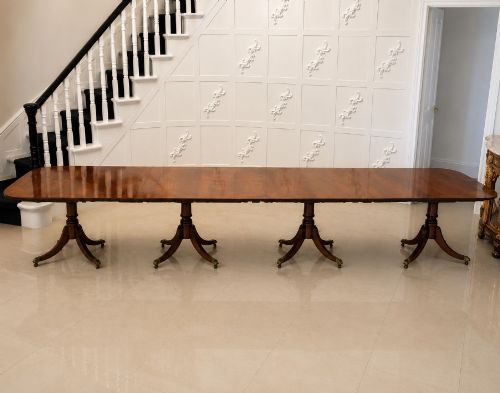
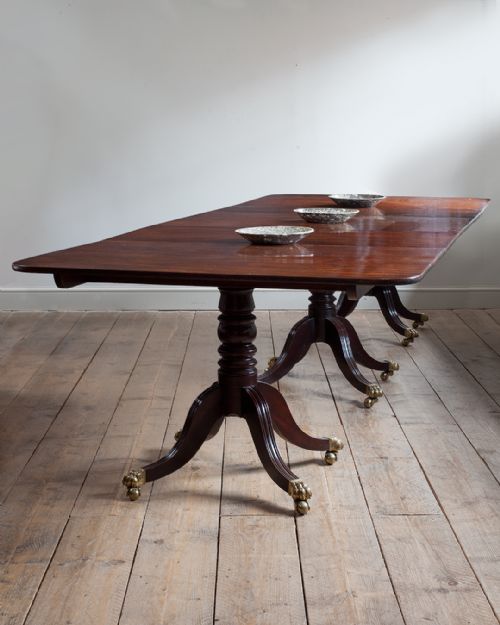
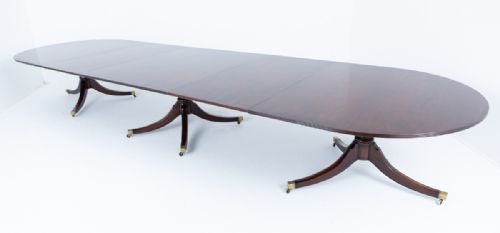
An edwardian pedestal dining table stands on one or more central wooden pillars rather than four corner legs, allowing extra legroom for seated guests. Most examples found here date from the Edwardian era or employ a Regency Revival style with multiple pedestals and drop-in leaves to extend the surface length.
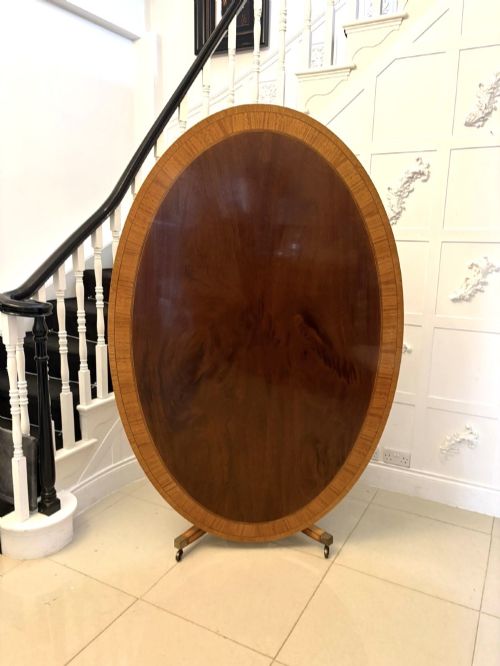
Makers constructed these tables primarily for dining rooms in large houses, using robust timbers to support substantial meals and heavy use. Alongside standard twin and triple pedestal formats, the selection includes boardroom tables and oval formats designed for intimate or grand dining spaces.
How They Were Made
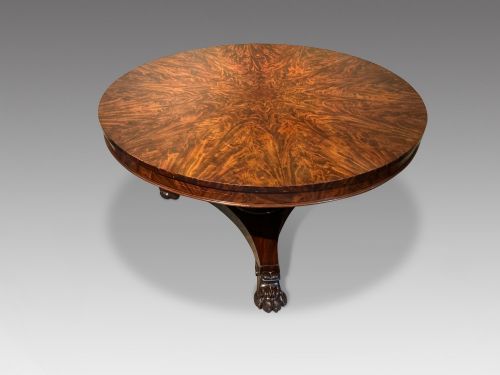
Cabinet makers built these tables using solid mahogany, walnut, oak, and birch, frequently applying flame mahogany or satinwood veneers to create figured table tops with contrasting crossbanded borders. Brass details appear on castors and feet, while internal mechanisms utilise draw leaves or removable central pillars to manage length.
Timber selection focused on grain movement and stability, ensuring that large extending leaves aligned smoothly with the main table sections. French polishing finished the wood surfaces, protecting the natural grain while highlighting inlaid details and marquetry.
Edwardian Pedestal Dining Table Retail Price Guide 2026
Typical asking prices for edwardian pedestal dining table among the pieces listed under this phrase on Sellingantiques today, from the lower quarter to the upper quarter. They describe what is for sale here now, not the wider market.
Several tables include revolving lazy susan attachments and dinner gongs, proving that Victorian dining involved serious spinning apparatus.
What Varies in Quality
Quality rests in the choice of timber and the precision of the pedestal mechanism. Tables featuring dense flame mahogany veneers, finely turned pillar supports, and original brass castors demonstrate superior craftsmanship compared to simpler models.
The integrity of the extending mechanism and the alignment of the leaves determine daily usability. Superior pieces retain smooth sliding tracks and solid pillar mountings that prevent wobbling when fully extended.
Whytock and Reid
The Edwardian Pedestal Dining Table Glossary
- Pedestal
- A central support pillar that holds the weight of the table top. This construction method replaces standard corner legs to maximise seating capacity.
- Crossbanded
- A border technique where veneer strips run perpendicular to the main grain of the table top. This frames the central panel with a contrasting wood pattern.
- Draw Leaf
- An extending table mechanism where hidden leaves slide out from beneath the main top. This allows the table length to increase without removing separate boards.
- Tilt-Top
- A hinged table top that pivots to a vertical position when not in use. This mechanism allowed tables to be stored flat against a wall to save floor space.
- Marquetry
- Inlaid wood pieces arranged to form decorative pictures or geometric patterns on furniture surfaces. Craftsmen used various coloured woods to achieve tonal contrast.
Edwardian Pedestal Dining Table: Frequently Asked Questions
How do I extend an edwardian pedestal dining table?
Most tables use a central winding mechanism or pull apart on runners to accept removable wooden leaves between the sections. The pedestals separate to maintain balanced support across the expanded length.
Ensure the floor surface is level before pulling the sections apart to prevent strain on the brass castors and internal wooden runners.
How many people can sit at these tables?
Capacity ranges from compact four-seat breakfast tables to large triple and quadruple pedestal formats seating twelve to twenty-two guests. The absence of corner legs allows chairs to fit comfortably around the entire perimeter.
Check the length of the leaves and the placement of the central pillars to confirm adequate legroom for your chairs.
How do I care for the polished wood surface?
Maintain the finish by dusting with a soft dry cloth and applying quality beeswax periodically to nourish the timber. Avoid placing hot dishes or wet glasses directly on the polished surface to prevent marking.
Keep the table away from direct sunlight and radiators to prevent the mahogany or walnut veneer from drying out or cracking.
What is the difference between Edwardian and Regency Revival?
Original Edwardian pieces were manufactured during the early twentieth century, whereas Regency Revival pieces replicate the earlier classical styles popularised in the nineteenth century. Both styles utilise similar mahogany timbers and pedestal formations.
Examining the construction methods, secondary woods, and hardware helps distinguish between the original period of manufacture and later revival pieces.