

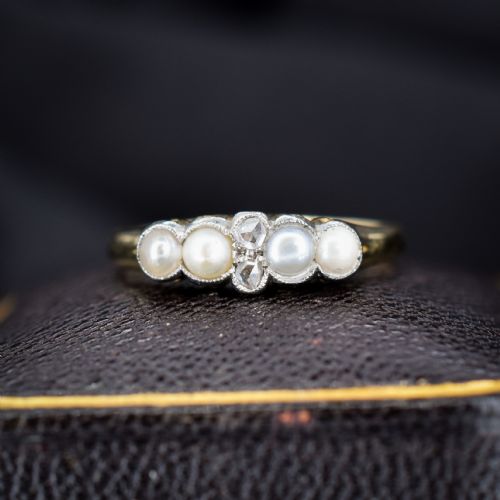


Edwardian Pearl Dress Ring
An edwardian pearl dress ring brings delicate luminosity and historic character to the hand through fine gems and period mounting.
Edwardian Pearl Dress Ring
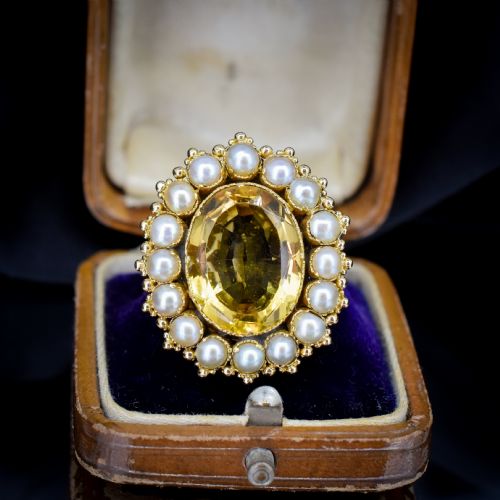
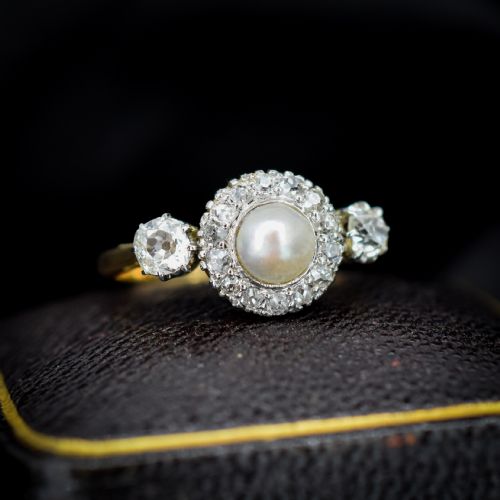
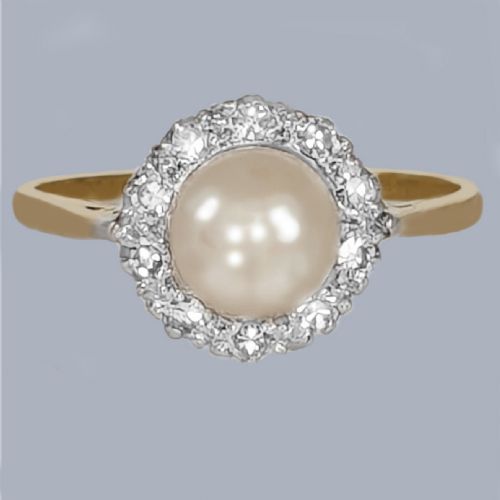
An edwardian pearl dress ring is a finger ornament designed primarily for decorative elegance rather than betrothal, originating predominantly from the early twentieth century. These pieces frequently pair luminous pearls with contrasting gemstones such as diamonds, rubies, sapphires, garnets, and turquoise.
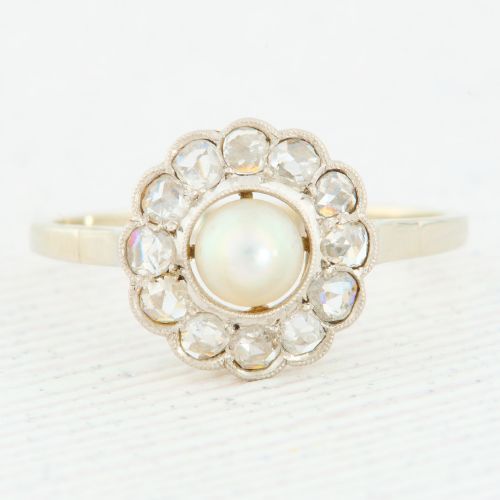
The most common examples on this page follow the cluster or trilogy format, where a central pearl or gem is surrounded by a halo of smaller stones. These designs draw heavily upon Edwardian, Belle Epoque, and Art Nouveau aesthetics, reflecting a period of refined craftsmanship.
While the core of the selection stems from the Edwardian era and the surrounding 1900s decades, the category also accommodates related Victorian and later mid-century iterations. Buyers encounter yellow gold, rose gold, white gold, and platinum mountings supporting both natural and cultured pearls.
Materials and construction
Goldsmiths of the period employed 18ct yellow gold, 15ct gold, and increasingly platinum to construct secure yet lightweight settings. Platinum allowed for intricate, knife-edge wirework and millegrain borders that maximised the play of light around diamonds and pearls.
Stones were typically hand-set using old-cut diamonds, rose-cut diamonds, and seed pearls or natural saltwater pearls. Jewelers balanced the organic softness of pearls against the sharper brilliance of cut gemstones, utilising bezel and prong techniques suited to delicate forms.
Some Edwardian makers tucked tiny seed pearls into the eyes of miniature gold serpents and evil eye motifs.
Distinctions in quality
Quality rests significantly upon the origin and surface integrity of the pearl, distinguishing natural saltwater specimens from later cultured alternatives. The matching of accompanying diamonds in cut and colour also dictates the overall harmony of a cluster ring.
The fineness of the metalwork, including the crispness of hand-carved galleries and intact millegrain detail, separates standard production from superior goldsmithing. Original settings that retain their structural integrity without heavy past repairs command greater appreciation among collectors.
The Edwardian Pearl Dress Ring Glossary
- Millegrain
- A decorative technique involving a row of tiny raised metal beads along the edge of a setting. This borders the stones with a soft, textural shimmer typical of Edwardian jewellery.
- Old-cut diamond
- A hand-faceted diamond shape preceding modern brilliant cuts, characterised by a smaller table and a higher crown. These stones display a distinctive, deep candlelit sparkle.
- Rose-cut diamond
- A vintage diamond style featuring a flat base and a domed, faceted top resembling an unopened rosebud. It yields a subtle, transparent lustre rather than intense modern brilliance.
- Seed pearl
- A very small, naturally occurring or early cultured pearl often utilised in clusters or delicate pavé arrangements. They provide a dense, shimmering texture around larger focal gems.
- Trilogy ring
- A ring featuring three principal stones set in a row, often symbolising the past, present, and future. In this selection, they frequently combine pearls with old-cut diamonds.
Edwardian Pearl Dress Ring: Frequently Asked Questions
How do I care for an antique pearl ring?
Pearls are organic gems that require gentle handling, as they are softer than diamonds and vulnerable to household chemicals, perfumes, and cosmetics. Wipe them clean with a soft, damp cloth after wearing and store them separately to avoid surface scratching.
Avoid immersing antique pearl rings in ultrasonic jewellery cleaners or liquid chemical dips, which can dissolve adhesives or damage the pearl's nacre. Regular inspection of the prongs by a jeweller ensures the pearl remains secure in its historical setting.
Can I wear an edwardian pearl dress ring every day?
While these rings were built with durable gold and platinum mountings, the organic nature of pearls means they demand more care than all-metal or all-diamond bands. Daily wear is entirely possible if you remove the ring during manual labour, gardening, or sports.
Mindful wear preserves the delicate millegrain edges and prevents undue friction on the pearl surface. Many owners reserve these pieces for special occasions or daily social wear to protect their fine craftsmanship.
What is the difference between natural and cultured pearls?
Natural pearls formed spontaneously inside molluscs without human intervention, making them scarcer and highly sought after by collectors of antique jewellery. Cultured pearls are grown with human assistance by introducing an irritant into the oyster, a practice that became widespread later in the twentieth century.
Both types appear in historic pieces, though early twentieth-century examples frequently house saltwater natural pearls. Examining the nacre under magnification often helps reveal the origin and formation history of the pearl.
How can I tell if a ring is genuinely Edwardian?
Authentic Edwardian pieces typically display specific stylistic indicators such as platinum-topped gold construction, delicate pierced galleries, and millegrain detailing. The use of old-cut diamonds and natural pearls further aligns with the decorative standards of the period between 1901 and 1910.
Assay marks, hallmarks, and maker stamps provide additional chronological evidence, though many rings carry hallmarks from Birmingham or international workshops that help verify their exact decade of creation.