


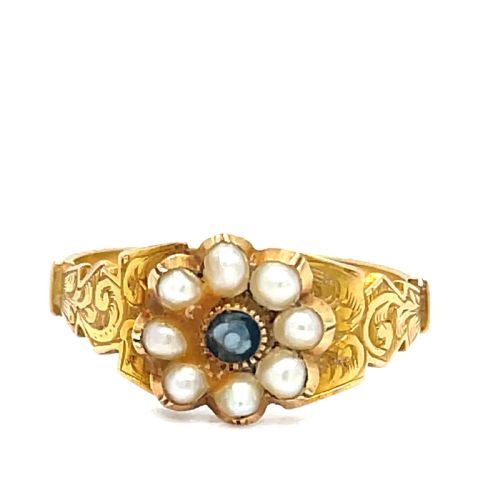


Antique Pearl Band Ring
An antique pearl band ring delivers the quiet lustre of organic gems set securely within precious gold.
Antique Pearl Band Ring
An antique pearl band ring combines organic lustre with precious metals, forming a continuous circle for the finger. Buyers seeking this phrase encounter pieces spanning the Victorian, Edwardian, Georgian, and Mid-Century eras.
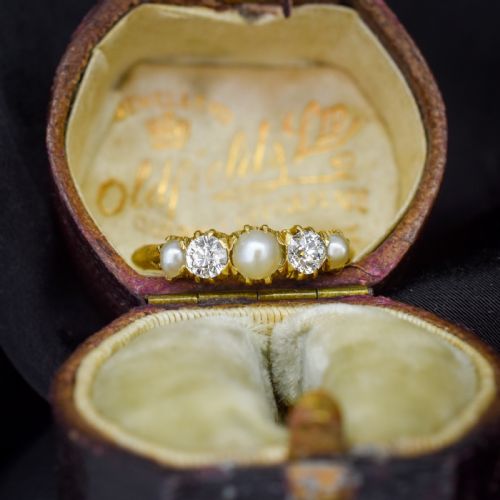
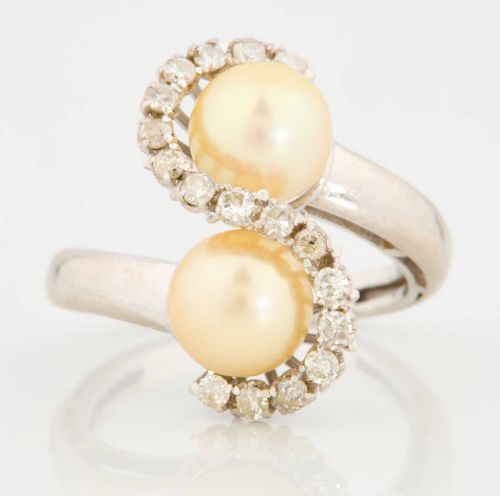
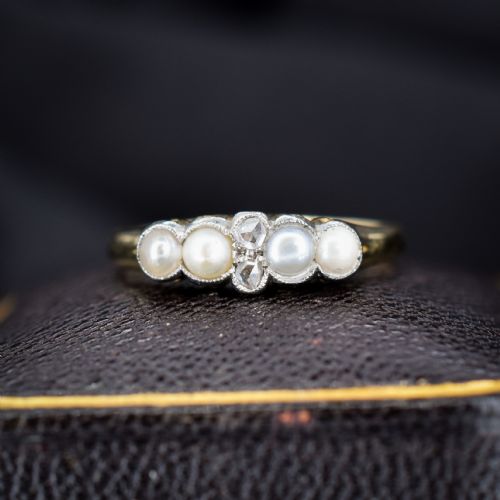
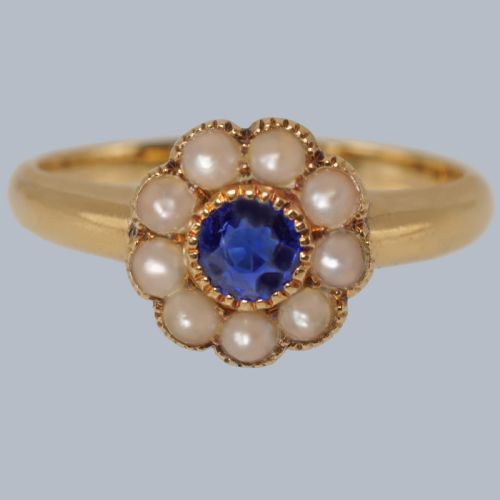
The selections on this page concentrate heavily on Victorian and Edwardian examples, often pairing pearls with diamonds, turquoise, or rubies. These bands take forms ranging from simple five-stone settings to complex multi-row clusters and mourning rings.
Makers utilised various gold purities, including 9ct, 12ct, 15ct, and 18ct yellow and rose gold, alongside platinum. The pearls themselves appear as seed pearls, split pearls, blister pearls, cultured pearls, and natural specimens.
How they were made
Goldsmiths shaped high-purity yellow and rose gold into bands by hand, casting or forging the metal to house the gems securely. Stones like old-cut diamonds, rubies, and turquoise were then integrated alongside pearls using grain, bezel, or flush settings.
Makers secured pearls directly into gold channels or onto individual posts within cluster and half-hoop arrangements. Seed pearls and split pearls required careful adhesive and physical anchoring to sit flush against the metalwork.
Some Victorian mourning rings hide braided human hair beneath tiny seed pearl clusters.
What varies in quality
The distinction between tiers rests on the uniformity and orientation of the pearls, alongside the weight and purity of the gold mount. Superior examples display well-matched nacre lustre across every pearl without noticeable surface blemishes.
Design complexity and gemstone pairing also dictate standing, with multi-row harem bands or pieces incorporating certified natural pearls and old-cut diamonds occupying the upper range. Masterful engraving and structural integrity in the gold band elevate a piece above simpler utilitarian settings.
The Antique Pearl Band Ring Glossary
- Seed pearl
- A very small, naturally formed pearl, often round or slightly irregular, used extensively in clusters and floral motifs. These delicate gems require careful handling to preserve their original nacre.
- Split pearl
- A natural or cultured pearl cut neatly in half to sit flat against a gold backing plate. This technique allows pearls to be set closely together without excessive height above the finger.
- Old-cut diamond
- A vintage diamond cut characterised by a small table, high crown, and open culet, fashioned before modern brilliant-cut standards. These stones catch candlelight with a softer, broader flash.
- Mourning ring
- A commemorative piece of jewellery containing hair, enamel, or pearls to remember a deceased loved one. These rings frequently feature black enamel and sombre inscriptions alongside seed pearls.
- Harem ring
- A multi-row stacking band designed to be worn together as a single wide formation. They often combine alternating rows of turquoise, pearls, and diamonds across several interconnected hoops.
Antique Pearl Band Ring: Frequently Asked Questions
Can I resize an antique band ring?
Resizing depends entirely on the construction of the band and the presence of stones set all the way around the hoop. Simple gold shanks allow a jeweller to add or remove metal easily.
Bands featuring continuous stones, such as half-eternity or multi-row configurations, present significant structural challenges. Altering these bands risks disturbing the surrounding gem settings.
Are these pearls natural or cultured?
The pieces span eras before and after the widespread commercial adoption of cultured pearls in the twentieth century. Earlier Victorian and Georgian pieces feature natural pearls formed organically in molluscs.
Later mid-century examples incorporate cultured pearls grown with human intervention. Listing details usually specify whether a pearl is natural, cultured, or a seed variety.
How do I date an antique ring?
Dating relies on stylistic clues, mounting techniques, and official hallmarks stamped inside the gold shank. Victorian and Edwardian pieces exhibit distinct design motifs, such as elaborate floral clusters or geometric platinum settings.
British assay office marks and date letters provide precise years for many gold bands. Stylistic shifts between Georgian heavy chased gold and Edwardian airy lacework also clarify chronology.