

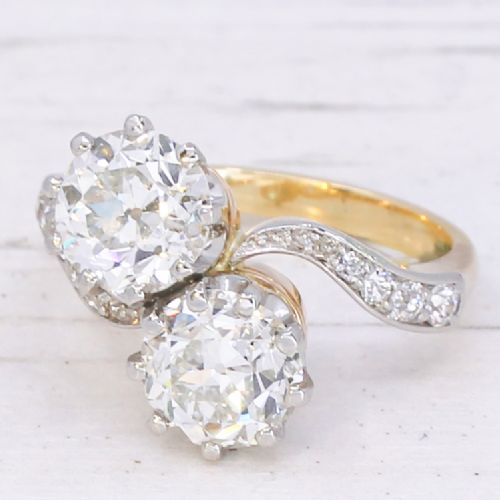


Vintage Diamond Bypass Ring
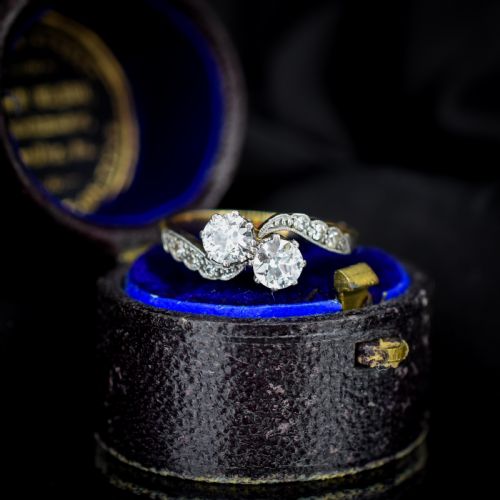
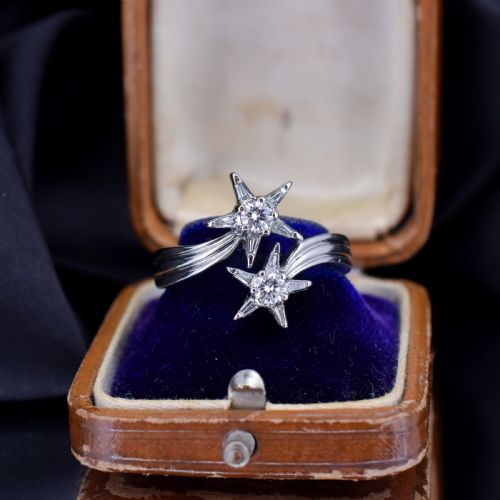
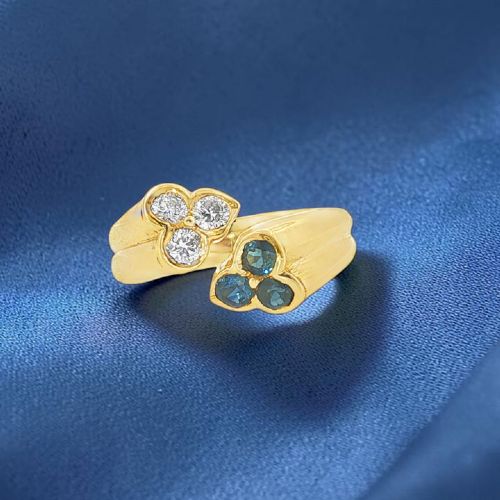
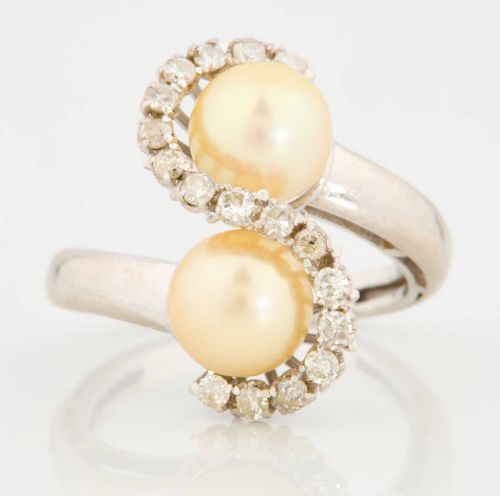
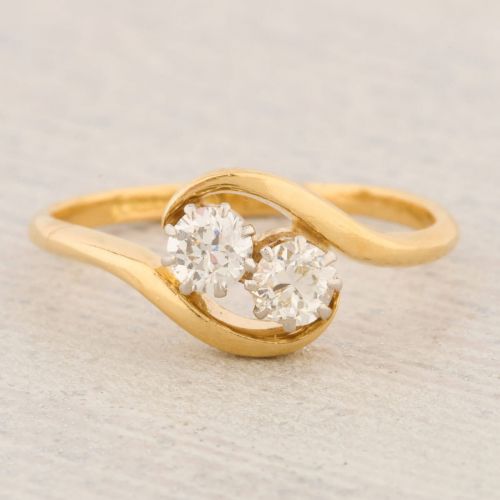
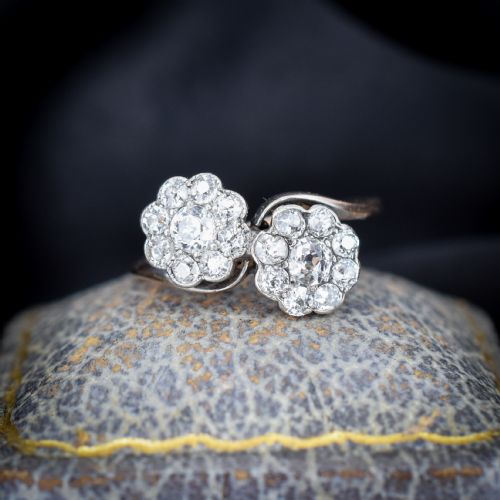
A vintage diamond bypass ring wraps the finger with twin gems meeting in a continuous, flowing line that symbolises connection.
Vintage Diamond Bypass Ring
When you search for a vintage diamond bypass ring, you encounter jewels where two or more stones sweep around the finger to meet or overlap. These pieces are frequently styled as twists, cross-overs, or toi et moi designs that have endured across multiple decades.
The selections span from the delicate scrollwork of the Edwardian and Art Nouveau eras through the geometric lines of Art Deco up to the bolder forms of the 1950s and 1960s. Among these, the twist and crossover configurations dominate the pieces available for study.
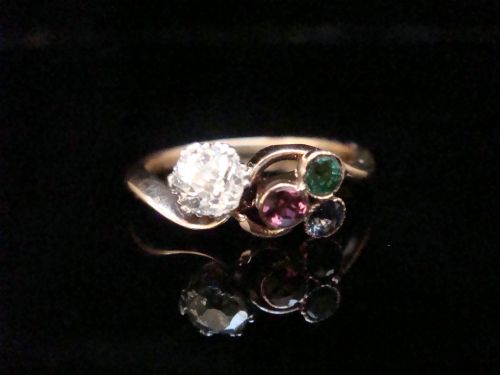
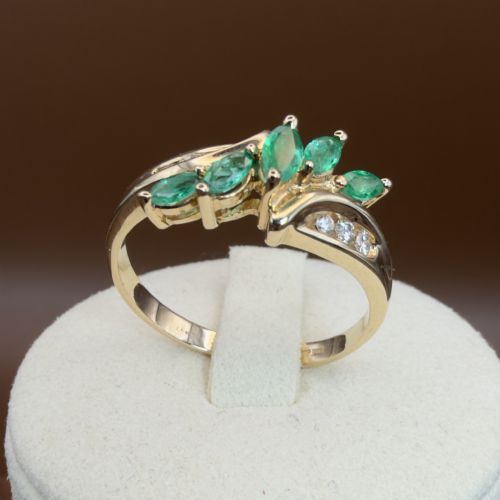
Makers utilised platinum alongside yellow and white gold to construct the undulating shanks that hold the principal stones. Alongside central diamonds, these rings often incorporate sapphires, rubies, emeralds, pearls, and opals within the sweeping design.
How they were made
Goldsmiths shaped platinum and various karats of yellow and white gold into fluid shanks that curve around the finger without a traditional closed cluster or solitary solitaire setting. This requires precise hand-forging to ensure the dual terminals align correctly.
Stones such as old-cut, old European cut, and brilliant-cut diamonds are secured alongside coloured gems using claw, bezel, or flush settings following the prevailing techniques of periods like the Edwardian era and the mid-century decades.
Even metal can feel indecisive when it spends a century refusing to touch itself.
What varies in quality
The standard of a bypass ring rests upon the fluidity of the metalwork and the symmetry of the opposing stones. Superior examples display clean, unbroken curves where the shoulders taper gracefully towards the central gems.
The cut and match of the primary stones dictate the visual balance of the piece. Matching old-cut diamonds or pairing a diamond with a natural pearl or sapphire requires careful selection to maintain proportion across the crossover.
Kutchinsky
The Vintage Diamond Bypass Ring Glossary
- Bypass ring
- A ring design where the shank ends pass each other rather than meeting centrally in a complete circle. This configuration creates a flexible, wrapping appearance on the hand.
- Toi et moi
- A French term meaning you and me, describing a ring featuring two principal stones set closely together. This style is frequently executed in a twist or crossover form.
- Old cut
- A diamond facet style popular in the late nineteenth and early decades of the twentieth century. These stones typically feature smaller tables and higher crowns than modern brilliant cuts.
- Crossover
- A ring style where the band crosses over itself at the top of the finger. It shares structural similarities with bypass and twist configurations.
Vintage Diamond Bypass Ring: Frequently Asked Questions
How do I date a bypass ring?
Dating relies on examining the metal choices, gemstone cuts, and overall manufacturing style of the piece. Edwardian examples often utilise platinum and intricate wirework, while mid-century versions frequently employ heavier yellow gold.
Older stones like old European cuts point towards early twentieth-century origins, whereas later twentieth-century pieces display bolder, cleaner lines associated with the 1950s and 1960s.
Are these rings comfortable to wear?
The low profile of many crossover and twist designs makes them well-suited for regular daily wear. The curved shanks sit smoothly against adjacent fingers.
Care should be taken with pieces featuring pearls or softer coloured stones, which require gentler treatment than diamonds alone.
What stones are paired with diamonds?
Diamonds in these bypass settings are frequently paired with sapphires, rubies, emeralds, and pearls. In toi et moi configurations, a diamond is often balanced by a coloured gemstone or a second diamond of similar scale.
Turquoise, amethyst, and opals also appear in pieces from the Edwardian and later vintage periods.