

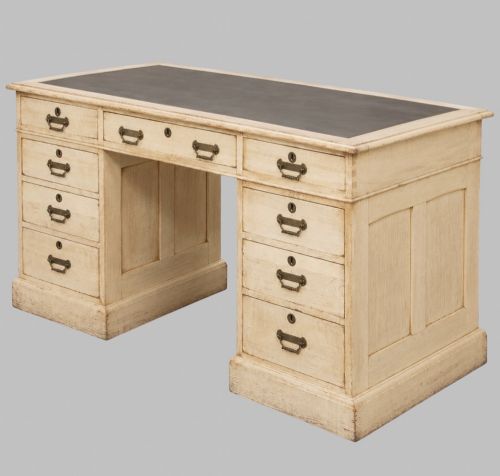
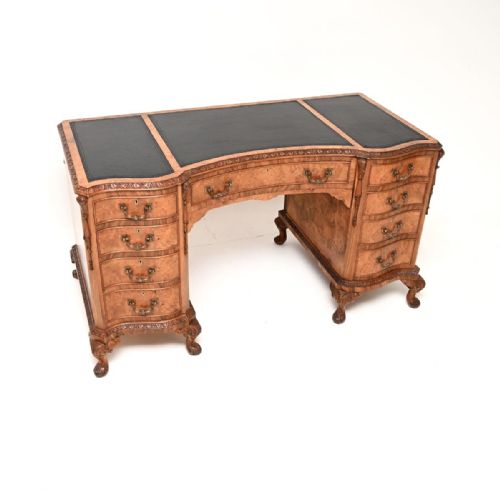
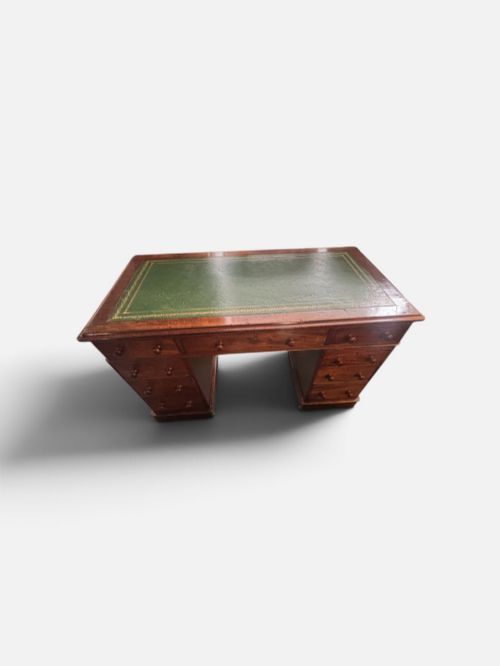
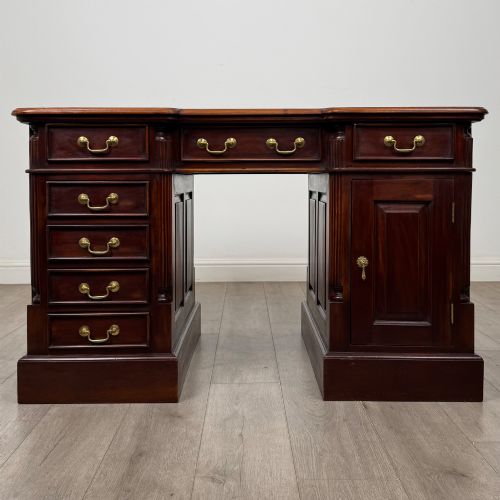
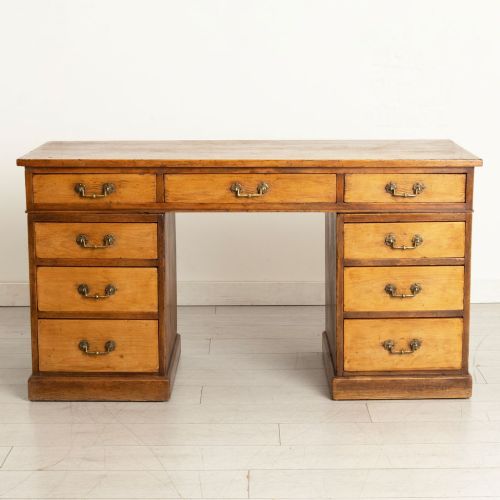
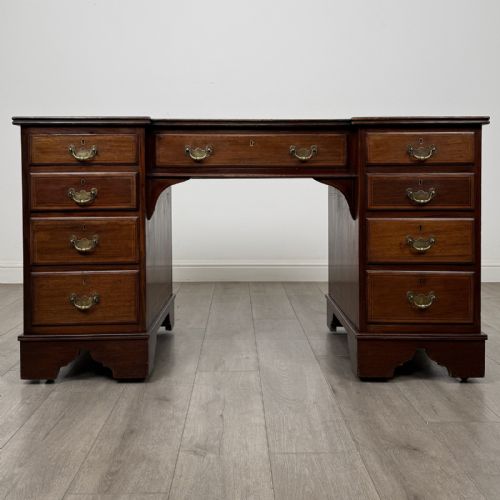
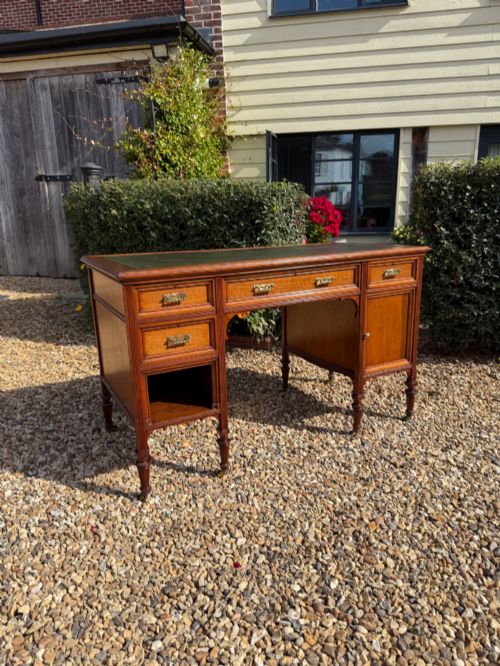
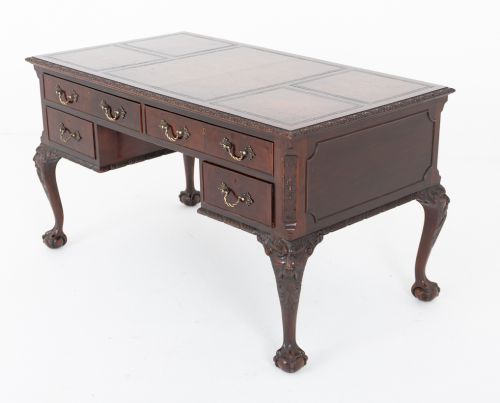

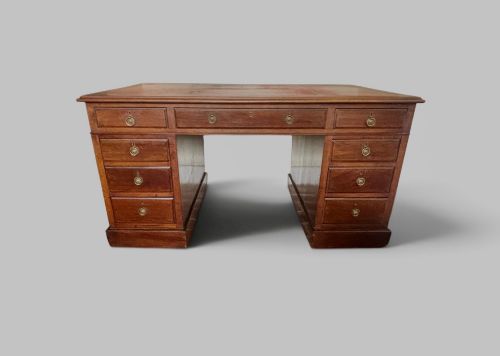
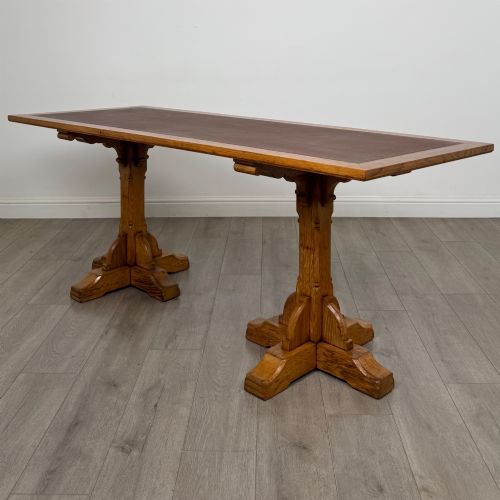
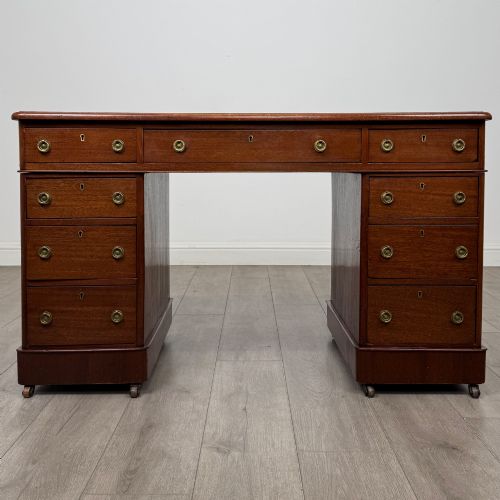
Edwardian Partners Table
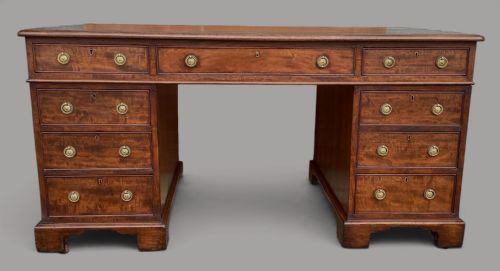
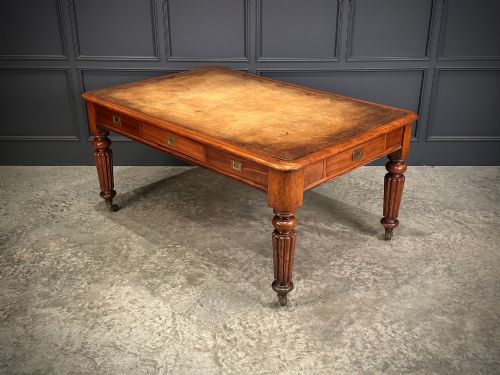
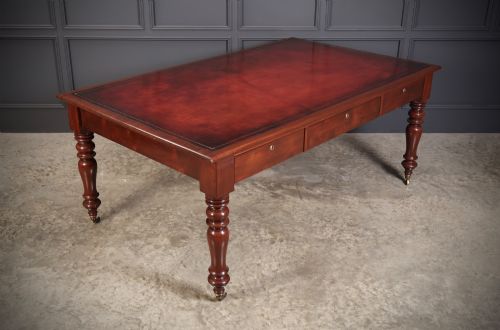
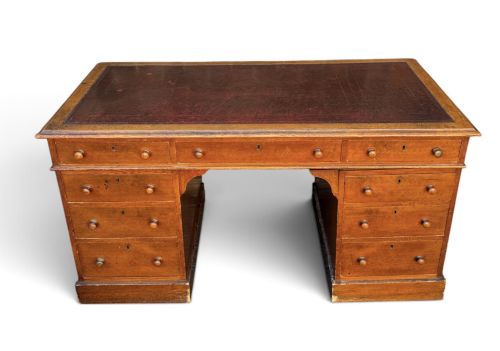
An edwardian partners table provides a generous double-sided writing surface designed for two people to work opposite one another.
Edwardian Partners Table
An edwardian partners table takes the form of a substantial writing desk constructed to allow access from both sides simultaneously. The pieces found here span the Edwardian period alongside Victorian, 1900, 1910, 1920, and 19th Century examples.
Most entries belong to the pedestal desk or library table categories, often featuring banks of drawers beneath the writing surface. The forms draw on styles such as Chippendale Revival, Queen Anne Revival, Arts and Crafts, Sheraton Revival, and Georgian.
Makers and firms appear occasionally within the titles, including Howard and Sons, Trollope and sons, Maple and Co, and Cookes of Finsbury London. Buyers encounter both mahogany and oak timber constructions frequently across these listings.
How they were made
Makers built these tables primarily using solid and veneered hardwoods like mahogany, oak, burr walnut, walnut, and satinwood. These timbers formed the main carcases, drawers, and structural frames.
Working surfaces typically incorporate inset leather panels alongside secondary materials such as brass fittings and hardware. Pine often appears in secondary structural components like drawer linings.
Edwardian Partners Table Retail Price Guide 2026
Typical asking prices for edwardian partners table among the pieces listed under this phrase on Sellingantiques today, from the lower quarter to the upper quarter. They describe what is for sale here now, not the wider market.
Listings feature oak, mahogany, burr walnut, walnut, satinwood, and brass materials across Victorian and Edwardian periods.
What varies in quality
The selection of timber grain and the precision of cabinetmaking separate standard workshop output from exceptional commissions. Burr walnut and figured mahogany veneers demand meticulous matching across large expanses.
Design details such as carved pillars, claw and ball feet, and integrated breakfront profiles indicate higher ambition in construction. The incorporation of original leather writing surfaces and branded maker signatures further distinguishes individual pieces.
Howard and Sons·Trollope and sons·Maple and Co·Cookes of Finsbury London
The Edwardian Partners Table Glossary
- Partners table
- A large double-sided desk designed with drawers or cupboards accessible from both front and reverse. These tables allowed two people to work face to face.
- Pedestal desk
- A heavy freestanding desk consisting of a central writing slab supported by two vertical banks of drawers. They frequently include panelled backs for placement in the centre of a room.
- Breakfront
- A piece of furniture where the central section projects forward from the flanking bays. This architectural arrangement creates depth and shadow across the front elevation.
- Library table
- A large freestanding table utilised for reading and writing rather than heavy administrative storage. They often stand on four legs rather than pedestal drawer columns.
- Sheraton Revival
- A late nineteenth and early twentieth century design movement replicating the lighter neoclassical furniture forms associated with Thomas Sheraton. These pieces utilise delicate timber inlays and refined proportions.
Edwardian Partners Table: Frequently Asked Questions
What is an partners table?
A partners table is a large double-sided desk built so that two people can sit opposite each other and work independently.
They traditionally feature drawers or cupboards opening on both sides of the piece to provide symmetrical storage.
How do I use a partners table?
These large desks suit placement in the centre of a room rather than pushed against a wall. The double-sided access allows two people to share the workspace or lets one person sit opposite a guest.
They function well as executive desks in studies, libraries, or home offices where floor space permits.
Are these tables made of solid wood?
Makers constructed these pieces using a combination of solid timbers and decorative wood veneers applied over secondary woods. Mahogany, oak, and walnut form the primary structural and visual elements.
Secondary woods like pine often appear in hidden areas such as internal drawer boxes.
How do I tell Edwardian from Victorian desks?
Edwardian desks often display lighter proportions and draw on revival styles like Sheraton or Arts and Crafts. Victorian examples tend to be heavier, utilising dense mahogany or burr walnut with darker finishes.
Construction methods and timber selection generally align with the prevailing aesthetic tastes of each specific era.