

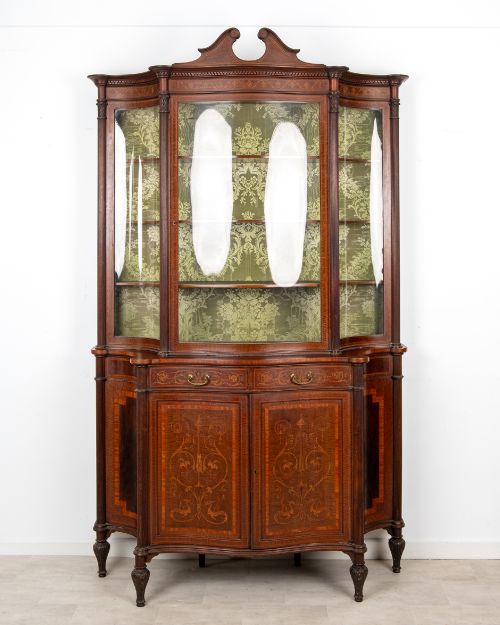
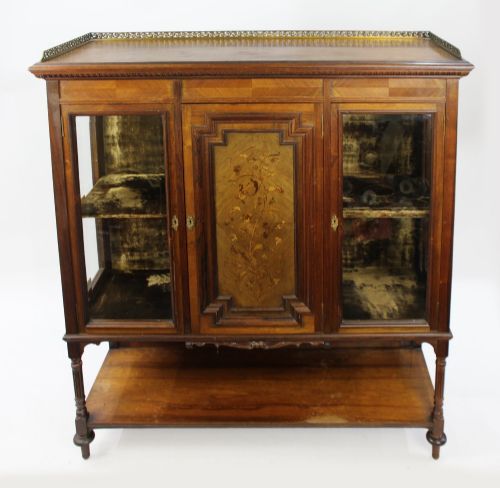
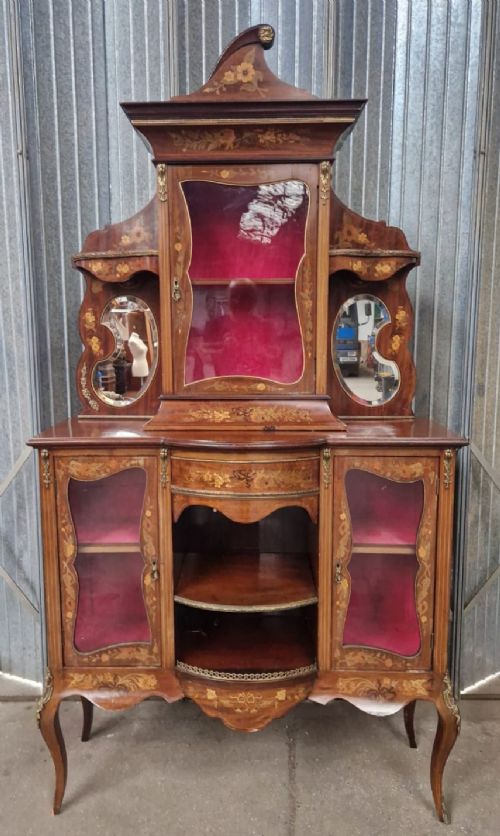
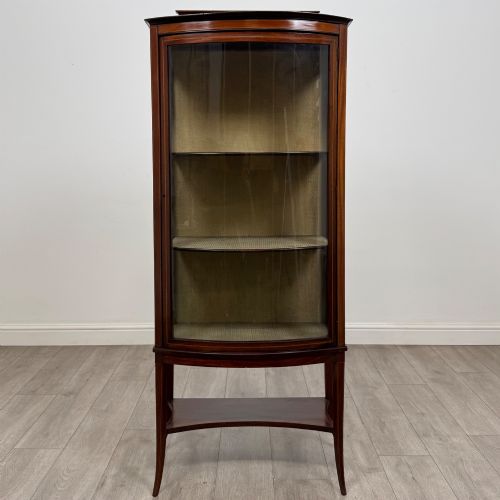
Edwardian Parlor Cabinet
An edwardian parlor cabinet is a refined piece designed to display and store treasured objects in the home.
Edwardian Parlor Cabinet
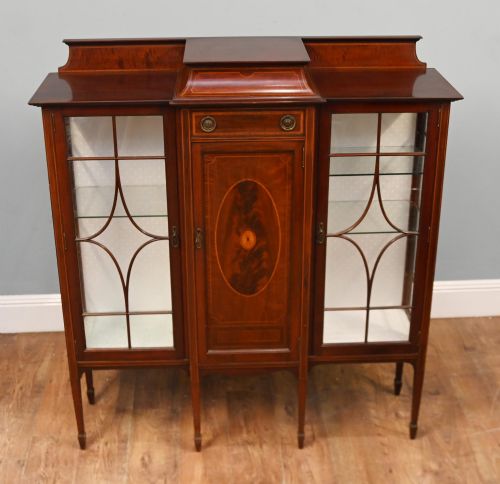
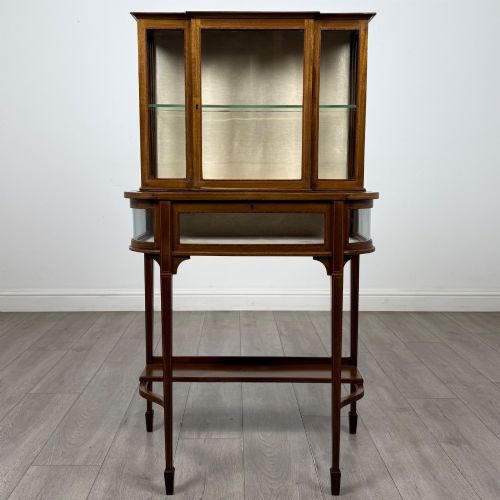
The edwardian parlor cabinet encompasses pieces created around the turn of the twentieth century, combining display functions with decorative storage. These items serve to organise and exhibit ceramics, glassware, and personal collections within reception spaces.
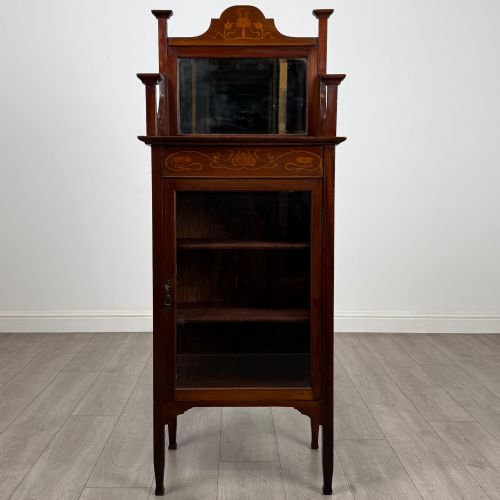
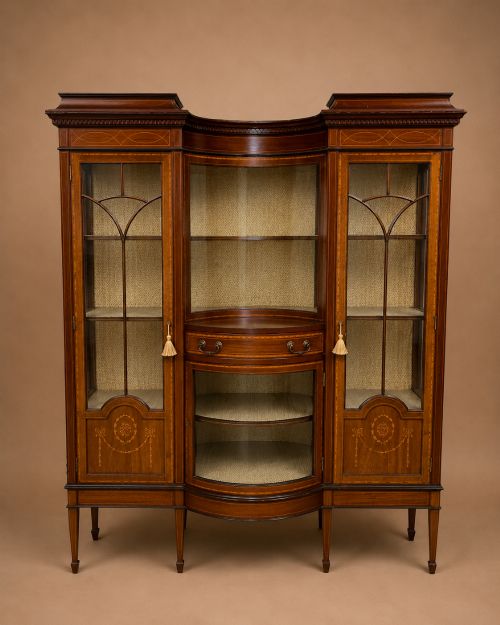
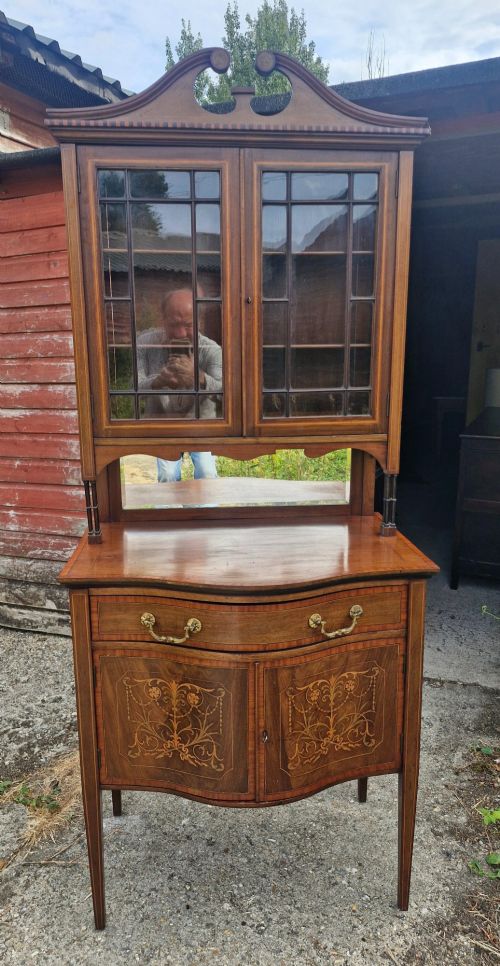
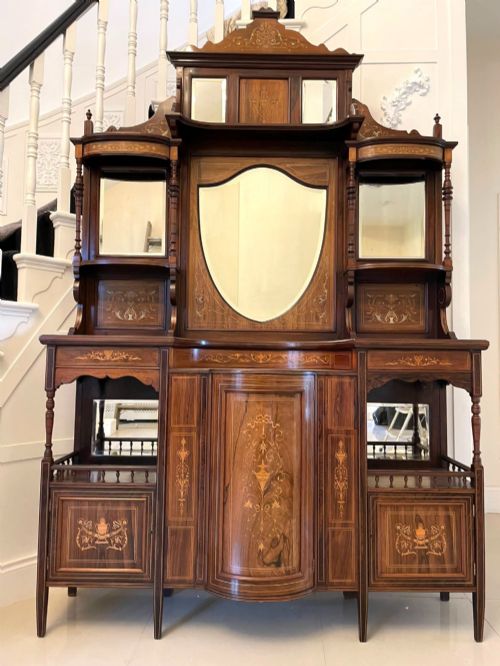
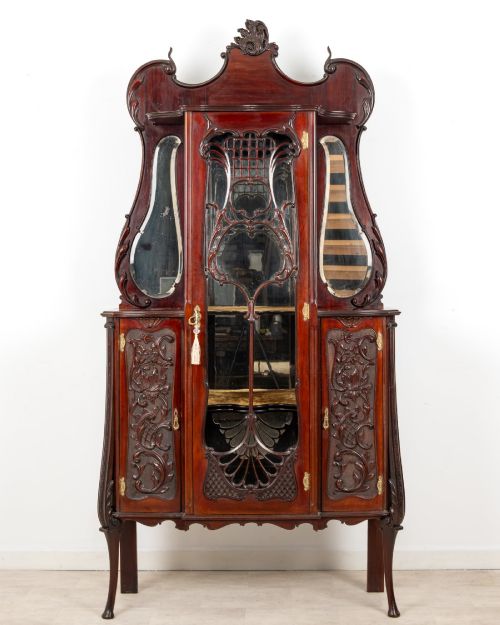
Makers and designers of the period drew upon earlier design idioms, leading to frequent examples executed in the Sheraton Revival style alongside Art Nouveau expressions. Forms range from compact bow-front cabinets to larger two-part display units.
Materials and construction methods
Makers utilised dense timbers such as mahogany, rosewood, and burr walnut as the primary structural foundations for these cabinets. Satinwood and contrasting wood veneers provided fine linear details and decorative surface patterns.
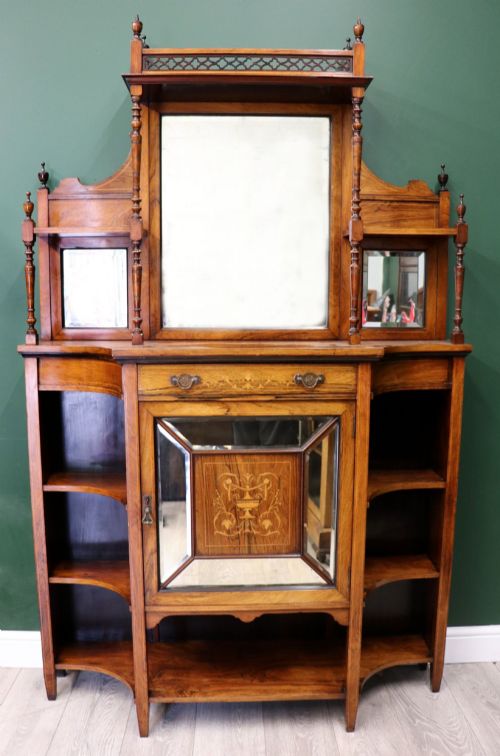
Inlay work and marquetry feature prominently across the pieces, executed with delicate botanical or geometric motifs. Brass hardware, mirrored glass panels, and fabric linings complete the construction of the display compartments.
Edwardian Parlor Cabinet Retail Price Guide 2026
Typical asking prices for edwardian parlor cabinet among the pieces listed under this phrase on Sellingantiques today, from the lower quarter to the upper quarter. They describe what is for sale here now, not the wider market.
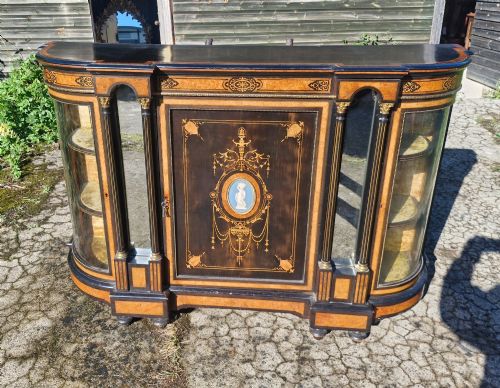
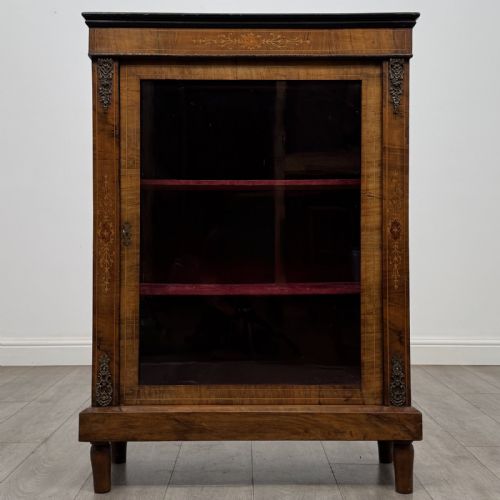
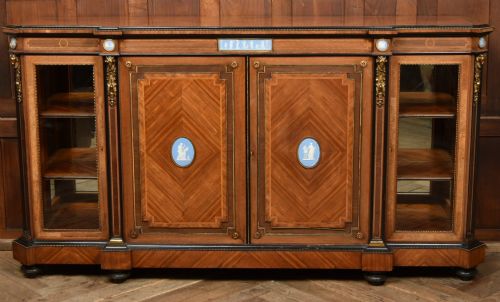
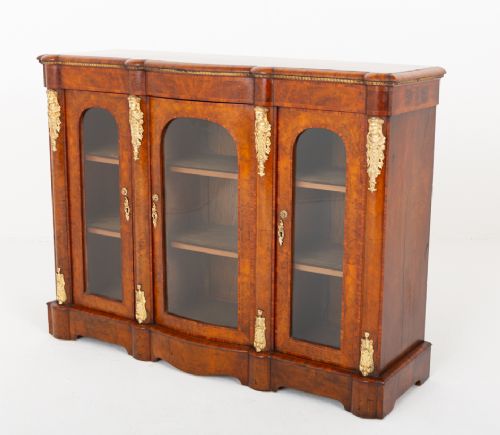
Cabinet forms on this page span display units, credenza sideboards, music cabinets, and chiffoniers with mirror backs.
Distinctions in craftsmanship
Quality rests upon the precision of the timber selection and the complexity of the inlay work integrated into the facade. Finer examples display meticulous grain matching and sophisticated use of contrasting woods.
Structural refinement separates standard production pieces from exceptional items, particularly in the carving of wooden elements and the integration of curved bow-front glass doors.
The Edwardian Parlor Cabinet Glossary
- Marquetry
- Decorative veneer work formed by fitting together small pieces of wood, shell, or ivory to create pictorial designs on the cabinet surface. This technique requires considerable skill from the artisan.
- Credenza
- A low cabinet or sideboard designed for display and storage, often featuring glass-fronted side cupboards flanking a central door. It became a prominent form in Victorian and Edwardian reception rooms.
- Bow front
- A convex curved cabinet front that projects outward in a smooth arc. This shape demands precise woodworking to ensure doors fit tightly within the frame.
- Sheraton Revival
- A late nineteenth and early twentieth century design movement that reinterpreted the light, classical furniture forms of the eighteenth-century designer Thomas Sheraton.
- Chiffonier
- A compact sideboard or cabinet equipped with enclosed cupboards and frequently topped with a raised shelf or mirror back. It provides versatile storage for smaller living spaces.
Edwardian Parlor Cabinet: Frequently Asked Questions
What is an edwardian parlor cabinet used for?
These cabinets were originally placed in formal reception rooms to hold delicate porcelain, glassware, and decorative ornaments. They kept prized possessions visible yet protected from dust and handling.
Today, owners utilise them in living spaces and hallways for similar display purposes, integrating them into contemporary interiors as statement furniture.
How do I identify an Edwardian piece?
Edwardian cabinets generally date from the period between nineteen hundred and nineteen ten, often exhibiting lighter timbers like satinwood and mahogany. Their decorative inlay tends to be refined and delicate compared to heavier Victorian carving.
Stylistic influences from the Sheraton Revival are common, alongside occasional Art Nouveau curves and simpler geometric borders.
What is the difference between a cabinet and a credenza?
A cabinet is typically an upright display piece featuring glass panels and multiple internal shelves designed for showing off objects. Cabinets can range from narrow music storage units to large two-part display furniture.
A credenza is traditionally a lower, broader piece incorporating cupboards and sometimes a mirror back, serving both display and surface storage functions.
How should I care for mahogany and rosewood?
Protect antique timber surfaces from direct sunlight to prevent fading and keep them away from sudden temperature shifts that cause wood to split. Regular dusting with a soft, dry cloth maintains the finish.
Avoid applying silicone polishes or heavy waxes, consulting a specialist if the timber requires deep nourishment or cleaning.