


Edwardian Painted Fruit Porcelain
Edwardian painted fruit porcelain brings botanical and orchard scenes into the room through hand-painted cabinet plates, bowls and vases.
Edwardian Painted Fruit Porcelain
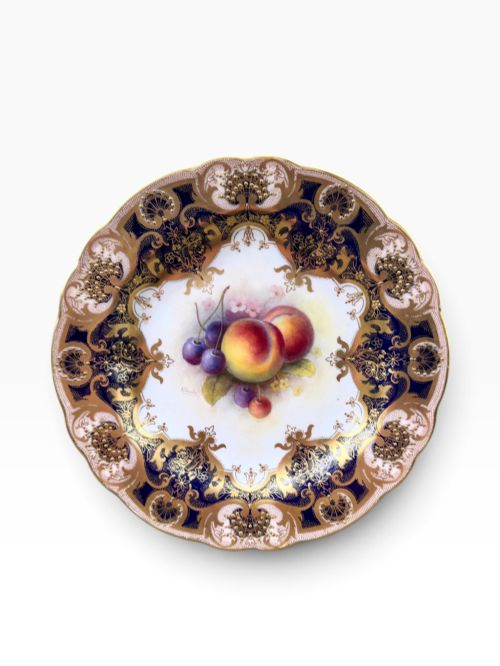
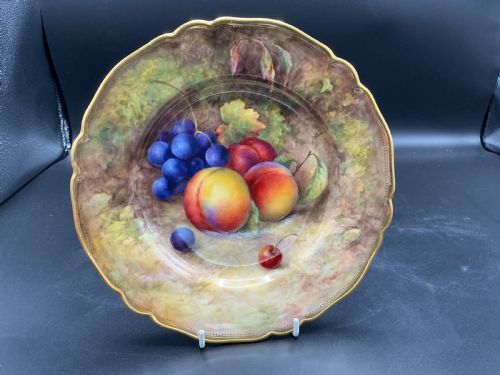
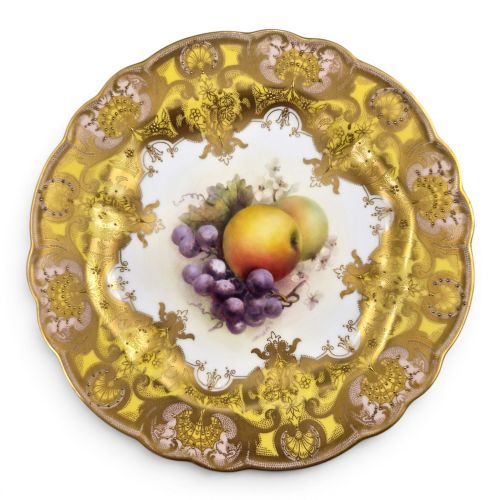
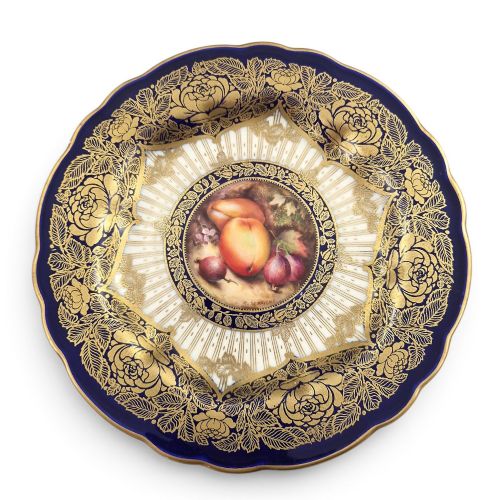
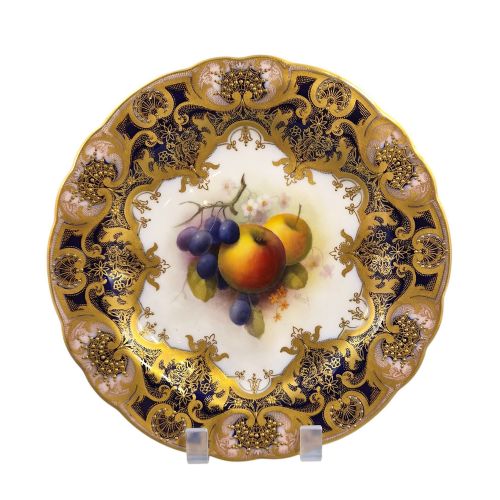
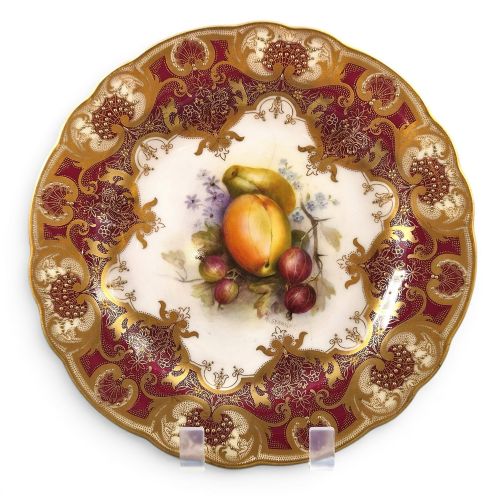
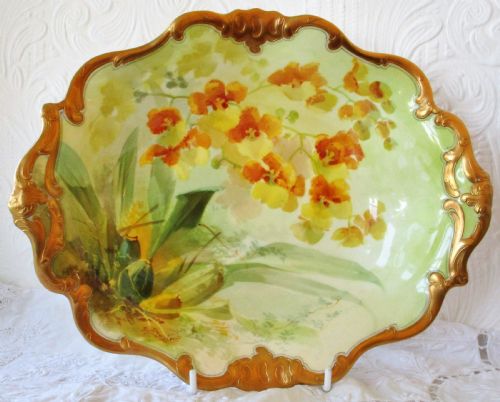
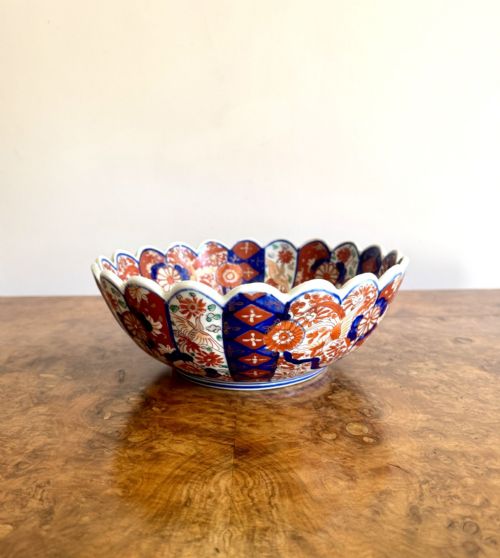
These pieces comprise decorative bowls, cabinet plates, vases, and centrepieces created primarily by Royal Worcester and decorated with detailed fruit studies. The form most commonly met on this page is the cabinet plate or dish, designed to be displayed on a wall or dresser rather than used for dining.
The objects span the early twentieth century, drawing on Edwardian tastes for naturalism and traditional English fine china production. Makers applied rich botanical compositions to porcelain bodies, resulting in functional shapes transformed entirely into display pieces.
Materials and Technique
Makers utilised fine bone china and standard porcelain as the base material for these items, applying smooth glazes to create an ideal surface for detailed painting. Artisans then brushed enamel pigments by hand to capture the rich colours of apples, grapes, peaches, and berries.
Gilding and gold leaf often frame the central painted fruit scenes, adding metallic borders and edge detailing to plates, bowls, and vases. Firing fixed the enamels and gold securely into the glaze, producing a glossy finish that protected the delicate pigments.
Materials recorded across the inventory include fine bone china, enamel, and gold leaf applied to decorative bowls and cabinet plates.
Judging Quality
Quality rests upon the skill of the painter, whose hand-rendered fruit studies determine whether a piece is standard commercial ware or a masterwork. Signed pieces by notable artists display superior brushwork, subtle colour blending, and realistic depth within the fruit clusters.
The application of gold leaf and gilt enamel also distinguishes finer examples, showing precise lines and rich lustre rather than flat or faded metallic touches. Additionally, the crispness of the porcelain moulding and the balance of the overall composition elevate certain cabinet plates and vases above others.
Royal Worcester·Royal Doulton·Schierholz
The Edwardian Painted Fruit Porcelain Glossary
- Cabinet Plate
- A decorative plate intended for display in a cabinet or on a wall rather than for everyday dining use. These items frequently feature elaborate painted scenes and gilded rims.
- Bone China
- A type of porcelain incorporating bone ash, yielding a strong, bright white body suited to fine hand-painting and intricate moulding. It forms the base for many twentieth-century decorative pieces.
- Gilding
- The application of gold leaf or gold powder to ceramic surfaces for decoration. It frames the central painted motifs and adds lustre to handles and edges.
- Enamel
- Vitreous coloured glass fused to the porcelain surface during firing. It provides the vibrant pigments used for the detailed fruit and botanical studies.
- Comport
- A raised decorative dish or bowl supported on a pedestal, used traditionally for serving fruit or sweets. They often appear as centrepieces on dining tables or sideboards.
Edwardian Painted Fruit Porcelain: Frequently Asked Questions
What is edwardian painted fruit porcelain?
These items are porcelain plates, bowls, and vases decorated with hand-painted fruit designs, produced mainly by English factories during the early twentieth century.
They combine fine ceramic forms with botanical artistry, created primarily for display in cabinets or on sideboards.
How were these porcelain pieces used?
Plates and dishes served as cabinet pieces to display artistic skill in the home, while bowls and vases held potpourri or floral arrangements.
Their owners placed them in drawing rooms and dining rooms to signal refinement and appreciation for traditional craftsmanship.
How do I care for painted porcelain?
Keep pieces out of direct sunlight to prevent the enamel colours and gilt details from fading over time.
Dust them gently with a dry, soft cloth and avoid washing them in dishwashers to protect the delicate hand-painted surfaces.
How do I identify the artist?
Look closely near the edge of the fruit painting for a signature or initials written by the decorator.
Factory backstamps on the underside of the porcelain also help date the piece and confirm the maker.