




Edwardian Padded Bench
An edwardian padded bench provides compact seating with upholstered comfort, spanning piano stools, footstools and window seats.
Edwardian Padded Bench
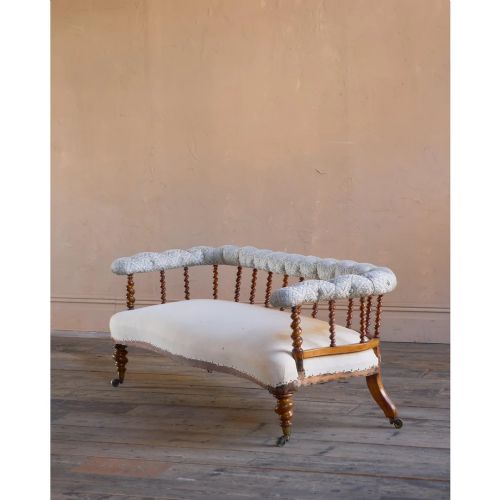
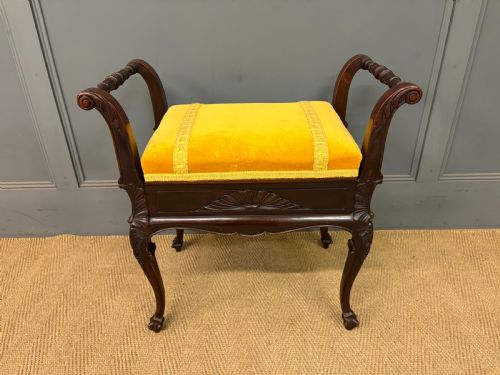
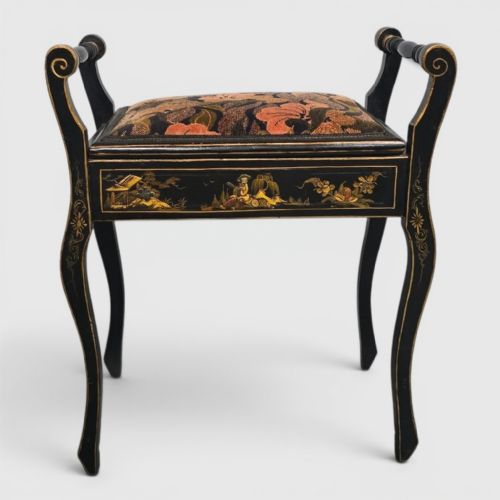
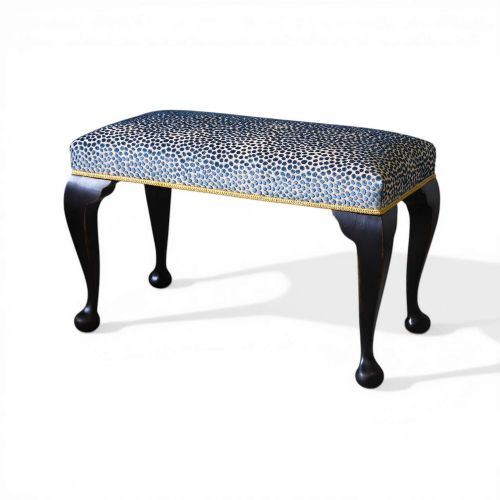
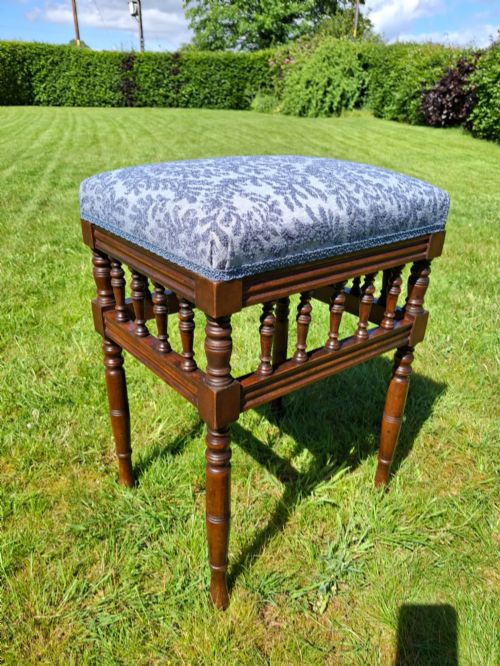
When searching for an edwardian padded bench, you encounter diverse small seating forms including piano stools, dressing table stools, footstools, window seats and club fenders spanning the late nineteenth and early twentieth centuries.
The selections on this page range from compact mahogany piano stools and inlaid Edwardian seating to larger Victorian leather ottomans, brass club fenders and salon settees.
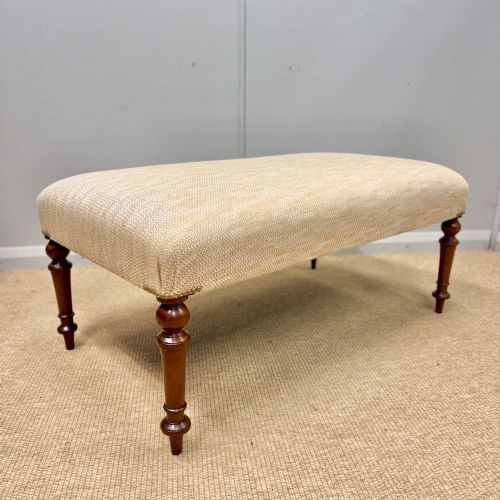
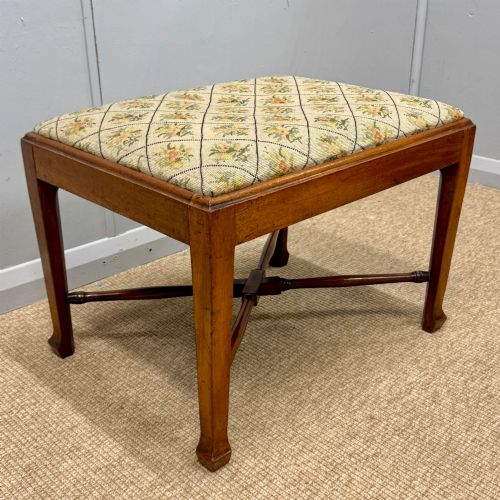
You are most likely to meet mahogany or walnut frames paired with traditional textile, velvet or leather upholstery, often featuring turned legs or cross stretchers.
How they were made
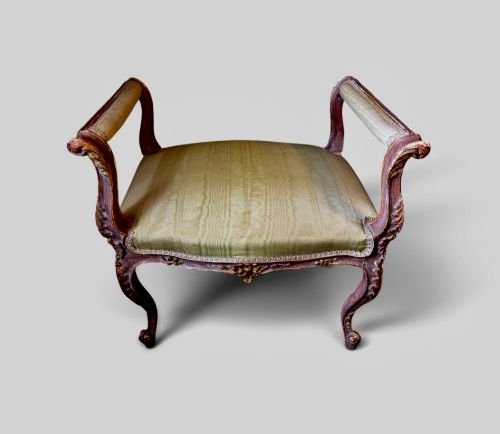
Frames are constructed from dense hardwoods such as mahogany, walnut, oak and ebonised timber, occasionally accented with giltwood, satinwood inlay or brass fittings.
Seating portions utilise traditional padding and upholstery methods, finished in contemporary or period fabric, velvet, textile and hand-dyed leather.
Listings feature periods spanning the Victorian era through the Edwardian years into the 1930s, utilising mahogany, walnut, oak, brass and leather.
What varies in quality
The refinement of the timber framework sets apart superior examples, visible in crisp hand-carving, quality inlay work, sturdy turned legs and well-fitted structural joinery.
Upholstery finish and the integrity of underlying padding determine the overall execution, alongside the quality and original presence of hardware such as brass castors or fender rails.
C. Hindley & Sons
The Edwardian Padded Bench Glossary
- Club Fender
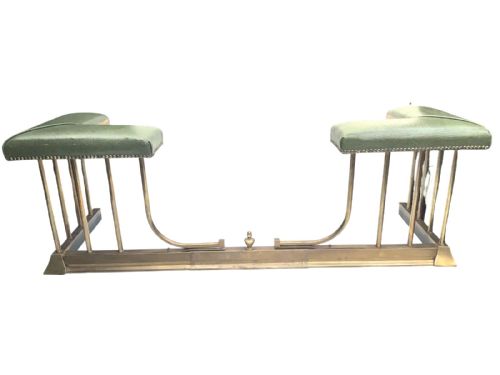
- A low fireside seat featuring an open metal frame and upholstered top rails. These pieces traditionally combine brass or steel framework with leather seating.
- Duet Stool
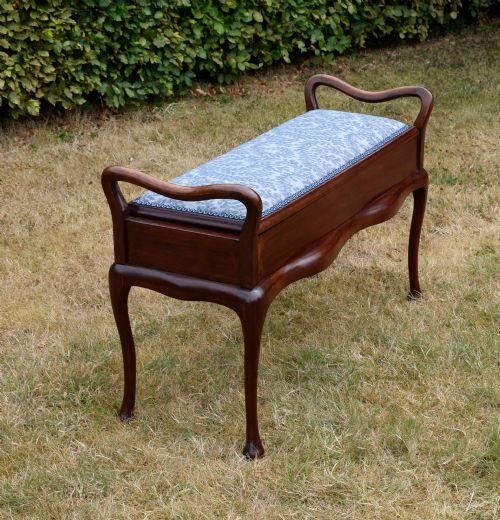
- An extended piano stool designed to seat two players side by side. They frequently incorporate hinged seats opening to reveal sheet music storage.
- Window Seat
- A long, narrow bench designed to fit into a window recess. These often feature upholstered top pads supported by wooden frames or small settees.
- Cross Stretcher
- A structural X-shaped brace connecting the legs of a stool or bench near the base. This provides added rigidity and stylistic detail to the undercarriage.
- Ebonised
- Timber treated with a dark finish to imitate expensive ebony. This technique was popular in Victorian and Edwardian cabinet making for a sleek appearance.
Edwardian Padded Bench: Frequently Asked Questions
Where were piano stools placed?
These stools sat directly before upright or grand pianos in Victorian and Edwardian parlours. Their compact footprint allowed them to slide neatly beneath keyboard consoles when not in use.
Many designs included internal compartments beneath hinged lids to keep sheet music organised. This dual purpose made them a standard fixture in music rooms.
How do I use a club fender?
Club fenders are positioned around the hearth to provide low, comfortable seating near the fire. The open metal base allows heat from the fireplace to circulate freely into the room.
They also serve as a physical barrier to protect hearth rugs from stray sparks. The upholstered top rails offer a sturdy perch for warming feet or sitting.
What is a window seat used for?
Window seats provide casual seating framed against natural light in living rooms and bedrooms. Their narrow proportions allow them to occupy shallow spaces without blocking pathways.
Historically, they offered a bright spot for reading or needlework before electric lighting became widespread. Today they function as versatile accent furniture.
How do I distinguish Edwardian from Victorian styles?
Victorian pieces often display heavier proportions, darker woods, and ornate carved ornamentation. The focus lies on robust construction and rich, formal finishes.
Edwardian designs typically exhibit lighter frames, simpler lines, and delicate inlay work. The overall aesthetic shifts toward airier forms and greater versatility.