



Antique Inlaid Settee
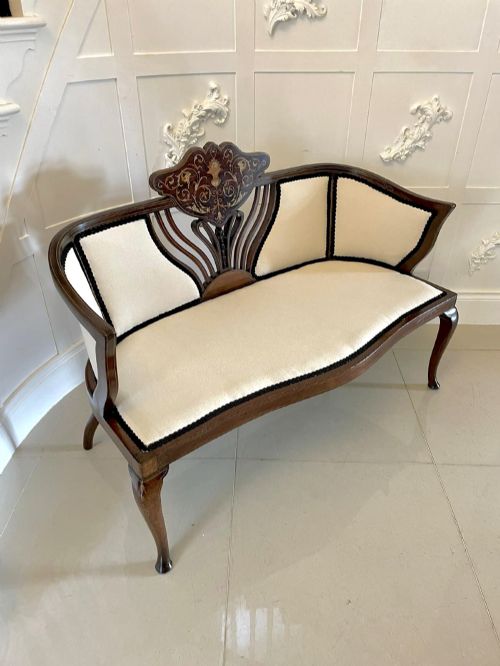
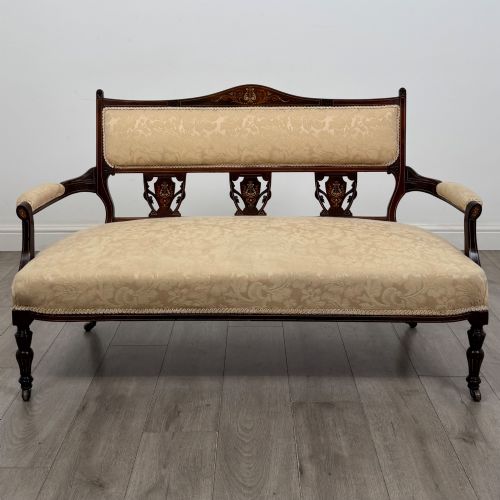
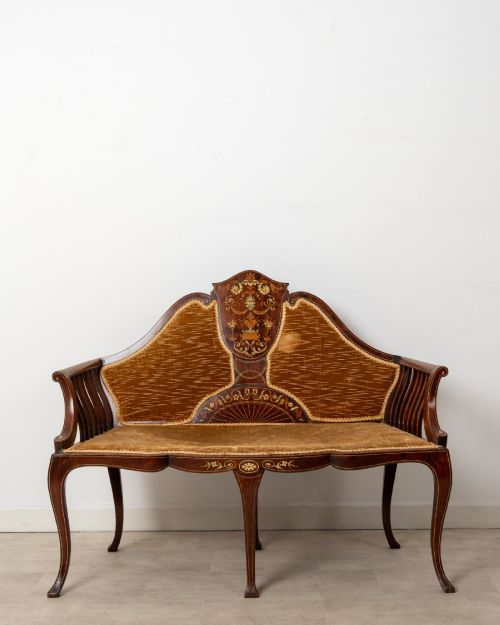
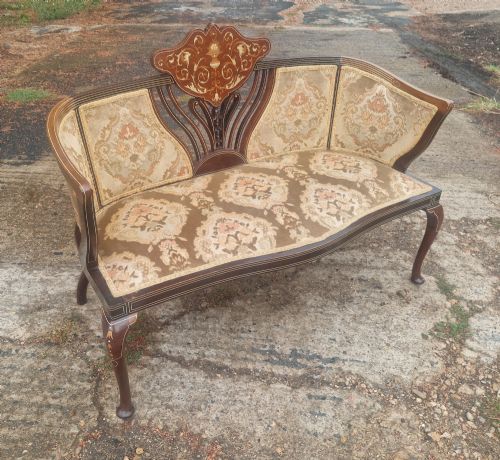
When you search for an antique inlaid settee, you are looking at nineteenth and early twentieth century upholstered seating decorated with contrasting wood veneers.
Antique Inlaid Settee
An antique inlaid settee is a upholstered two-seater or multi-seat couch designed for formal rooms, featuring decorative wood veneers embedded into the structural frame. The search phrase covers pieces spanning from the Victorian era through the Edwardian period and up to nineteen-twenty.
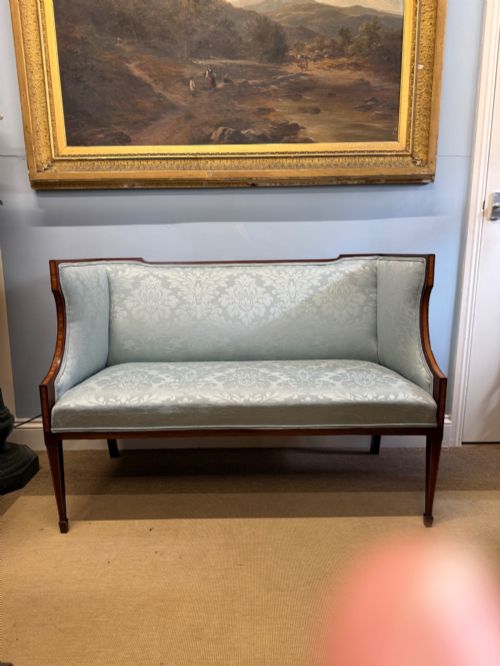
The most common version met on this page is the Edwardian mahogany salon settee, frequently embellished with satinwood or boxwood inlay. These range from compact two-seater sofas to larger parlour suites complete with matching chairs.
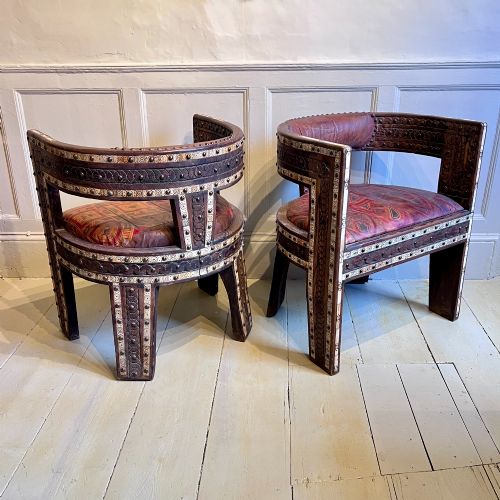
Beyond standard salon seating, variations include rosewood couches from the Victorian period, window seats, and revival styles referencing Dutch neo-classical or Hepplewhite designs. Certain examples incorporate specific regional influences such as Islamic or Moorish ornamentation.
Materials and construction
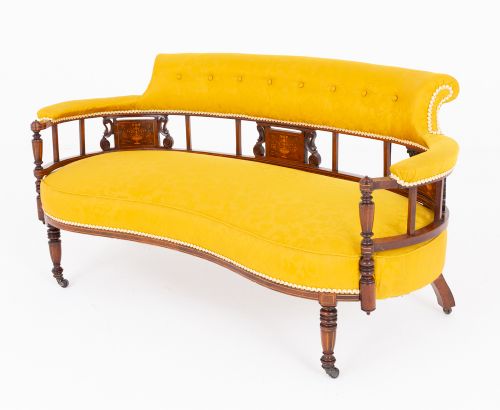
Makers constructed the primary frames of these settees using solid hardwoods such as mahogany, rosewood, and occasionally walnut. Selected sections received decorative veneers of lighter timbers, particularly satinwood and boxwood, to create contrasting geometric or floral patterns.
Inlay techniques involved cutting precise recesses into the primary timber ground and fitting contrasting wood pieces flush into the surface. Additional decorative detailing on select pieces includes bone work, mother of pearl, or brass elements integrated alongside the woodwork.
Some nineteenth-century makers tucked small conversation seats into corners so polite visitors could whisper without craning their necks.
Assessing quality
Quality in these settees rests primarily on the precision of the timber work and the integrity of the frame construction. Finer examples display tightly fitted inlay with crisp junctions between contrasting woods, whereas lesser pieces rely on simpler painted or stamped approximations of true marquetry.
The selection of primary timber also distinguishes grades of manufacture, with dense, evenly figured rosewood and high-grade mahogany commanding greater presence than ordinary softwoods or plain secondary timbers. Upholstery standard varies from basic webbing to complex sprung foundations tied by hand.
The Antique Inlaid Settee Glossary
- Inlay
- A decorative technique where small pieces of contrasting wood, bone, or shell are fitted into prepared hollows in the wooden surface of the frame. This method creates flat, patterned ornamentation across the backrests and rails.
- Marquetry
- An elaborate form of veneer work assembling various woods into pictorial or symmetrical designs. It covers entire surfaces rather than small linear insertions.
- Satinwood
- A durable, light yellow timber prized for its lustrous grain. It is frequently employed for contrasting inlay panels against darker mahogany or rosewood frames.
- Salon suite
- A coordinated set of seating furniture comprising a settee accompanied by matching armchairs and chairs. These groupings were manufactured for formal reception rooms.
- Scroll end
- A curved wooden arm or terminal shaped in a continuous sweeping scroll. This profile appears frequently on nineteenth-century couches and window seats.
Antique Inlaid Settee: Frequently Asked Questions
Where were antique settees placed in the home?
These pieces generally occupied formal reception spaces such as drawing rooms, parlours, and large entry halls where guests were received.
Smaller variants also served in bedrooms as end-of-bed seating or within specialised window recesses to provide casual seating.
How do I identify an Edwardian settee?
Edwardian examples typically feature lighter mahogany frames combined with delicate satinwood stringing or boxwood floral motifs. The overall proportions tend to be lighter and more slender than earlier Victorian seating.
Many retain original proportions suited for compact salon arrangements rather than heavy formal drawing rooms.
Did these settees come as part of larger suites?
Makers frequently produced settees alongside matching pairs of armchairs and single chairs to furnish entire rooms uniformly. Surviving suites keep the matching timber and inlay motifs consistent across every seating piece.
Complete suites appear across both Victorian and Edwardian manufacturing periods.
What is the difference between a settee and a sofa?
The terms are often used interchangeably in historical listings, though settees traditionally describe lighter, upholstered wooden-framed seating with exposed woodwork. Sofas can denote heavier, more fully upholstered designs intended for relaxed lounging.
In period cataloguing, both labels apply to two-seater and three-seater formal couches.