

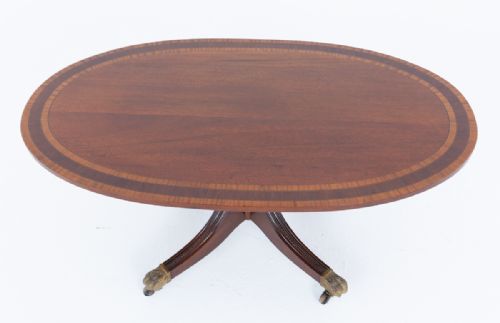


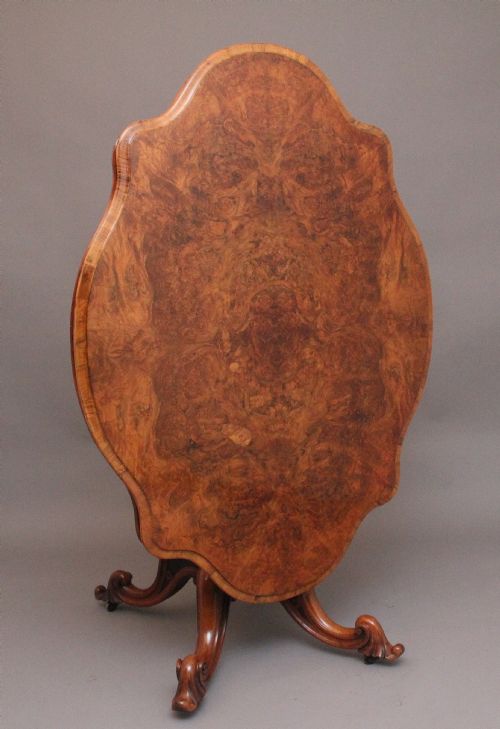

Edwardian Oval Centre Table
An Edwardian oval centre table offers a graceful, curved surface designed to sit proudly in the middle of a room.
Edwardian Oval Centre Table
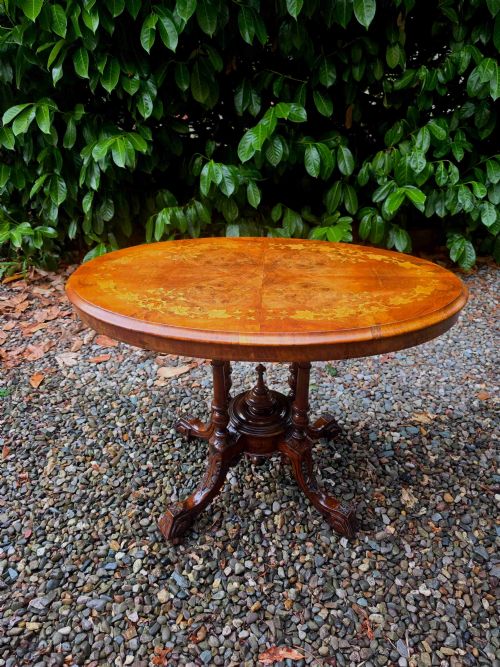
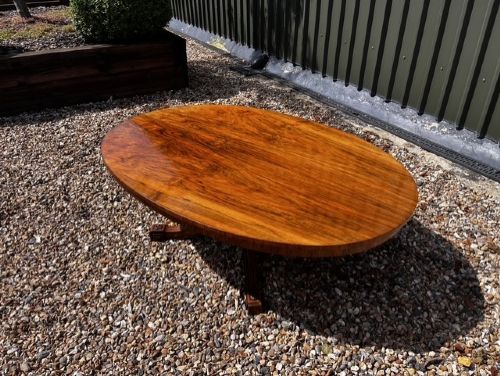
An edwardian oval centre table represents a refined piece of furniture typically designed to anchor a principal room without the hard corners of traditional rectangular pieces. Buyers seeking this form will find examples originating from the early twentieth century alongside earlier Victorian and nineteenth-century antecedents that share the curved top.
The pieces appearing most frequently on this page span walnut, mahogany, and satinwood constructions, often embellished with delicate boxwood inlay or marquetry details. Many incorporate pedestal bases, stretcher supports, or multiple tiers, providing practical display space while maintaining a light visual footprint.
While the search specifically highlights the Edwardian era, the listings encompass nineteenth-century interpretations and Sheraton Revival revivals that echo the same proportions and graceful oval silhouettes. These tables function equally well as occasional surfaces, breakfast tables, or freestanding focal points within a period interior.
Materials and construction methods
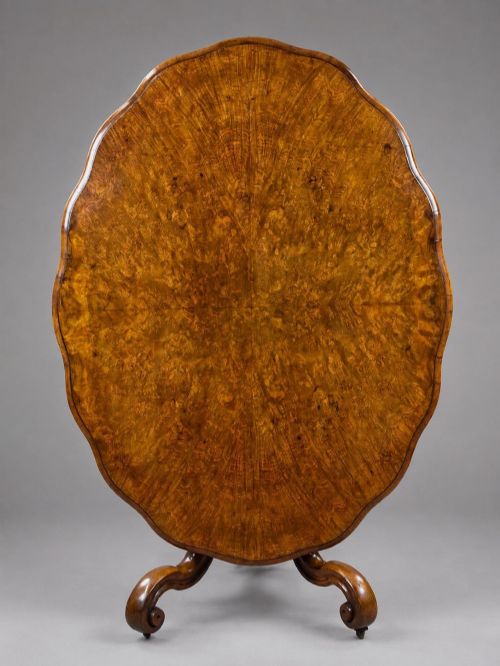
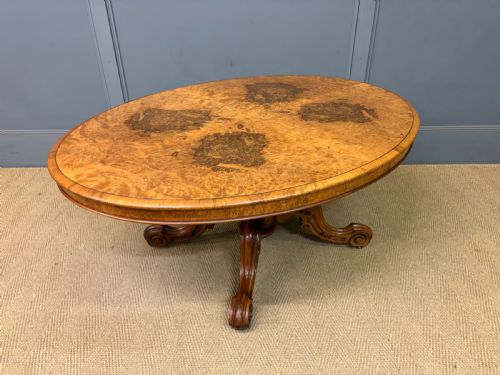
Cabinetmakers utilised rich timber veneers such as burr walnut, figured mahogany, and pale satinwood to create visually striking table tops, frequently applying contrasting boxwood inlay to define the borders. The underlying carcasses relied on solid secondary woods to provide stability for the sweeping curves of the oval top.
Pedestal columns and multi-tiered frames required skilled joinery to support the weight of the timber above without encumbering the floor space. Crossbanding and fine stringing were meticulously applied by hand to accentuate the curved perimeter of each piece.
Listings feature tables spanning the nineteenth century through the Edwardian era, incorporating mahogany, walnut, and satinwood.
Distinctions in craftsmanship
The tier of quality in these tables rests upon the selection of the timber veneers, where highly figured burr walnut or carefully matched satinwood demonstrates superior cabinetmaking choices over plain or uniform boards. The crispness and complexity of the boxwood inlay further separate standard workshop output from exceptional exhibition pieces.
Structural finesse dictates the longevity and elegance of the design, visible in the stability of the central pedestal, the precision of the joints on multi-tiered stands, and the sympathetic integration of any drop-leaves or tilting mechanisms.
Holland & Sons Of London·Edwards & Roberts
The Edwardian Oval Centre Table Glossary
- Crossbanded
- A technique where a border of veneer is applied to the edge of a table top with the grain running perpendicular to the centre panel. This creates a neat framing effect common in finer nineteenth and early twentieth-century cabinet work.
- Marquetry
- The art of forming decorative patterns on a wooden surface using various veneers of different woods, metals, or shells. It transforms a plain table top into a pictorial display.
- Pedestal
- A single central column supporting the table top, often branching out into three or four carved feet at the base. This construction allows maximum legroom around the curved perimeter.
- Satinwood
- A hard, durable timber featuring a lustrous yellowish-orange sheen that takes a fine polish. It was heavily favoured during the Edwardian period and the Sheraton Revival for bright, elegant occasional tables.
- Stretcher
- A horizontal wooden brace connecting the legs of a table to increase structural rigidity. On these pieces, stretchers frequently intersect centrally beneath a pedestal or support a lower tier.
Edwardian Oval Centre Table: Frequently Asked Questions
Where should an oval centre table go?
These pieces work best positioned in the middle of a room or drawing space where their curved top can be appreciated from all angles without blocking pathways.
They also function effectively as large occasional tables against a principal wall when floor space requires a shallower footprint.
How do I care for polished mahogany and walnut?
Maintain the timber surfaces by dusting regularly with a soft, dry cloth and avoiding placement near direct heat sources or strong sunlight.
Applying a quality beeswax periodically will nourish the wood and preserve the natural lustre of the grain.
Can I use an antique centre table for dining?
Certain larger examples featuring sturdy pedestal or four-leg constructions were historically utilised for breakfast or dining purposes.
Checking the height and leg clearance of the specific piece will determine whether it comfortably accommodates chairs for seated use.
How do I distinguish Edwardian from Victorian tables?
Edwardian examples generally exhibit lighter timbers like satinwood, simpler inlaid motifs, and more restrained proportions influenced by the Sheraton Revival.
Victorian pieces tend to favour heavier burr walnut or dark mahogany, deeper mouldings, and more robust pedestal bases.