


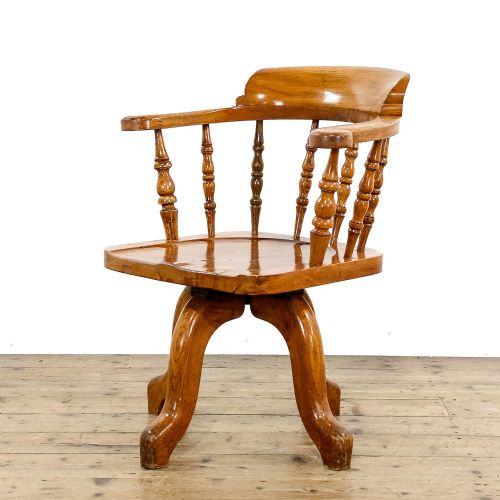


Edwardian Oak Swivel Chair
An edwardian oak swivel chair brings sturdy mechanical function and domestic comfort to a working space, combining rotary rotation with solid timber construction.
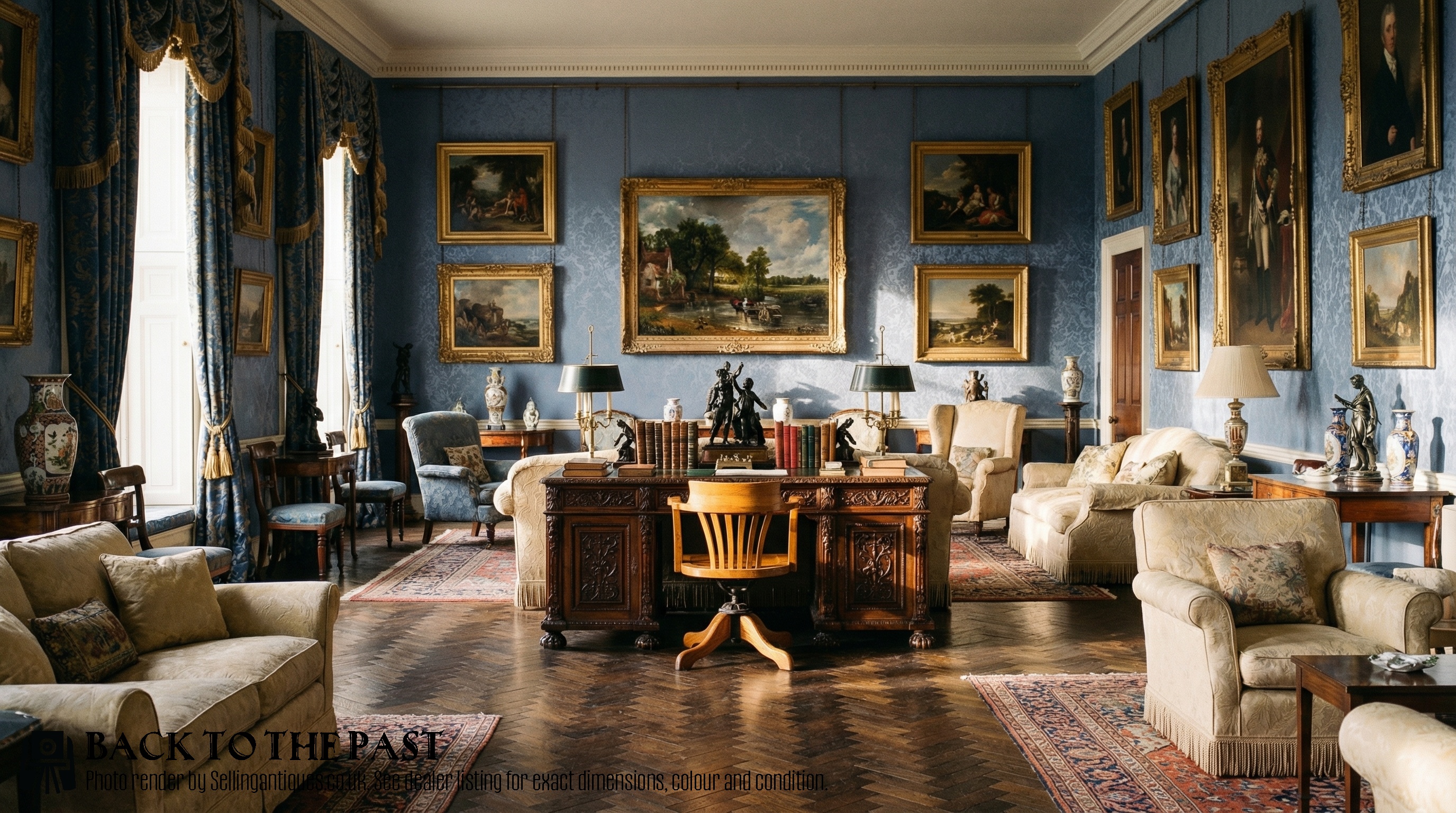
Edwardian Oak Swivel Chair
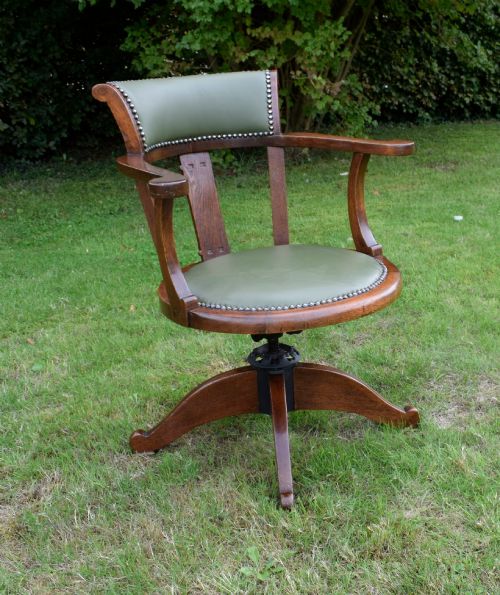
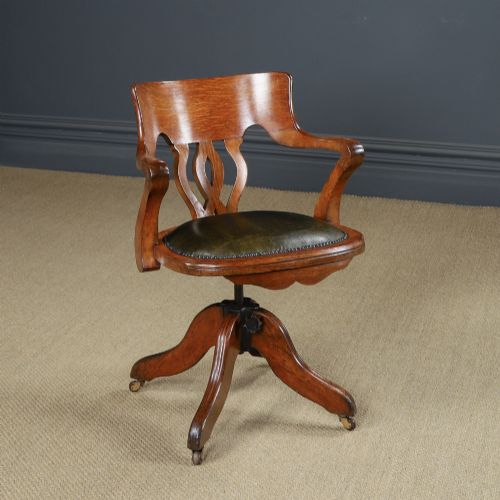
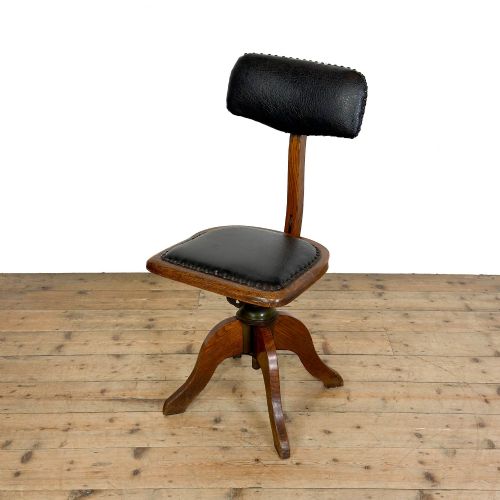
An edwardian oak swivel chair is a functional seating form designed primarily for office, desk or library use during the late Victorian and early 20th century periods. These pieces provide mechanical rotation and adjustable height mechanisms to assist the seated worker throughout long hours at a ledger or writing desk.
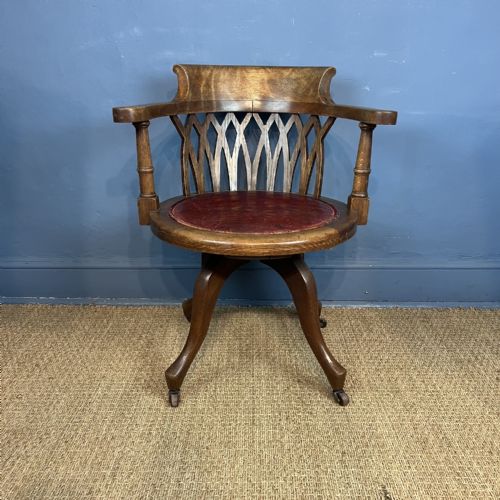
The version most commonly met on this page is the Edwardian desk chair or revolving office armchair, frequently constructed from solid oak with integrated swivel and tilt mechanisms. Alongside standard office models, variations include bergere seated forms, captain's chairs, and specialised maritime or shipping pieces.
Origins span from the late 19th century through the Edwardian era and into the early 20th century, capturing a period of transition in commercial workspace ergonomics. Makers utilise robust timber frames designed to withstand heavy daily rotation.
How they were made
Makers combine solid oak frames with iron, cast iron and steel mechanisms to create the necessary revolving and tilting movement. Wooden components are joined using traditional methods, while metal spindles and spider bases support the swivel action beneath the seat.
Upholstered versions incorporate leather, tan hide or green leather pads over padded seats, whilst other examples retain plain wooden or cane bergere seats. Brass fittings often appear on adjustments and castors, adding functional detail to the iron and steel hardware.
Some maritime examples feature heavy wooden carving designed to keep Victorian passengers firmly anchored during rough channel crossings.
What varies in quality
The standard of an edwardian oak swivel chair rests on the complexity of its timber turning and the robustness of its undercarriage mechanism. Substantial cast iron swivel assemblies with smooth tilt action separate utility office seating from finer domestic library examples.
Materials also dictate the grade, with heavily carved frames, quality green or tan leather upholstery, and secondary timbers like beech marking out superior production. The integrity of the revolving pivot and the weight of the oak frame determine the lasting stability of the piece.
Kendrick & Jefferson·Edward William Godwin·Hillcrest
The Edwardian Oak Swivel Chair Glossary
- Swivel action
- A mechanical pivot assembly beneath the seat that allows the chair to rotate fully. This movement relies on iron or steel spindles and bearings housed within a central hub.
- Bergere
- A type of upholstered armchair featuring woven cane panels on the back or seat. This technique adds lighter texture to heavy oak frames.
- Captain's chair
- A sturdy low-backed armchair designed for office or library use. These typically feature a rounded top rail supported by vertical spindles.
- Tilt mechanism
- An adjustable hardware assembly that lets the seated user lean backward against spring tension. It is controlled by threaded spindles or under-seat levers.
- Aesthetic movement
- A late 19th-century design style emphasising visual and artistic qualities over traditional historic revival. Pieces from this movement often display refined joinery and artistic restraint.
Edwardian Oak Swivel Chair: Frequently Asked Questions
How do I adjust the height?
Adjustment is typically achieved by spinning the seat itself clockwise or counter-clockwise on a central wooden or metal screw thread until the desired height is reached.
Some models also incorporate metal under-seat levers or tension springs to control the backward tilt of the backrest.
Were these used in ships?
Yes, certain variations were adapted for maritime use on passenger liners and vessels, such as those associated with shipping lines like P & O.
These marine examples often feature heavier construction or specialised floor fastenings to remain stable while at sea.
Are the leather seats original?
Leather upholstery on these office chairs frequently shows signs of extensive workplace use, leading to period or later replacement.
Original hides typically exhibit deep patination, while replacement leather is applied neatly over the original stuffing or solid wood base.
How do I tell Victorian from Edwardian?
Victorian examples generally date from the late 19th century and tend to feature heavier carving, darker timber finishes, and more ornate spindle work.
Edwardian pieces from the 1900s and 1910s often display cleaner lines, lighter oak tones, and simpler commercial office forms.