

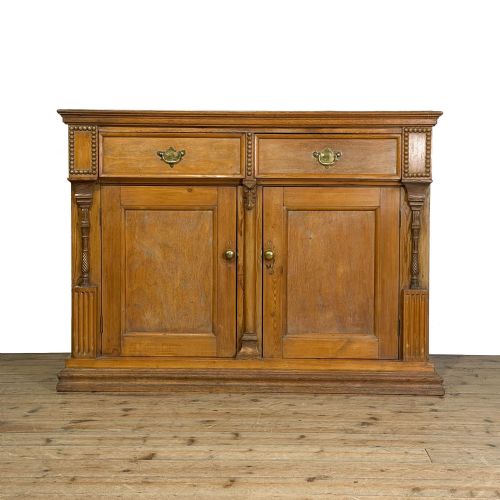
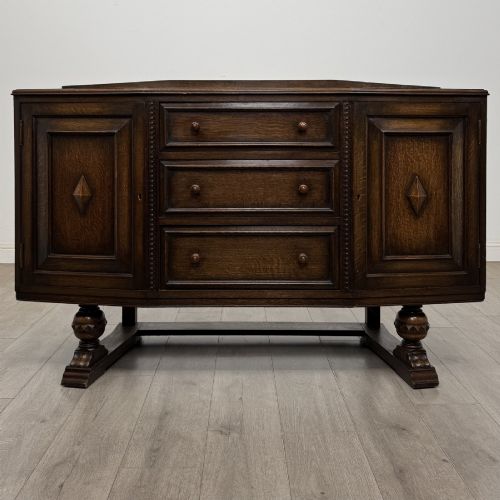
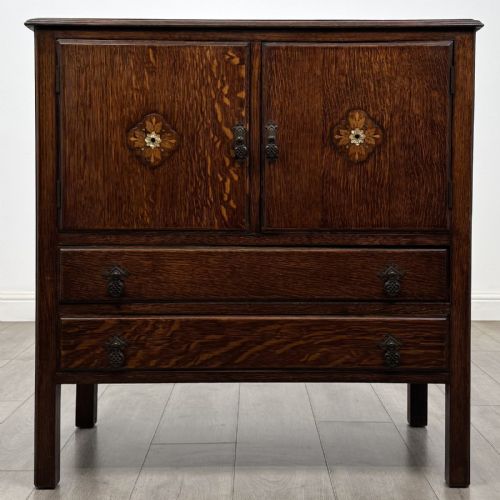
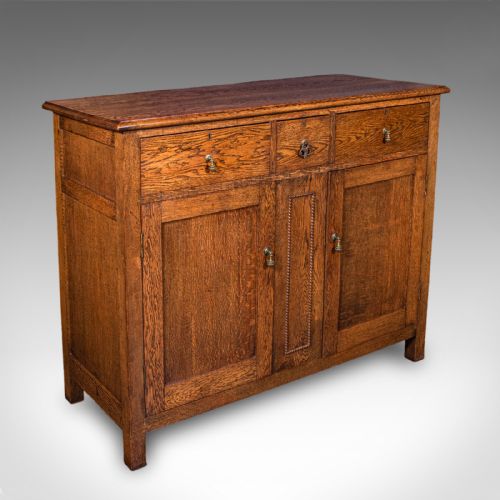
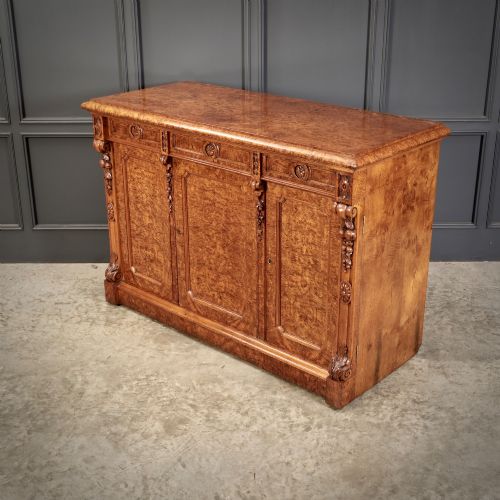
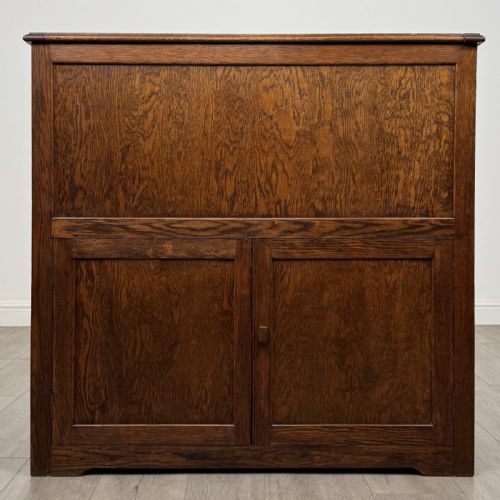
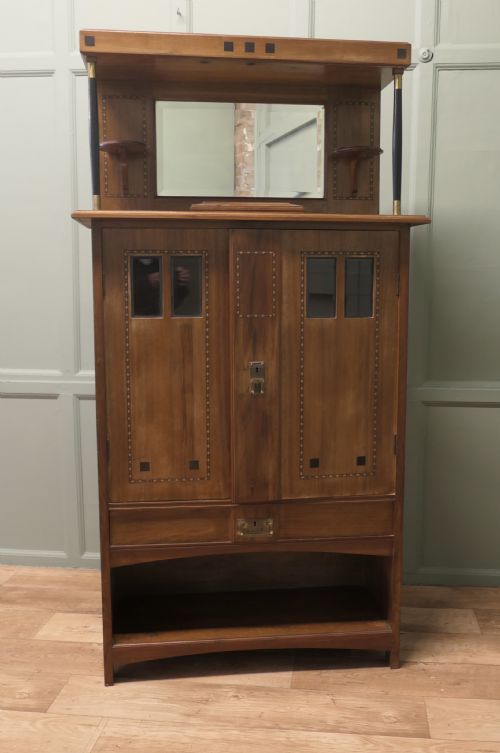
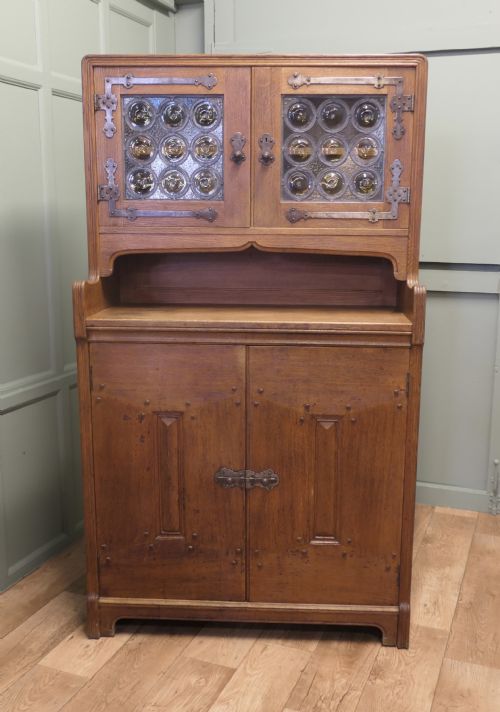
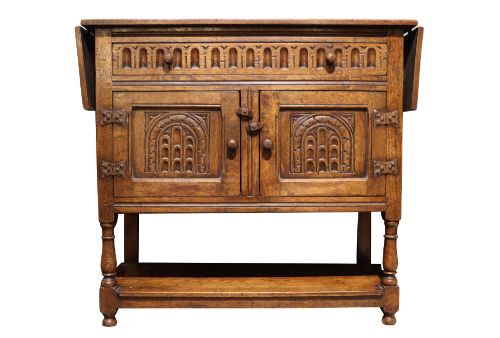
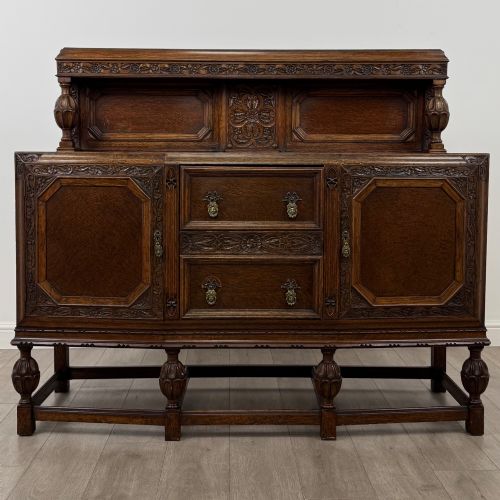
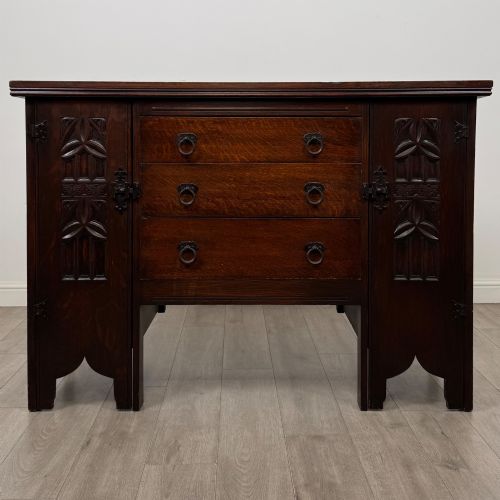
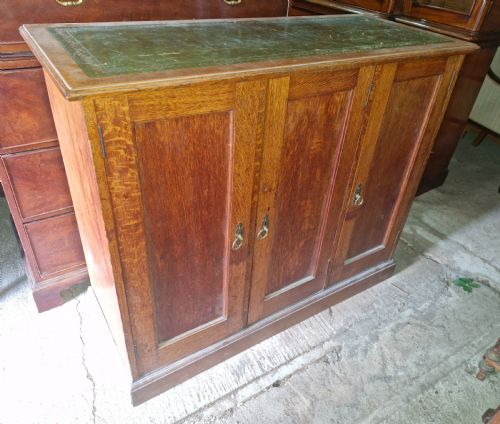
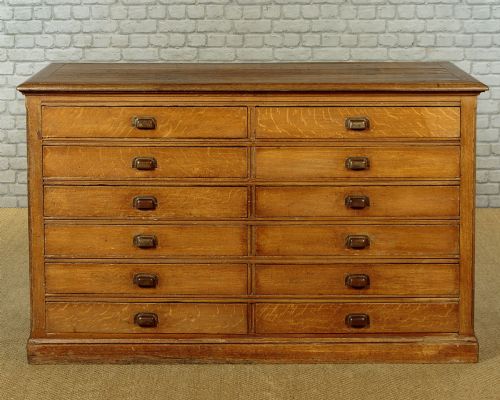


Edwardian Oak Storage Sideboard
An edwardian oak storage sideboard delivers sturdy practicality and rich timber character suited to daily dining room use.
Edwardian Oak Storage Sideboard
An edwardian oak storage sideboard combines cupboard space and drawer capacity for dining and living spaces. These pieces emerge predominantly from the Edwardian period, though related examples span the late nineteenth century and the nineteen-twenties.
Forms range from compact side cabinets and fitted cupboards to large dressers with plate racks and mirror backs. The domestic requirement for organised storage drives the variety of internal pigeon holes, bottle racks, and banks of drawers.
How they were made
Construction relies heavily on solid oak and pollard oak, supported by brass face handles, copper details, and iron hardware. Glass panels appear in cabinet doors and mirror glass lines the backs of display sections.
Workshops utilised carving, barley twist legs, turned supports, and raised galleries to enrich the timber framework. Stylistic influences incorporate Arts and Crafts, Art Nouveau, Gothic Revival, and Jacobean Revival motifs.
Edwardian Oak Storage Sideboard Retail Price Guide 2026
Typical asking prices for edwardian oak storage sideboard among the pieces listed under this phrase on Sellingantiques today, from the lower quarter to the upper quarter. They describe what is for sale here now, not the wider market.
Listings feature periods spanning from the nineteenth century through the nineteen-thirties, incorporating oak, brass, glass, and mirror glass.
What varies in quality
The standard of timber selection and depth of carving distinguish workshop output. Pieces designed by notable firms show finer proportions and more considered integration of hardware like brass handles and mirror glass.
Structural complexity creates variation, ranging from plain functional cupboards to fitted interiors with pigeon holes, bottle racks, and specialised display cabinets. The presence of stamped signatures or documented maker attributions elevates the standing of individual items.
Peter Waals·Maple and Co·Liberty
The Edwardian Oak Storage Sideboard Glossary
- Pollard oak
- Timber taken from trees that have been pollarded, producing a heavily figured and mottled grain pattern. This decorative wood appears on select nineteenth century surfaces.
- Barley twist
- A turned wooden column resembling the spiral shape of a twisted rope or barley sugar. It provides substantial vertical support on legs and uprights.
- Raised gallery
- A low decorative wooden upstand positioned along the top rear edge of a sideboard or dresser base. It prevents items from sliding off the surface.
- Secessionist
- An early twentieth century stylistic movement characterised by geometric forms and rejection of traditional academic ornament. It shares close ties with continental Art Nouveau.
- Pigeon hole
- A small, open compartment within a fitted interior used for sorting papers or household documents. These compartments highlight the functional storage design of Edwardian cabinetry.
Edwardian Oak Storage Sideboard: Frequently Asked Questions
Where should I place an edwardian oak storage sideboard?
Dining rooms and large hallways offer suitable proportions for these substantial timber pieces. They anchor a room while providing functional surface space and enclosed storage.
Ensure adequate clearance for doors to swing open and drawers to extend fully without obstruction from nearby furniture.
How do I maintain oak surfaces?
Regular dusting with a dry, soft cloth maintains the natural lustre of the timber. Avoid silicone sprays which build up and attract dust over time.
Feed the wood periodically with traditional wax polish to prevent drying and preserve the depth of the oak grain.
What is the difference between a sideboard and a dresser?
Sideboards generally feature a low profile with a flat top surface above cupboards and drawers. Dressers incorporate vertical storage structures such as plate racks or enclosed upper shelving.
Both forms utilise robust oak construction to handle daily domestic storage requirements.
How do I identify Arts and Crafts details?
Look for honest construction methods, hand-carved elements, and exposed joinery that celebrate the natural qualities of the oak. Hardware often includes hammered brass or copper handles rather than mass-produced fixtures.
Designs favour utility and simple geometric lines over excessive historical ornamentation.