


Edwardian Oak Step Stool
These edwardian oak step stool designs combine the everyday utility of a climb with the clever engineering of dual-purpose furniture.
Edwardian Oak Step Stool
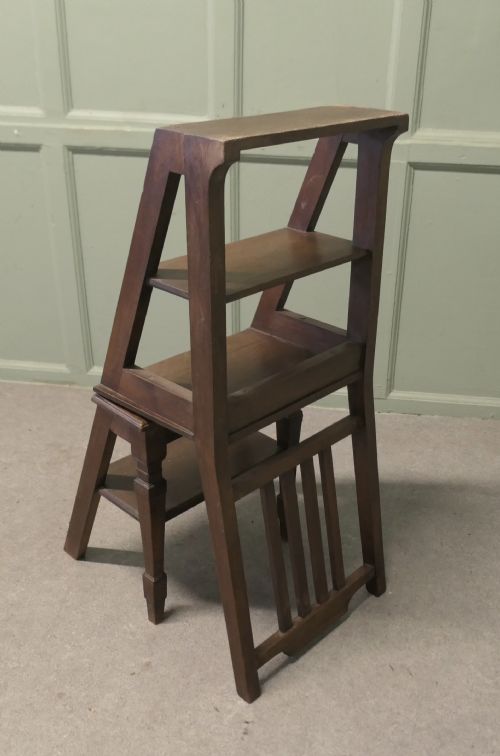
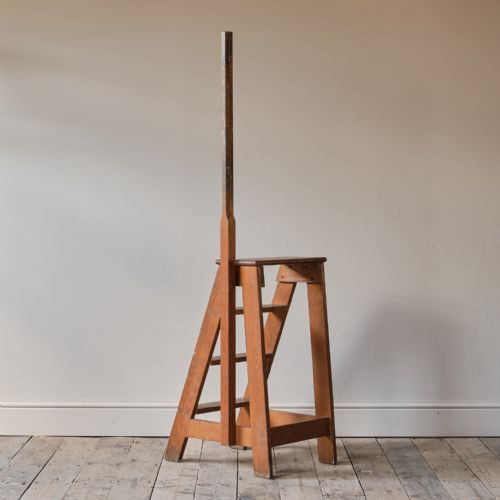
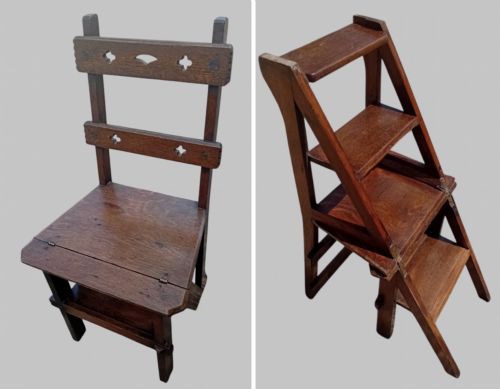
When you search for an edwardian oak step stool, you encounter practical climbing furniture that often transforms into seating. These pieces span late Victorian, Arts and Crafts, and early twentieth-century periods, showing up as library steps, metamorphic chairs, and library ladders.
The domestic forms recorded on this page include solid oak slipper boxes and small footstools alongside taller library flights. You mostly meet sturdy timber builds designed for reaching high shelves or doubling as domestic seating in period rooms.
What varies in quality
The standard of an edwardian oak step stool rests upon the cleverness of its conversion mechanism and the soundness of its timber joints. Pieces that transform cleanly from a chair into a flight of steps display superior carpentry to those with stiff or loose pivots.
Proportion and scale also separate standard examples from finer items, particularly in larger library ladders and steps built for heavy institutional or domestic use. The thickness of the oak and the retention of original brass hardware contribute significantly to the overall integrity of the piece.
Listings span several decades, encompassing late Victorian, Arts and Crafts, and early twentieth-century periods executed in oak with brass hardware.
The Edwardian Oak Step Stool Glossary
- Metamorphic
- Furniture designed to transform from one object into another, such as a chair turning into a set of steps. This ingenious engineering was popular in domestic libraries.
- Arts and Crafts
- A design movement focusing on traditional craftsmanship, simple forms, and visible construction methods. Pieces in this style often highlight the natural grain of the oak.
- Library steps
- A sturdy flight of wooden stairs designed to reach high bookshelves in period rooms. They appear in various heights, from small footstools to large multi-tiered ladders.
- Slipper box
- A low wooden box with a hinged lid used for storing footwear or small items near a fire. These sturdy oak boxes often double as low seats.
Edwardian Oak Step Stool: Frequently Asked Questions
How do metamorphic library chairs work?
These pieces use clever pivoting hinges and locking brackets concealed within the wooden frame. You simply rotate or unfold the backrest and seat sections to reveal a stable flight of steps.
This dual-purpose design allowed homeowners to save space in smaller rooms while maintaining practical access to high shelves.
Are these steps safe to use today?
Most antique oak steps remain structurally robust due to dense hardwood construction and traditional joinery. However, you should check that all pivoting brass fittings and wooden treads lock securely before climbing.
Heavier models designed for libraries offer exceptional stability, whereas smaller footstools serve better for light domestic reach or as casual seats.
What periods do these pieces date from?
The items span from the late nineteenth century through the Edwardian era up to the 1920s. You will find stylistic influences ranging from Victorian formality to the simpler lines of the Arts and Crafts movement.
Makers during these decades continued producing traditional library furniture alongside smaller rustic country items for the home.
How do I care for antique oak furniture?
Keep wooden steps away from direct heat sources and drastic humidity changes to prevent the oak from splitting. Regular dusting and occasional application of natural wax will preserve the finish and grain.
Avoid harsh chemical cleaners that can strip the aged patina built up on the timber over the decades.