
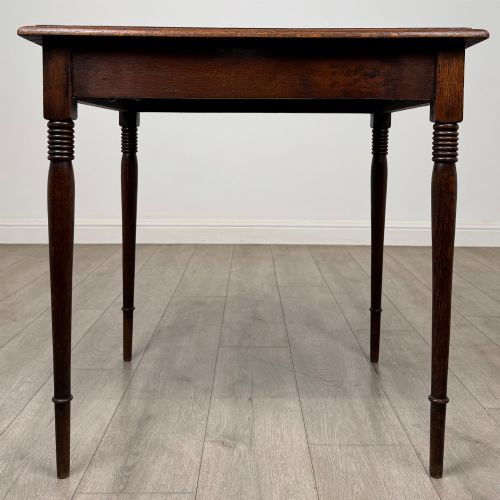
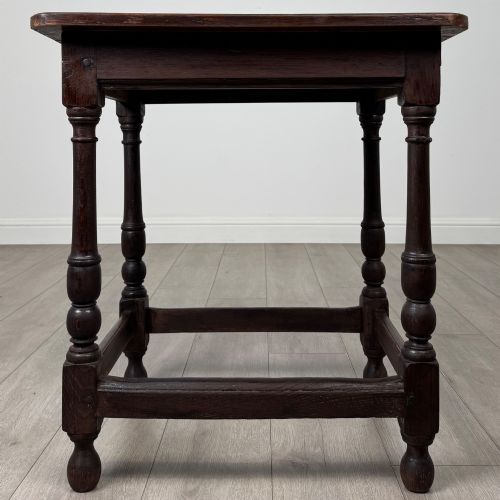
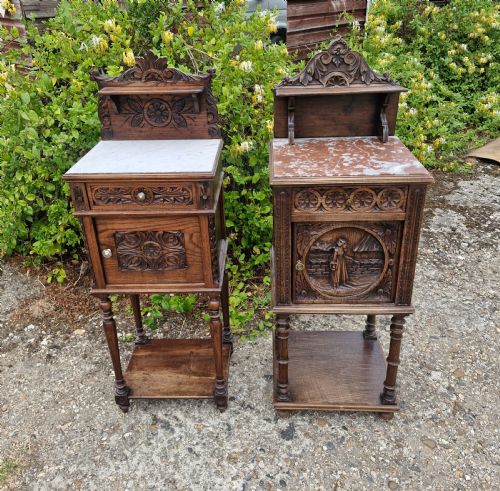
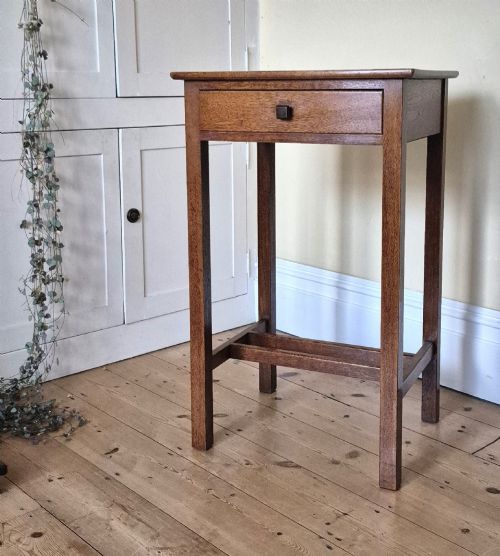
Edwardian Oak Nightstand
An edwardian oak nightstand brings honest utility and straightforward joinery to the bedside, rooted in the solid domestic craft of the early twentieth century.
Edwardian Oak Nightstand
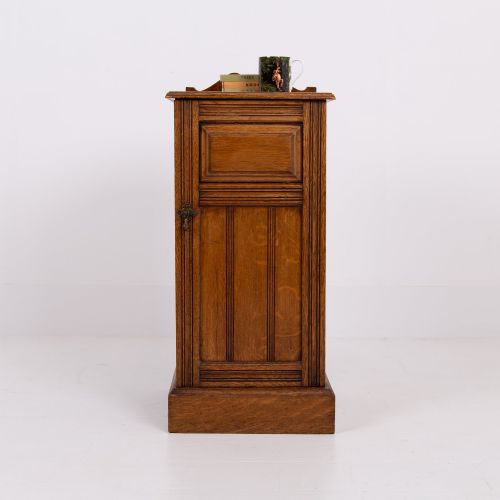
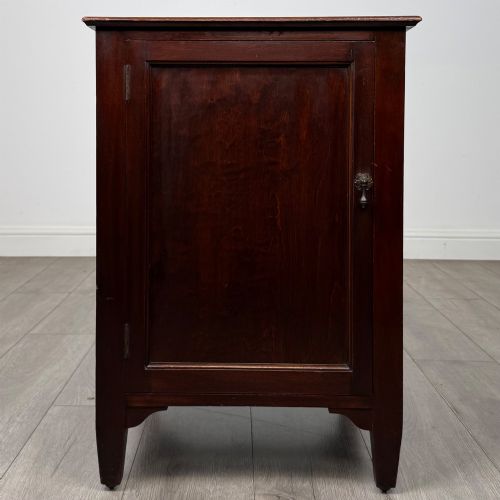
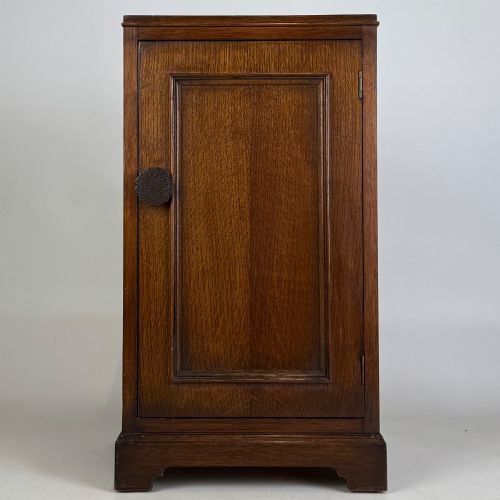
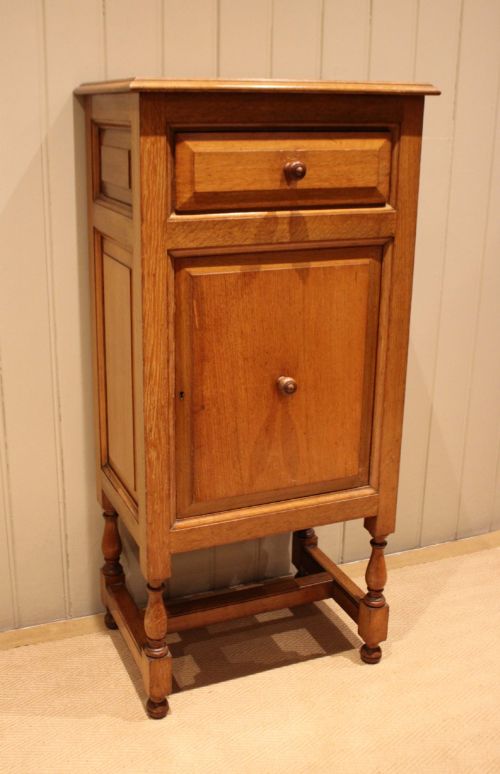
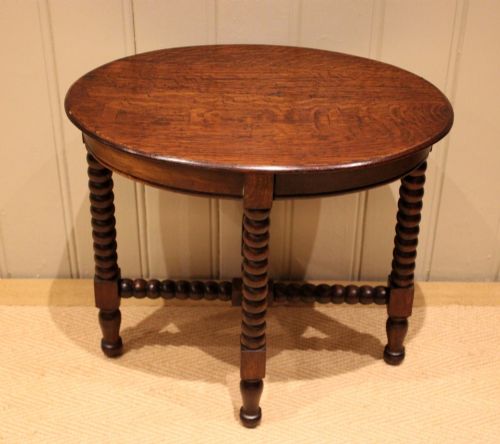
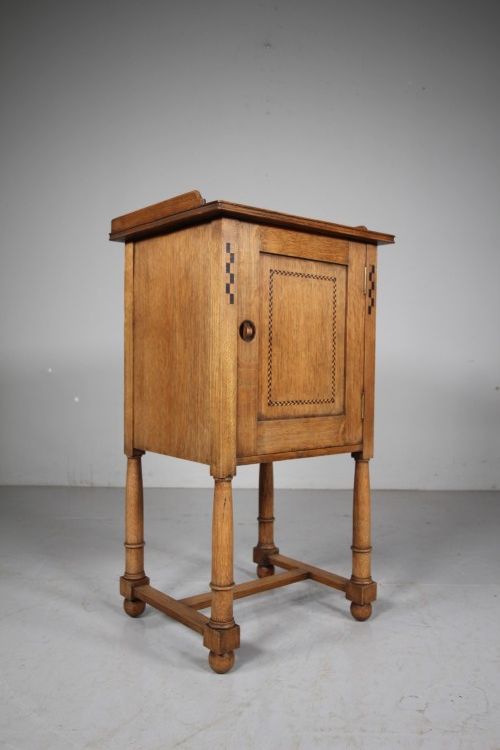
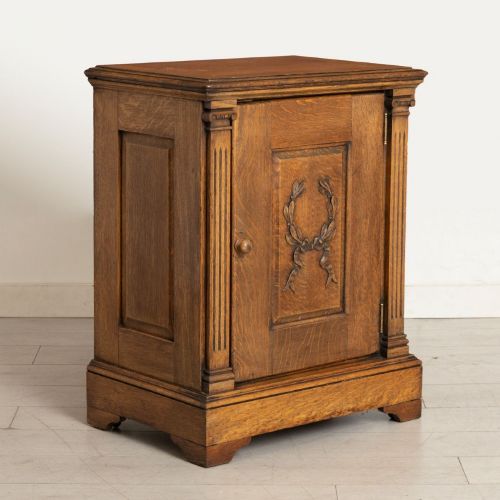
An edwardian oak nightstand is a compact piece of bedroom furniture designed to hold small essentials close to the bed, typically taking the form of a bedside cabinet, a pot cupboard, or a small side table. These pieces emerge predominantly from the Edwardian period and the surrounding decades, often sharing characteristics with Arts and Crafts and late Victorian design.
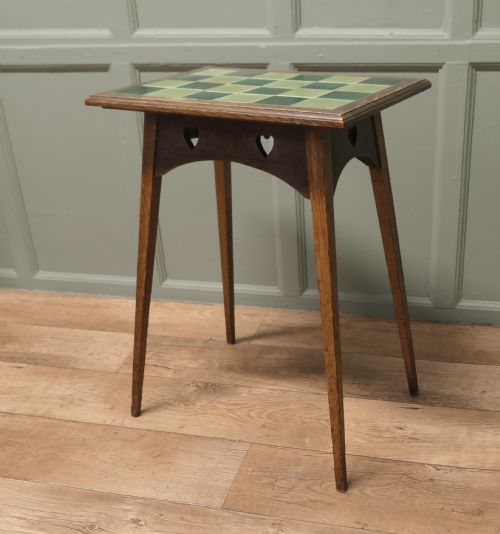
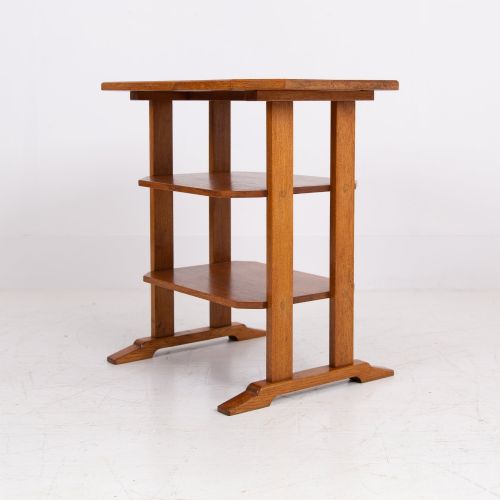
The version most commonly met on this page is a cupboard or single-drawer table built from solid oak, sometimes featuring panelled doors or tiled tops. They range from utilitarian domestic pieces to more distinctive workshop-made items influenced by the Arts and Crafts movement.
What separates the best from the rest
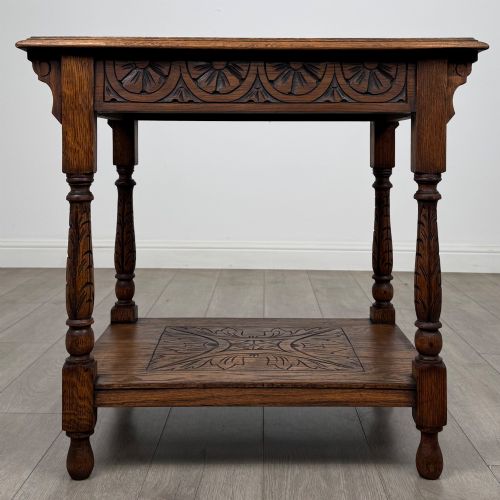
Quality in these pieces rests upon the selection of timber and the ambition of the design rather than mere age. Pieces originating from known schools of craft or specific regional workshops display superior attention to proportion, hand-carved detailing, and structural integrity.
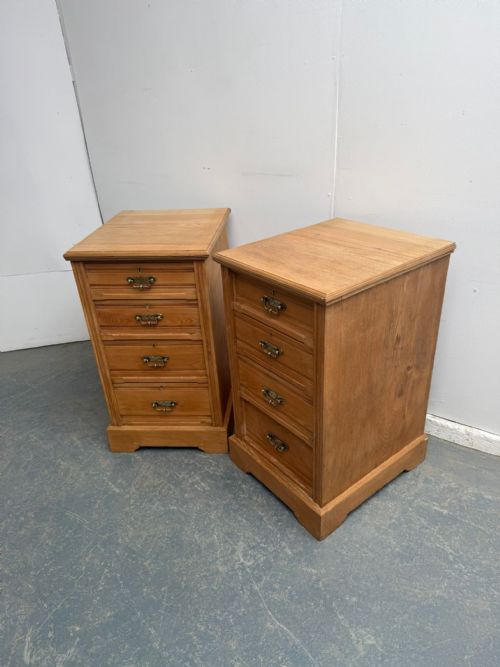
Simpler mass-produced utility cupboards satisfy basic domestic requirements with plain panels and standard hardware, whereas examples with thoughtful carving, tiled surfaces, or ash construction demonstrate a higher standard of period craftsmanship.
Listings feature oak, ash, brass, marble, and ceramic tiles across Edwardian, Victorian, and Arts and Crafts pieces.
Heal and Son·Liberty London·Hubert Simpson of Kendal
The Edwardian Oak Nightstand Glossary
- Pot cupboard
- A small bedside cabinet originally designed to enclose a chamber pot. These practical items often feature a single door above a small enclosed space.
- Arts and Crafts
- A design movement prioritising traditional craftsmanship and simple forms over mass-produced ornament. Pieces from this tradition often display visible joinery and honest materials.
- Tiled top
- A tabletop inset with decorative ceramic tiles. This feature provided a durable, heat-resistant surface for jugs and washing equipment.
- Cotswold School
- A branch of the Arts and Crafts movement centred in Gloucestershire. Furniture from this tradition emphasises plain surfaces and vernacular construction methods.
Edwardian Oak Nightstand: Frequently Asked Questions
What is an edwardian oak nightstand used for?
These pieces serve as practical bedside storage for lamps, books, and nighttime necessities. Their compact footprint makes them suitable for smaller bedrooms.
Historically, enclosed cabinet versions kept washing equipment or chamber pots out of sight. Today, they function reliably as side tables or bedside cabinets in modern homes.
How do I tell an Arts and Crafts nightstand apart from other styles?
Arts and Crafts pieces emphasise honest construction, visible grain, and simple functional forms rather than heavy revivalist ornament. You will often see pegged joints, heart carvings, or iron hardware.
By contrast, Jacobean Revival or Gothic Revival examples rely on darker stained wood and heavier geometric carving. Look closely at the surface details to identify the design influence.
Are marble top nightstands original?
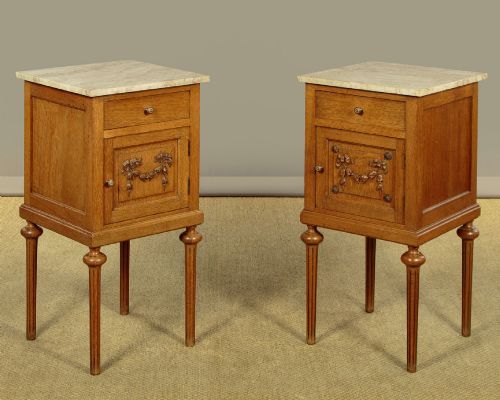
Yes, marble tops appear on period bedside tables to provide a clean, water-resistant surface for washing jugs and glasses. They were a practical feature in Edwardian bedrooms.
These stone slabs sit directly within the wooden frame of the table. They add significant weight to the piece and require careful handling.
How do I care for waxed oak furniture?
Waxed oak benefits from occasional applications of beeswax to nourish the timber and maintain its sheen. Avoid placing these pieces in direct sunlight or near heat sources to prevent the wood from drying out.
Use coasters for drinks and wipe spills immediately with a dry cloth. Gentle dusting with a soft cloth keeps the surface clean without stripping the finish.