
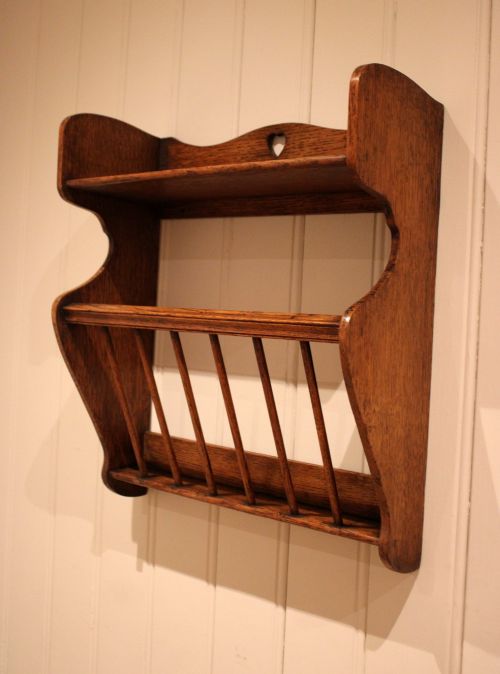


Edwardian Oak Magazine Rack
An Edwardian oak magazine rack brings sturdy utility and honest timber into a room, offering the exact compartmented storage that Edwardian households relied upon for periodicals.
Edwardian Oak Magazine Rack
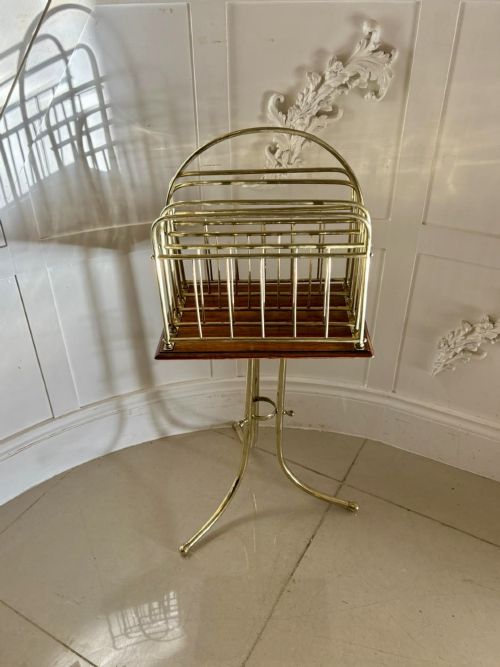
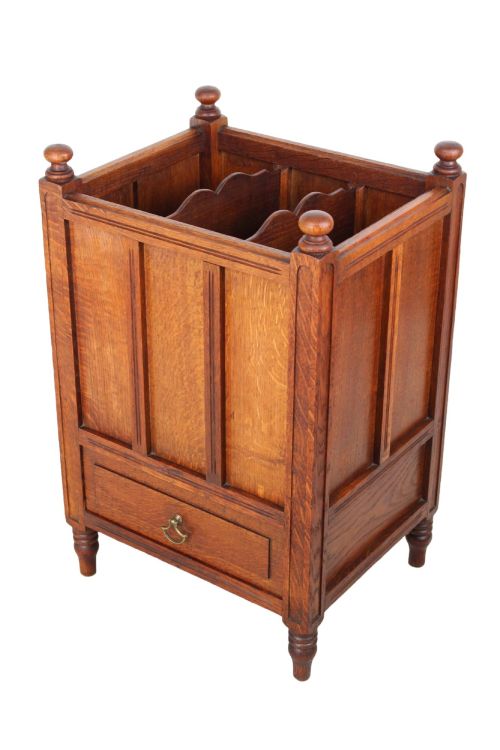
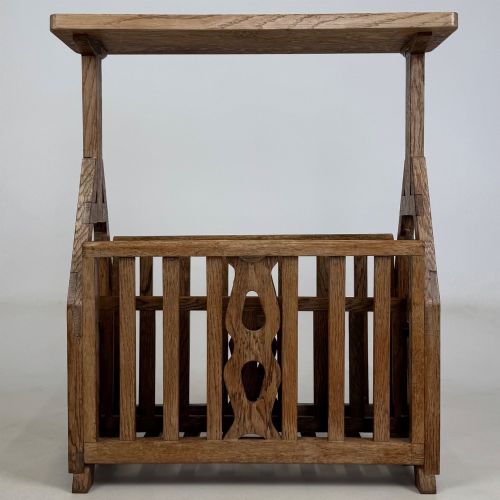
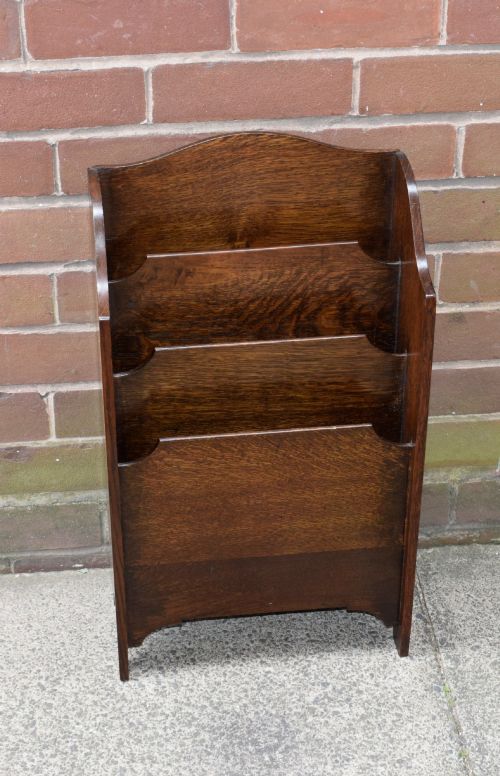
An edwardian oak magazine rack is a functional piece of furniture designed to hold newspapers, periodicals, and books within domestic spaces. The pieces appearing here encompass freestanding stands, revolving designs, and hybrid forms that combine storage compartments with side tables, wall shelves, or bookcases.
Most examples hail from the Edwardian period or share the straightforward aesthetic of the Arts and Crafts movement. Alongside standard floor-standing racks, the selection includes related formats such as the traditional canterbury and the low log carrier.
While oak forms the primary structural timber, these items frequently incorporate brass fittings, such as carrying handles and rods, alongside occasional satinwood details. The domestic scale of these items allows them to sit easily beside armchairs, sofas, or desks in modern interiors.
How they were made
Makers constructed these racks using solid oak, frequently selected for its prominent grain and durability. Joinery methods relied on traditional framing and panel construction, ensuring the partitions and baseboards remained rigid under the weight of heavy paper volumes.
Metal elements, predominantly brass, were integrated to form carrying bars, handles, and revolving mechanisms. These brass components were typically screwed or riveted to the wooden framework, providing both structural reinforcement and a visual contrast to the dark or golden tones of the timber.
Listings feature items spanning the Victorian, Edwardian, and early twentieth-century eras, constructed primarily in oak with brass hardware.
What varies in quality
The distinction between standard production items and superior pieces rests largely on the ambition of the design and the treatment of the materials. Better examples exhibit thoughtful integration of brass hardware and refined proportions, rather than relying on plain, utilitarian box construction.
Craftsmanship shows in the stability of the joints and the finish applied to the oak surfaces. Pieces associated with notable retail houses or specific movement aesthetics often demonstrate cleaner lines and more deliberate attention to grain selection.
Liberty London
The Edwardian Oak Magazine Rack Glossary
- Canterbury
- A low, freestanding stand featuring partitioned sections for holding books, sheet music, or periodicals, often fitted with a low carrying handle.
- Arts and Crafts
- A design movement prioritising traditional craftsmanship, plain surfaces, and visible construction methods over excessive factory-made ornamentation.
- Revolving rack
- A piece fitted with a central pivot mechanism allowing the entire compartmented body to turn for easy access from multiple seating positions.
- Log carrier
- A low wooden receptacle designed for holding fuel, sharing similar robust construction and timber characteristics with contemporary newspaper stands.
Edwardian Oak Magazine Rack: Frequently Asked Questions
Where should I place a magazine rack?
These pieces sit naturally beside armchairs, reading desks, or sofas where periodicals and books accumulate. Their compact footprints allow them to occupy tight corners without crowding a room.
Because many include carrying handles or revolving bases, they remain easy to reposition as your seating arrangement shifts.
How do I care for the oak and brass?
Regular dusting with a dry cloth keeps the timber surface clean, while occasional applications of a suitable wax nourish the grain without leaving heavy residues. Avoid placing wooden furniture in direct sunlight or beside intense heat sources to prevent the timber from drying out.
Brass components can be left to develop a natural patina over time, or gently cleaned with a non-abrasive metal polish if you prefer a brighter finish.
Can these racks hold modern magazines?
Standard compartments accommodate most contemporary publications, though very wide or oversized folios may occasionally exceed the traditional slot dimensions. The divisions are typically sized for standard newspaper formats and weekly periodicals of the early twentieth century.
Checking the internal measurements of the individual compartments ensures your preferred reading material fits comfortably.
How do I distinguish Edwardian pieces from later ones?
Edwardian items generally display the specific timber selections, traditional joinery, and hardware conventions typical of the period around nineteen hundred. They often share stylistic traits with earlier Victorian and Arts and Crafts production.
Examining the construction methods underneath and inside the compartments reveals the hand of traditional cabinet makers rather than mid-century mass production.