


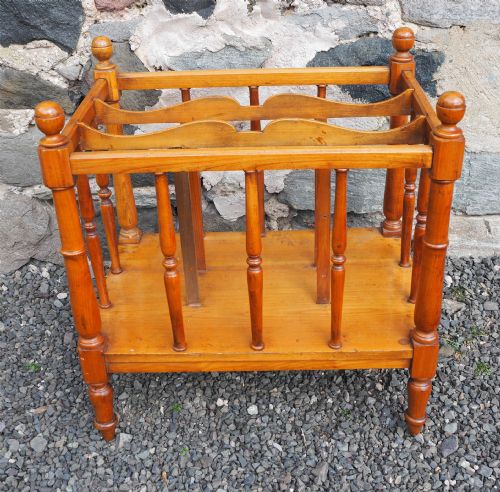

Vintage Wooden Magazine Holder
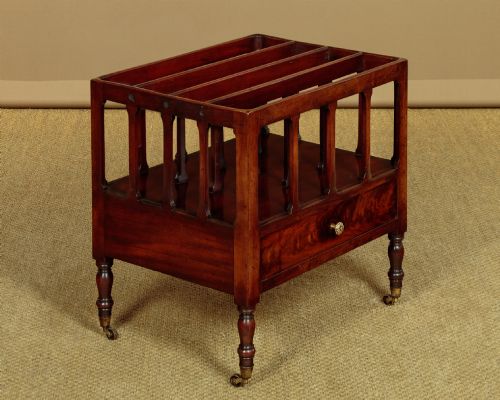
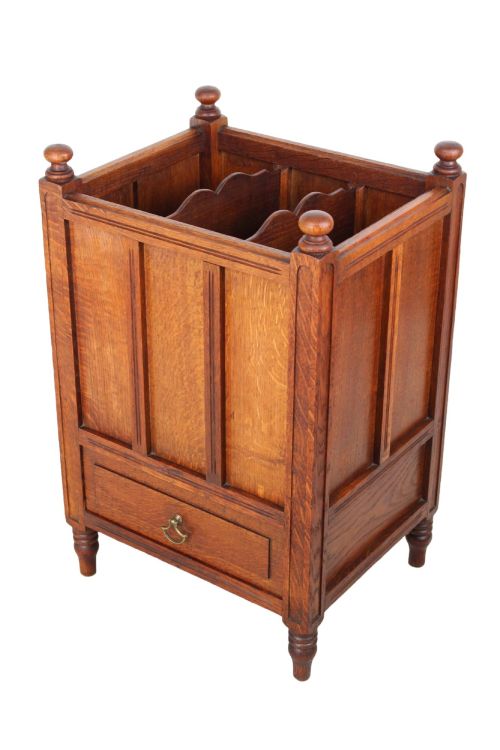
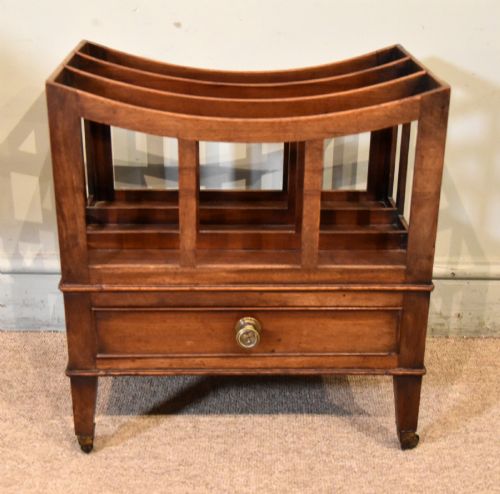
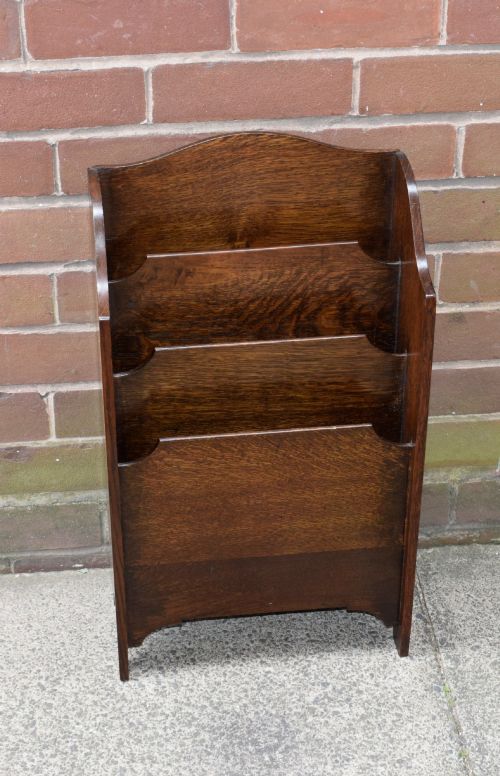
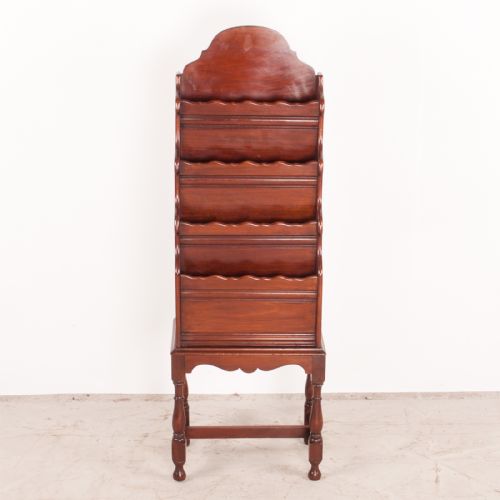
A vintage wooden magazine holder brings order to newspapers and folios, ranging from Georgian mahogany canterburys to Edwardian oak racks.
Vintage Wooden Magazine Holder
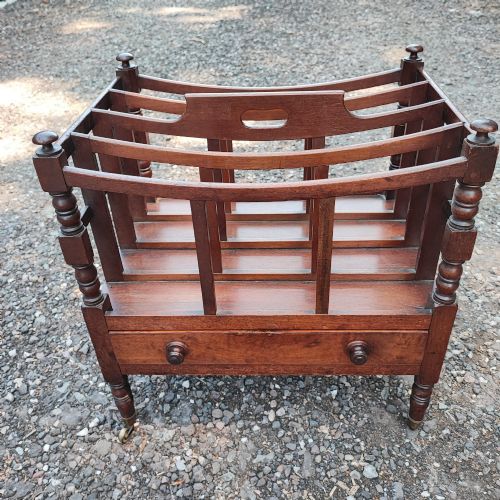
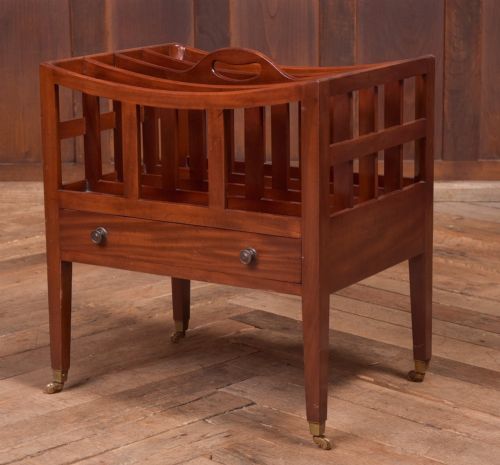
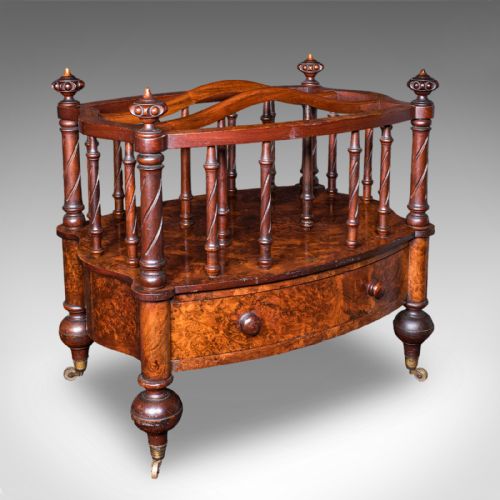
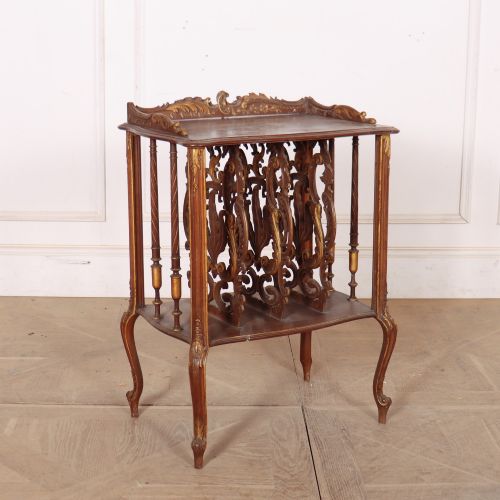
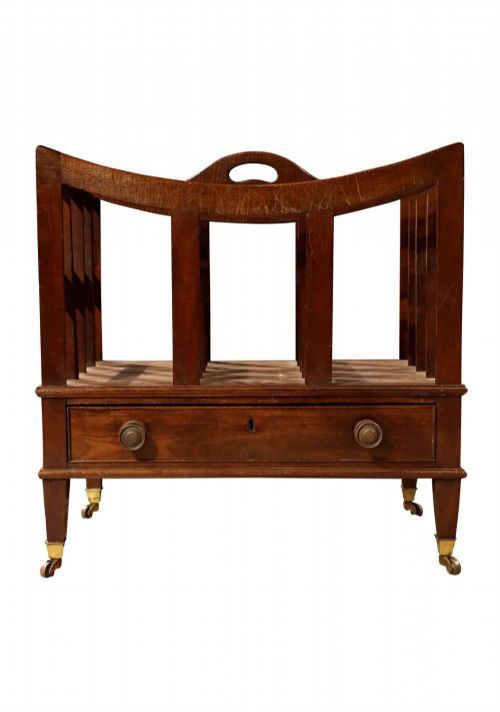
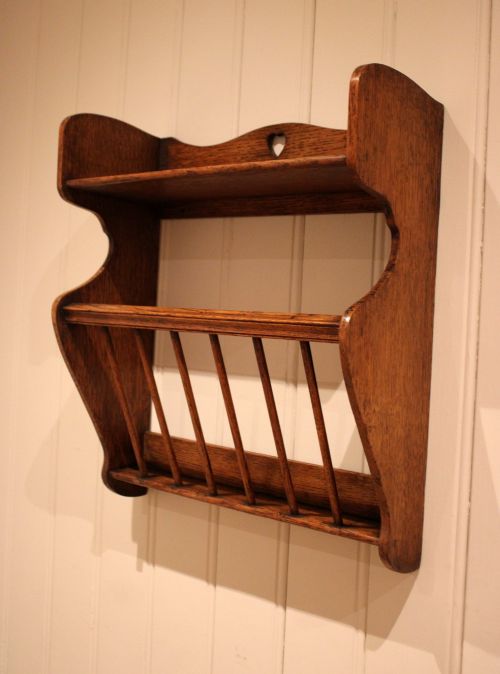
A vintage wooden magazine holder spans forms such as canterburys, freestanding magazine racks, folio stands, and wall shelves. The Canterbury is the most frequent form on this page, originating in the Georgian and Regency periods with slatted divisions for holding papers.
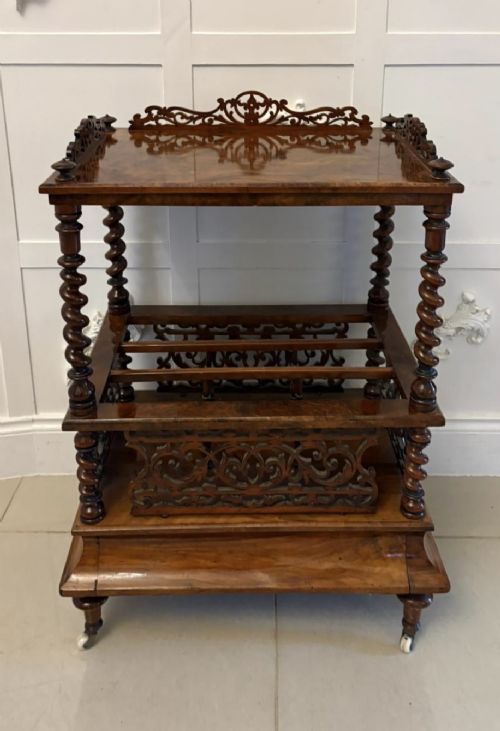
Makers adapted these stands through the Victorian, Edwardian, and Arts & Crafts eras, producing variants with drawers, tier structures, and music sheet compartments. Pieces range from the 18th century through to the 1920s.
The objects serve as functional storage for reading materials, often fitted with turned legs, castors, or integrated tables for domestic use.
Materials and construction
Joinery methods include slatted divisions, turned supports, carved detailing, and inlaid marquetry work. Drawer construction appears on select canterburys and music cabinets alongside wall-mounted configurations.
Listings feature timbers including mahogany, rosewood, oak, walnut, burr walnut, satinwood, fruitwood, and Cuban mahogany.
Assessing the standard
Quality rests on the selection of timber figures, such as burr walnut or figured mahogany, and the crispness of carved or turned details. Pieces with integrated drawers, marquetry inlay, or original castors represent higher tiers of craftsmanship.
Structural integrity of the slatted divisions and the weight of the timber dictate the lasting form of the stand, distinguishing standard utility pieces from fine formal furniture.
The Vintage Wooden Magazine Holder Glossary
- Canterbury
- A low, freestanding stand with slatted divisions designed to hold sheet music, newspapers, or periodicals. It typically includes a carrying handle or lower drawer.
- Folio stand
- An adjustable or fixed upright rack used for holding large books, prints, or folios. These appear from the Georgian period onward.
- Marquetry
- Decorative patterns formed by the insertion of contrasting pieces of wood veneer into a solid surface. This technique appears on select Victorian walnut pieces.
- Castors
- Small wheel attachments fitted to the feet of furniture to aid movement. They frequently accompany Regency and Victorian canterburys.
- Division
- One of the vertical partitions separating the compartments of a rack. These sections define the structural rhythm of the stand.
Vintage Wooden Magazine Holder: Frequently Asked Questions
How do I date a wooden canterbury?
Dating relies on timber selection, leg styling, and construction traits. Georgian and Regency examples often feature finely turned legs and linear mahogany frames.
Later Victorian and Edwardian pieces introduce burr walnut, marquetry inlay, or broader oak proportions associated with the Arts & Crafts movement.
Were these stands only used for magazines?
Original uses extended to holding sheet music, folios, newspapers, and unbound books. Many Victorian examples functioned as combined music cabinets or occasional tables.
The compartmentalised layout suited domestic rooms where reading materials required orderly storage near seating areas.
Where should I place a magazine rack at home?
These holders suit placement beside armchairs, sofas, or in studies where periodicals gather. Freestanding canterburys with castors allow easy movement across rooms.
Wall shelves serve tighter spaces by keeping reading materials elevated and accessible without occupying floor area.