


Edwardian Oak Carver Chairs
Edwardian oak carver chairs combine sturdy native timber with comfortable elbow rests, offering solid seating rooted in early twentieth-century design.
Edwardian Oak Carver Chairs
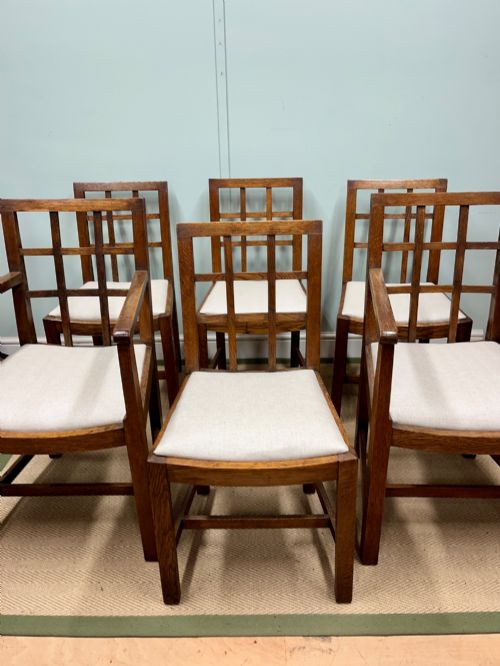
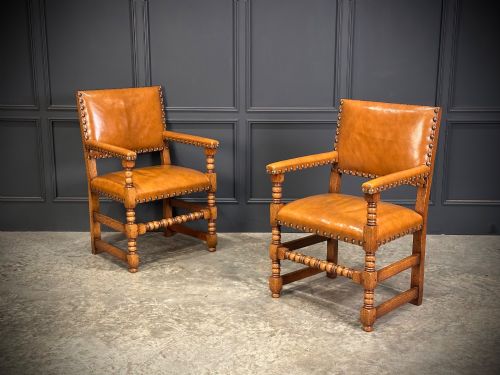
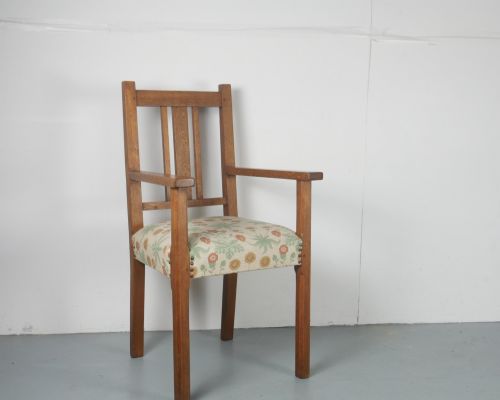
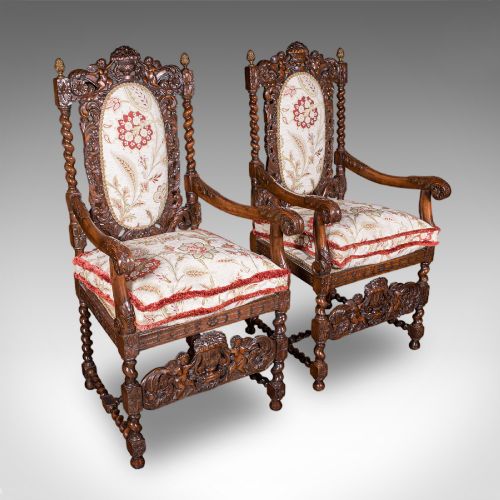
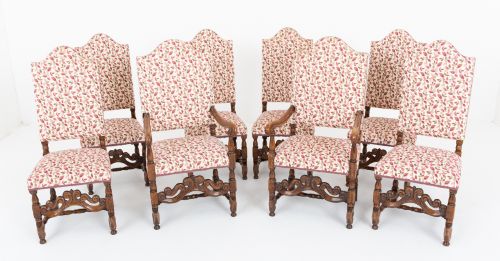
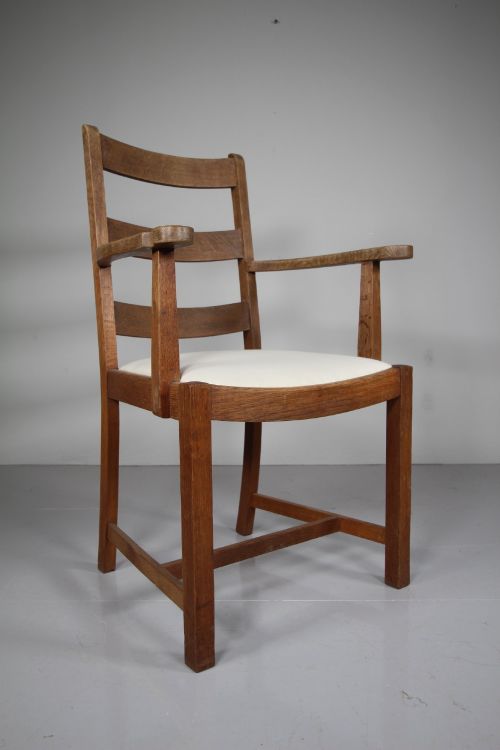
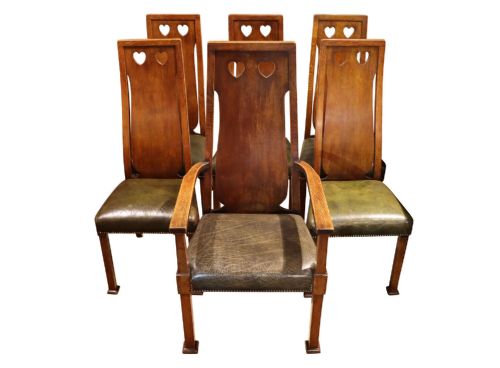
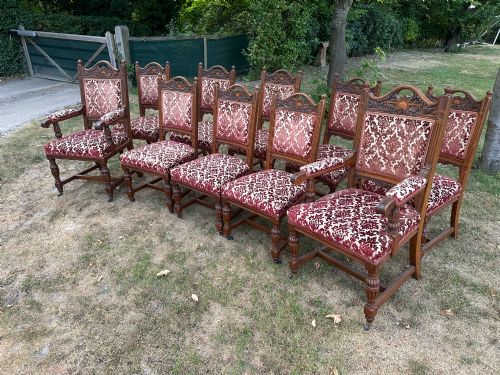
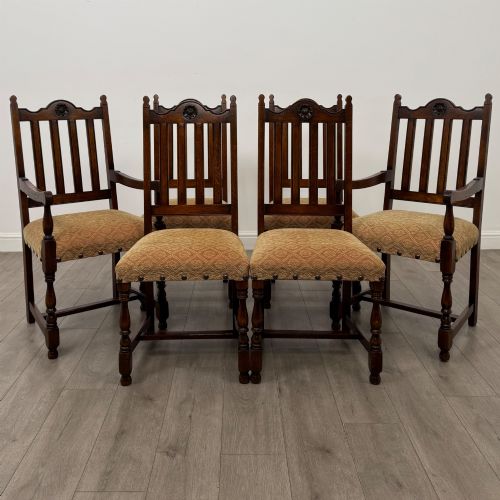
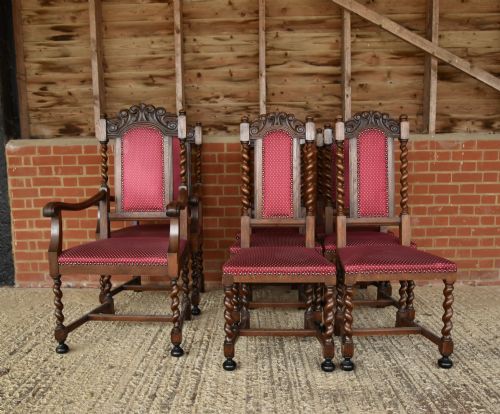
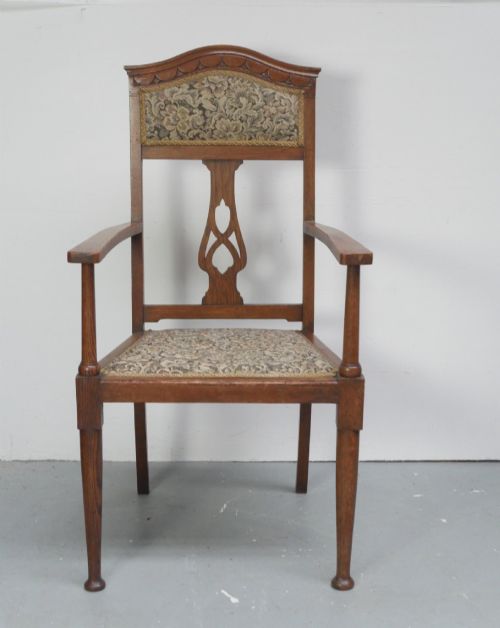
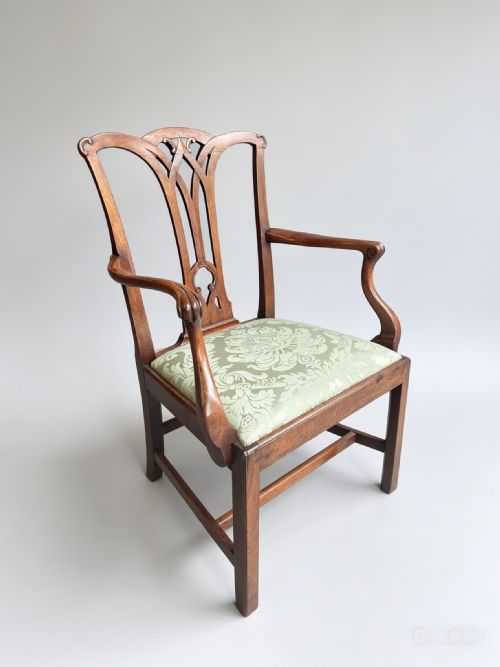
Edwardian oak carver chairs appear frequently in various revival and movement styles across this selection, spanning periods from the late nineteenth century into the 1930s. Buyers searching for edwardian oak carver chairs encounter pieces shaped by Arts and Crafts ideals, Jacobean revival motifs, and simpler country traditions. These armchairs typically function as companion seating at the head of a dining table or as standalone desk chairs.
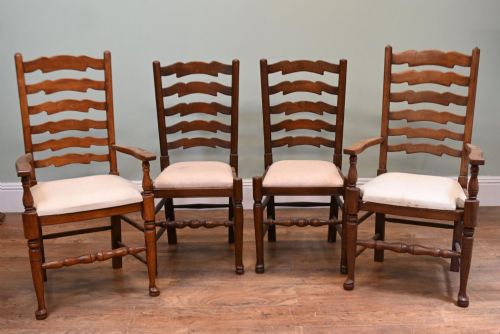
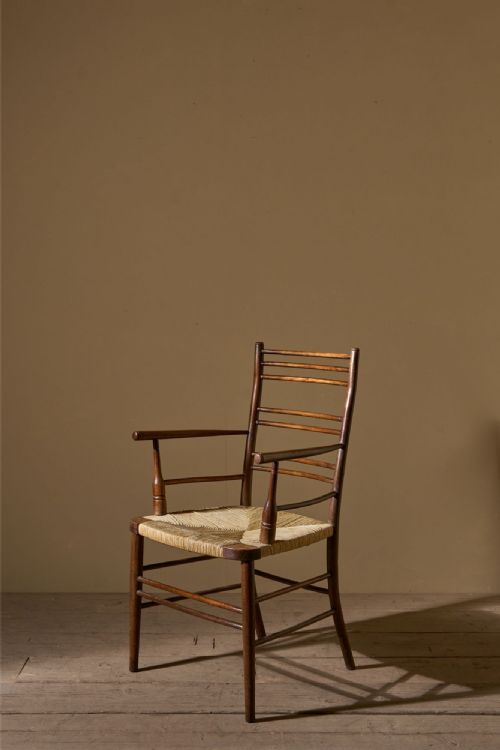
Makers and retailers such as Liberty, Morris and Co, Goodyers, Heal's, and Shapland and Petter heavily influenced the domestic output of the era. Alongside formal dining suites, the selection includes sturdy ladderback models, highback chairs in the gothic manner, and low armchairs designed for parlour use. The variety reflects both urban design workshops and rural vernacular production.
Materials and Construction
Solid oak provides the structural backbone for these chairs, often finished with turned barley twist legs or carved strapwork panels depending on the revival style. Workshops utilised traditional joinery methods to ensure stability under daily use.
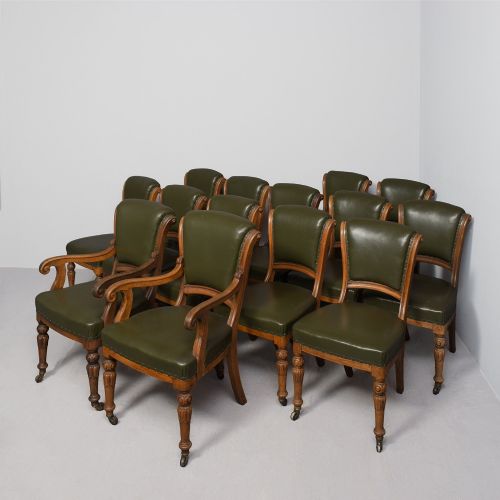
Seats and backrests integrate supportive materials such as woven rush, supple leather, brass studding, and textured tapestry or upholstery fabric. These elements connect the timber frame to the softer requirements of domestic comfort.
Edwardian Oak Carver Chairs Retail Price Guide 2026
Typical asking prices for edwardian oak carver chairs among the pieces listed under this phrase on Sellingantiques today, from the lower quarter to the upper quarter. They describe what is for sale here now, not the wider market.
Listings feature oak combined with leather, rush, brass, and tapestry across Arts and Crafts and Jacobean revival styles.
Judging Quality
Quality reveals itself in the crispness of carved details, the tightness of the frame's joinery, and the integrity of secondary materials like hand-twisted rush or patinated leather. Pieces carrying provenance from notable makers often display superior timber selection and balanced proportions.
Subtleties in wood finishing and the original tension of woven or upholstered elements distinguish standard commercial production from workshops operating under Arts and Crafts principles.
Goodyers London·Heals Letchworth·Liberty Morris And Co·W Williamson And Sons·Shapland And Petter
The Edwardian Oak Carver Chairs Glossary
- Carver
- An armchair, usually designed to match a set of dining side chairs and featuring wooden elbow rests. These pieces historically sat at the head and foot of a formal dining table.
- Arts and Crafts
- A design movement prioritising honest construction, visible handcraft, and simple materials over industrial ornament. Pieces from this tradition often feature exposed tenons and functional framing.
- Jacobean Revival
- A style echoing seventeenth-century furniture design, characterised by heavily carved oak, geometric panels, and turned supports. This aesthetic enjoyed significant popularity during the Edwardian period.
- Rush
- Dried marsh grass woven tightly to form durable, textured chair seats. It appears frequently on chairs influenced by the Arts and Crafts aesthetic.
- Barley Twist
- A decorative turning technique resembling a twisted rope, carved into chair legs and upright supports. It adds movement and visual interest to solid oak frames.
Edwardian Oak Carver Chairs: Frequently Asked Questions
What defines an Edwardian oak carver chair?
These armchairs feature solid oak frames produced around the start of the twentieth century, often incorporating styles from earlier historical periods.
They serve as supportive seating with integrated elbow rests, frequently accompanying larger sets of dining chairs.
How do I care for leather and rush seats?
Leather surfaces benefit from appropriate conditioning treatments to maintain suppleness and prevent cracking over time.
Rush seats require gentle cleaning with dry tools to preserve the natural plant fibres without introducing excess moisture.
Where should I place these armchairs?
Carver chairs traditionally occupy the ends of a dining table to complement simpler side chairs.
They also function effectively as standalone hallway seats, desk chairs, or fireside reading chairs.
How can I tell Arts and Crafts chairs apart?
Arts and Crafts chairs emphasise utility and honest construction, often displaying exposed joinery and rush seating.
In contrast, Jacobean revival versions rely on heavy carved oak and elaborate turned wooden elements.