

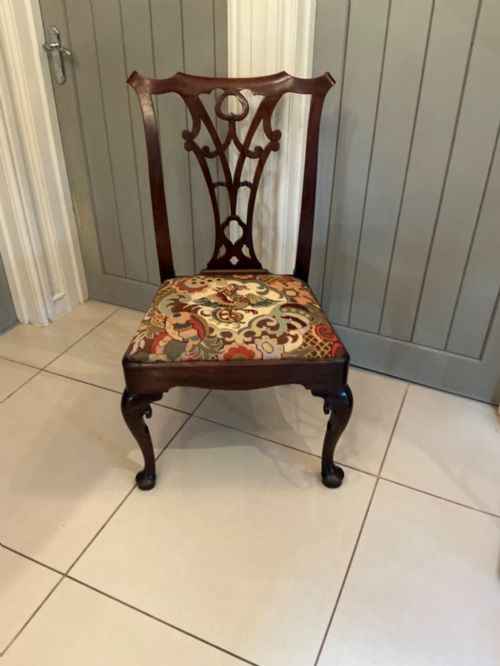
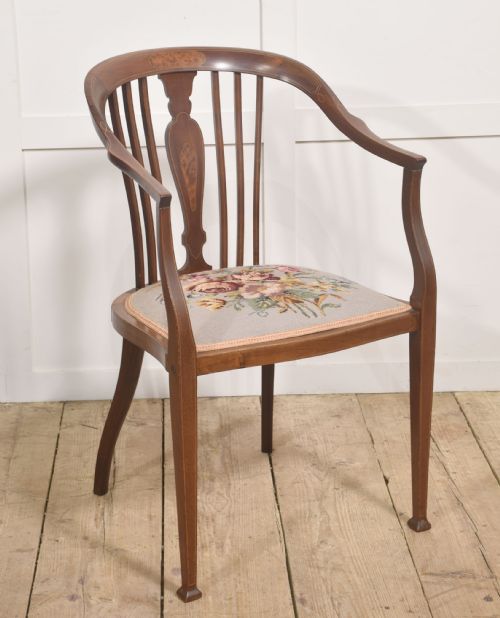
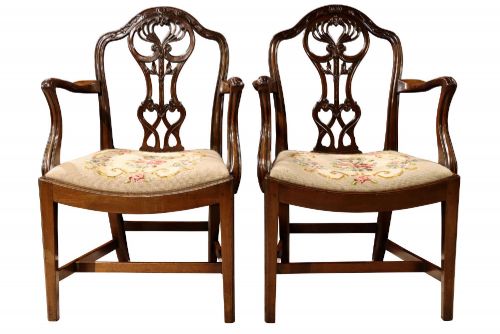


Edwardian Needlepoint Chair
An Edwardian needlepoint chair brings tactile charm to a room through its hand-stitched textile seat and warm timber frame.

Edwardian Needlepoint Chair
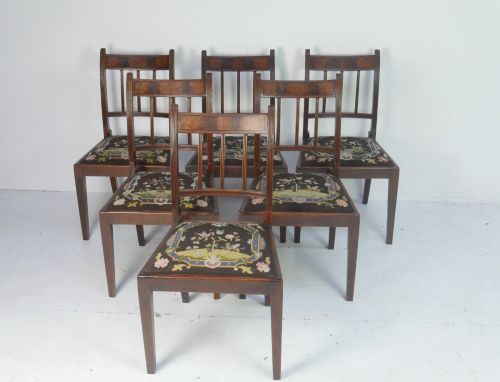
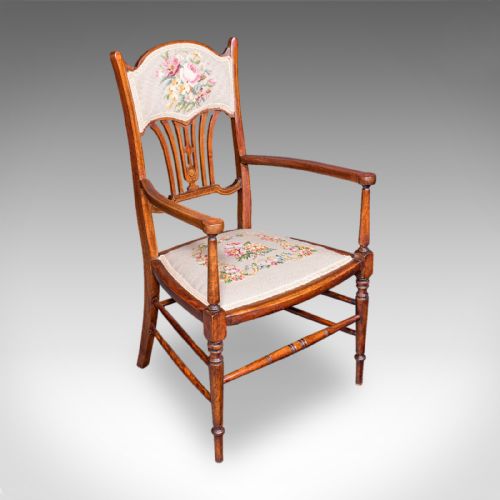
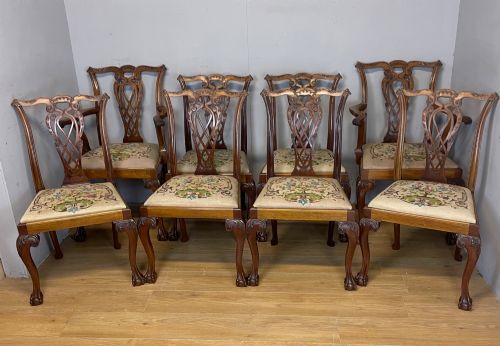
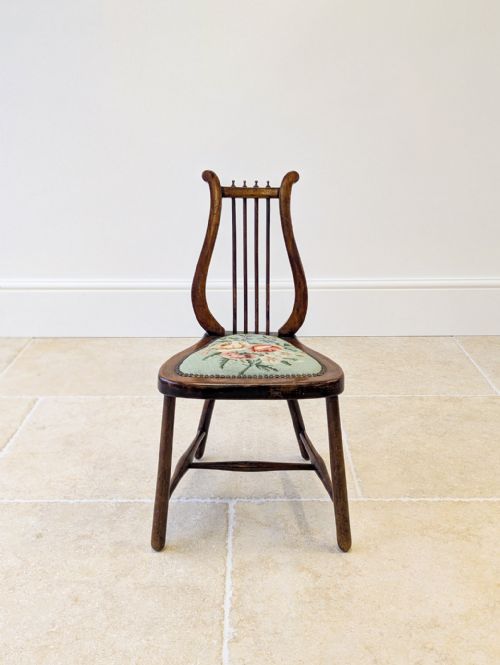
An edwardian needlepoint chair combines the upright timber construction typical of the early twentieth century with detailed textile upholstery worked in wool and tapestry. These seating pieces appear frequently in mahogany and beech, often taking the form of open armchairs, elbow chairs, and occasional side seats.
The aesthetic bridges formal revival styles and practical domestic comfort, drawing on Chippendale revival motifs alongside simpler Edwardian frames. Buyers encounter both single salon chairs and matched pairs designed for parlour or bedroom use.
How they were made
Makers utilised dense timbers such as mahogany and walnut for the structural frames, often enriching the surface with satinwood inlay or marquetry details. Beech served as a robust alternative for turned supports and simpler side chairs.
Needlepoint work involved hand-stitching wool threads through an open-weave canvas backing to create durable floral or geometric tapestry patterns. Brass hardware and structural joinery completed the assembly, uniting the textile top with the wooden base.
Morning rooms required seating sturdy enough for daily correspondence yet elegant enough for unexpected visitors.
What varies in quality
The distinction between ordinary and superior pieces rests on the crispness of the timber carving and the complexity of the wood selection. Fine examples display carefully matched grain patterns, precise marquetry inlay, and sturdy structural joinery that withstands daily use.
The needlepoint upholstery itself dictates much of the visual value. Tighter, finer stitches with complex colour palettes indicate greater artisan effort compared to coarser, simpler textile coverings.
Charles Tozer·Warings·Liberty & Co
The Edwardian Needlepoint Chair Glossary
- Needlepoint
- A type of canvas work embroidery executed with wool yarn, forming the textured upholstery seen on many period seats.
- Elbow chair
- An armchair featuring open sides with armrests, popular in Edwardian and Victorian drawing rooms.
- Marquetry
- Decorative veneer work arranged in intricate patterns on the wood surface, utilising contrasting timbers.
- Beech
- A pale, close-grained hardwood commonly utilised for chair frames and turned components.
Edwardian Needlepoint Chair: Frequently Asked Questions
How do I clean the needlepoint?
Gently vacuum the textile using a low suction setting with a soft brush attachment to remove dust without snagging the wool threads. Avoid harsh chemical cleaners or excessive moisture which can damage the underlying canvas and stuffing.
For stubborn marks, consult a professional textile conservator rather than attempting wet cleaning at home. Protecting the fabric from direct sunlight prevents the wool colours from fading over time.
Are these chairs comfortable for daily sitting?
Most edwardian needlepoint chair designs prioritise upright posture for parlour or occasional use rather than deep lounging. The supportive wooden frames and firm upholstery suit desk work or reading.
Comfort varies depending on the internal padding condition, which may range from firm traditional stuffing to softer modern cushioning. Testing the seat provides the best indication of daily usability.
Can I mix these with modern furniture?
The warm mahogany and walnut tones of an edwardian needlepoint chair pair naturally with contemporary minimalist timber pieces. The textured tapestry seat adds visual softness to clean architectural lines.
Placing an occasional chair in a hallway or bedroom creates a deliberate focal point without overwhelming the surrounding modern decor.
How do I distinguish Edwardian from Victorian pieces?
Edwardian frames generally display lighter proportions and brighter mahogany or satinwood finishes compared to heavier, darker Victorian walnut and carved oak. The decorative vocabulary shifts from elaborate Victorian ornamentation to refined neoclassical revivals.
Examining the underlying construction and timber selection often reveals the transitional manufacturing shifts occurring around nineteen hundred.