
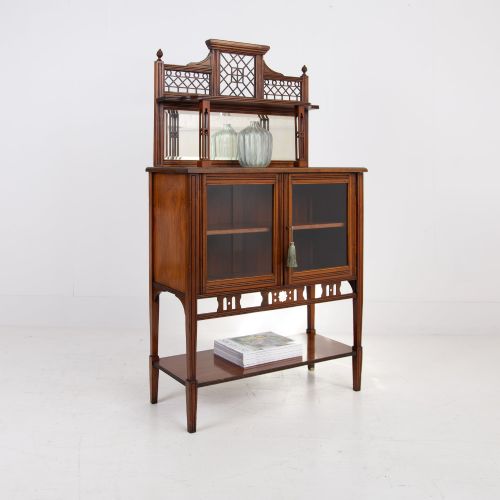
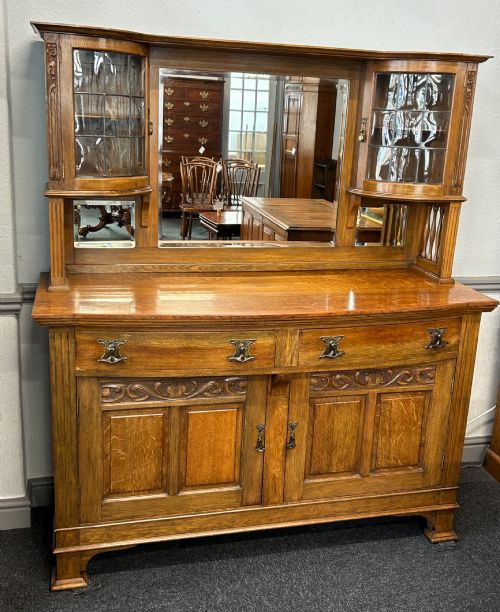
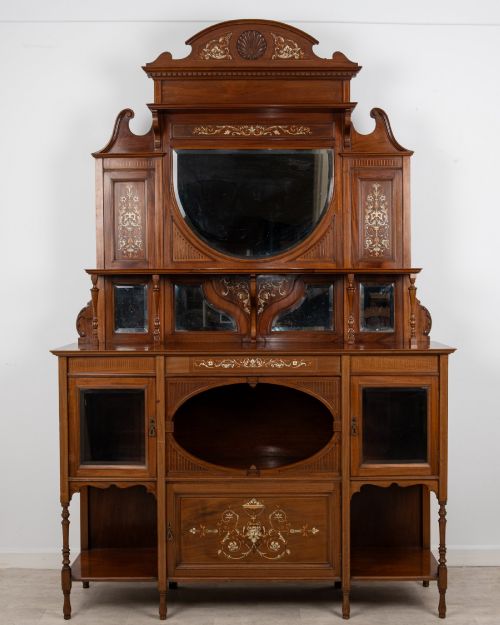
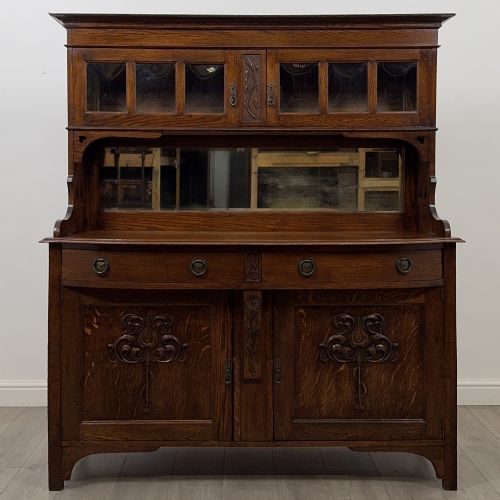
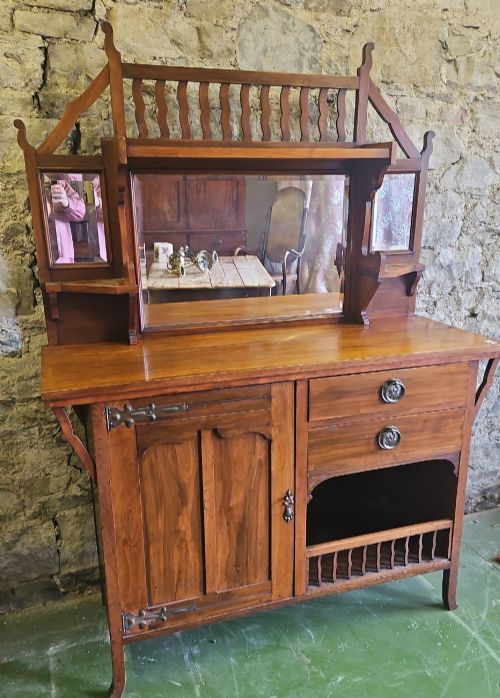
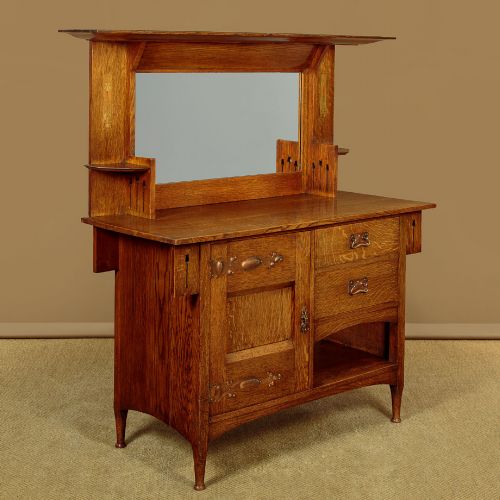

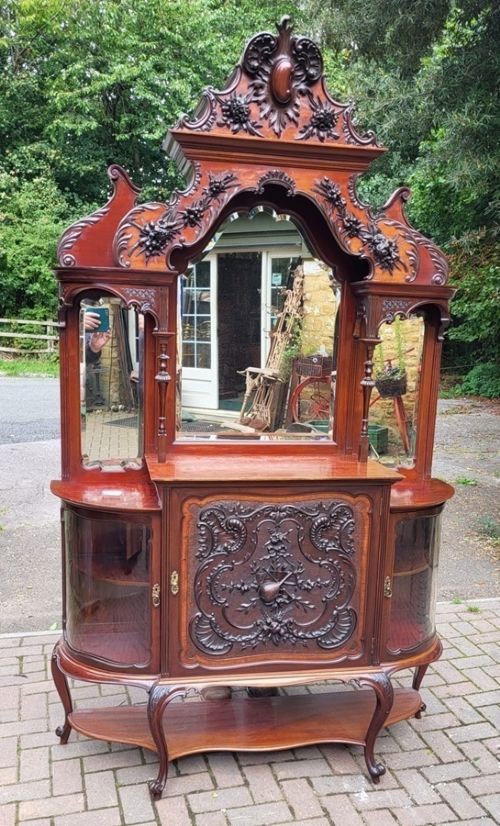
Edwardian Mirrored Sideboard
An edwardian mirrored sideboard brings together generous storage and reflective glass, offering a practical centrepiece for the dining room.
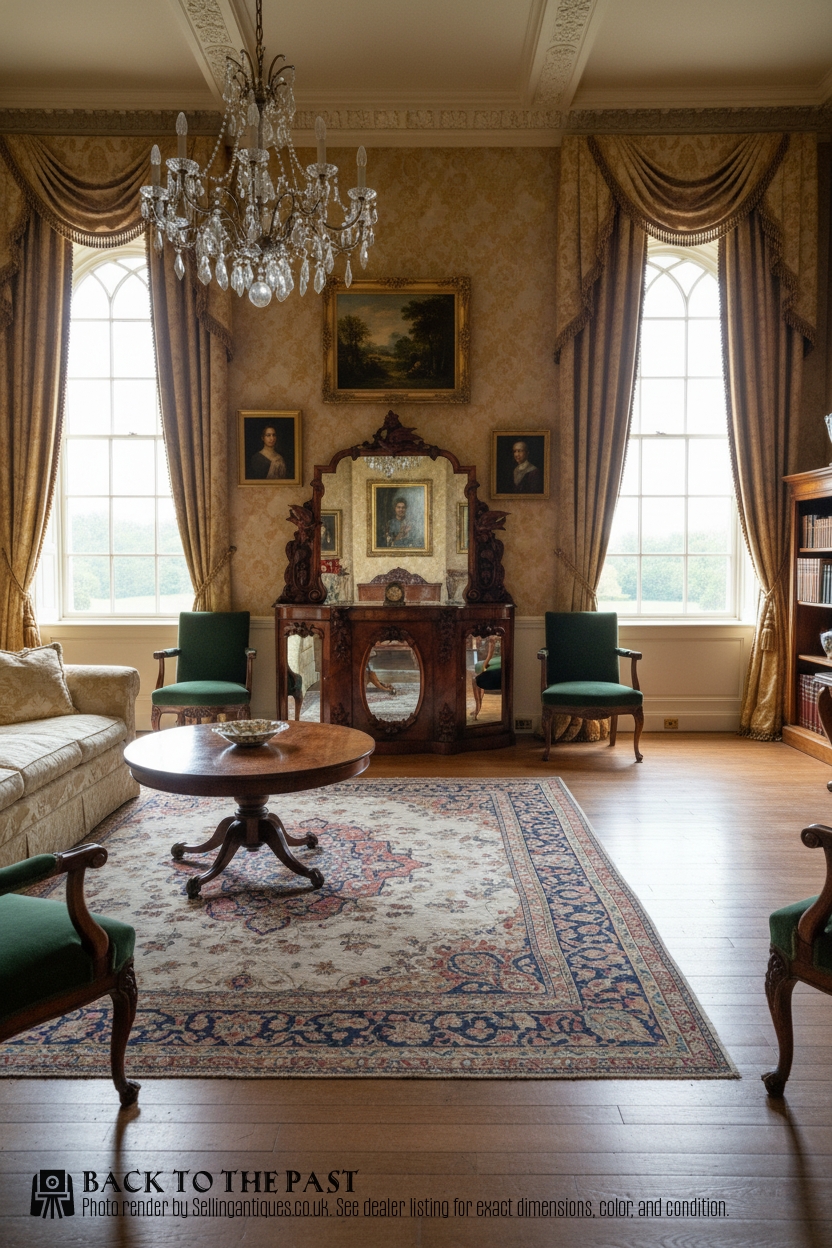
Edwardian Mirrored Sideboard
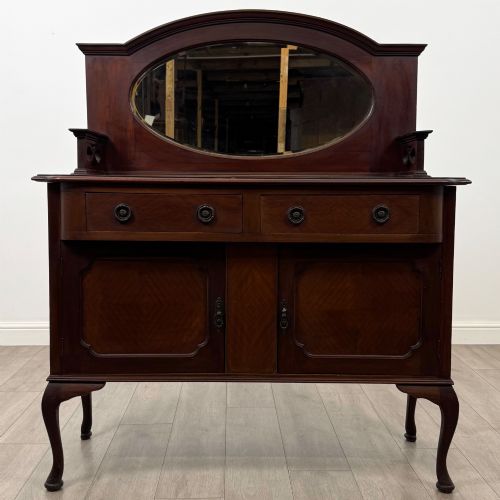
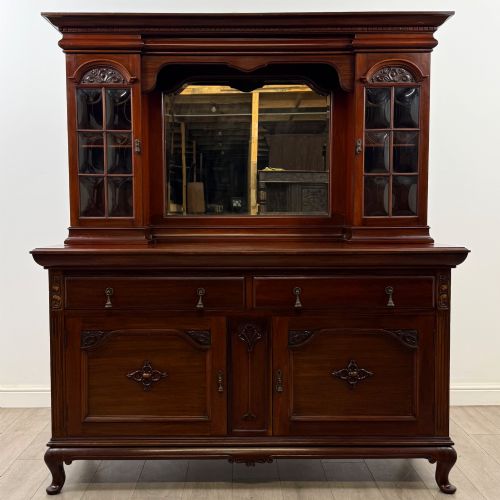
The edwardian mirrored sideboard combines substantial timber cabinetry with an integrated mirror back, serving as both storage and a display surface. These pieces sit within a lineage that includes Victorian mirror-backed sideboards and credenzas, sharing the heavy presence and reflective glass panels of the period.
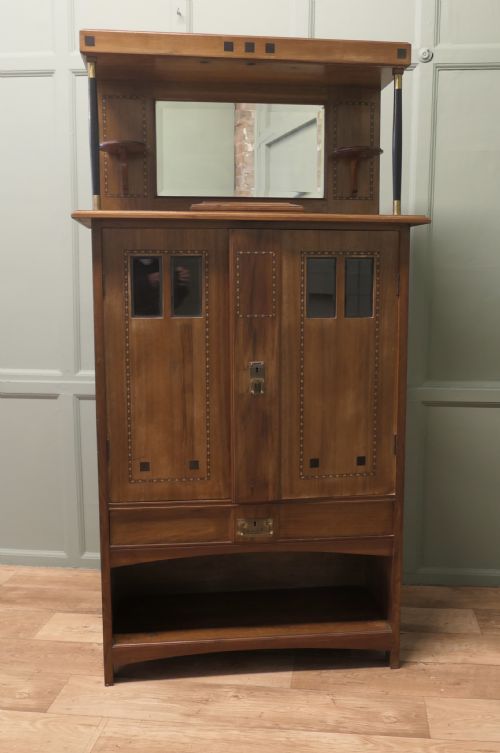
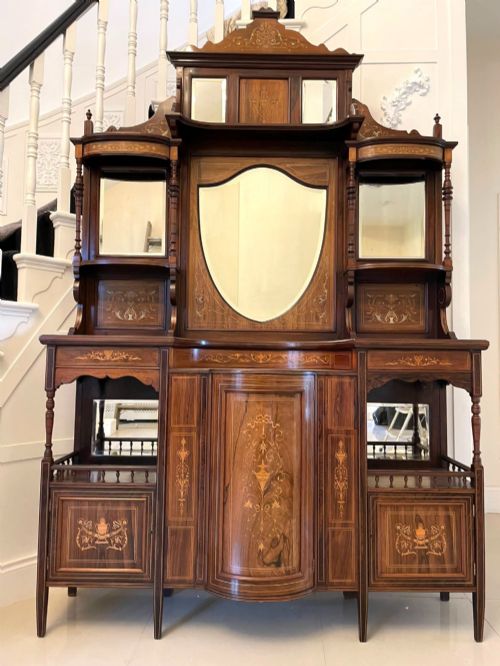
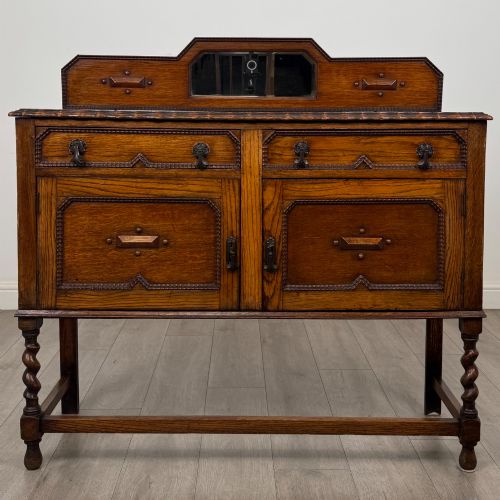
Makers of the era drew on varied aesthetics, producing examples in styles ranging from Arts and Crafts oak to inlaid mahogany and rosewood. While many carry the specific hallmarks of the Edwardian period, buyers will also encounter pieces spanning late Victorian and early twentieth-century production.
Materials and construction
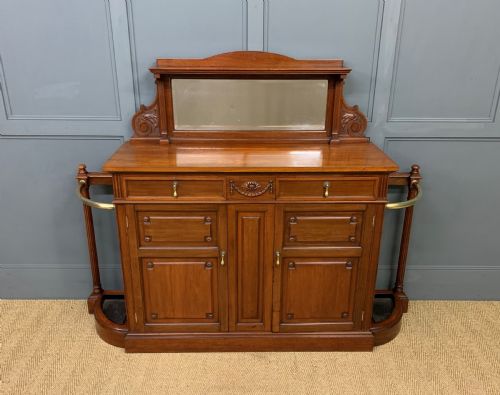
Cabinetmakers utilised a variety of dense timbers, principally oak, mahogany, and walnut, frequently selecting figured veneers such as burr walnut or pollard oak for decorative impact. Rosewood also appears alongside marquetry inlay and brass hardware, contributing to the rich surface texture of the period.
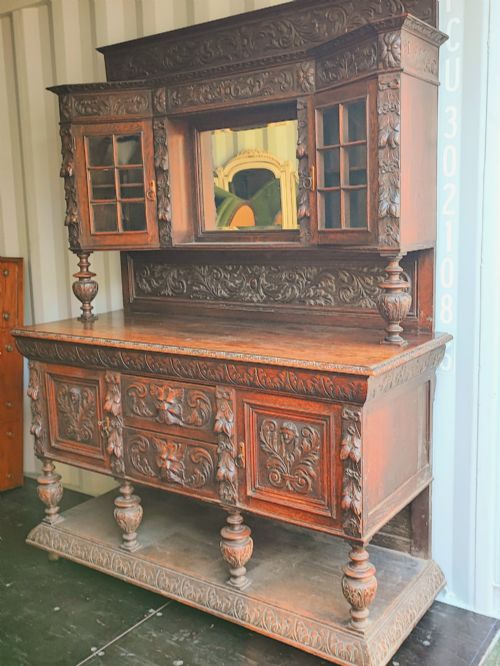
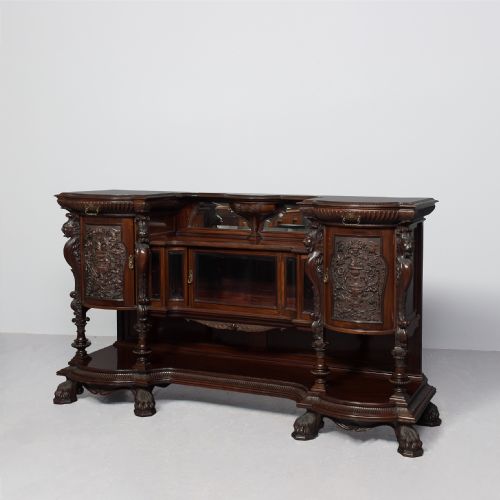
Construction methods rely on traditional joinery for the main carcase, with carved details, applied mouldings, and leaded glass doors appearing on more ambitious designs. The glass mirror is secured within a wooden frame above the sideboard surface, often supported by turned or carved uprights.
Listings feature periods spanning Victorian, Edwardian, and the early twentieth century, up to the nineteen-thirties.
Distinctions in quality
Quality rests in the selection of timbers and the precision of the cabinetwork, from the alignment of inlaid veneers to the depth and crispness of carved ornamentation. Pieces displaying exhibition or fine quality standards reveal superior attention to detail in the secondary woods and interior fittings.
The integration of the mirror back dictates much of the visual success, where balanced proportions between the lower cabinet and the upper glass section separate standard production from superior work. Hardware such as brass handles and hinges should complement the overall weight and style of the timber.
Shoolbred and Co·T Simpson and Son·Shapland and Petter
The Edwardian Mirrored Sideboard Glossary
- Mirror back
- A wooden superstructure incorporating one or more glass mirrors, mounted above the main sideboard surface to reflect light and display items.
- Marquetry
- Decorative patterns formed by fitting contrasting veneers into a prepared wooden surface, often seen in floral or geometric motifs.
- Arts and Crafts
- A design movement prioritising honest construction, visible joinery, and the qualities of natural materials over mass-produced ornamentation.
- Credenza
- A low dining room cabinet or sideboard, frequently featuring mirrored doors or glass panels for display.
- Chiffonier
- A compact sideboard or cabinet, typically fitted with enclosed cupboards and a raised superstructure.
Edwardian Mirrored Sideboard: Frequently Asked Questions
How do I clean the mirror glass safely?
Use a soft microfibre cloth with a mild glass cleaner sprayed onto the cloth rather than directly onto the glass. This prevents moisture from seeping behind the silvering or damaging the surrounding wooden frame.
Avoid abrasive materials or harsh chemicals that can scratch the glass surface or degrade the antique polish on the adjoining timber mouldings.
Where should I place an edwardian mirrored sideboard?
Position the piece against a sturdy interior wall in a dining room, hallway, or spacious living area where it can anchor the room. Ensure the floor is level so the heavy carcase and mirrored superstructure remain stable.
Consider the position of windows and light sources opposite the mirror, as the glass will reflect natural light and brighten darker corners of the room.
How do I tell Edwardian from Victorian sideboards?
Edwardian examples generally exhibit lighter proportions, simpler lines, and a preference for golden oak or Sheraton-influenced mahogany inlays. They often reflect the influence of the Arts and Crafts movement or early twentieth-century revival styles.
Victorian pieces tend to be heavier and darker in appearance, utilising dense rosewood, burr walnut, or carved dark oak with more elaborate, high-relief ornamentation and imposing mirror backs.
How were these sideboards used originally?
In period dining rooms, these pieces served as staging surfaces for serving food, pouring drinks, and displaying fine silver or ceramic dinner services. The lower cupboards provided secure storage for heavy linens, cutlery, and bottled beverages.
The mirrored back and upper display shelves allowed households to showcase decorative objects, making the sideboard a focal point for hospitality as well as utility.