



Edwardian Marine Canvas Artwork
Edwardian marine canvas artwork captures the motion of coastal tides and tall ships upon stretched textiles.
Edwardian Marine Canvas Artwork
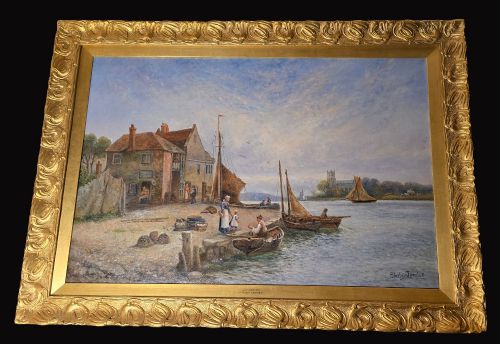
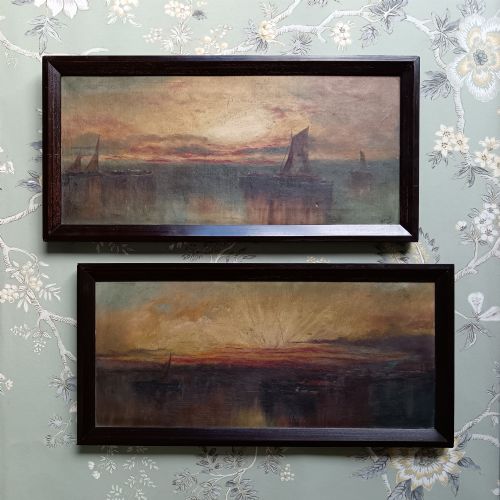
Edwardian marine canvas artwork brings historical coastal scenes, naval vessels, and bustling riverscapes directly into interior spaces through oil paintings. These pieces capture the maritime world of the early twentieth century alongside Victorian survivals and later additions.
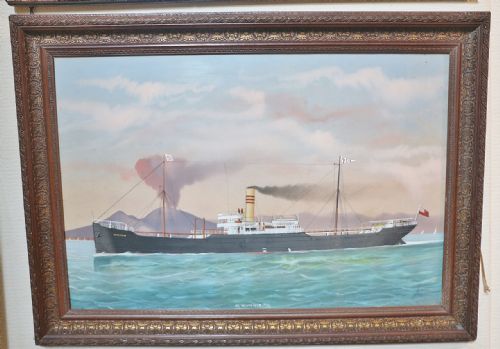
Buyers encounter oil paintings on canvas depicting tall ships, harbours, and coastal views framed in wood and gilt. The selections range from detailed depictions of steamships and naval cruisers to tranquil estuaries and Cornish fishing ports.
Most examples date from the Edwardian era and surrounding decades, reflecting a period of intense artistic output focused on maritime subjects. The works span British impressionism, maritime realism, and traditional coastal landscapes executed on fabric supports.
Assessing quality in coastal oil paintings
Quality rests upon the artist's ability to render water, light, and vessel rigging with convincing depth and atmospheric truth. Superior works demonstrate confident handling of tone across sea and sky, whereas lesser examples rely on formulaic repetition.
The preservation of the paint surface and the stability of the canvas tension dictate the physical integrity of the piece. Well-maintained brushwork without excessive retouching elevates an artwork above compromised surfaces.
Edwardian Marine Canvas Artwork Retail Price Guide 2026
Typical asking prices for edwardian marine canvas artwork among the pieces listed under this phrase on Sellingantiques today, from the lower quarter to the upper quarter. They describe what is for sale here now, not the wider market.
Several canvases faithfully record historic vessels like the flying cloud and royal navy cruisers plying distant waters.
Charles Napier Hemy·Daniel Sherrin·Edward Henry Eugene Fletcher·James Webb·Bertram Priestman
The Edwardian Marine Canvas Artwork Glossary
- Oil on Canvas
- A painting medium where pigments suspended in drying oils are applied to a stretched fabric support. This combination allows for rich blending and textured impasto marks.
- Giltwood
- Wood carved and covered with a thin layer of gold leaf or metallic powder. This material frequently frames Edwardian and Victorian fine art.
- British Impressionism
- An artistic approach focusing on light, loose brushwork, and everyday subjects outdoors. Artists working in this style captured fleeting coastal moments.
- Maritime Realism
- A genre dedicated to accurate depictions of ships, coastal topography, and nautical life. These works prioritise precise detail regarding naval architecture and sea conditions.
Edwardian Marine Canvas Artwork: Frequently Asked Questions
How do I clean an oil painting on canvas?
Dust the surface gently with a soft, dry brush to remove loose particles without disturbing the paint. Avoid using water, household cleaners, or moisture on the canvas.
Professional conservation is recommended for deeper cleaning or varnish removal. Improper cleaning can permanently damage the fragile oil layers.
Where should I hang marine art?
Display these works away from direct sunlight and excessive humidity to protect the canvas and paint. Stable indoor temperatures prevent the wooden stretcher frames from warping.
Consider room lighting carefully to avoid glare on the varnished surface. Placing the artwork at eye level enhances the visual impact of the coastal scene.
How do I identify an Edwardian painting?
Look for stylistic cues such as loose impressionistic brushwork combined with early twentieth-century naval or coastal subjects. Many pieces carry signatures, dates, or framing details consistent with the period.
Compare the canvas preparation and stretcher construction with known examples from the era. Archival records and artist signatures provide definitive dating evidence.
What is maritime realism?
Maritime realism is an artistic movement dedicated to truthful representations of ships, water, and coastal weather. Painters strove for accuracy in rigging, hull design, and nautical operations.
This style flourished during the nineteenth and early twentieth centuries alongside commercial shipping expansion. Artists often observed naval vessels and fishing fleets directly from life.