

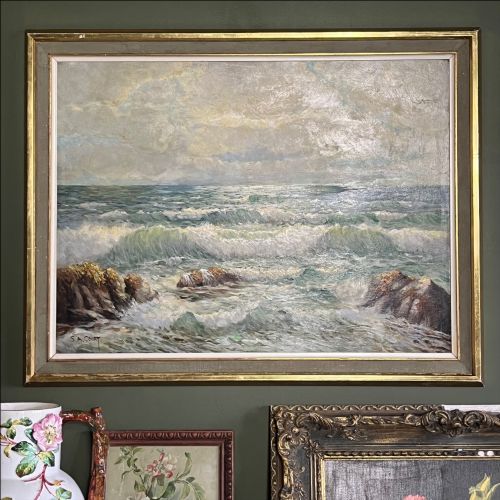
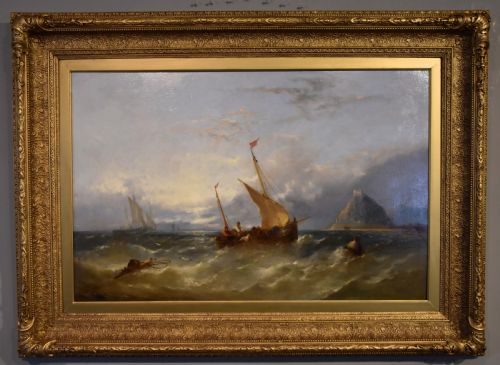


Cornish Coastal Oil Artwork
These Cornish coastal oil artwork pieces capture the dramatic Atlantic light and rugged fishing harbours of the far southwest.
Cornish Coastal Oil Artwork
Cornish coastal oil artwork captures the distinct maritime topography of the southwest peninsula, focusing on harbours, fishing fleets, and tidal inlets. These works range from Victorian maritime scenes to mid-twentieth-century modernist interpretations.
The pieces on this page span several decades, featuring works created across the nineteenth and twentieth centuries. Landscapes from St Ives, Mevagissey, and Polperro dominate the subjects encountered here.
Materials and construction
Artists painted these coastal scenes primarily using oil paint applied to stretched canvas panels or wooden supports. Many works utilise en plein air techniques to capture immediate atmospheric conditions by the shore.
Surviving pieces frequently retain their period frames constructed from wood and gesso, often finished in gilt. These original surrounds complement the maritime subject matter and protect the painted edges.
Cornish Coastal Oil Artwork Retail Price Guide 2026
Typical asking prices for cornish coastal oil artwork among the pieces listed under this phrase on Sellingantiques today, from the lower quarter to the upper quarter. They describe what is for sale here now, not the wider market.
Listings incorporate oil on canvas and wood panels produced across the nineteenth and twentieth centuries.
Assessing quality in coastal oils
Quality rests upon the artist's handling of coastal light and the depth achieved within maritime perspectives. Works displaying confident brushwork and accurate topographical detail stand apart from more formulaic decorative output.
The integrity of the original canvas surface and stability of the oil layer dictate the preservation state. Strong provenance and documented attribution to established regional schools elevate the standing of individual paintings.
Sidney A. Court·William Henry Williamson·Edward Matthew Elliott·Charles Napier Hemy·Gyrth Russell·George Turland Goosey·William Pitt·William Lambert Bell·Jack R Mould·William Edward Webb
The Cornish Coastal Oil Artwork Glossary
- En plein air
- Painting outdoors to directly observe the landscape and changing coastal light. This method produces immediate brushwork characteristic of nineteenth and twentieth-century impressionism.
- Newlyn School
- An art colony based in West Cornwall that flourished from the late nineteenth century onward. Artists associated with this group focused on realistic depictions of local fishermen and coastal daily life.
- Gesso
- A plaster-like mixture applied to wooden frames or panels to prepare a smooth surface for gilding or painting. Traditional recipes combine chalk or gypsum with animal glue.
- St Ives School
- A designation for artists working in and around the Cornish port town, shifting from traditional marine realism toward various forms of abstraction and post-impressionism over the decades.
Cornish Coastal Oil Artwork: Frequently Asked Questions
What periods do these paintings cover?
The works span from the late nineteenth century through to the mid-twentieth century. This timeline covers Victorian realism up to post-impressionist interpretations of Cornish harbours.
Earlier examples often depict traditional maritime activities, while later twentieth-century pieces adopt broader handling of light and form.
Which Cornish locations appear most often?
St Ives, Mevagissey, and Polperro are frequent subjects across these coastal scenes. Landmarks such as St Michael's Mount also feature prominently in marine compositions.
Artists drew inspiration from the busy fishing ports and tidal variations unique to the south-west peninsula.
Are original frames included?
Many listings include period wooden frames finished with gesso and gilt details. These surrounds often date from the same era as the canvas.
Examining the frame construction provides additional context regarding the age and history of the artwork.
How do I care for an oil painting?
Keep paintings away from direct sunlight and sources of extreme heat or humidity fluctuations. Dust the surface gently with a soft, dry brush without applying pressure.
Avoid using liquid cleaners or attempting restoration without professional conservation advice.