
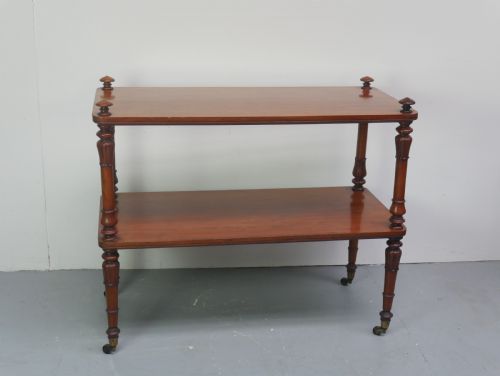
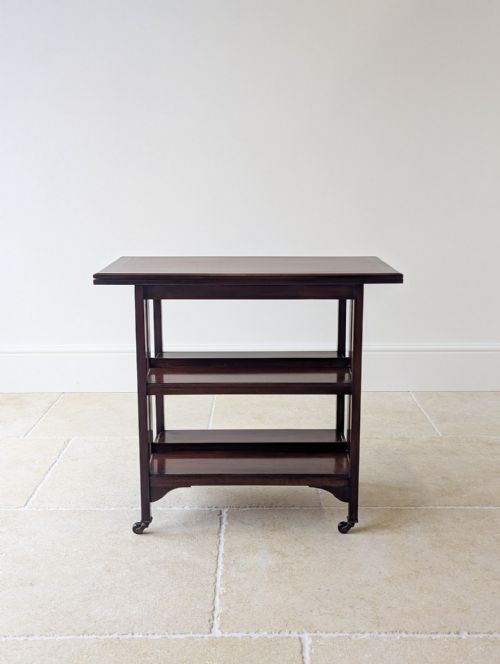
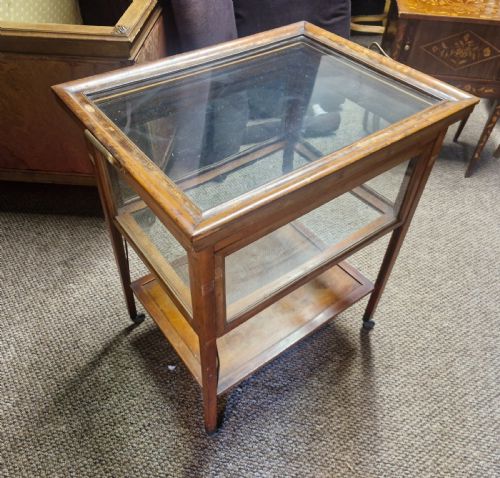


Edwardian Mahogany Trolley
These edwardian mahogany trolley designs combine polished timber and practical wheels to serve afternoon tea or hold drinks with effortless grace.
Edwardian Mahogany Trolley
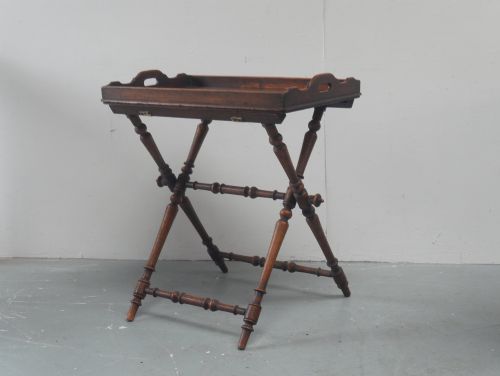
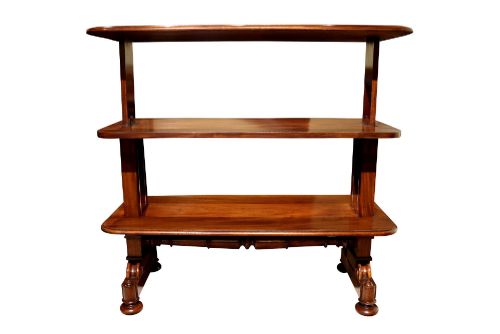
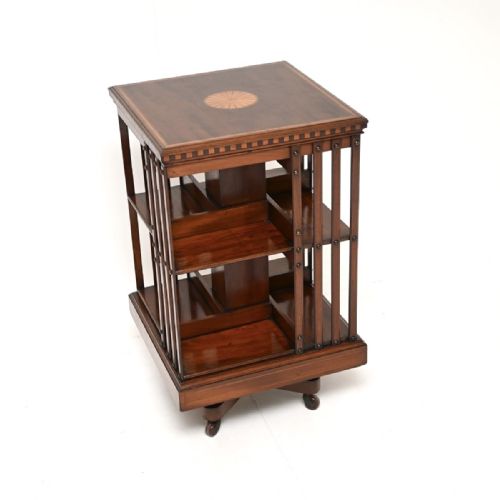
An edwardian mahogany trolley is a movable serving piece designed for domestic hospitality, most commonly encountered in two-tier and drop-leaf tea or drinks formats from the early twentieth century. The selections available on this page stretch from proper Edwardian examples to related nineteenth-century buffets, dumb waiters, and serving tables in mahogany.
Buyers seeking an edwardian mahogany trolley will find pieces intended for practical entertaining, featuring wheeled mobility, tiered shelving, and sometimes removable serving trays or baize-lined card surfaces. These items reflect a period of domestic comfort where serving refreshments efficiently across drawing rooms and libraries mattered greatly.
Materials and Construction
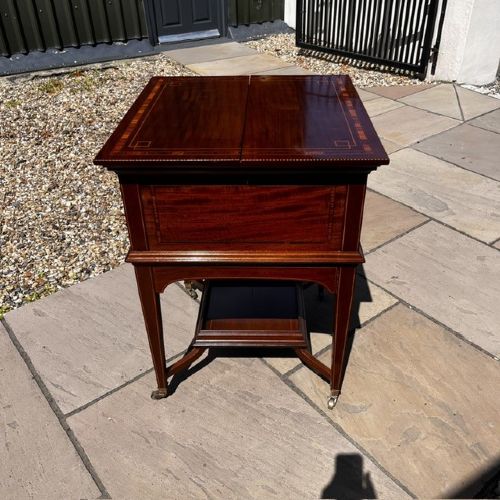
The primary timber across these pieces is mahogany, frequently paired with satinwood or boxwood inlay for decorative contrast and occasional flame mahogany veneers on serving surfaces. Brass fittings provide structural support, castors enable movement, and glass or ceramic elements appear on select trays and shelves.
Joinery techniques focus on stability and mobility, uniting solid mahogany and veneered panels with sturdy tier supports, drop-leaf hinges, and caster-mounted legs. Inlaid stringing and contrasting borders define the style without compromising the functional integrity of the framework.
Some tea trolleys doubled as card tables with baize surfaces, proving that Victorians and Edwardians took both tea and gambling with equal seriousness.
Distinctions in Quality
Quality in these pieces is dictated by the crispness of the cabinetwork, the richness of the mahogany timber, and the subtlety of any satinwood or boxwood inlay. Finer examples display balanced proportions, select wood figure, and integrated brass hardware that remains sturdy under daily movement.
The Edwardian Mahogany Trolley Glossary
- Mahogany
- A durable tropical hardwood prized for its deep reddish-brown tone and smooth grain. It forms the structural foundation for the vast majority of these serving pieces.
- Satinwood
- A pale, lustrous timber native to India and Ceylon, used here for contrasting inlay and stringing. It creates sharp visual borders against darker mahogany surfaces.
- Dumb waiter
- A tiered piece of furniture designed to hold food, drinks, or books without requiring servant attendance. They appear here in foldable and multi-shelf formats.
- Drop-leaf
- A table or trolley design featuring hinged flaps that fold down to save space or lift up to extend the serving surface. These allow the footprint to adapt to the room.
- Etagere
- A set of open shelves for displaying small objects or serving items. This form provides tiered storage accessible from multiple angles.
Edwardian Mahogany Trolley: Frequently Asked Questions
What is an edwardian mahogany trolley used for?
These pieces were originally designed for serving afternoon tea, cakes, and drinks within the home without the need for constant servant attendance. They provided a mobile surface for glassware, teapots, and decanters across drawing rooms.
Today, they function brilliantly as mobile cocktail bars, side tables, or plant stands in modern living spaces. Their tiered shelves and wheel mobility offer practical storage alongside period character.
How do I spot a genuine edwardian piece?
Authentic pieces from the Edwardian era typically exhibit construction methods appropriate to the early twentieth century, including traditional joinery, solid mahogany or quality veneers, and period brass castors. Look for natural ageing in the timber and hand-finished details rather than modern manufacturing marks.
Stylistic cues also help anchor the date, such as satinwood inlay, stringing, and proportions typical of the period. Comparing the construction to documented pieces from similar decades confirms the timeline.
Are these trolleys sturdy enough for daily use?
Most of these serving pieces were built for active domestic service, utilising solid timber frames and sturdy tier supports designed to carry heavy tea services or glassware. Their wheeled castors allow them to move smoothly across flat residential floors.
Gentle handling and proper maintenance of the wooden joints and castors ensure they remain fully functional. Treating them with the same care as any antique table preserves their structural integrity.