



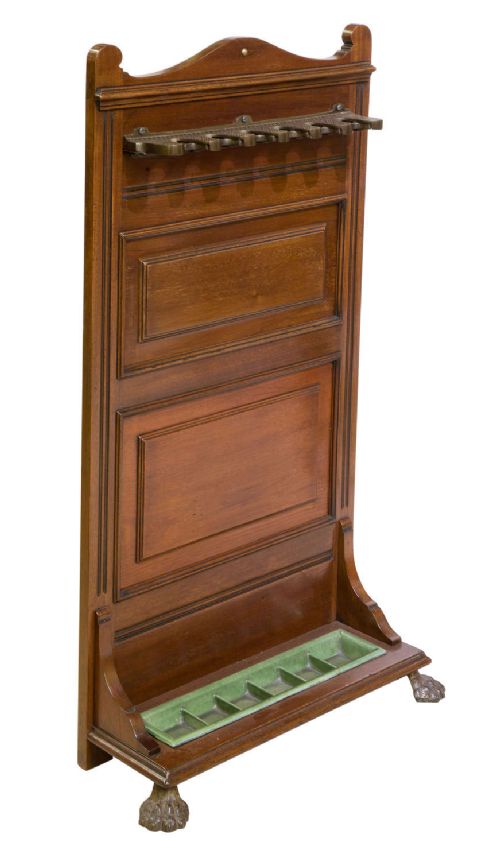


Edwardian Mahogany Stick Rack
These edwardian mahogany stick rack pieces organise hallway clutter with timber warmth and practical metal work.
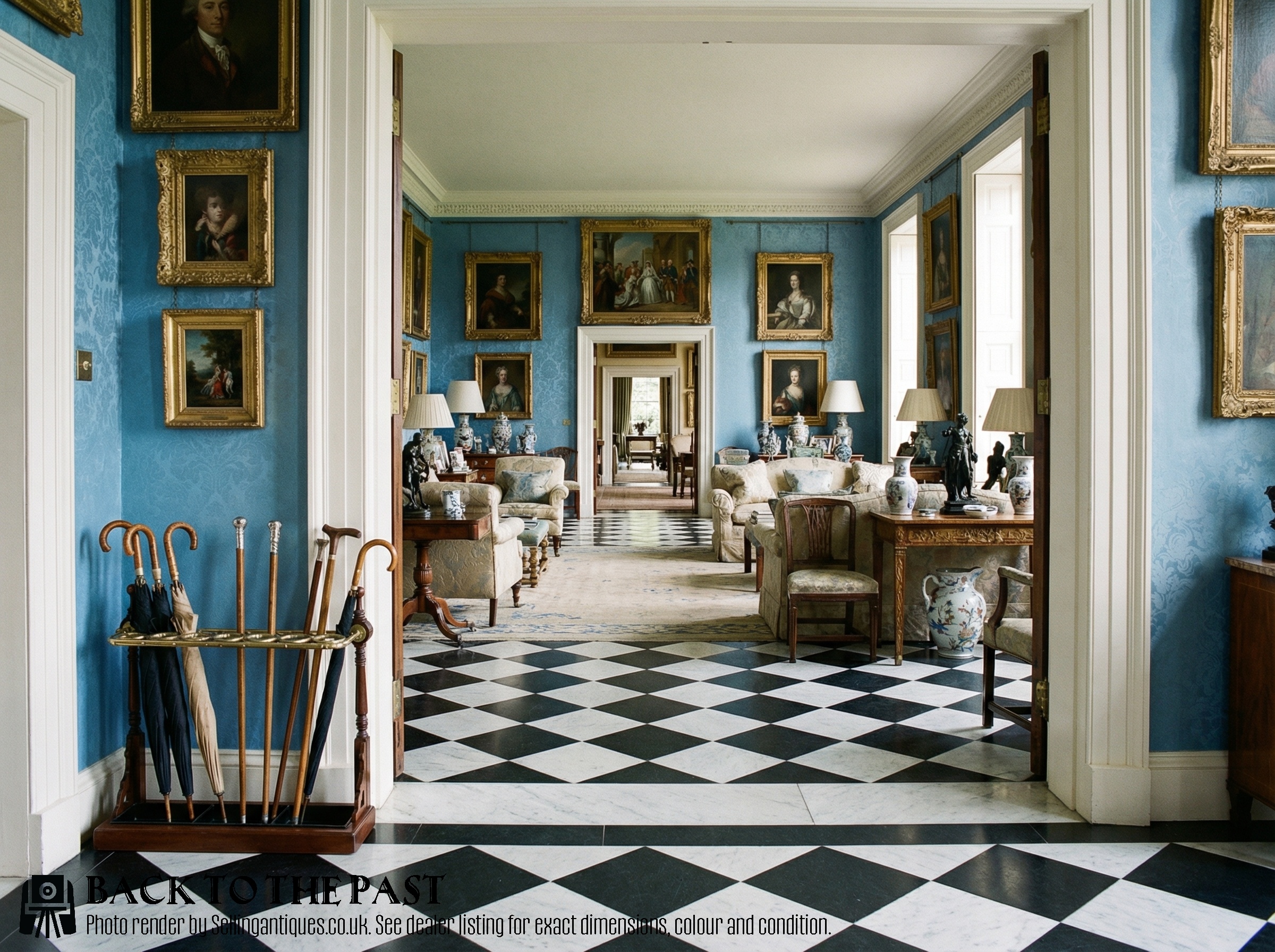
Edwardian Mahogany Stick Rack
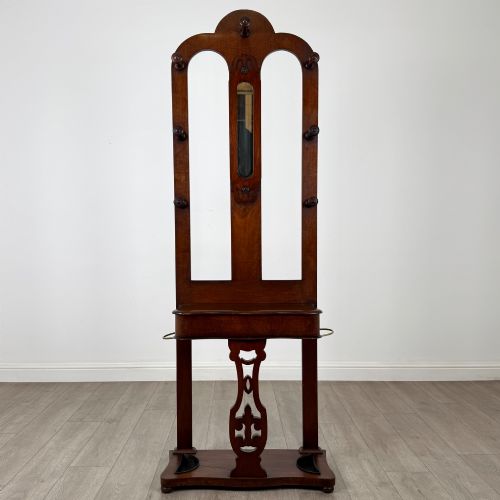
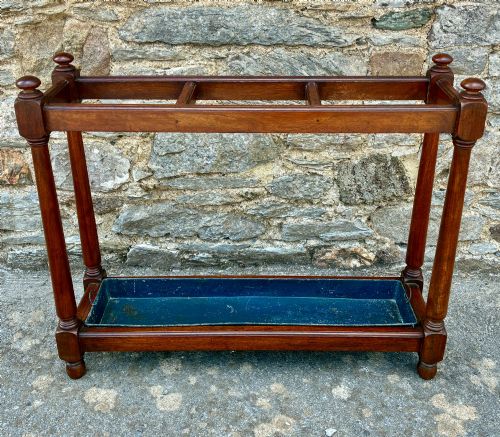
An edwardian mahogany stick rack serves as a domestic retainer for walking sticks, umbrellas, boots, and whips in a hallway or entrance. The examples recorded here span hallway furniture and standalone holders made during the Victorian and Edwardian eras.
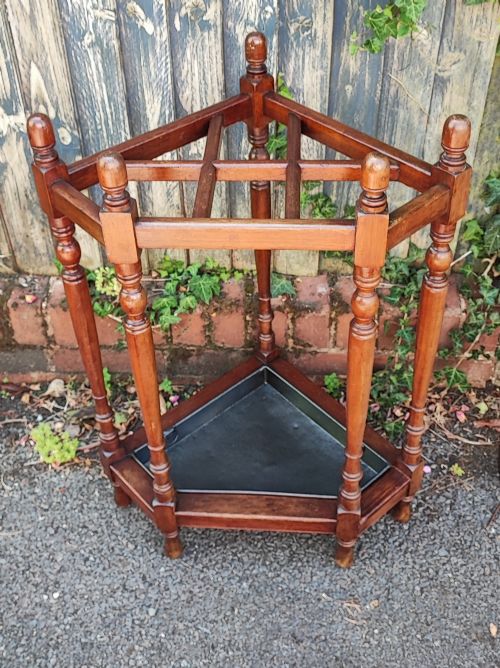
The form appears as dedicated stick stands, corner stands, and larger combined hall stands incorporating coat hooks and mirrors. Mahogany forms the primary structural timber across the pieces listed.
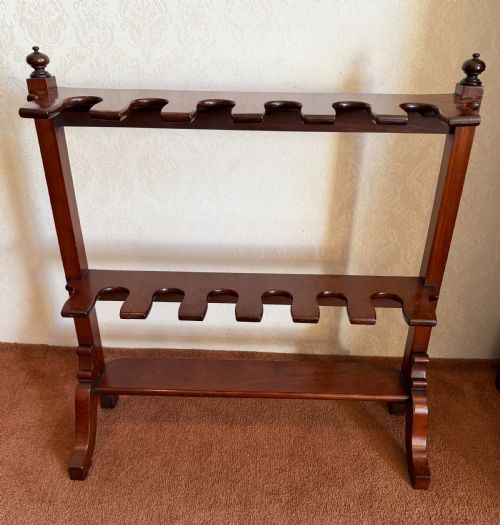
Makers adapted the form for country houses and town residences alike, occasionally integrating mechanical snooker cue holders or boot scrapers alongside traditional umbrella wells.
How they were made
Construction relies primarily on solid and veneered mahogany shaped into frames, panels, and dividers. Workshops combined this timber with brass rails, cast iron drip pans, and occasional painted sheet metal liners to catch rainwater from wet umbrellas.
Detailing includes inlaid motifs characteristic of the Arts and Crafts movement alongside turned spindles and brass mounts. Heavy bases utilise cast iron or marble inserts to provide stability against heavy walking sticks and riding crops.
Several pieces double as boot and whip repositories, proving that Victorian households had very muddy dogs and horses.
What varies in quality
Quality depends upon the architectural ambition of the frame and the integrity of the secondary materials like brass rails and drip trays. Pieces featuring integrated mirrors, intricate inlay work, or combined coat and hat hooks represent a more substantial form than simple standalone frames.
The selection of timber grain and the solidity of the joints distinguish standard utility pieces from finer country house examples. Original metal drip pans and intact brass fittings elevate the completeness of an individual stand.
The Edwardian Mahogany Stick Rack Glossary
- Hall stand
- A combined item of entrance furniture incorporating stick wells, coat hooks, a mirror, and often a glove drawer. These larger pieces dominated Victorian and Edwardian entrance halls.
- Drip pan
- A removable metal tray placed at the base of a stick stand to catch moisture from wet umbrellas. They are commonly fashioned from brass, zinc, or painted sheet metal.
- Arts and Crafts
- A design movement favouring honest construction, simple forms, and handcrafted ornamentation rather than mass-produced revival styles. Pieces from this period often display subtle inlay and exposed joinery.
- Cue stand
- A specialised rack configured to hold snooker or billiard cues rather than walking sticks. Their internal spacing and heights are adapted specifically for gaming equipment.
Edwardian Mahogany Stick Rack: Frequently Asked Questions
Where were these stands placed in a home?
These pieces sat directly inside the front entrance or hallway of a house. They provided an immediate drop-off point for outdoor gear upon entering.
Guests and residents deposited wet umbrellas, walking sticks, and riding whips before stepping further into the residence.
How do I care for a mahogany hall stand?
Keep the timber away from direct heat sources and sudden temperature shifts to prevent wood movement. Feed the mahogany polish sparingly to maintain the surface sheen.
Empty and dry the metal drip pans regularly to stop moisture from damaging the base timbers.
Can these hold modern umbrellas?
The interior dividers and wells accommodate standard modern umbrella handles and shafts without difficulty. Traditional compartments were built with generous clearances for various walking aids.
Folding umbrellas may slip through wider divider bars, so long-handled umbrellas work best.
Are all these stands made of solid mahogany?
Construction utilises a mixture of solid mahogany timbers for structural members and frames, alongside veneers applied to secondary woods for larger panels. The evidence shows consistent use of mahogany across the recorded items.
Internal framing and backboards on larger hall stands frequently employ supporting secondary timbers.