
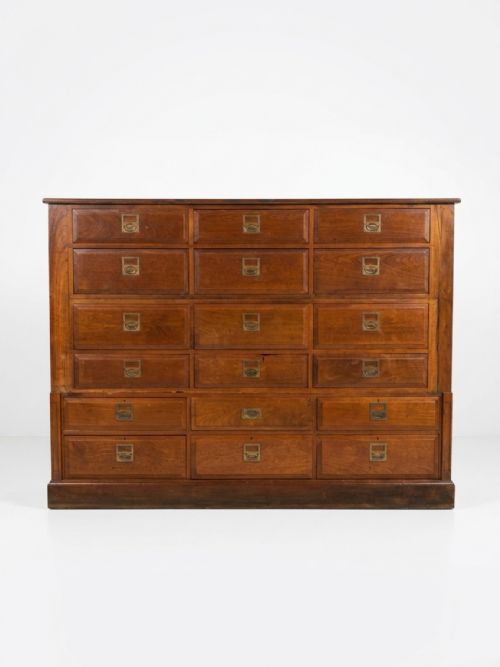


Edwardian Mahogany Specimen Cabinet
These edwardian mahogany specimen cabinet examples are disciplined storage pieces built for serious collections, offering deep drawers for careful study.
Edwardian Mahogany Specimen Cabinet
An edwardian mahogany specimen cabinet provides orderly housing for natural history items, documents, and small objects of curiosity. Most pieces encountered combine rich timber carcases with numerous shallow drawers designed to protect delicate contents from dust and light.
The form developed to serve Victorian and Edwardian collectors who gathered everything from insects and eggs to botanical samples and microscope slides. These cabinets range from modest six-drawer chests to substantial multi-drawer storage units bearing the marks of specialised workshops.
How They Were Made
Makers built these pieces primarily from solid mahogany, frequently pairing the dense reddish timber with satinwood for contrast or interior elements. Brass fixtures such as drop handles, card holders, and lock escutcheons provided functional durability alongside precise visual balance.
Glass panels were integrated into door frames to allow viewing of contents without disturbing sensitive specimens stored within. Interior drawer construction demanded exact tolerances to ensure smooth sliding action across dozens of individual compartments.
Current listings feature mahogany, brass, glass, satinwood, and felt across Victorian and Edwardian periods.
What Varies in Quality
Quality rests in the precision of the drawer joinery and the integrity of the secondary timbers selected for hidden partitions. Finer examples display meticulous attention to internal fit, ensuring drawers slide effortlessly despite seasonal humidity changes.
The choice of exterior hardware and the grain selection in the mahogany veneer or solid panels distinguish standard utility pieces from workshop masterworks. Original glass panes and intact internal linings further elevate the standard of preservation.
Brady of Edmonton·James Gardner of London
The Edwardian Mahogany Specimen Cabinet Glossary
- Mahogany
- A durable tropical hardwood prized for its deep reddish-brown tone and resistance to warping. It served as the primary structural and visual material for superior storage furniture.
- Specimen cabinet
- A specialised chest featuring multiple shallow drawers built to house natural history collections or small scientific items. The internal configuration prioritized secure organisation over large volume storage.
- Satinwood
- A lustrous yellow timber utilised for contrasting stringing, banding, or panel details within high-grade cabinetwork. Its inclusion usually signals a more ambitious workshop origin.
- Wellington chest
- A tall vertical chest of drawers secured by a hinged locking stile on one side that fastens over the drawer edges. This form provided compact security for documents and valuable objects.
Edwardian Mahogany Specimen Cabinet: Frequently Asked Questions
What were these cabinets originally used for?
These cabinets housed systematic collections of natural history, including insects, eggs, botanical samples, and geological specimens. Collectors relied on the numerous shallow drawers to keep fragile items organised and protected.
The multiplication of drawers allowed owners to sort extensive series by species, size, or acquisition date without overcrowding individual compartments.
How do I date an edwardian mahogany specimen cabinet?
Dating relies on construction methods, hardware styles, and timber selection relative to known periods. Edwardian pieces often exhibit lighter secondary woods and simpler decorative restraint compared to heavily moulded Victorian predecessors.
Examining internal drawer construction and lock stamps helps establish a manufacturing window consistent with the era's workshop practices.
Can I use these for modern storage?
The shallow drawers suit the organisation of flat graphics, jewellery, small collections, and office supplies. The enclosed nature of the cabinets keeps dust away from delicate items while fitting neatly into domestic spaces.
Careful placement away from direct heat sources protects the old timber and original interior felts from deterioration.
How do I care for the mahogany finish?
Routine maintenance involves gentle dusting with a dry, soft cloth to prevent particulate accumulation on the polished surfaces. Avoid liquid cleaners and silicone sprays, which can penetrate porous old finishes and cause long-term softening.
Maintaining stable room humidity prevents the timber and drawer runners from binding or cracking over time.