
Edwardian Mahogany Shelving
Edwardian mahogany shelving brings together rich timbers and practical tiering, offering a refined way to display books and domestic objects.
Edwardian Mahogany Shelving
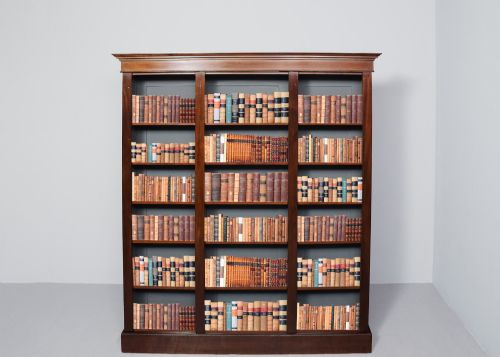
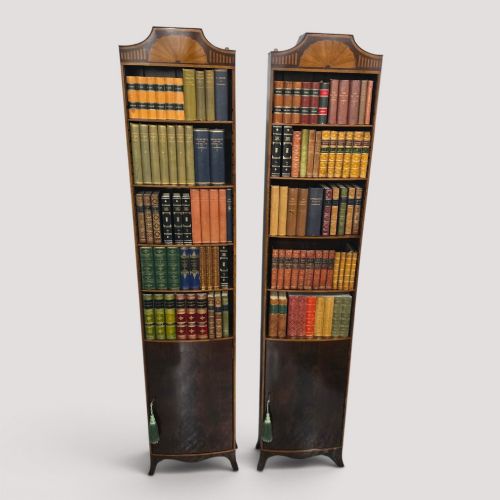
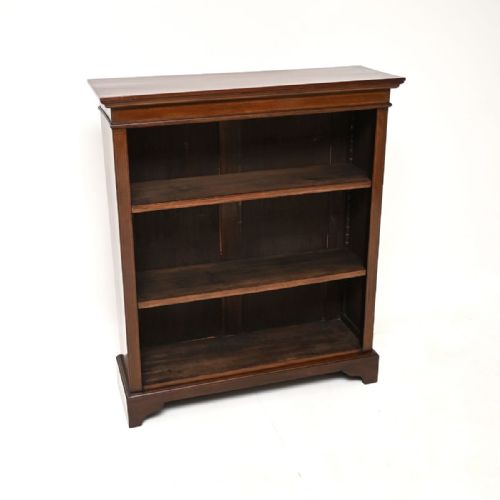
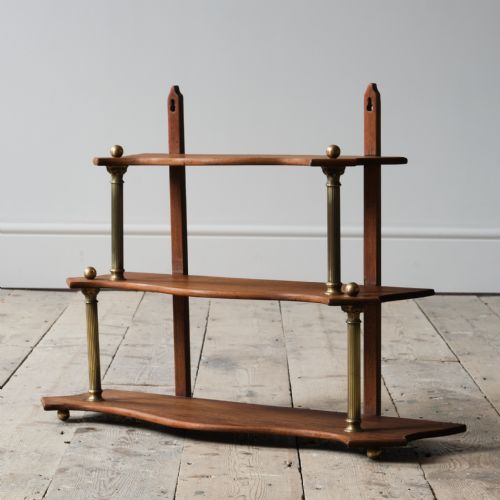
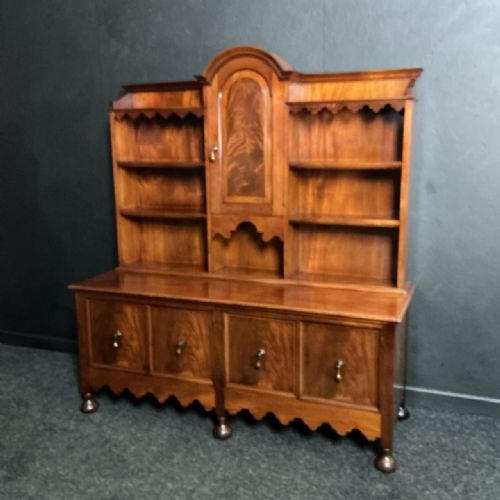
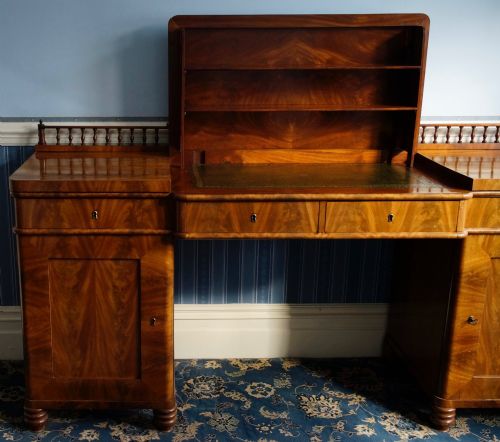
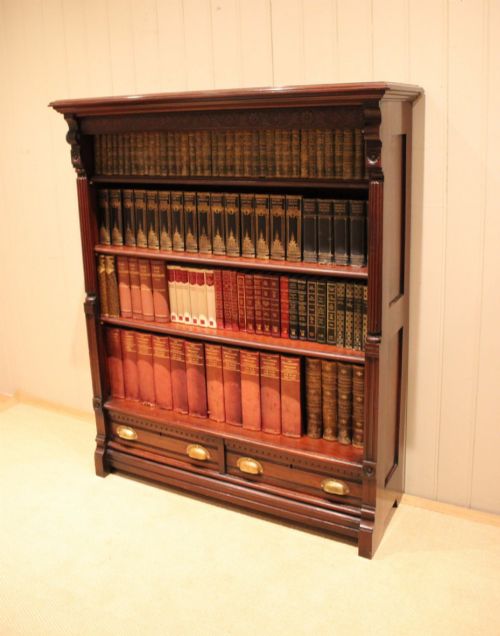
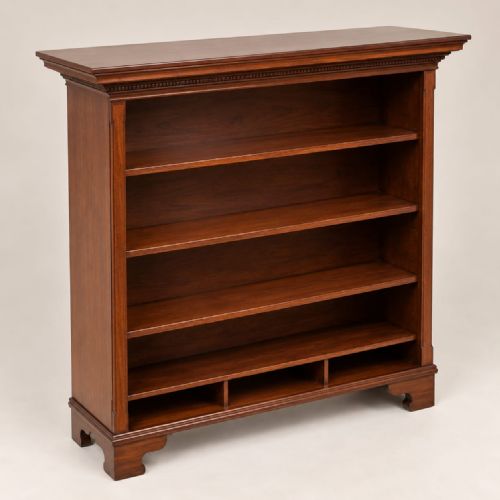
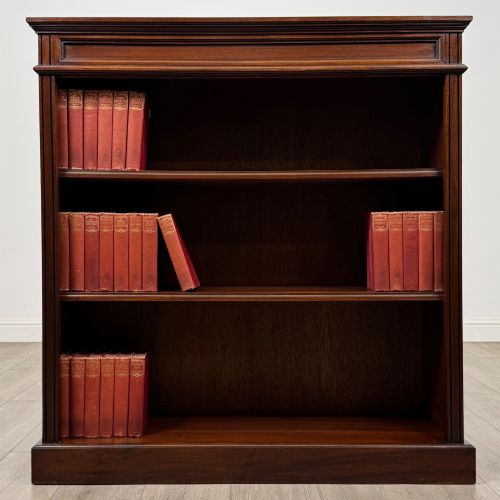
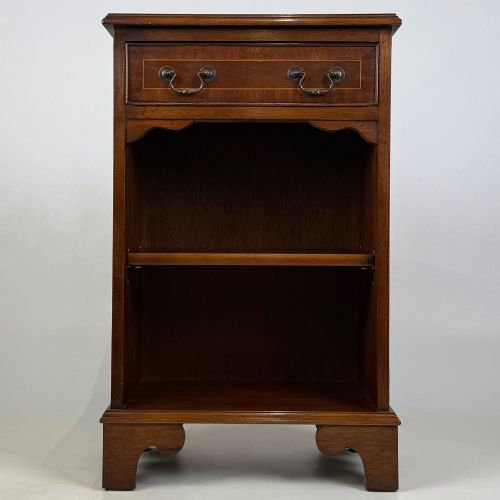
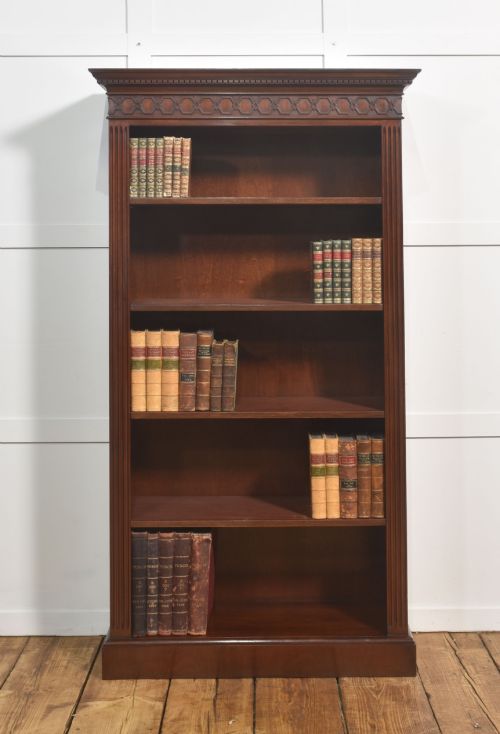
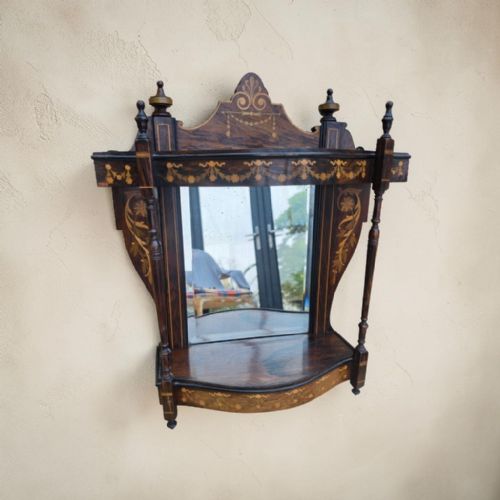
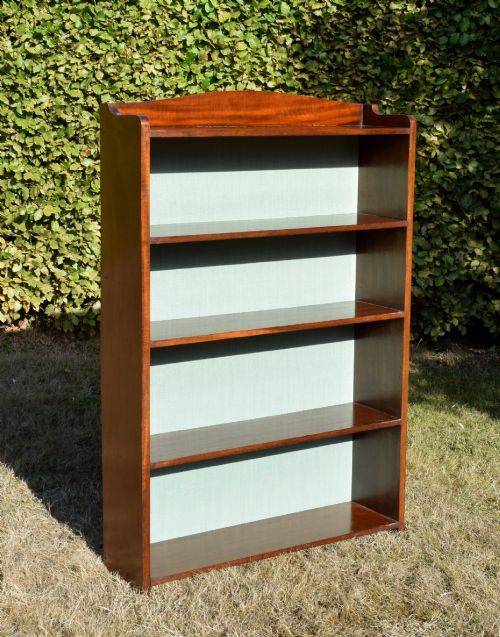
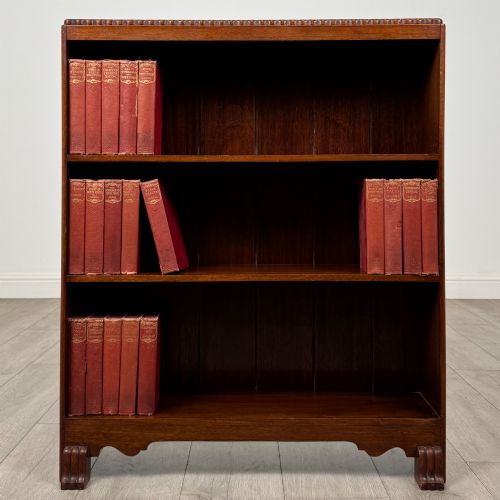
Edwardian mahogany shelving primarily appears as open bookcases, wall hanging shelves, and narrow display cabinets originating from the early twentieth century and the late Victorian period. These pieces respond to a domestic demand for orderly book storage and decorative display within drawing rooms and libraries.
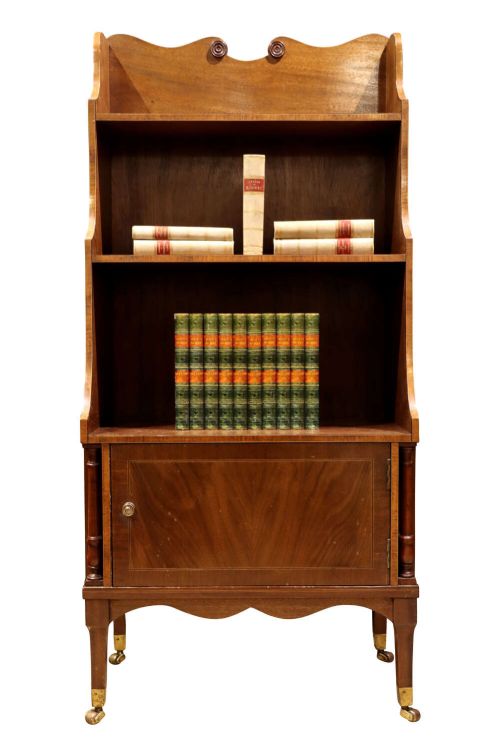
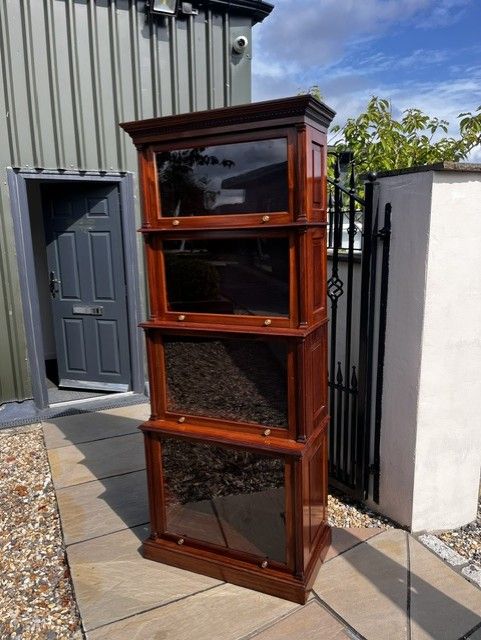
The selections span distinct formats, ranging from compact wall shelves to substantial bookcases with adjustable shelving, occasional cabinets, and occasional whatnots. Pieces carry influences from Sheraton Revival alongside straightforward Edwardian utility, reflecting the design vocabulary of the period.
Materials and Techniques
Makers utilised solid mahogany and mahogany veneers, occasionally incorporating satinwood for contrast or inlay work within the timber surfaces. Brass fittings, glass panels, and mirror inserts appear alongside leather and fabric elements on related desk and cabinet components.
Construction techniques involve structural timber framing combined with delicate stringing and inlaid motifs characteristic of revivalist cabinet making. Brass castors support heavier bookcase cabinets, while wall-hanging variations rely on secure joinery to bear loads safely.
Some barristers' bookcases come fitted with clever stacking glass doors designed to protect precious law volumes from dusty courtrooms.
Distinctions in Execution
Quality rests upon the selection of timber grain, the precision of inlaid details, and the integrity of the structural joinery. Finer pieces demonstrate careful timber matching and subtle decorative stringing rather than heavy or plain surfaces.
Hardware choice and mechanical elements, such as adjustable shelf mechanisms and brass castors, separate standard production items from finer workshop pieces. Attention to proportion and neatness of scale defines the upper tier of surviving examples.
Edwards & Roberts·Globe Wernicke·Lamb of Manchester·Tudor & Burrey·Waring and Gillows
The Edwardian Mahogany Shelving Glossary
- Edwardian
- A stylistic period spanning the reign of King Edward VII, noted for lighter furniture forms and revivalist decoration. Pieces from this era often favour neoclassical motifs and polished mahogany surfaces.
- Mahogany
- A durable tropical hardwood prized for its deep reddish-brown colour and fine grain. It serves as the primary structural and surface material for these bookcases and shelves.
- Waterfall bookcase
- A tiered shelving unit where each successive shelf steps back from the one below it, creating a cascade profile. This form appears frequently in refined display pieces.
- Inlay
- A decorative technique where contrasting woods or materials are set into the surface of the primary timber. Satinwood stringing is a common application on these items.
- Whatnot
- A freestanding piece of furniture consisting of multiple open shelves for displaying ornaments or books. These tiers are supported by slender upright columns.
Edwardian Mahogany Shelving: Frequently Asked Questions
How do I hang wall shelves securely?
Wall-hanging shelves require proper wall fixings matched to the weight of the mahogany timber and any books placed upon them. Locate solid studs or use appropriate cavity anchors to support the structure.
Ensure the hanging brackets or plates are firmly screwed into the frame before loading the shelves with volumes. Distribute weight evenly across the tiers to maintain stability.
Are these shelves suitable for heavy books?
Many Edwardian and late Victorian bookcases feature adjustable wooden shelves designed to hold standard library volumes securely. Solid mahogany construction provides adequate strength for everyday book storage.
Heavier folio volumes sit best on lower fixed shelves where the structural support is most direct. Check that shelf supports are fully engaged in their slots before loading.
How do I care for mahogany surfaces?
Dust mahogany shelving regularly with a soft, dry cloth to prevent dirt accumulation on the polished grain. Avoid placing pieces in direct sunlight to protect the rich colour from fading.
Apply a quality beeswax polish occasionally to nourish the timber and maintain its natural lustre. Keep the wood away from extreme temperature shifts and excessive moisture.
What defines the Edwardian style?
Edwardian furniture design draws heavily on eighteenth-century Sheraton and Georgian precedents while embracing lighter proportions. Inlaid satinwood details and clean lines distinguish these pieces from heavier Victorian predecessors.
This aesthetic prioritises functional elegance, resulting in adaptable shelving units that fit comfortably into modern domestic spaces. The focus remains on balanced proportions and understated decorative enrichment.