




Edwardian Mahogany Secretary Desk
An edwardian mahogany secretary desk combines practical writing space with handsome cabinetry, offering a sophisticated centrepiece for a study.
Edwardian Mahogany Secretary Desk
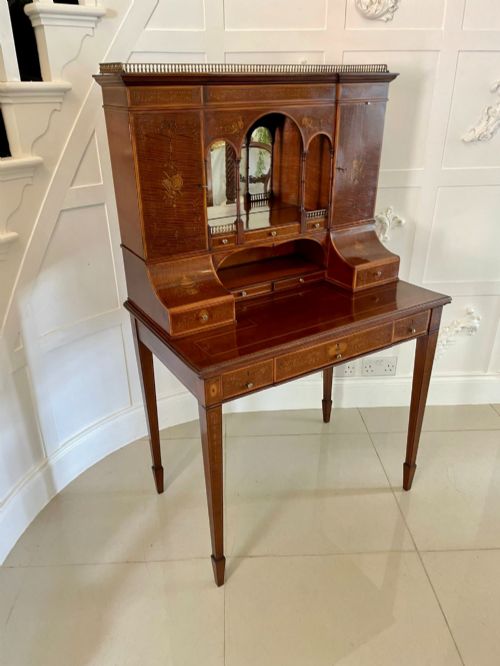
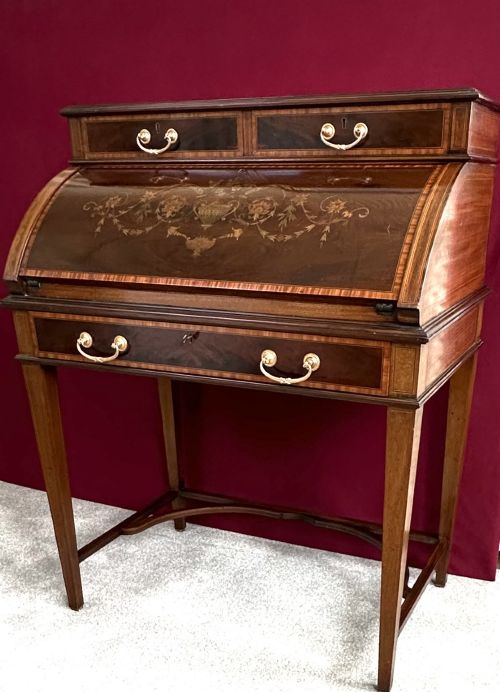
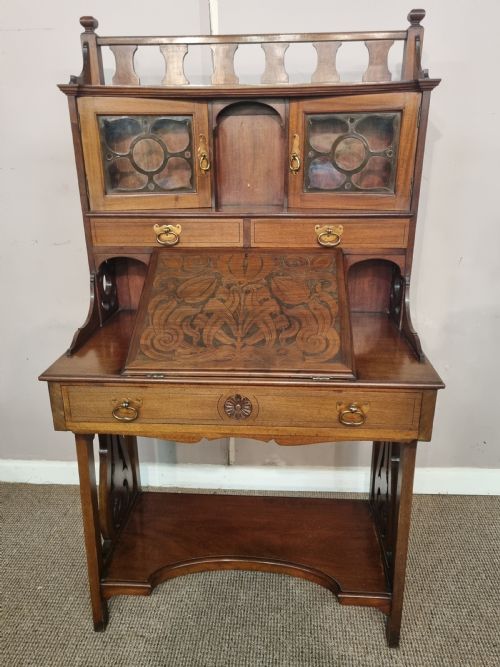
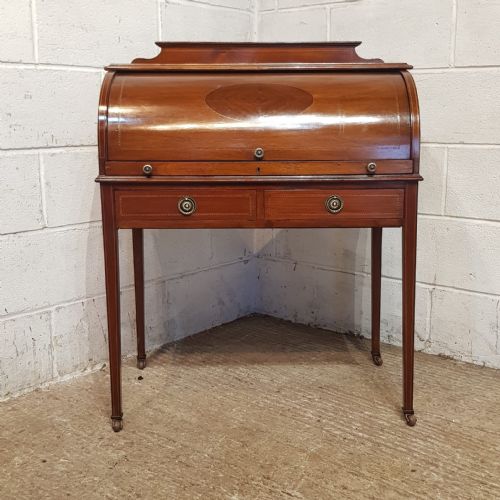
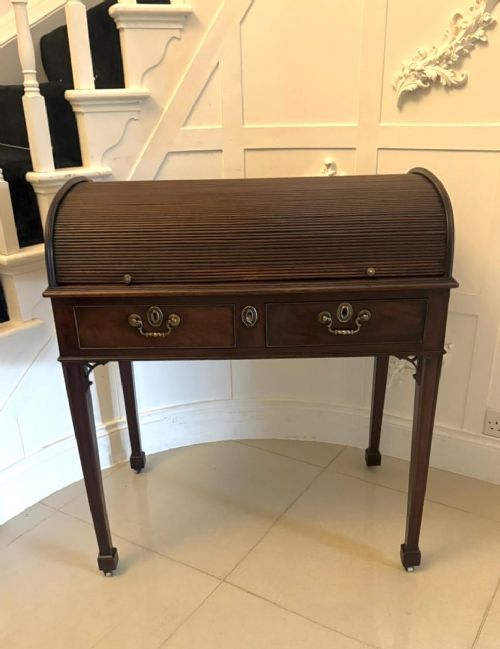
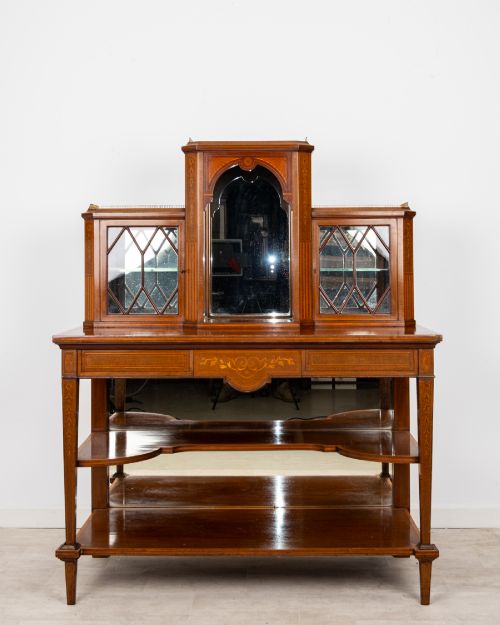
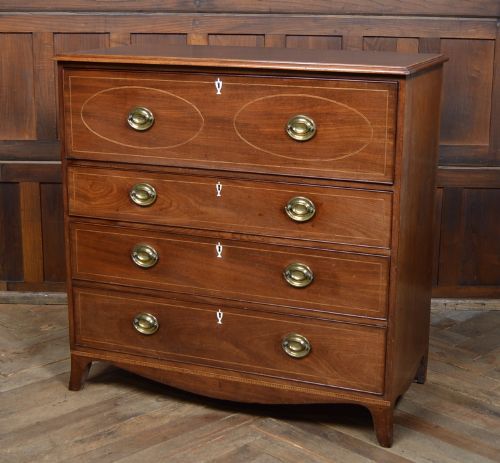
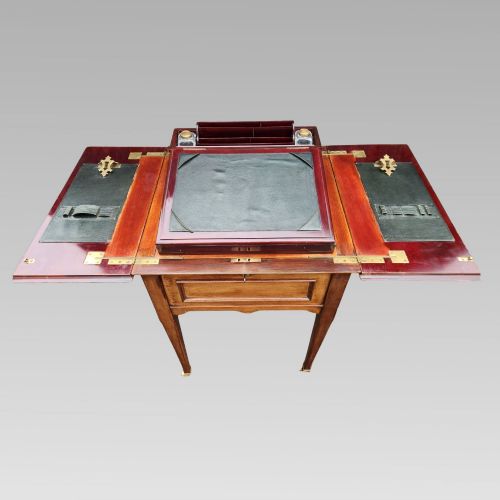
When you search for an edwardian mahogany secretary desk, you encounter versatile writing furniture produced primarily around the early twentieth century alongside related bureau bookcases and cylinder desks. These pieces range from compact fall-front bureaux and bureau bookcases to intricate bonheur du jour tables and Carlton house desks.
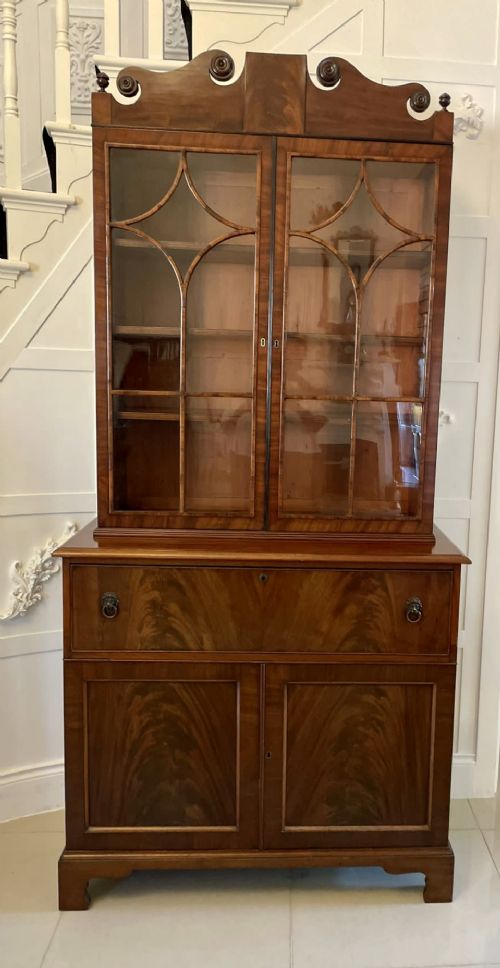
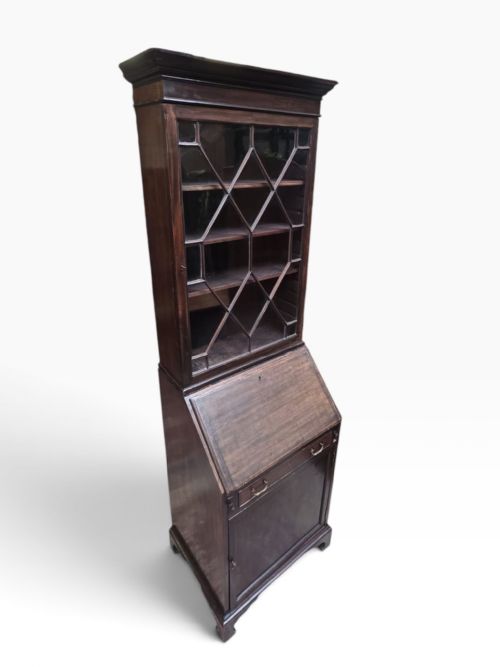
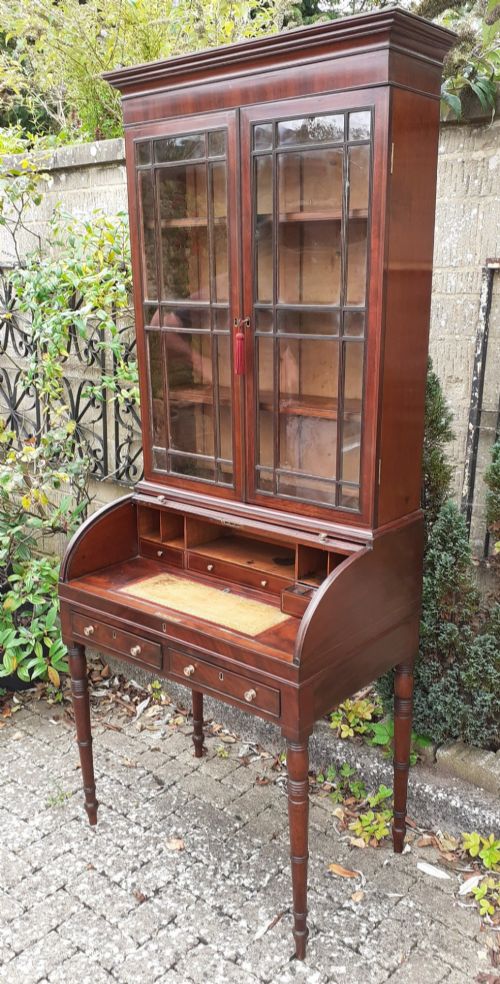
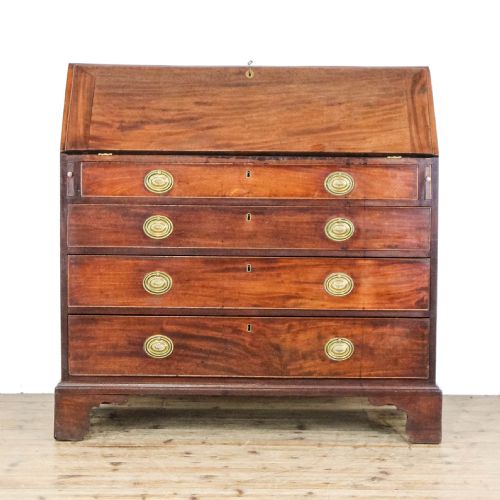
The selection on this page draws heavily from Edwardian and Victorian workshops, with earlier Georgian and Regency pieces also appearing to represent the broader lineage of mahogany writing furniture. Bureau bookcases dominate the offerings, pairing shelved upper cabinets with sloping drop-front writing surfaces and lower drawer storage.
Distinctions in Quality
Superior examples display precise cabinetmaking, where dovetail joints remain tight and fall-front mechanisms operate with smooth balance. The choice of timber grain and the crispness of inlaid satinwood or marquetry determine the visual distinction between standard production and exceptional craftsmanship.
Fitted interior drawers, original brass handles, and well-executed glazing bars elevate the standing of a piece. The condition of the internal leather writing surface and the overall integrity of the secondary woods further distinguish finer furniture.
Form variations range from compact bonheur du jour writing tables to large bureau bookcases.
Tudor & Burrey·Gillows·Edwards & Roberts
The Edwardian Mahogany Secretary Desk Glossary
- Bureau bookcase
- A combination furniture piece featuring a shelved upper cabinet above a lower writing desk with a drop front.
- Bonheur du jour
- A light, elegant ladies writing desk, often featuring small drawers and a cabinet on top.
- Cylinder desk
- A writing desk featuring a rounded, rolling wooden shutter that conceals the writing surface and interior pigeonholes when closed.
- Fall front
- A hinged writing flap that pulls down into a horizontal position to provide a writing surface.
- Marquetry
- Decorative patterns formed by inlaying different coloured veneers into a wood matrix.
Edwardian Mahogany Secretary Desk: Frequently Asked Questions
How do I maintain the leather writing surface?
Keep the leather clean by dusting regularly with a dry cloth and avoiding harsh chemical cleaners. Conditioning balm can be applied sparingly to prevent the leather from drying and cracking over time.
Protect the surface from direct sunlight and moisture by using blotters or pads when writing. Proper care preserves the supple texture and rich colour of the original hide.
What is the difference between a bureau and a secretary?
A bureau typically refers to a slant-front desk designed primarily for writing and storage. In antique terminology, a secretary or secretaire often denotes a piece with a drawer that drops open to reveal a fitted writing desk.
Both forms share similar ancestry, though secretary desks frequently incorporate upper bookcase sections or cabinet doors. The terms are often used interchangeably in modern descriptions of antique mahogany furniture.
How do I date an Edwardian desk?
Edwardian pieces date from the reign of King Edward VII, spanning roughly from 1901 to 1910. Stylistic cues include lighter proportions, satinwood stringing, and Sheraton Revival influences.
Construction methods also provide clues, as machinery production grew more common during this era while retaining traditional hand-finishing techniques. Look for stamps, paper labels, or drawer construction details that align with early twentieth-century manufacturing.
Where should I place a cylinder desk?
Position the desk away from direct heat sources and strong sunlight to protect the mahogany veneer from warping and fading. Adequate room is necessary behind or beside the desk to allow comfortable access to drawers and the rolling cylinder mechanism.
Because these desks often feature finished backs or serve as statement pieces, placing them away from walls in a study allows their proportions to be fully appreciated.