
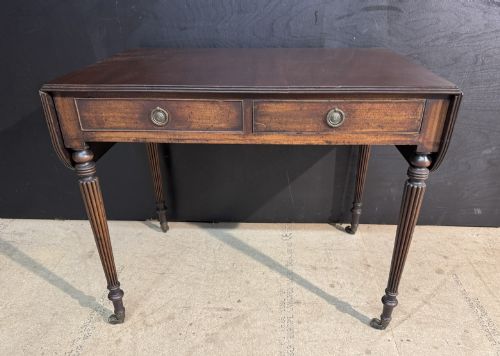
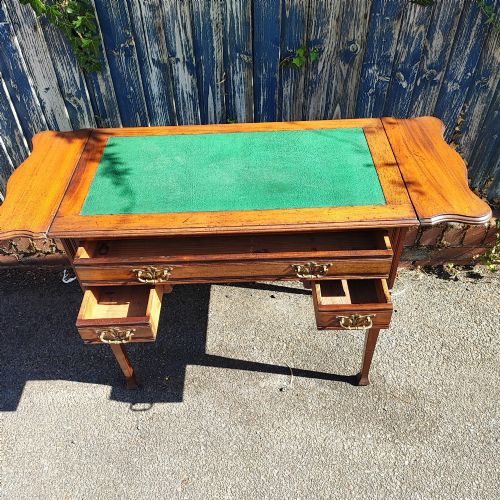
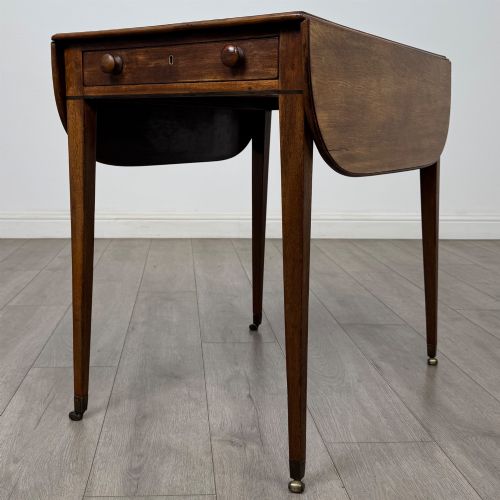
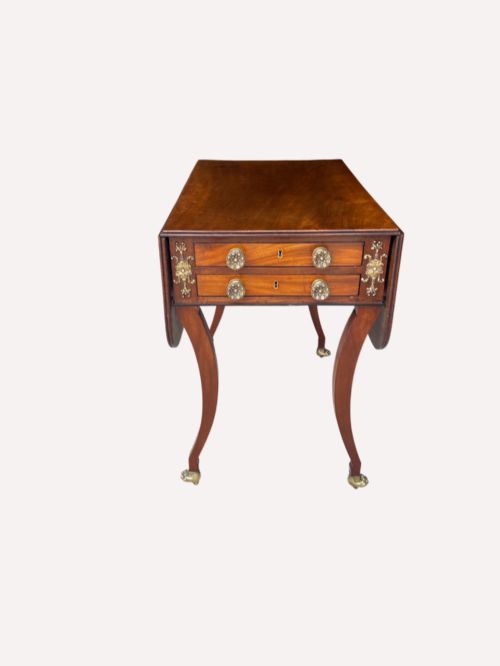

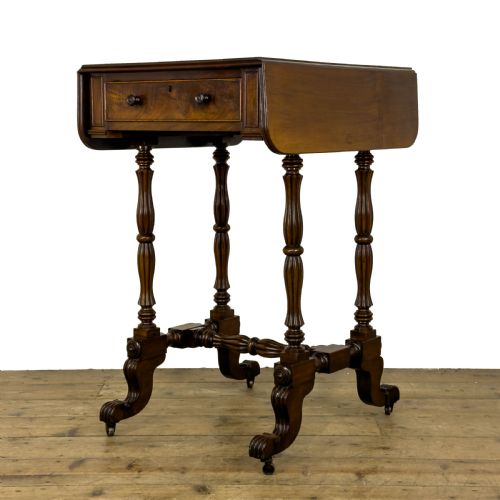

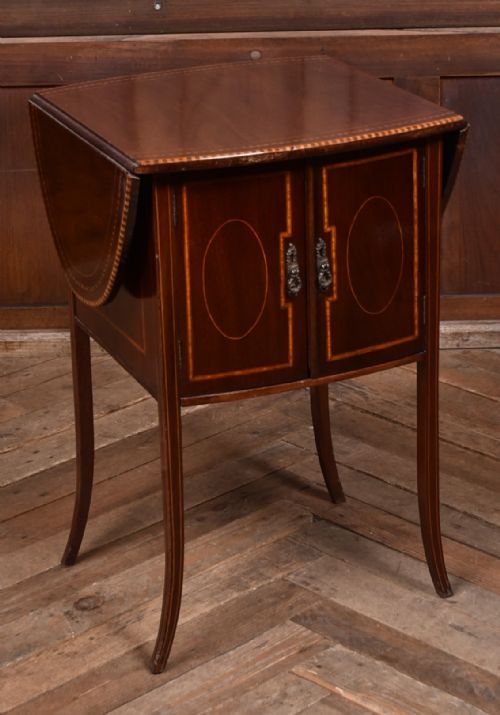


Edwardian Mahogany Pembroke Table
When you handle an Edwardian mahogany pembroke table, you hold a versatile drop-leaf form designed to extend small spaces with polished timber and hinged flaps.
Edwardian Mahogany Pembroke Table
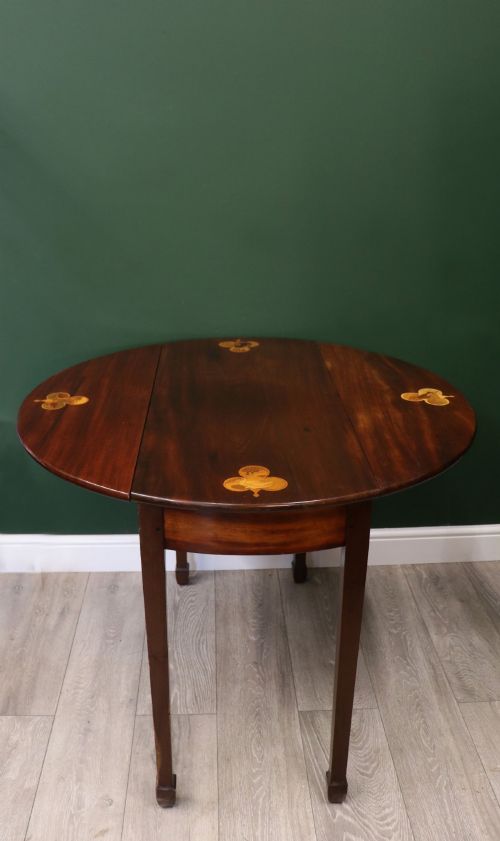
The edwardian mahogany pembroke table is a domestic drop-leaf form characterised by hinged flaps on opposing sides that expand the surface area when supported by folding brackets or swinging legs. These pieces emerge across periods spanning the eighteenth, nineteenth, and early twentieth centuries, appearing in rectangular and oval formats alongside related side and work tables.
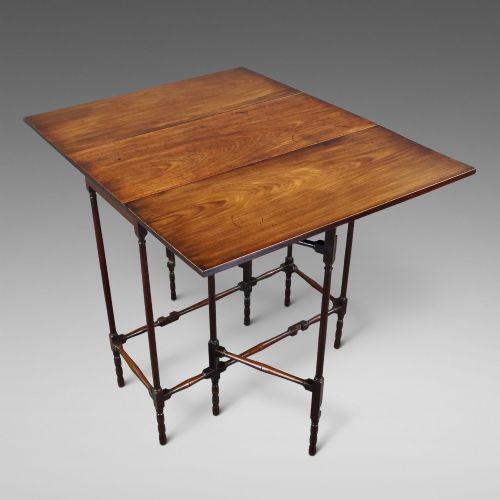
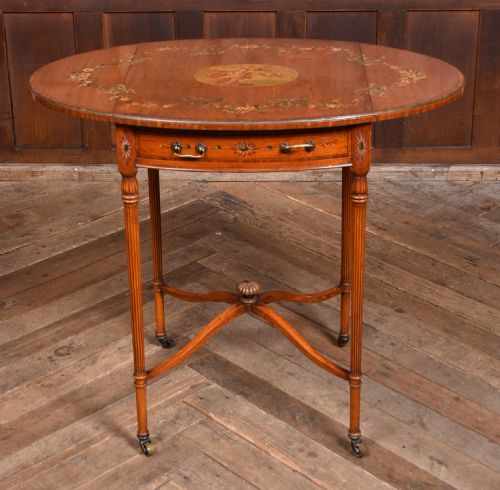
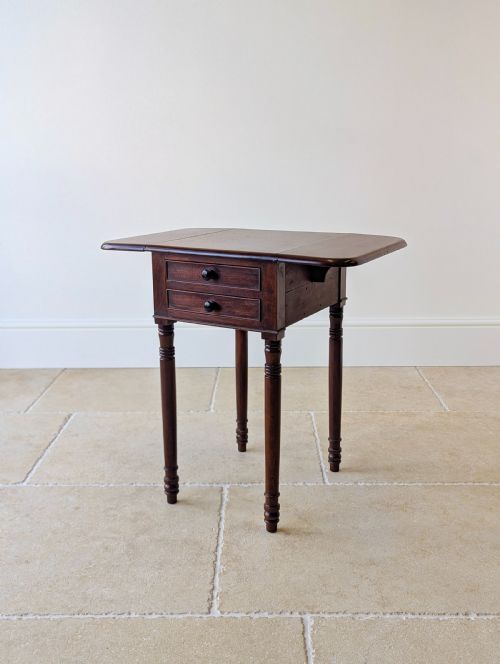
Edwardian examples frequently incorporate satinwood banding, boxwood inlay, and painted details, reflecting a lighter aesthetic than their heavier Victorian predecessors. Makers also produced variants featuring spider legs, drawers, and lower shelves intended for occasional use or as lamp tables in polite rooms.
What varies in quality
Quality rests upon the selection of timber figures, where richly grained mahogany and well-matched satinwood banding separate superior examples from plain variants. The crispness of the inlaid stringing and the neatness of the hinge fitment indicate the skill of the original workshop.
Structural integrity depends on the smooth operation of the drop-leaf supports and drawers without excessive play in the joints. Tables retaining original brass hardware and stable, unwarped leaves command greater regard than those altered by later repairs or replacement components.
The archive reveals that drop-leaf furniture encompasses work tables equipped with interior compartments alongside traditional pembroke and sofa tables.
Andrew Thomson And Sons·Gillows
The Edwardian Mahogany Pembroke Table Glossary
- Pembroke table
- A small occasional table featuring two hinged drop leaves supported by brackets or swinging legs, first popularized in the eighteenth century. These pieces served diverse functions as breakfast, writing, or side tables.
- Drop leaf
- A hinged section of a table top that folds down when not in use. It allows the overall footprint of the furniture to expand or contract according to domestic needs.
- Satinwood
- A lustrous, yellow-toned timber utilised for contrasting veneers and stringing inlay. Cabinetmakers employed it extensively during the Edwardian period to highlight borders and panels.
- Stringing
- Thin lines of contrasting wood inlay set into channels cut into the primary surface. This technique created fine geometric borders on tabletops and drawer fronts.
- Spider leg
- An arrangement of exceptionally slender turned wooden legs supporting a lightweight table frame. These delicate supports appear frequently on smaller Edwardian occasional and Pembroke tables.
Edwardian Mahogany Pembroke Table: Frequently Asked Questions
What is an edwardian mahogany pembroke table used for?
These tables function as versatile surface space in sitting rooms or studies, offering expandable leaves for writing or displaying lamps. When folded down, their compact profile allows them to stand against a wall.
Historically, they accommodated occasional meals, needlework, or correspondence within domestic interiors. Their adaptable design made them useful in rooms where floor space shifted throughout the day.
How do I tell an Edwardian table from a Georgian one?
Edwardian examples generally display lighter construction, frequent use of boxwood and satinwood inlay, and often feature slender tapering or spider legs. They reflect a revival of earlier neoclassical tastes combined with turn-of-the-century manufacturing methods.
Georgian pieces tend toward heavier solid mahogany timbers, more restrained carving, and structural forms dictated by eighteenth-century proportions. Comparing the secondary woods and internal drawer construction helps clarify the period of manufacture.
Are the drop leaves sturdy enough for daily use?
The hinged flaps rely on wooden brackets or swinging gatelegs that pivot out from the frame to bear weight. When properly adjusted, these supports hold the extended leaves securely for normal tasks.
Users should avoid placing heavy loads on the outer edges of the flaps, as the hinges and pivot joints experience mechanical stress. Gentle handling preserves the original timber framing around the pivot points.
How should I care for the mahogany and inlay?
Routine maintenance involves dusting with a dry, soft cloth and occasionally applying a conservative coat of quality beeswax to nourish the polished wood. Direct sunlight and sudden changes in humidity can cause veneers to lift and timber to split.
Keep these tables away from heat sources and radiators to prevent the shrinkage of secondary woods and the warping of the drop leaves. Promptly wiping away moisture protects both the leather inserts and the delicate boxwood stringing.