


Edwardian Mahogany Music Stool
An Edwardian mahogany music stool brings period character to a piano room while offering practical seating and storage.
Edwardian Mahogany Music Stool
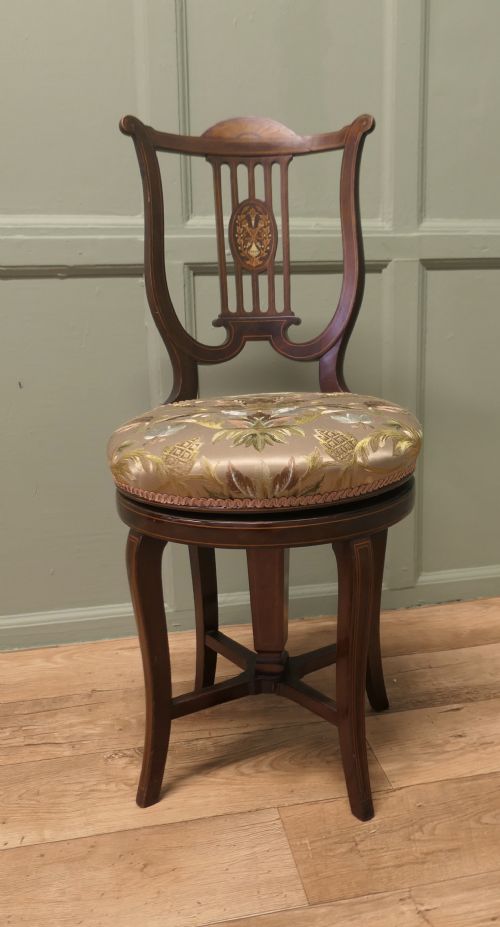
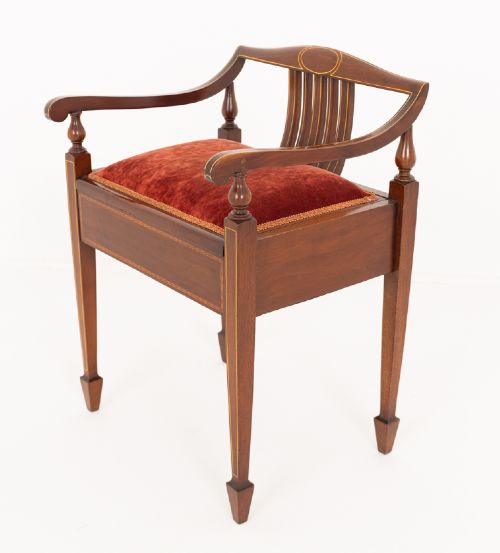
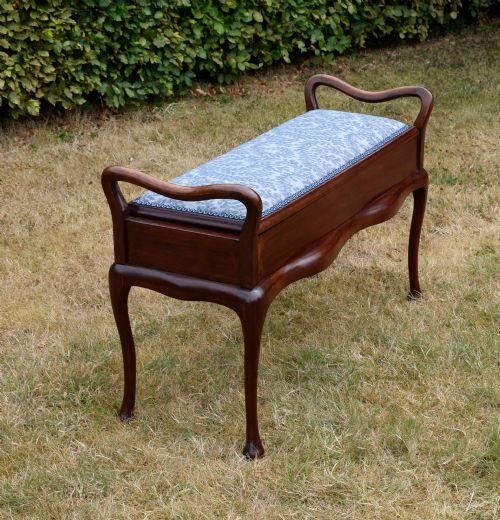
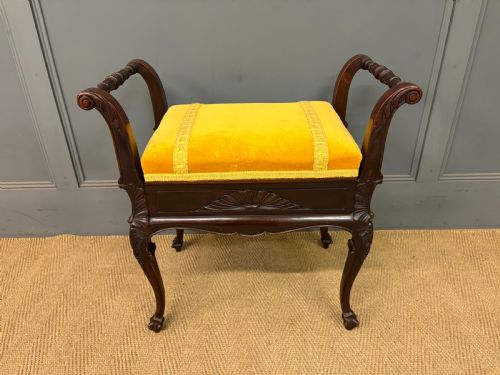
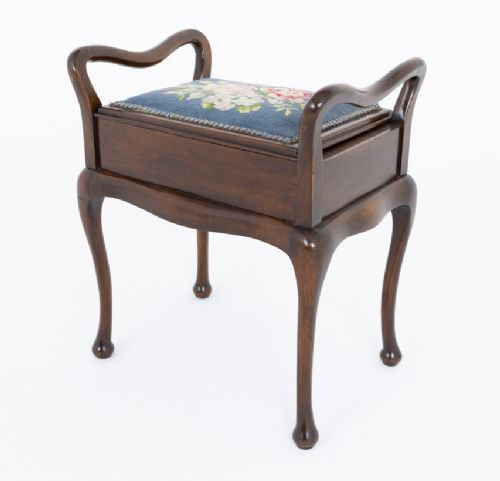
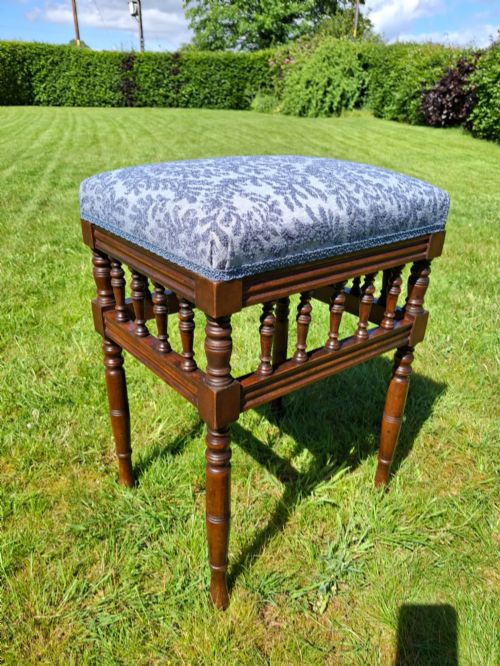
When you search for an edwardian mahogany music stool, you encounter specialised seating designed for the home parlour or drawing room, where the piano formed the centre of domestic entertainment. The listings show forms ranging from single revolving seats and adjustable chairs to wider duet stools and box seats with lifting lids or music cabinet drawers.
The majority of pieces on this page date from the Edwardian period and around nineteen hundred, constructed primarily in mahogany with occasional examples stretching back into the Victorian era or drawing upon earlier Georgian and Sheraton Revival styles.
Makers such as Jas Shoolbred contributed to this form, producing circular piano stools alongside standard upright designs that accommodated sheet music beneath the seat.
Materials and construction
Carpenters built these music seats predominantly using mahogany, often incorporating satinwood inlay, strung lines or contrasting wood veneers to decorate the frames. The construction frequently included rotating mechanisms for adjustable height, hinged lifting lids for internal storage, and box compartments designed to hold sheet music.
Upholstery formed a central part of the manufacturing process, utilising materials such as fabric, velvet, tapestry, needlepoint and tan leather to pad the seats. Metal and brass components frequently supported the revolving actions, castors and hinges that allowed the stools to function smoothly during performance.
Musicians once relied on a quick spin of the seat to find their ideal height before tackling a demanding nocturne.
Distinctions in quality
The distinction between standard production and superior examples rests upon the intricacy of the cabinetwork and the refinement of the timber. Finer pieces display crisp satinwood inlay, precise stringing and substantial mahogany frames rather than plain, unadorned surfaces.
Hardware and mechanism integration also separate grades of work, with smoothly operating revolving screws and solid brass fittings marking out better workshops. Furthermore, the retention of original upholstery materials like tapestry or specialised leather adds to the integrity of a piece.
Jas Shoolbred
The Edwardian Mahogany Music Stool Glossary
- Duet Stool
- A wider piano seat designed to accommodate two musicians side by side. These often feature lifting lids or box compartments for shared sheet music.
- Revolving Stool
- A seat fitted with a screw mechanism allowing the player to adjust their height by turning the top. Metal internal components typically support this action.
- Sheraton Revival
- A late nineteenth and early twentieth-century style drawing inspiration from eighteenth-century neoclassical designs. It frequently utilises mahogany with contrasting satinwood inlay.
- Lyre Back
- A chair back design shaped in the form of an ancient Greek lyre. This motif appears on specialised music chairs intended for harpists, cellists or pianists.
- Needlepoint
- Hand-stitched canvas work used extensively for upholstery on period seats. It often depicts floral or geometric patterns executed in wool.
Edwardian Mahogany Music Stool: Frequently Asked Questions
How do you adjust the height?
Many single music stools feature a revolving mechanism that allows the seated person to raise or lower the top by turning it clockwise or anticlockwise. A central wooden or metal screw column supports this movement.
Other variants rely on fixed heights or focus instead on horizontal surface area rather than vertical adjustment.
Where was sheet music stored?
Sheet music storage is integrated directly into the body of many box stools and cabinet seats. Lifting the upholstered seat reveals a compartment beneath, while some designs incorporate pull-out drawers.
This concealed space kept scores organised and close at hand beside the instrument during practice or performance.
How do I style one today?
These stools fit naturally beside a piano, but their compact proportions allow them to serve equally well as dressing table seats or small occasional chairs in a living room. The enclosed storage makes them practical for keeping small household items out of sight.
Pairing a mahogany and inlaid version with traditional or transitional interiors highlights the warmth of the timber and the detail of the satinwood stringing.