




Antique Velvet Vanity Stool
An antique velvet vanity stool brings tactile warmth and practical luxury to a dressing area.
Antique Velvet Vanity Stool
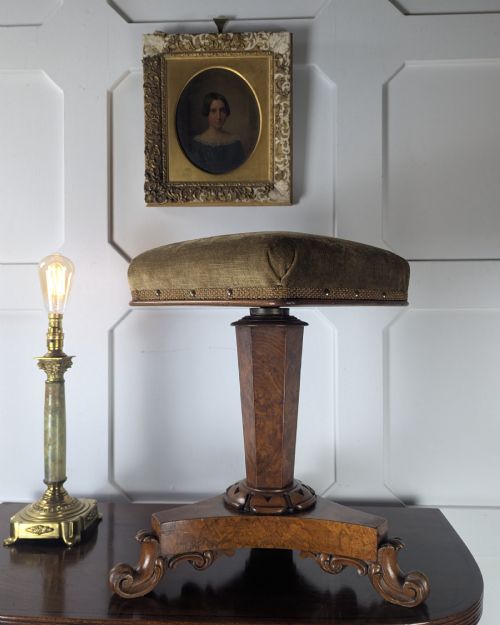
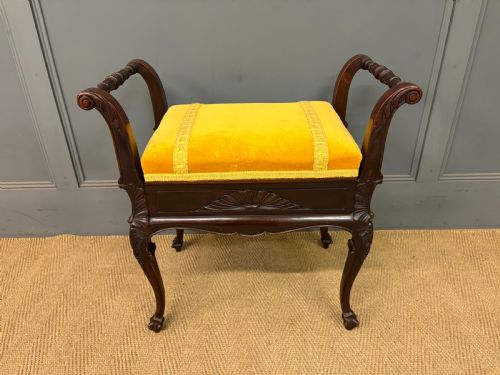
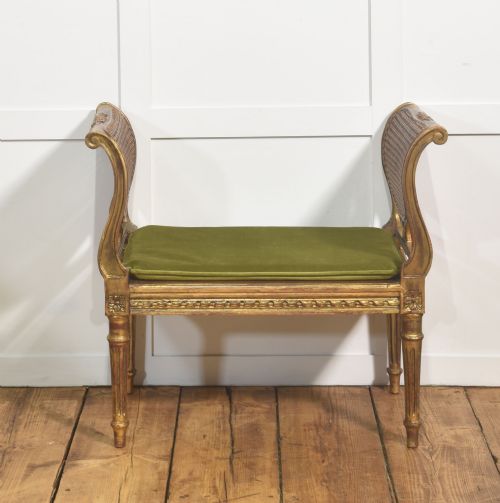
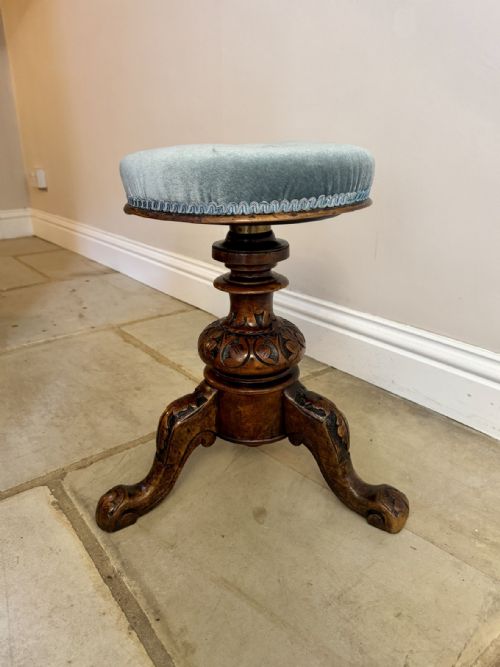
An antique velvet vanity stool is a low seating piece typically used at a dressing table, piano, or window seat. The selection here spans the nineteenth century, Edwardian era, and Art Deco period, capturing forms from simple footstools to adjustable music seats.
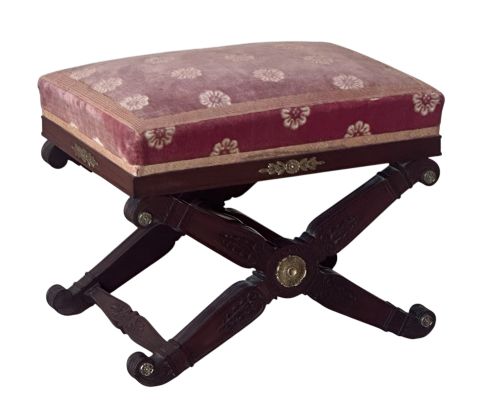
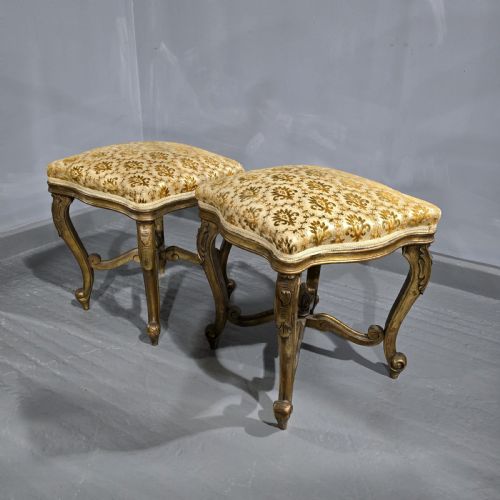
Buyers will encounter revival styles alongside genuine period items, ranging from Georgian and Regency manners to Victorian, Edwardian, and French Empire designs. These seats function effectively as dressing table stools, piano stools, and small ottomans.
Materials and construction
Cabinetmakers constructed the frames using solid timbers such as walnut and mahogany, occasionally applying ebonising, gilding, or paint. Joints were typically joined with traditional dowels and mortise and tenon techniques.
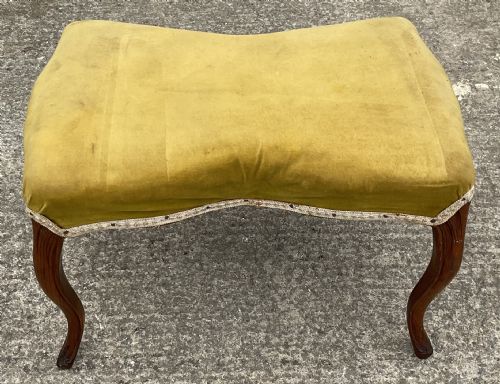
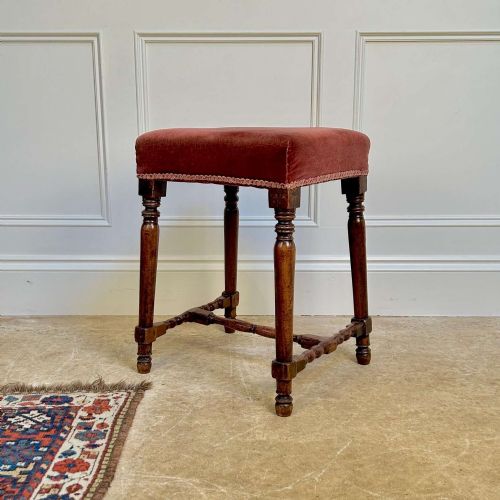
Upholstery involved stuffing textile or fabric over a padded base, finished with velvet and secured with braid. Metal components like brass and steel appeared on adjustable piano stools and frame accents.
A coronation stool sits quietly among the dressing seats, having served a momentary purpose at Westminster before finding its way to the marketplace.
Distinguishing quality in these stools
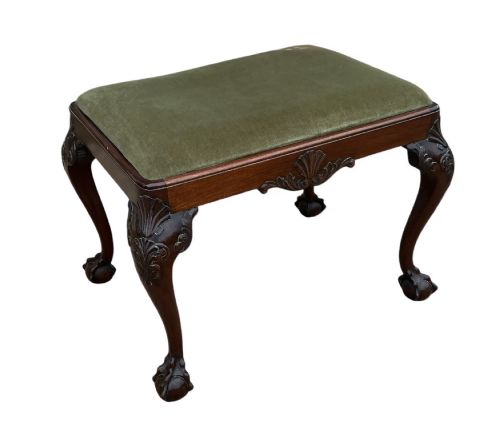
Quality rests in the crispness of timber carving, the choice of figured veneers, and the structural integrity of the frame. Pieces with well-executed cabriole legs, sabre legs, or intricate turning demonstrate superior craftsmanship.
The choice of covering material and the precision of the upholstery work indicate the tier of the piece. Genuine period materials and robust internal mechanisms on adjustable models elevate an example above standard utility items.
James Shoolbred·B. North and Son·A.M.E. Fournier
The Antique Velvet Vanity Stool Glossary
- Cabriole leg
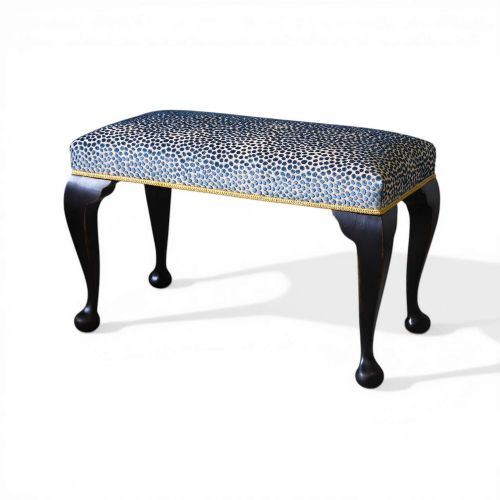
- A furniture leg that curves out and then in, resembling an animal leg. This form appears frequently on eighteenth and nineteenth-century seating.
- Giltwood
- Wood that has been coated with gold leaf or a gold-coloured finish. It is common on decorative French and Victorian frames.
- Ebonised
- Timber treated to resemble ebony through staining or painting. This dark finish was popular during the Victorian and Edwardian periods.
- Sheraton Revival
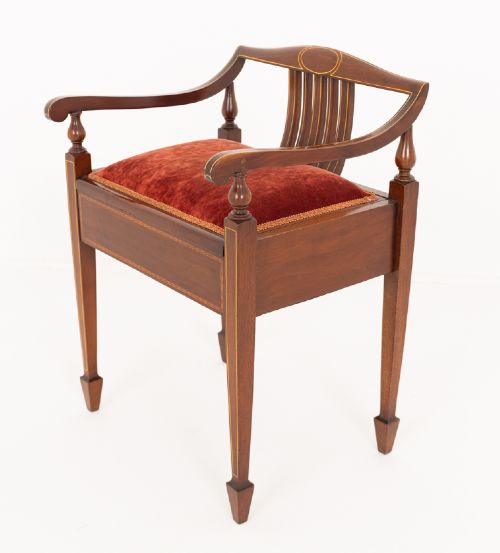
- A late nineteenth and early twentieth-century design movement inspired by the neoclassical furniture of Thomas Sheraton. These pieces often feature delicate mahogany frames and inlaid details.
- Sabre leg
- A concave sweeping leg that tapers toward the foot, characteristic of Regency furniture. It adds a distinct classical line to low stools.
Antique Velvet Vanity Stool: Frequently Asked Questions
What is the difference between a vanity stool and a piano stool?
Vanity stools are generally stationary seats designed for use at a dressing table or mirror. Piano stools often include mechanical height adjustment to suit the musician.
Both types utilise similar timber frames and upholstered velvet seats, but their internal construction reflects their original purpose.
How do I identify a Regency period stool?
Regency pieces frequently display classical influences, such as sabre legs and dark mahogany frames. They date from the early nineteenth century and lean toward restrained, architectural lines.
Revival versions produced later often emulate these specific stylistic markers.
Where should I place an antique stool in a modern home?
These compact pieces function well as dressing table seats, window benches, or occasional footstools in a living room. Their small footprint allows them to tuck beneath tables or sit beside larger armchairs.
Velvet upholstery adds textural contrast to contemporary interiors.
Are Edwardian stools different from Victorian ones?
Edwardian examples tend to be lighter in scale, sometimes featuring inlaid details, ebonised finishes, or simpler turned legs. Victorian pieces generally showcase heavier carved walnut or mahogany frames with deep upholstery.
Both eras embraced the use of plush textiles and decorative braid.