
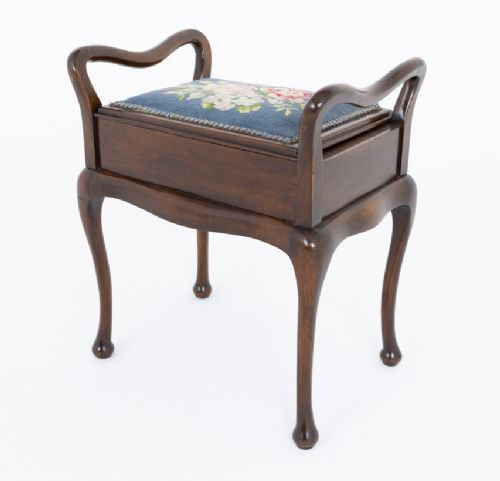
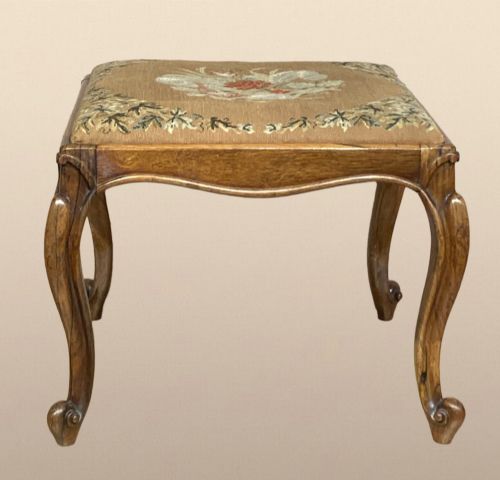


Cabriole Leg Piano Stool
A cabriole leg piano stool offers practical seating for musicians, uniting steady timber frames with shapely, curving supports found across Victorian and Edwardian periods.
Cabriole Leg Piano Stool
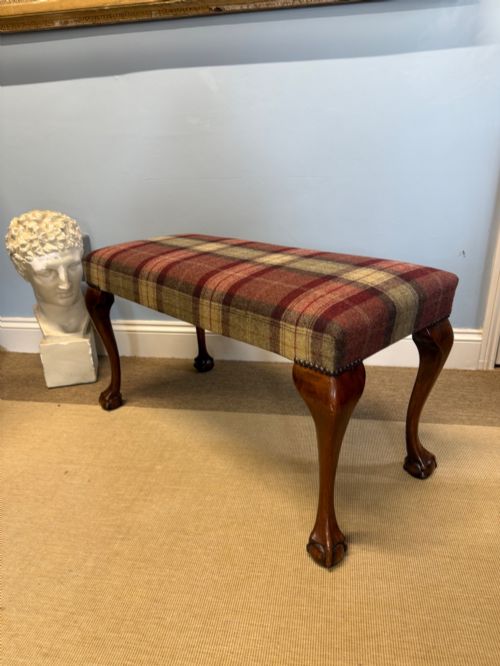
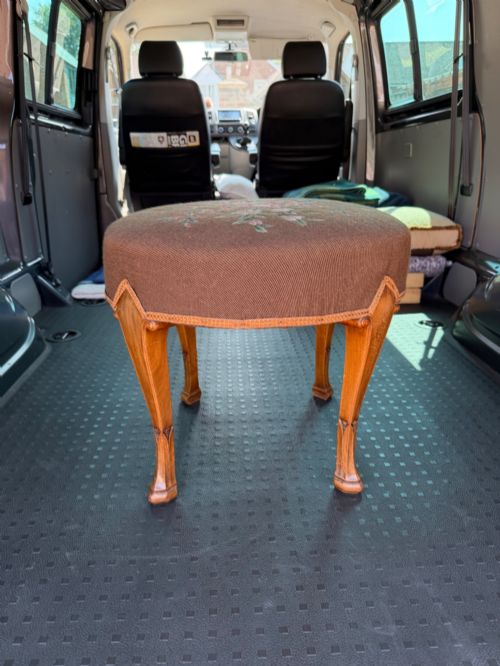
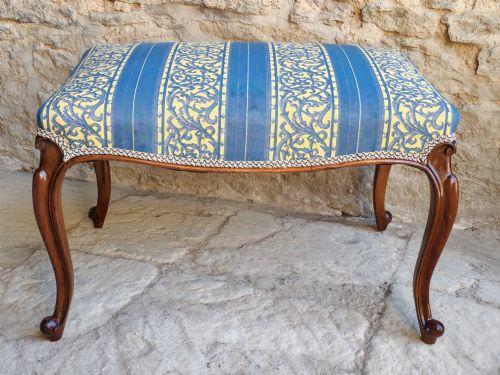
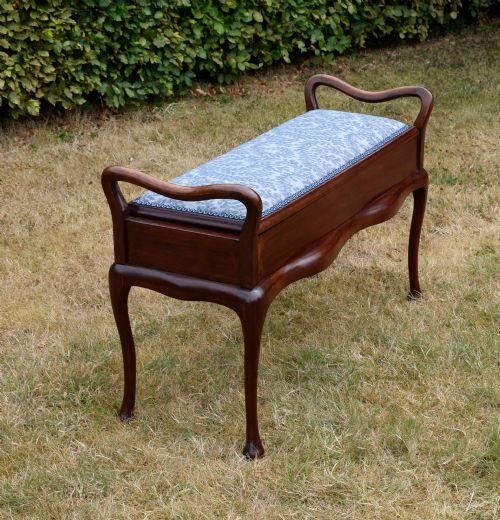
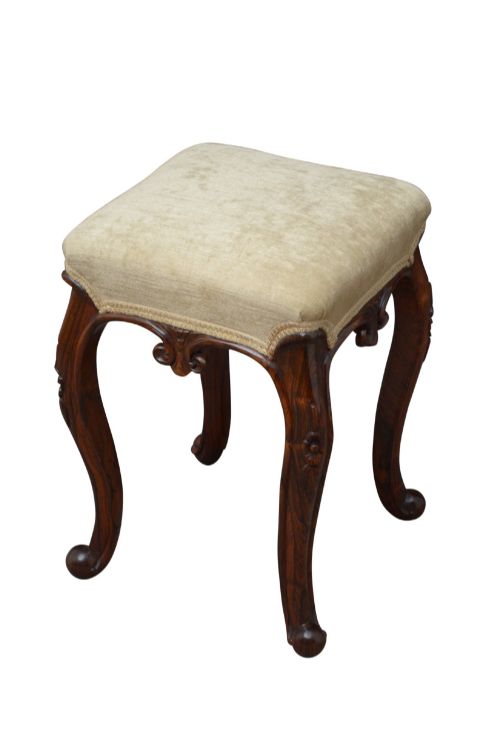
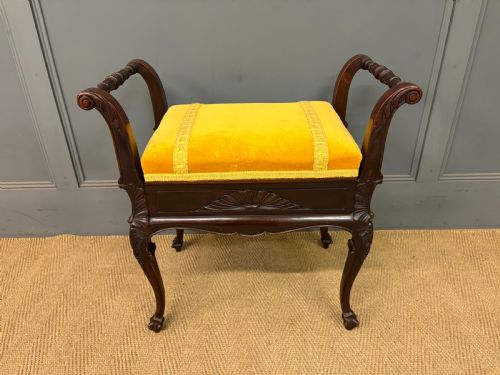
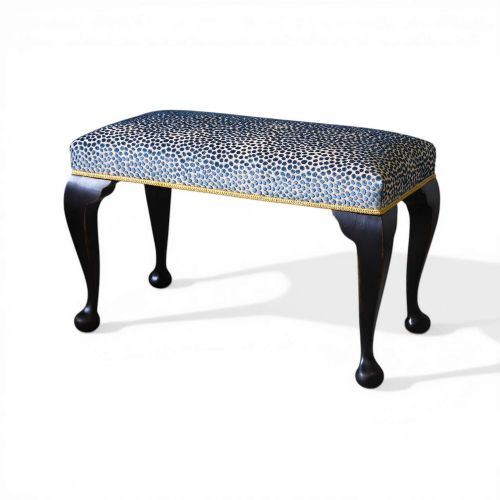
A cabriole leg piano stool is a specialised seat designed for keyboard players, combining sturdy timber construction with distinctively curved legs that trace their lineage through Victorian, Edwardian, and revival styles. When searching for a cabriole leg piano stool, buyers encounter single seats, larger duet variations, and adjustable rise and fall mechanisms intended for keyboard use. These pieces often overlap in form with dressing table stools, window seats, and general footstools, sharing the same characteristic scrolling supports.
The most common examples on this page date from the nineteenth and early twentieth centuries, spanning Victorian, Edwardian, and later revival periods. Walnut and mahogany dominate the material record, frequently paired with upholstered seats finished in tapestry, needlepoint, wool, fabric, velvet, or textile. Forms range from simple fixed seats to sophisticated swivel and adjustable mechanisms tailored for musicians.
Materials and Construction
Cabinet makers utilised dense hardwoods such as mahogany, walnut, and occasionally rosewood or goncalo alves to construct the supportive frames and characteristic curving legs. These timbers provided the structural strength required to shape the distinctive double-curved profile without sacrificing load-bearing capacity.
Seats relied on traditional upholstery methods, incorporating textile coverings like needlepoint, wool, tapestry, velvet, and standard fabric over padded foundations. Brass hardware frequently appeared in adjustable swivel mechanisms, allowing musicians to alter their seating height smoothly.
Listings feature walnut and mahogany predominantly, alongside rosewood, spanning Victorian, Edwardian, and Regency periods with fixed and adjustable formats.
Assessing Craftsmanship and Execution
Quality separates in the crispness of timber carving along the knees and feet of the cabriole supports, where finer examples display hand-carved shell, scroll, or ball and claw motifs rather than simpler, plain profiles. The choice of primary timber also distinguishes pieces, with richly figured walnut and dense mahogany marking out superior cabinet work over plain secondary woods.
The sophistication of the internal mechanism dictates utility in adjustable or swivel variants, where smooth height adjustment indicates superior engineering. Upholstery finish and the retention of original textile coverings, such as hand-worked needlepoint or tapestry, contribute significantly to the integrity of a piece.
The Cabriole Leg Piano Stool Glossary
- Cabriole Leg
- A furniture leg that curves outward at the knee and tapers inward toward the ankle, ending in a pad, claw, or scroll foot. This iconic form gained prominence during the eighteenth century and saw heavy revival in Victorian and Edwardian design.
- Rise and Fall
- An adjustable mechanical system allowing the seat height to be altered by twisting or turning the top. This functionality is particularly common on music and piano stools.
- Needlepoint
- A form of counted thread embroidery stitched onto a stiff canvas mesh, frequently utilised for historic stool seat covers. Surviving examples often display elaborate floral or geometric patterns.
- Duet Stool
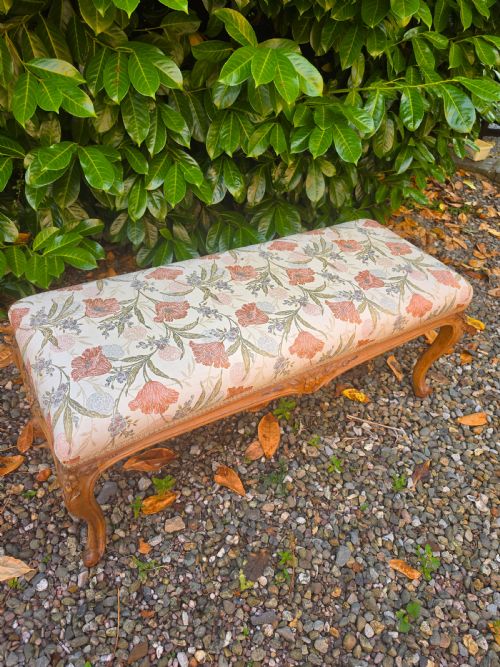
- An extended bench designed to accommodate two players side by side at a piano. These wider formats often feature multiple sets of legs or central supports for added stability.
- Goncalo Alves
- A dense, heavily figured exotic hardwood sometimes referred to as tigerwood, utilised for distinctive nineteenth-century furniture frames and decorative seating.
Cabriole Leg Piano Stool: Frequently Asked Questions
How do I identify a piano stool?
Piano stools are typically distinguished by adjustable swivel mechanisms or rise and fall screw posts that allowed musicians to alter their height at the keyboard. They often share forms with dressing table stools but prioritise mechanical height adjustment.
Many examples feature rectangular or revolving tops paired with supportive timber frames, designed specifically to sit comfortably beside upright or grand pianos.
What is a cabriole leg?
A cabriole leg is a curving furniture support that swells outward near the top knee and tapers inward toward the foot. The design mimics the shape of an animal's curving leg.
In these listings, the leg often terminates in a scroll, pad, or ball and claw detail, reflecting Georgian tastes revived during the Victorian and Edwardian eras.
Are these stools adjustable?
Some musical and dressing seats incorporate swivel tops or rise and fall mechanisms operated by turning the seat. These allowed players to find their preferred height easily.
Fixed-height variants also exist across the listings, serving as standard static seats or long duet benches without mechanical adjustment.
What woods were used?
Cabinet makers relied primarily on rich dark timbers such as walnut and mahogany for their strength and attractive grain patterns. Rosewood and goncalo alves also appear in specific nineteenth-century pieces.
These durable hardwoods provided the structural integrity needed to carve complex curving legs and support mechanical internal hardware.
What upholstery is common?
Original and replacement seats feature a variety of textiles including traditional needlepoint, tapestry, wool, velvet, and standard fabric. Needlepoint and tapestry work are particularly frequent on nineteenth-century examples.
Padding materials support these coverings, creating a firm yet comfortable surface intended for extended periods of keyboard practice.